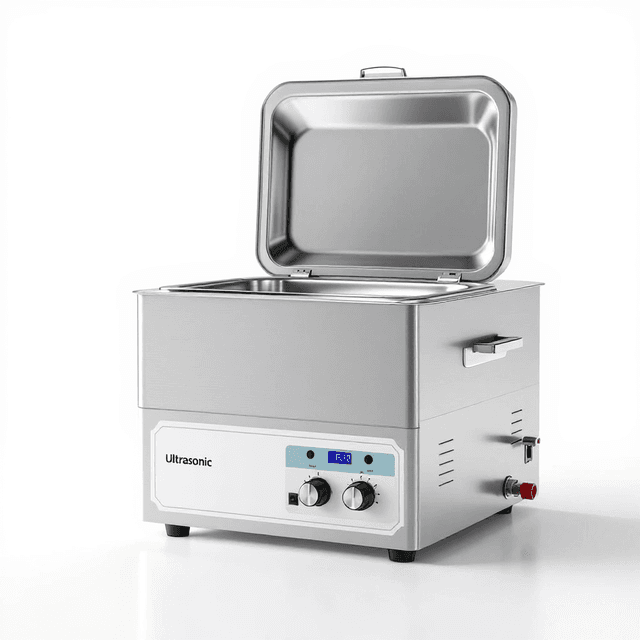
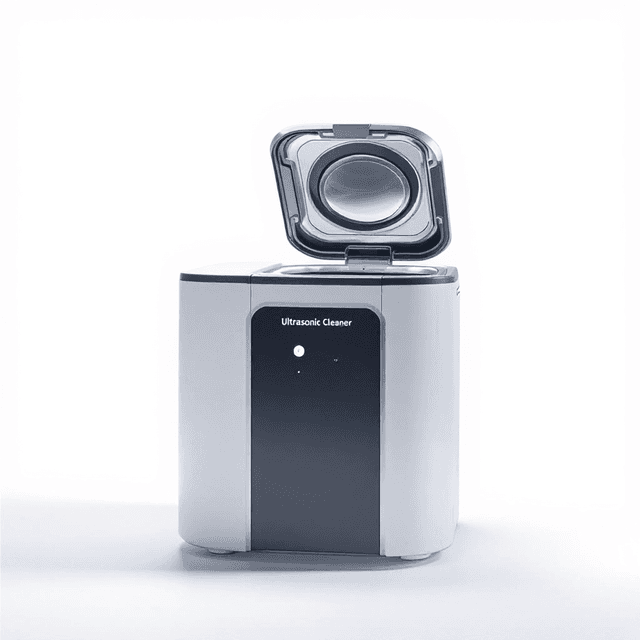
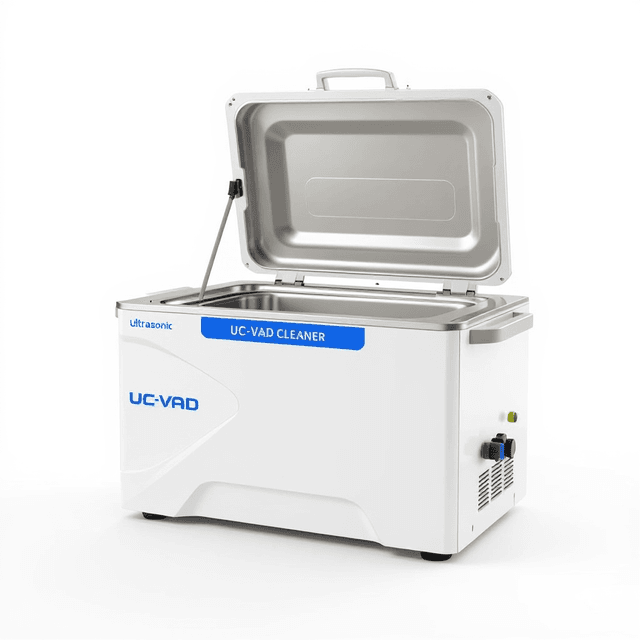
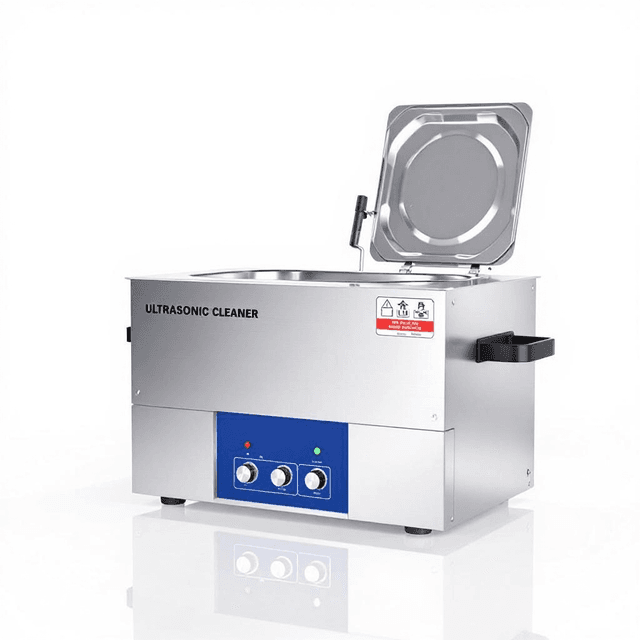
Ultrasonic Cleaner Single Frequency Type
Laboratory ultrasonic cleaner with 40 kHz frequency, programmable heating (20-80°C), and timer control for standardized cleaning of glassware and precision instruments.

Louise Corscadden, PhD
Director of Science · ConductScience
Ask Louise about Ultrasonic Cleaner Single Frequency Type fit, setup, configuration, or quote prep.
Already working with us? Sign in to connect this with My Scientist.
Key Specifications
Full details →- Model fit
- Configured during quote
- SKU family
- BIO-0704
- Shipping box
- 15 x 14 x 6.5 cm
- Ordering
- Online checkout and quote request available
- Category
- Cleaners
- Build notes
- Confirm accessories, station layout, and support needs before purchase
The Ultrasonic Cleaner Single Frequency Type is a laboratory cleaning instrument that employs 40 kHz ultrasonic waves to remove contaminants from laboratory glassware, surgical instruments, and precision components. Available in four tank capacities (UC-08A through UC-50A), the system combines ultrasonic agitation with programmable heating (20-80°C) and timer control (1-99 minutes) for standardized cleaning protocols.
The 40 kHz frequency provides effective cavitation for removing particulate matter, biological residues, and chemical contaminants from complex geometries and hard-to-reach surfaces. Temperature control enables optimization of cleaning chemistry while timer functionality ensures reproducible processing cycles. Tank dimensions range from 150×140×65 mm (UC-08A) to 300×240×200 mm (UC-50A) to accommodate various laboratory cleaning requirements.
How It Works
Ultrasonic cleaning operates through acoustic cavitation, where high-frequency sound waves (40 kHz) create alternating pressure zones in the cleaning solution. During low-pressure phases, microscopic bubbles form and grow, then violently collapse during high-pressure phases, generating localized shock waves and micro-jets that dislodge contaminants from surfaces.
The heating element raises solution temperature to 20-80°C, accelerating chemical reaction rates and reducing solution viscosity for enhanced cavitation efficiency. Temperature control optimizes cleaning chemistry performance while protecting temperature-sensitive materials. The programmable timer (1-99 minutes) ensures consistent exposure duration for reproducible cleaning protocols.
The single-frequency design provides uniform cavitation throughout the tank volume, enabling simultaneous processing of multiple items. Tank geometries are optimized for laboratory applications, accommodating standard glassware configurations and instrument components while maintaining effective acoustic coupling.
Features & Benefits
Automation Level
- semi-automated
Ultrasonic Frequency
- Time Range/Heating Temp
Ultrasonic Power(W)
- Heating Power(W)
UC-08A
- 1.3
40KHz
- 1~99min/20~80°C
60
- 200
150*140*65
- 260*260*260
UC-10A
- 2
150*140*100
- 260*260*290
UC-20A
- 3
120
- 200
240*135*100
- 350*260*330
UC-50A
- 14
300
- 400
300*240*200
- 430*370*430
Brand
- ConductScience
Research Domain
- Analytical Chemistry
- Cell Biology
- Environmental Monitoring
- Materials Science
- Microbiology
- Pharmaceutical QC
Shipping weight
- 0.64 lb
Shipping box
- L: 15 cm
- W: 14 cm
- H: 6.5 cm
| Feature | This Product | Typical Alternative | Advantage |
|---|---|---|---|
| Ultrasonic Frequency | 40 kHz single frequency | Entry-level models often use higher frequencies (80-130 kHz) with lower power | 40 kHz provides optimal balance between penetration and cavitation intensity for diverse laboratory cleaning applications |
| Temperature Control | Programmable heating 20-80°C | Basic models often lack temperature control or offer limited range | Temperature optimization enhances cleaning chemistry performance and protects temperature-sensitive materials |
| Tank Capacity Options | Four sizes from 1.3L to 14L | Single tank size offerings are common in this category | Multiple capacity options allow optimization for specific laboratory throughput requirements and available bench space |
| Timer Programming | 1-99 minute programmable timer | Manual timing or basic preset intervals | Precise timing control ensures reproducible cleaning protocols and prevents over-processing of delicate components |
| Heating Power | 200W (smaller models) to 400W (UC-50A) | Lower power heating elements in comparable units | Higher heating power enables faster temperature equilibration and maintains thermal stability during operation |
This ultrasonic cleaner series provides laboratory-focused cleaning capabilities with programmable temperature control, extended timer range, and multiple tank capacities. The 40 kHz frequency and integrated heating elements offer reliable performance for diverse laboratory cleaning protocols.
Practical Tips
Verify temperature accuracy monthly using a calibrated thermometer placed in the cleaning solution during operation.
Why: Temperature calibration ensures cleaning chemistry operates at optimal conditions for consistent results.
Drain and clean the tank weekly with mild detergent to remove accumulated residues and maintain ultrasonic efficiency.
Why: Contaminated tanks reduce cavitation effectiveness and can introduce artifacts into subsequent cleaning cycles.
Degas fresh cleaning solutions by running a 5-minute ultrasonic cycle before adding items to be cleaned.
Why: Degassed solutions provide immediate cavitation activity and prevent cleaning delays caused by dissolved air.
If cleaning effectiveness decreases, check for biofilm formation on tank walls and verify solution concentration.
Why: Biofilms and depleted cleaning solutions reduce ultrasonic transmission and chemical cleaning activity.
Document cleaning parameters (temperature, time, solution type) for each batch to enable protocol reproduction.
Why: Standardized cleaning protocols ensure consistent surface preparation for subsequent analytical procedures.
Never operate the unit without adequate solution level, as this can damage the ultrasonic transducers.
Why: Dry operation causes transducer overheating and permanent damage to the ultrasonic generation system.
Pre-rinse heavily contaminated items before ultrasonic cleaning to extend solution life and improve cleaning efficiency.
Why: Gross contamination removal prevents solution saturation and maintains ultrasonic cleaning effectiveness for fine residues.
Replace cleaning solutions when visible contamination appears or cleaning effectiveness diminishes noticeably.
Why: Contaminated solutions can redeposit particles onto cleaned surfaces and reduce overall cleaning performance.
Setup Guide
What’s in the Box
- Ultrasonic cleaner main unit (typical)
- Power cord (typical)
- User manual (typical)
- Cleaning basket or tray (typical)
Warranty
ConductScience provides standard 1-year manufacturer warranty covering defects in materials and workmanship. Technical support includes cleaning protocol guidance and troubleshooting assistance.
Compliance
What types of cleaning solutions are compatible with this ultrasonic cleaner?
Compatible with aqueous detergents, mild acids, bases, and organic solvents suitable for ultrasonic cleaning. Avoid strong acids, caustic solutions, or solvents that could damage stainless steel construction. Consult chemical compatibility charts for specific applications.
How does tank capacity affect cleaning efficiency across the model range?
Larger tanks (UC-50A at 14L) provide higher ultrasonic power (300W) for intensive cleaning while smaller units (UC-08A at 1.3L with 60W) offer precision cleaning for delicate items. All models maintain 40 kHz frequency for consistent cavitation characteristics.
What temperature accuracy and stability can be expected during heated cleaning cycles?
Temperature control operates from 20-80°C with heating power of 200W (smaller models) to 400W (UC-50A). Consult product datasheet for specific temperature accuracy specifications and thermal stability parameters.
How should cleaning baskets be positioned to optimize ultrasonic energy distribution?
Position items to avoid contact with tank bottom and ensure complete solution immersion. Use perforated baskets that allow solution circulation while preventing items from settling in acoustic dead zones near tank walls.
What maintenance intervals are recommended for sustained cleaning performance?
Daily: drain and refill cleaning solution as needed. Weekly: clean tank interior and inspect heating elements. Monthly: verify temperature accuracy and timer calibration. Replace cleaning solutions when visibly contaminated or reduced cleaning effectiveness is observed.
Can multiple different item types be cleaned simultaneously in the same cycle?
Yes, provided all items are compatible with the selected cleaning solution and temperature. Group items by material compatibility and contamination level to prevent cross-contamination or damage to sensitive components.
How does this compare to manual cleaning methods for laboratory glassware?
Ultrasonic cleaning provides superior contaminant removal from complex geometries and reduces manual handling. Automated timing and temperature control ensure reproducible results compared to variable manual cleaning techniques.
What safety considerations apply when operating at maximum temperature settings?
At 80°C operation, ensure adequate ventilation to prevent solvent vapor accumulation. Use appropriate personal protective equipment when handling heated solutions and allow cooling before removing items to prevent thermal burns.
Have a question about this product?
Have a question? Just ask.
Send it over and we'll email you a personalized answer — no call, no scheduling.
Prefer to talk it through?
Frequently Bought Together