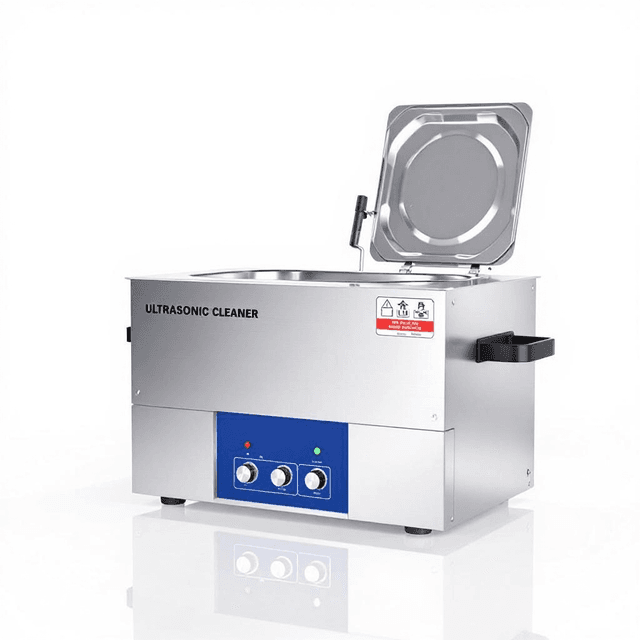
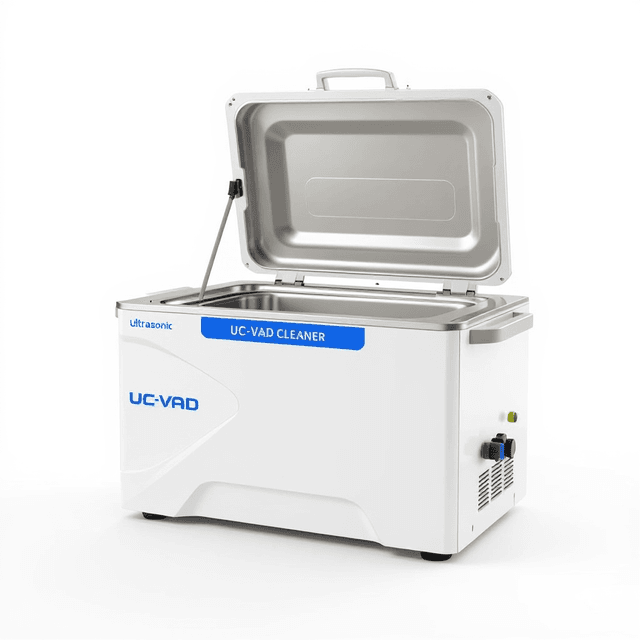
Ultrasonic Cleaner UC-AD Series
Laboratory ultrasonic cleaner series with 40 kHz frequency, 180W-600W power range, and integrated heating for contamination removal from research instrumentation.

Louise Corscadden, PhD
Director of Science · ConductScience
Ask Louise about Ultrasonic Cleaner UC-AD Series fit, setup, configuration, or quote prep.
Already working with us? Sign in to connect this with My Scientist.
Key Specifications
Full details →- Model fit
- Configured during quote
- SKU family
- BIO-0702
- Shipping box
- 30 x 15 x 15 cm
- Ordering
- Online checkout and quote request available
- Category
- Cleaners
- Build notes
- Confirm accessories, station layout, and support needs before purchase
The Ultrasonic Cleaner UC-AD Series provides laboratory-grade ultrasonic cleaning for research instrumentation and glassware. Operating at 40 kHz frequency with multiple power configurations from 180W to 600W, the system removes contaminants through cavitation-induced microscopic bubble formation and collapse. The series offers five tank capacities from 6.5L to 30L with integrated heating capabilities for enhanced cleaning protocols.
Each unit features stainless steel construction with digital controls for time, temperature, and ultrasonic power settings. The 500W heating element maintains precise temperature control for thermally-assisted cleaning procedures. Tank dimensions range from 300×150×150mm to 500×300×200mm, accommodating various laboratory vessel sizes and research equipment components.
How It Works
Ultrasonic cleaning operates through acoustic cavitation at 40 kHz frequency. High-frequency sound waves create alternating high and low pressure cycles in the cleaning solution, forming microscopic vacuum bubbles during low-pressure phases. These bubbles rapidly collapse during high-pressure cycles, generating localized temperature spikes up to 5000°C and pressures exceeding 1000 atmospheres for microseconds.
The cavitation implosion creates intense scrubbing action that penetrates microscopic crevices and removes adhered contaminants through mechanical disruption. The 40 kHz frequency provides optimal penetration for laboratory glassware while generating sufficient cavitation intensity for organic residue removal. Integrated heating enhances cleaning kinetics by reducing solution viscosity and increasing cavitation bubble activity.
Digital control systems regulate ultrasonic power output from 180W to 600W depending on model configuration, allowing optimization for different contamination types and substrate materials. The heating element maintains solution temperature up to the optimal range for specific cleaning protocols.
Features & Benefits
Automation Level
- semi-automated
UC-24AD
- UC-36AD
UC-48AD
- UC-60AD
Capacity(L)
- 6.5
10
- 15
22.5
- 30
Ultrasonic Frequency
- Single frequency, 40khz
Ultrasonic Power
- 180W
240W
- 360W
480W
- 600W
Heating Power
- 500W
Tank Size(mm)
- 300*150*150
300*240*150
- 330*300*150
500*300*150
- 500*300*200
Brand
- ConductScience
Research Domain
- Analytical Chemistry
- Cell Biology
- Environmental Monitoring
- Materials Science
- Microbiology
- Pharmaceutical QC
Power/Voltage
- 220V, 50Hz
Shipping weight
- 21.03 lb
Shipping box
- L: 30 cm
- W: 15 cm
- H: 15 cm
| Feature | This Product | Typical Alternative | Advantage |
|---|---|---|---|
| Ultrasonic Frequency | Single frequency 40 kHz | Entry-level models often use higher frequencies with limited penetration | 40 kHz provides optimal balance of cleaning intensity and penetration for laboratory glassware |
| Power Range | 180W to 600W across five models | Basic units typically offer fewer power options | Multiple power levels allow optimization for different contamination types and substrate sensitivities |
| Heating Integration | 500W integrated heating element | Many basic models lack heating capabilities | Temperature control enhances cleaning kinetics and solution effectiveness |
| Tank Options | Five capacity options from 6.5L to 30L | Limited size options in budget models | Multiple tank sizes accommodate various laboratory equipment and batch processing needs |
| Digital Controls | Digital time, temperature, and power controls | Basic models often use analog timers only | Digital interface enables precise parameter setting and reproducible cleaning protocols |
The UC-AD series provides laboratory-grade ultrasonic cleaning with 40 kHz frequency, integrated heating, and multiple tank configurations. Digital controls enable precise parameter setting for reproducible cleaning protocols across diverse laboratory applications.
Practical Tips
Verify ultrasonic output using aluminum foil cavitation test in water before first use and periodically thereafter.
Why: Ensures transducer performance meets specifications and identifies potential degradation over time.
Drain and refill tank completely between different cleaning solutions to prevent chemical interactions.
Why: Prevents formation of precipitates or unwanted reactions that could damage equipment or reduce cleaning effectiveness.
Allow solution to degas for 5-10 minutes before adding items to clean for optimal cavitation activity.
Why: Dissolved gases reduce cavitation intensity and cleaning effectiveness until equilibrium is established.
If cleaning effectiveness decreases, check for buildup on tank bottom and clean transducer surfaces.
Why: Contamination or scale on transducers reduces ultrasonic transmission and cleaning performance.
Document cleaning parameters and solution types for reproducible protocols in regulated environments.
Why: Consistent cleaning protocols ensure reliable analytical results and support quality system requirements.
Use appropriate personal protective equipment when handling cleaning solutions and heated liquids.
Why: Chemical exposure and thermal burns are primary safety risks during ultrasonic cleaning operations.
Position delicate items in solution basket rather than directly on tank bottom to prevent damage from intense cavitation.
Why: Direct contact with tank surface exposes items to maximum ultrasonic intensity which may cause substrate damage.
Replace cleaning solution when contamination is visible or effectiveness decreases noticeably.
Why: Contaminated solutions reduce cleaning efficiency and may redeposit contaminants onto cleaned items.
Setup Guide
What’s in the Box
- Ultrasonic cleaner main unit
- Stainless steel cleaning basket (typical)
- Power cord
- User manual and operation guide
- Drainage valve and accessories (typical)
Warranty
ConductScience provides standard one-year manufacturer warranty covering defects in materials and workmanship. Technical support includes operation guidance and maintenance recommendations for optimal cleaning performance.
Compliance
What cleaning solutions are compatible with the UC-AD series?
The stainless steel construction supports most laboratory cleaning solutions including detergents, solvents, and mild acids. Avoid strong alkaline solutions or halogenated compounds that may cause corrosion. Consult product datasheet for specific chemical compatibility.
How do I select the appropriate ultrasonic power level?
Lower power (180W-240W) suits delicate glassware and optics, while higher power (480W-600W) handles stubborn residues and larger batches. Start with lower settings and increase as needed based on contamination type and substrate tolerance.
What temperature range is achievable with the heating system?
The 500W heating element provides temperature control above ambient conditions. Optimal cleaning typically occurs at 40-60°C, though specific temperature ranges depend on solution type and should be verified in product specifications.
How frequently should the cleaning solution be replaced?
Replace solution when visible contamination accumulates or cleaning effectiveness decreases. High-throughput applications may require daily changes, while occasional use may extend solution life to several cycles.
Can multiple items be cleaned simultaneously?
Yes, items can be batch processed provided they do not contact each other or the tank walls. Use baskets or holders to maintain separation and ensure solution circulation around all surfaces.
What maintenance procedures are required?
Regular tank cleaning, solution replacement, and inspection of heating elements and ultrasonic transducers. Descaling may be necessary in hard water areas. Follow manufacturer maintenance schedule for optimal performance.
How does tank size selection affect cleaning performance?
Larger tanks accommodate more items but may require higher power for uniform cleaning. Select tank size based on typical batch sizes and available bench space, ensuring adequate solution volume for proper cavitation.
Have a question about this product?
Have a question? Just ask.
Send it over and we'll email you a personalized answer — no call, no scheduling.
Prefer to talk it through?
Accessories
Enhance your setup with compatible accessories
Frequently Bought Together
Upgrade Options