1 / 3
Visual Burrow System
SKU 4910
$2,990.00
IncludesStandard care
Semi-natural burrow system for studying social behavior, territorial patterns, and group dynamics in mice and rats through visual observation of burrow construction and occupancy behaviors.
CE MarkedBAA available
Scientist guidance

Louise Corscadden, PhD
Director of Science · ConductScience
Ask Louise about Visual Burrow System fit, setup, configuration, or quote prep.
Already working with us? Sign in to connect this with My Scientist.
Key Specifications
Full details →- Model fit
- Mouse, Rat
- SKU family
- CS-958377
- Sizing
- Mouse: Mouse Chamber: 86 cm x 61 cm x 26 cm (L x W x H); Burrow area: 25 cm x 61 cm x 26cm (L x W x H); Three chambers (located in burrow area): 12 cm x 7 cm x 6 cm (L x W x H); Open Area: Burrow area: 61 cm x 61 cm x 26cm (L x W x H); Tube Diameter (3): 5cm; Rat: Rat Chamber: 129 cm x 92 cm x 39 cm (L x W x H); Burrow area: 38 cm x 92 cm x 39cm (L x W x H); Three chambers (located in burrow area): 18 cm x 1 cm x 9 cm (L x W x H); Open Area: Burrow area: 92 cm x 92 cm x 39cm (L x W x H); Tube Diameter (3): 7.5 cm
- Ordering
- Online checkout and quote request available
- Category
- Behavioral Mazes
- Build notes
- Confirm accessories, station layout, and support needs before purchase
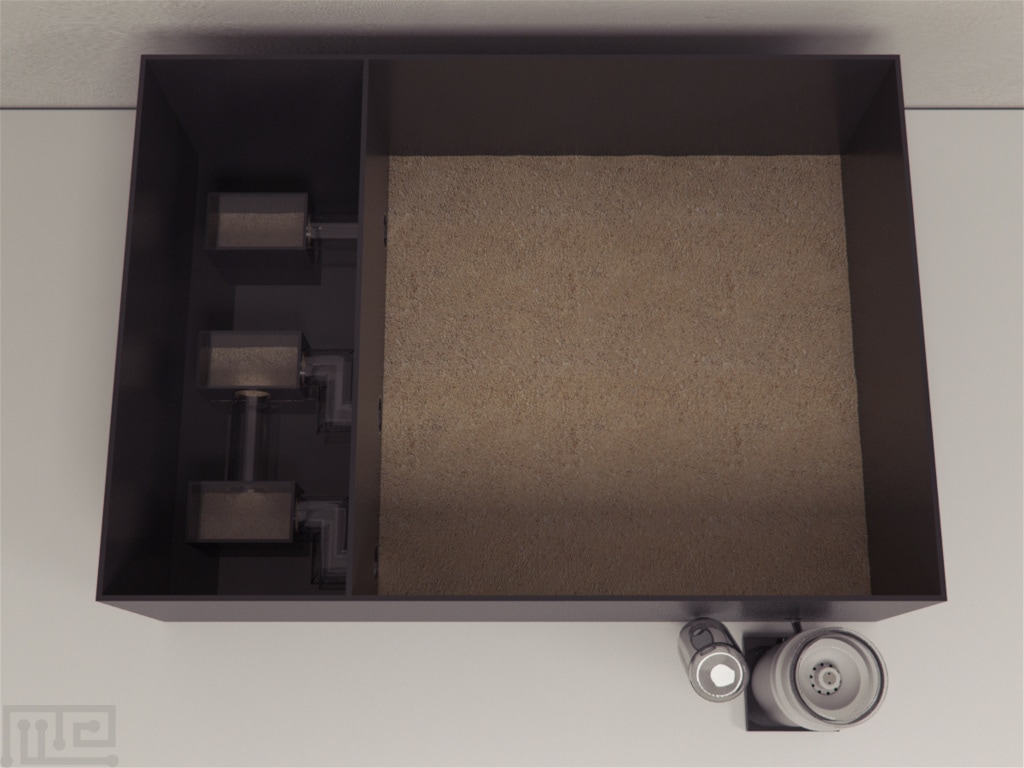
The Visual Burrow System provides a semi-natural environment for assessing social behavior, territorial patterns, and burrowing activities in laboratory rodents. The apparatus features a main open area connected to an enclosed burrow section containing three discrete chambers linked by connecting tubes, mimicking natural underground burrow structures.
Available in species-specific configurations for mice and rats, the system enables observation of complex social behaviors including dominance hierarchies, territorial establishment, and group dynamics. The transparent construction allows for continuous visual monitoring and video recording while maintaining a controlled laboratory environment. This apparatus is particularly valuable for researchers investigating social behavior paradigms, colony organization, and ethological responses in small group settings.
How It Works
The Visual Burrow System operates on the principle of providing a semi-natural environment that triggers innate burrowing and territorial behaviors in laboratory rodents. The apparatus design mimics natural burrow structures with discrete chambers connected by tubes, allowing animals to establish territories and exhibit species-typical social behaviors.
Animals are introduced to the system and naturally explore and occupy different chambers based on social hierarchies and territorial preferences. The transparent construction enables continuous visual monitoring and behavioral scoring, while the chamber design creates distinct microenvironments that animals can claim and defend. Social interactions, chamber occupancy patterns, and movement between areas provide quantifiable measures of social behavior.
The system's effectiveness relies on the natural tendency of rodents to establish burrow territories and social hierarchies when provided with appropriate environmental structures. Behavioral endpoints include time spent in different chambers, social interactions frequency, and territorial defense behaviors.
Features & Benefits
Species-specific sizing
Optimized chamber dimensions and tube diameters for mouse (5cm tubes) and rat (7.5cm tubes) ensure appropriate scale for natural movement and behavior expression
Three-chamber burrow design
Multiple discrete territories allow for complex social hierarchy establishment and territorial behavior assessment in group studies
Transparent construction
Continuous visual monitoring and video recording capabilities enable detailed behavioral analysis without disturbing natural behaviors
Semi-natural environment
Triggers innate burrowing and territorial behaviors while maintaining controlled laboratory conditions for reproducible results
Open area plus burrow sections
Provides both exposed and protected environments to assess anxiety-related behaviors and social preferences simultaneously
Connecting tube system
Mimics natural burrow tunnels and creates transition zones for studying movement patterns and territorial boundaries
Modular assembly design
Allows for efficient storage when not in use and facilitates thorough cleaning between experimental sessions
Sizes by model
| Measurement | Mouse | Rat |
|---|---|---|
| Size | Mouse Chamber: 86 cm x 61 cm x 26 cm (L x W x H); Burrow area: 25 cm x 61 cm x 26cm (L x W x H); Three chambers (located in burrow area): 12 cm x 7 cm x 6 cm (L x W x H); Open Area: Burrow area: 61 cm x 61 cm x 26cm (L x W x H); Tube Diameter (3): 5cm | Rat Chamber: 129 cm x 92 cm x 39 cm (L x W x H); Burrow area: 38 cm x 92 cm x 39cm (L x W x H); Three chambers (located in burrow area): 18 cm x 1 cm x 9 cm (L x W x H); Open Area: Burrow area: 92 cm x 92 cm x 39cm (L x W x H); Tube Diameter (3): 7.5 cm |
- Mouse: Mouse Chamber: 86 cm x 61 cm x 26 cm (L x W x H)
- Mouse: Burrow area: 25 cm x 61 cm x 26cm (L x W x H)
- Mouse: Three chambers (located in burrow area): 12 cm x 7 cm x 6 cm (L x W x H)
- Mouse: Open Area: Burrow area: 61 cm x 61 cm x 26cm (L x W x H)
- Mouse: Tube Diameter (3): 5cm
- Rat: Rat Chamber: 129 cm x 92 cm x 39 cm (L x W x H)
- Rat: Burrow area: 38 cm x 92 cm x 39cm (L x W x H)
- Rat: Three chambers (located in burrow area): 18 cm x 1 cm x 9 cm (L x W x H)
- Rat: Open Area: Burrow area: 92 cm x 92 cm x 39cm (L x W x H)
- Rat: Tube Diameter (3): 7.5 cm
Warranty Length
- 1 YEAR
Storage Included
- Yes
Assembly Required
- Yes
Behavioral Construct
- Social dominance
- Territorial behavior
- Group dynamics
- Social hierarchy
- Anxiety-related behavior
- Exploration behavior
Automation Level
- manual
Research Domain
- Aging Research
- Anxiety and Depression
- Behavioral Pharmacology
- Developmental Biology
- Neuroscience
- Social Behavior
Compatible Tracking Software
- ConductVision
Shipping weight
- 6.06 lb
Shipping box
- L: 65.0 cm
- W: 36.0 cm
- H: 27.0 cm
| Feature | This Product | Typical Alternative | Advantage |
|---|---|---|---|
| Chamber Configuration | Three discrete chambers connected by tubes | Simple two-compartment designs or single large chambers | Multiple territories allow for complex social hierarchy establishment and territorial behavior assessment |
| Species Sizing | Species-specific dimensions for mice and rats | One-size-fits-all approaches | Proper scaling ensures natural movement patterns and appropriate behavioral expression for each species |
| Visual Access | Transparent construction throughout system | Limited viewing windows or opaque sections | Complete behavioral monitoring without disturbing animals or missing interactions in hidden areas |
| Environmental Complexity | Combined open area and burrow sections | Either open field or enclosed chambers only | Simultaneous assessment of anxiety-related and territorial behaviors in one testing session |
| Assembly Design | Modular construction with storage components | Fixed assemblies requiring permanent lab space | Efficient laboratory space utilization and thorough cleaning capabilities between experiments |
The Visual Burrow System combines semi-natural environmental complexity with practical laboratory functionality. The species-specific sizing and three-chamber design provide appropriate territorial structure while transparent construction ensures comprehensive behavioral monitoring throughout the system.
| Model | Size | SKU | Listed price | Status | Shipping box |
|---|---|---|---|---|---|
| Mouse | Mouse Chamber: 86 cm x 61 cm x 26 cm (L x W x H); Burrow area: 25 cm x 61 cm x 26cm (L x W x H); Three chambers (located in burrow area): 12 cm x 7 cm x 6 cm (L x W x H); Open Area: Burrow area: 61 cm x 61 cm x 26cm (L x W x H); Tube Diameter (3): 5cm | 4909 | $2,490.00 | Available | 65.0 x 36.0 x 27.0 cm |
| Rat | Rat Chamber: 129 cm x 92 cm x 39 cm (L x W x H); Burrow area: 38 cm x 92 cm x 39cm (L x W x H); Three chambers (located in burrow area): 18 cm x 1 cm x 9 cm (L x W x H); Open Area: Burrow area: 92 cm x 92 cm x 39cm (L x W x H); Tube Diameter (3): 7.5 cm | 4910 | $2,990.00 | Available | 65.0 x 36.0 x 27.0 cm |
Social Behavior
Assessing dominance hierarchies and territorial establishment in small groups of mice or rats through burrow chamber occupancy patterns and social interactions.
Behavioral Pharmacology
Evaluating effects of anxiolytic or social behavior-modifying compounds on group dynamics and territorial behavior in semi-natural conditions.
Neuroscience
Investigating neural mechanisms of social behavior by combining burrow system observations with optogenetic or pharmacological manipulations in socially housed rodents.
Anxiety and Depression
Analyzing social withdrawal behaviors and group interaction patterns as indicators of anxiety-like or depression-like states in rodent models.
Aging Research
Studying age-related changes in social behavior and territorial maintenance by comparing young and aged rodents in group housing conditions.
Developmental Biology
Examining social behavior development and group formation patterns in juvenile versus adult rodents during critical developmental periods.
Practical Tips
Best Practices
Allow 48-72 hours for territorial establishment before beginning data collection, monitoring for stable chamber occupancy patterns.
Why: Adequate habituation time ensures reliable baseline behaviors and reduces novelty-induced exploration that could confound territorial measurements.
Maintenance
Disassemble all components for cleaning between groups and replace bedding materials completely to eliminate olfactory cues.
Why: Residual scents from previous occupants can influence territorial behavior and social hierarchy formation in subsequent groups.
Data Quality
Use consistent lighting conditions throughout testing and position cameras to capture both chambers and tube transitions.
Why: Standardized environmental conditions and complete behavioral coverage ensure reliable data collection and prevent missed social interactions.
Safety
Monitor animals closely during initial introduction periods to identify excessive aggression or social stress.
Why: Early intervention prevents injury in territorial disputes while maintaining natural behavioral expression within acceptable limits.
Best Practices
Record baseline individual behaviors before group housing to distinguish individual differences from social effects.
Why: Individual behavioral profiles help separate innate behavioral tendencies from socially-induced changes in territorial and dominance behaviors.
Troubleshooting
If animals avoid certain chambers consistently, check for drafts, noise sources, or cleaning residue that might create aversive conditions.
Why: Environmental factors unrelated to social behavior can influence chamber preferences and confound territorial behavior measurements.
Calibration
Validate video tracking zones by manually scoring a subset of recordings to ensure accurate automated behavioral measurements.
Why: Software calibration verification ensures that automated measurements accurately capture behavioral events and territorial boundaries.
Setup Guide
Unpack and Inspect
Remove all components from packaging and verify all panels, chambers, and connecting tubes are present and undamaged.
Assemble Main Chamber
Connect the main chamber walls according to the assembly instructions, ensuring all joints are secure and the structure is stable.
Install Burrow Section
Attach the burrow area to the main chamber, positioning the three chambers and connecting tubes as specified in the configuration diagram.
Connect Tube System
Install connecting tubes between chambers, ensuring proper diameter fit (5cm for mouse, 7.5cm for rat) and smooth transitions.
Environmental Preparation
Place appropriate bedding material in chambers and ensure ambient lighting and temperature conditions are suitable for behavioral testing.
System Validation
Conduct a test run with animals to verify proper navigation through tubes and chamber accessibility before beginning formal experiments.
Recording Setup
Position video cameras or observation equipment to capture behavior in both open area and burrow chambers for data collection.
What’s in the Box
- Main chamber panels and assembly hardware
- Burrow section components
- Three individual chambers (species-specific dimensions)
- Connecting tubes (species-appropriate diameter)
- Assembly instructions and setup guide
- Storage containers for disassembled components
Warranty
ConductScience provides a 1-year manufacturer warranty covering defects in materials and workmanship, with technical support available for setup and operational guidance.
Compliance
AAALAC International GuidelinesSystem design supports enriched housing requirements for social species research in accredited facilities
NIH Guide for Care and UseApparatus dimensions and environmental complexity align with guidelines for rodent behavioral research housing standards
ARRIVE GuidelinesStandardized apparatus design supports reproducible methodology reporting requirements for behavioral studies
Q
What group sizes are appropriate for testing in the Visual Burrow System?
A
Typical group sizes range from 3-8 animals depending on species and research objectives. Smaller groups (3-4) allow for clearer territorial establishment, while larger groups (6-8) provide more complex social dynamics. Consult behavioral literature for your specific research question.
Q
How long should animals be housed in the system before behavioral testing begins?
A
A habituation period of 48-72 hours is generally recommended to allow territorial establishment and social hierarchy formation. Monitor for stable occupancy patterns and reduced exploratory behavior before beginning data collection.
Q
Can the chambers be modified or reconfigured for specific experimental needs?
A
The basic three-chamber configuration is fixed, but chamber contents can be modified with appropriate bedding, enrichment items, or environmental manipulations while maintaining the structural integrity of the system.
Q
What behavioral parameters can be reliably measured using this system?
A
Key measures include chamber occupancy time, transition frequency between areas, social interaction duration, aggressive encounters, and territorial defense behaviors. Video tracking software can automate many measurements.
Q
How should the system be cleaned between experimental groups?
A
Disassemble all components for thorough cleaning with appropriate disinfectants. Allow complete drying before reassembly. Replace bedding materials and ensure all olfactory cues from previous occupants are eliminated.
Q
Is the system suitable for studying both diurnal and nocturnal behaviors?
A
Yes, the transparent construction allows for observation under various lighting conditions. Infrared lighting can be used for nocturnal observations without disrupting natural behavior patterns.
Q
What type of bedding material works best with the burrow chambers?
A
Standard laboratory bedding materials work well. Ensure bedding depth allows for natural nesting behaviors while maintaining visibility for behavioral observations. Avoid materials that could obstruct tube passages.
Have a question about this product?
Track rodents with ConductVision
ConductVision is our video-tracking software. Record your sessions on video, and it scores standard rodent tests, such as those listed below.
Examples of tests it scores
To check whether ConductVision scores your protocol in this apparatus, ask in your quote request.
Ask a question
Have a question? Just ask.
Send it over and we'll email you a personalized answer — no call, no scheduling.
Personalized email reply
Usually within one business day
Helpful answers published here
Prefer to talk it through?
Accessories
Enhance your setup with compatible accessories
Total: $0.00
Frequently Bought Together
Total: $2,730.00


Visual Burrow System
$2,990.00
Added to quoteView Quote