Wastewater Ammonia Analyzer
Portable colorimetric analyzer for rapid determination of ammonia nitrogen in water samples using DPD method, measuring 0.00-10.00 mg/L with field-deployable design.
| Model | LH-N11 |
| Product name | wastewater ammonia analyzer colorimeter |
| Test item | Ammonia nitrogen |
| Measuring range | 0.00~10.00mg/l |
| Light source | LCD |
| Wavelength | 470-5475mm |

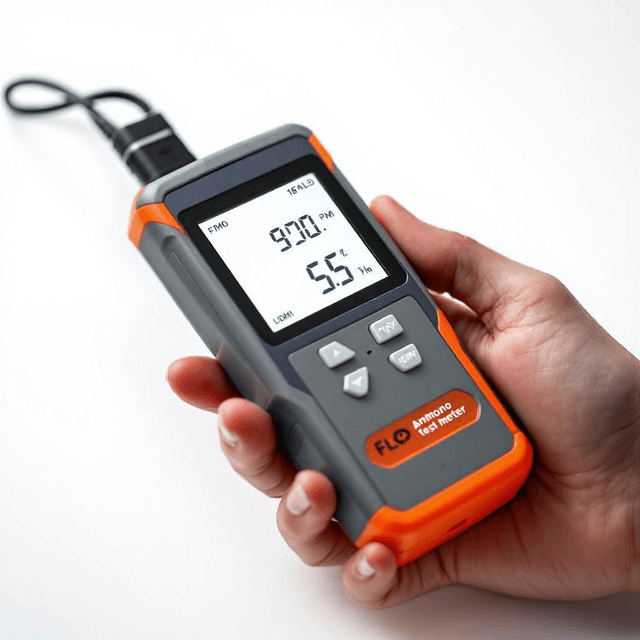
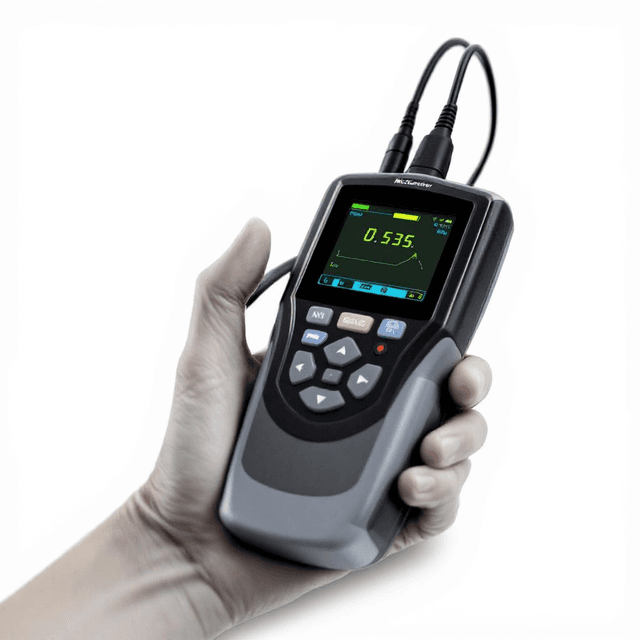
The Wastewater Ammonia Analyzer (CS-LH-N11) is a portable colorimetric instrument designed for rapid determination of ammonia nitrogen concentrations in aqueous samples. This handheld device employs the DPD (N,N-diethyl-p-phenylenediamine) colorimetric method to quantify total ammonia nitrogen in the range of 0.00-10.00 mg/L, making it suitable for environmental monitoring and water quality assessment applications.
The analyzer operates at a wavelength of 470-475 nm with an LCD light source, providing accuracy of ±5% for concentrations ≤5.00 mg/L and ±10% for concentrations >5.00 mg/L. The compact design (180×68×26 mm, 220g) enables field deployment for on-site water quality testing. Understanding that ammonia exists in equilibrium between toxic un-ionized ammonia (NH₃) and relatively non-toxic ammonium ion (NH₄⁺), with the proportion dependent on pH, this instrument measures total ammonia nitrogen to support comprehensive water quality evaluation.
How It Works
The analyzer employs colorimetric detection based on the DPD (N,N-diethyl-p-phenylenediamine) method, an established analytical technique for ammonia nitrogen determination. When ammonia is present in the sample, it reacts with the DPD reagent under specific chemical conditions to form a colored complex. The intensity of this colored complex is directly proportional to the ammonia nitrogen concentration in the sample.
The instrument measures light absorbance at 470-475 nm wavelength using an LCD light source. The optical system quantifies the degree of light attenuation caused by the colored complex, converting this measurement to a concentration value through pre-programmed calibration algorithms. This colorimetric approach provides rapid results while maintaining analytical accuracy across the 0.00-10.00 mg/L measurement range.
The method accounts for total ammonia nitrogen, which includes both un-ionized ammonia (NH₃) and the ammonium ion (NH₄⁺). Since the relative proportion of these species is pH-dependent, the measurement provides comprehensive assessment of nitrogen content regardless of sample pH conditions, supporting accurate water quality evaluation.
Features & Benefits
Model
- LH-N11
Product name
- wastewater ammonia analyzer colorimeter
Test item
- Ammonia nitrogen
Measuring range
- 0.00~10.00mg/l
Light source
- LCD
Wavelength
- 470-5475mm
Test method
- DPD method
Working condition
- 0~40âï¼Rh:0-90%
Automation Level
- semi-automated
Brand
- ConductScience
Accuracy
- conc.â¤5.00mg/l:±5%conc.ï¼5.00mg/l:±10%
Dimensions
- 180mm*68mm*26mm
Weight
- 220g
Research Domain
- Analytical Chemistry
- Environmental Monitoring
- Food Science
- Industrial Hygiene
- Pharmaceutical QC
Weight
- 0.15 kg
Dimensions
- L: 7.09 mm
- W: 2.68 mm
- H: 1.02 mm
Comparison Guide
| Feature | This Product | Typical Alternative | Advantage |
|---|---|---|---|
| Measurement Range | 0.00-10.00 mg/L | Entry-level models often offer narrower ranges or require dilution for higher concentrations | Covers typical environmental and wastewater concentrations without sample dilution requirements. |
| Detection Method | DPD colorimetric method | Some alternatives use ISE or spectrophotometric methods | DPD method is internationally standardized and provides reliable results across varied sample matrices. |
| Portability | 220g, 180×68×26 mm | Laboratory instruments often weigh several kilograms and require bench space | Enables field deployment and on-site testing, reducing sample transport time and costs. |
| Operating Wavelength | 470-475 nm LCD light source | Many instruments use broader wavelength ranges or require multiple filters | Optimized wavelength range provides selective detection for ammonia-reagent complex formation. |
| Measurement Accuracy | ±5% (≤5.00 mg/L), ±10% (>5.00 mg/L) | Accuracy specifications vary by model and price range | Provides reliable quantification suitable for environmental monitoring and process control applications. |
This analyzer combines the analytical reliability of the established DPD colorimetric method with portable design for field deployment. The 0.00-10.00 mg/L range and specified accuracy levels support both environmental monitoring and process control applications where ammonia nitrogen quantification is required.
Practical Tips
Perform zero calibration with deionized water before each measurement session to account for optical baseline drift.
Why: Environmental temperature changes and light source aging can affect baseline readings over time.
Allow samples to equilibrate to instrument operating temperature before analysis to minimize thermal effects on colorimetric development.
Why: Temperature variations can affect both reagent reaction kinetics and optical measurement stability.
Clean optical components regularly using appropriate solvents to prevent accumulation of residues that could affect light transmission.
Why: Sample residues or reagent deposits on optical surfaces will cause measurement drift and reduced accuracy.
Run duplicate measurements on 10% of samples to monitor measurement precision and identify potential systematic errors.
Why: Statistical quality control helps detect instrument performance issues before they affect data reliability.
If readings appear unstable, check sample clarity and consider filtration for turbid samples that may cause optical interference.
Why: Suspended particles or organic matter can scatter light and lead to erratic or elevated readings.
Handle DPD reagents according to safety data sheet requirements and ensure proper ventilation during use.
Why: Chemical reagents may pose health hazards and require appropriate handling procedures in laboratory and field environments.
Store calibration standards according to manufacturer specifications and replace regularly to maintain measurement traceability.
Why: Degraded standards will compromise measurement accuracy and may not be detected during routine calibration checks.
Setup Guide
What’s in the Box
- CS-LH-N11 Ammonia Analyzer (main unit)
- Power adapter (typical)
- Sample cuvettes (typical)
- DPD reagent kit (typical)
- Calibration standards (typical)
- User manual and operating instructions
- Carrying case (typical)
Warranty
ConductScience provides a standard one-year manufacturer warranty covering defects in materials and workmanship, with technical support available for operational guidance and troubleshooting assistance.
Compliance
References
Background reading relevant to this product:
What is the detection limit for ammonia nitrogen with this analyzer?
The measurement range starts at 0.00 mg/L; consult the product datasheet for specific detection limit and method detection limit values under the DPD colorimetric method.
How does sample pH affect the measurement accuracy?
The analyzer measures total ammonia nitrogen (NH₃ + NH₄⁺), which accounts for pH-dependent equilibrium between species. Sample pH adjustment may be required depending on the specific DPD method protocol used.
What sample preparation is required before analysis?
Samples require DPD reagent addition and proper reaction time development. Filtration or pretreatment may be necessary for turbid samples to prevent optical interference.
How frequently does the instrument require calibration?
Calibration frequency depends on usage intensity and accuracy requirements. Daily zero calibration with deionized water and periodic standard verification are recommended for consistent performance.
Can this analyzer measure samples with high organic content?
Organic matter may cause optical interference in colorimetric methods. Sample dilution or pretreatment may be necessary for heavily contaminated samples; consult method guidelines for specific protocols.
What is the typical analysis time per sample?
Analysis time includes reagent reaction time and measurement duration. The manufacturer specifies rapid testing capability; consult product documentation for specific timing protocols.
How does this compare to ion-selective electrode methods?
Colorimetric methods like DPD typically provide better precision at low concentrations compared to ISE methods but require reagent addition and have longer analysis time per sample.
Have a question about this product?
Accessories
Enhance your setup with compatible accessories
Upgrade Options