Behavioral Tracking for Guinea Pig
Cavia porcellus
Auditory neuroscience, vocal communication, and respiratory research in Cavia porcellus. ConductVision delivers automated tracking and quantitative parameter extraction across the full assay catalog below.
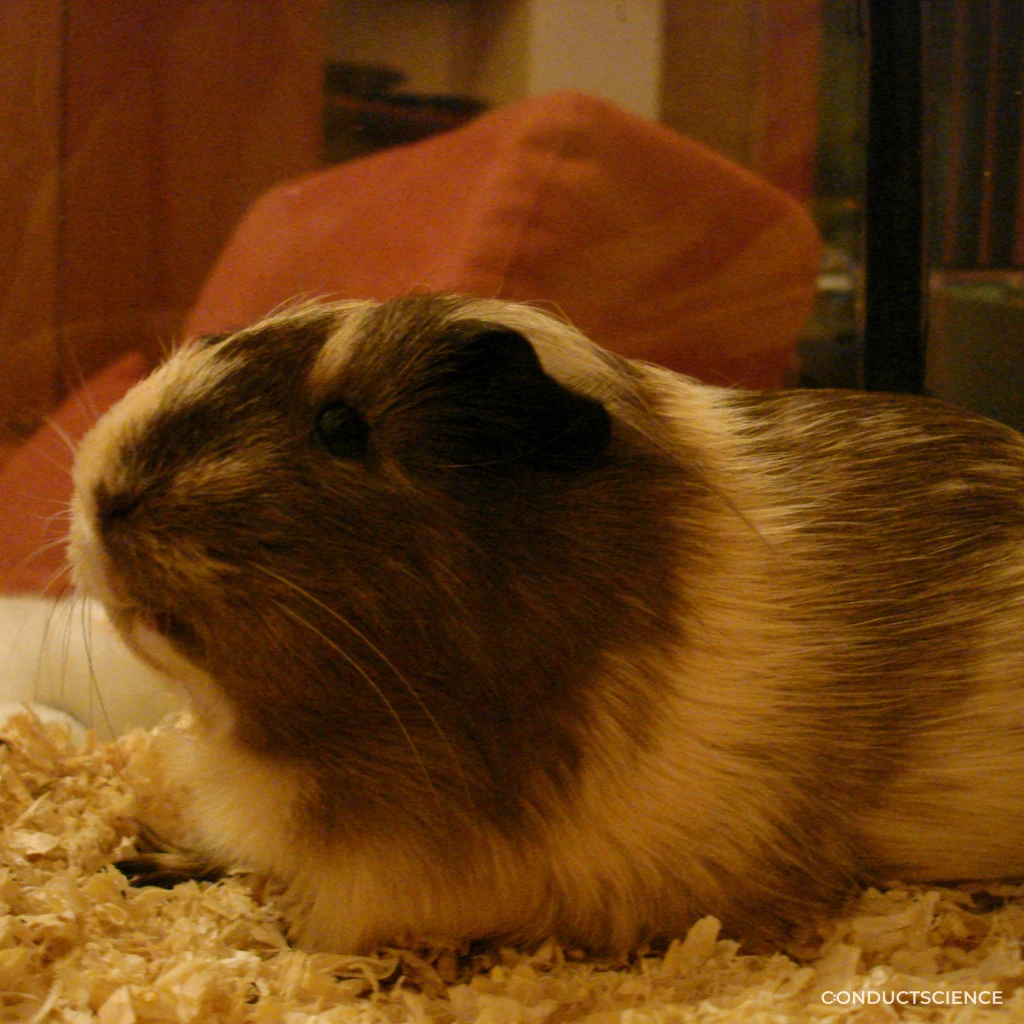
Why Guinea Pig in Behavioral Research
Guinea pigs are foundational for auditory neuroscience, cochlear research, and respiratory physiology. Their sensitive hearing range, robust vocal repertoire, and well-characterized cardiopulmonary system support behavioral audiometry and translational hearing studies.
Berryman JC. (1976). Guinea-pig vocalizations: their structure, causation and function. Z Tierpsychol, 41(1), 80-106. PMID: 961122
Heffner R, Heffner H, Masterton B. (1971). Behavioral measurements of absolute and frequency-difference thresholds in guinea pig. J Acoust Soc Am, 49(6), 1888-1895. PMID: 5125740
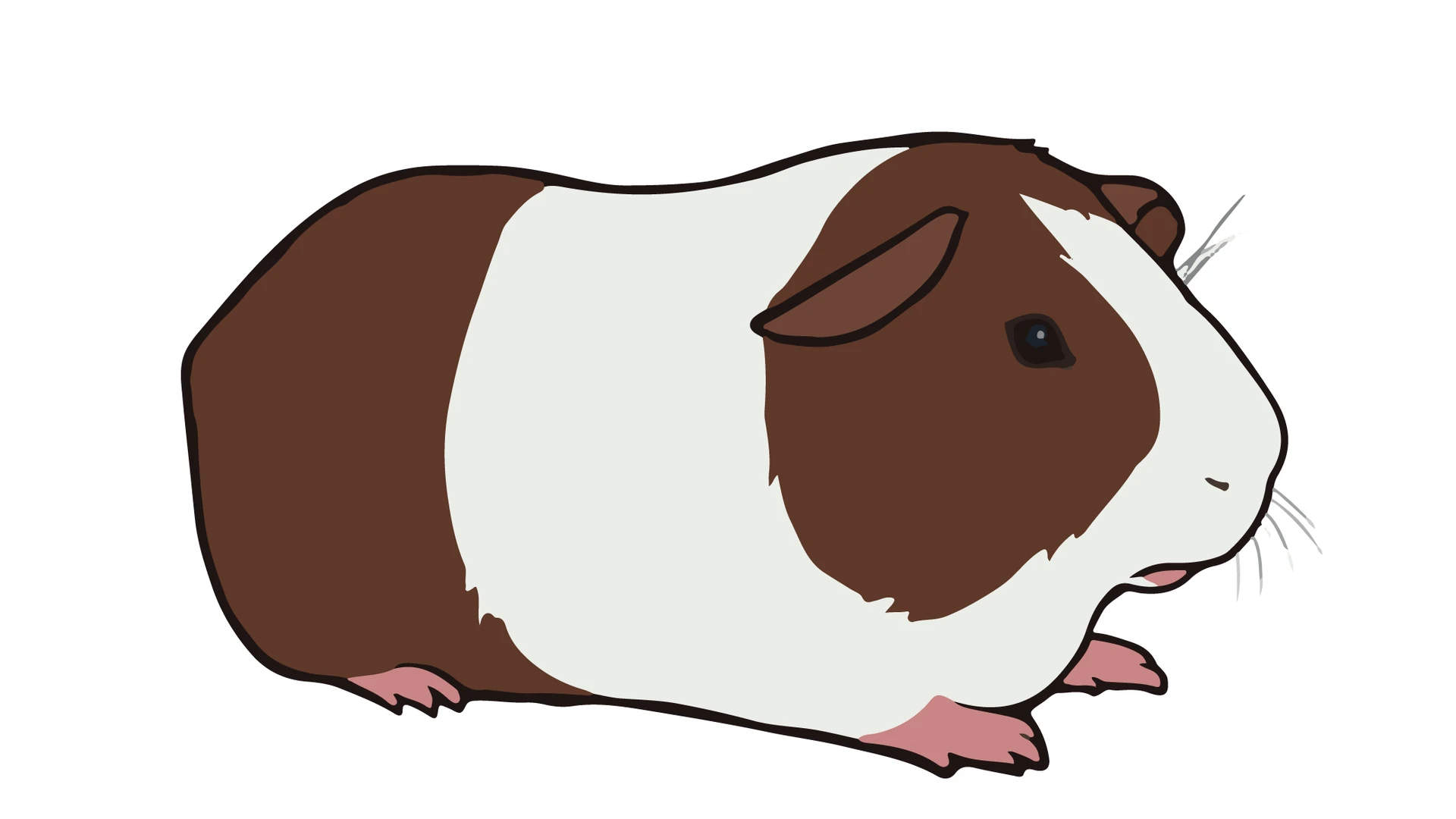
What We Measure in Guinea Pig
Validated assays with quantitative parameter tracking for Cavia porcellus.
Operant audiometry measures absolute and frequency-difference thresholds across 100 Hz - 50 kHz. The guinea pig audiogram is foundational for cochlear and noise-exposure research.
| Parameter | Unit | Description |
|---|---|---|
| Absolute threshold | dB SPL | Detection limit per frequency |
| Frequency difference limen | % | Pitch discrimination |
| Best frequency | kHz | Most sensitive region |
| Threshold shift | dB | Post-noise audiogram |
Heffner R, et al. (1971). PMID: 5125740
Guinea pigs emit a structured repertoire (whistle, chut, drrr, purr, scream) tied to social and motivational contexts. Call rate and type distribution index social bond, alarm, and feeding-anticipation states.
| Parameter | Unit | Description |
|---|---|---|
| Call rate | calls/min | Vocal output |
| Call-type distribution | fractions | Whistle/chut/drrr ratios |
| Whistle peak frequency | kHz | Acoustic structure |
| Antiphonal response latency | s | Conspecific reply |
Berryman JC. (1976). PMID: 961122
Guinea pigs in an open field freeze, vocalize, and explore peripheries. The assay measures locomotion, thigmotaxis, and freezing as anxiety indices.
| Parameter | Unit | Description |
|---|---|---|
| Distance traveled | m | Locomotion |
| Freezing duration | s | Immobility |
| Time in center | s | Anxiety-like |
| Vocalization rate | calls/min | Distress |
Hennessy MB, et al. (1995). Behavioral and physiological responses of guinea pigs to mother-infant separation. Physiol Behav, 57(5), 845-852. PMID: 7610136
Sows nurse and groom precocial pups but show limited retrieval. Time on pups, latency to nurse, and pup contact assess maternal responsiveness.
| Parameter | Unit | Description |
|---|---|---|
| Nursing duration | min/h | Lactation contact |
| Latency to nurse | s | Onset of feeding |
| Pup contact time | min/h | Hovering / sleeping with pups |
| Grooming bouts | count/h | Maternal grooming |
Hennessy MB. (2003). Enduring maternal influences in a precocial rodent. Dev Psychobiol, 42(3), 225-236. PMID: 12621650
Pup separation elicits whistle calls and a glucocorticoid stress response. The paradigm models maternal-attachment biology and developmental neuroendocrinology.
| Parameter | Unit | Description |
|---|---|---|
| Whistle rate during separation | calls/min | Distress signal |
| Cortisol response | fold change | HPA activation |
| Latency to first whistle | s | Distress onset |
| Recovery time on reunion | s | Affiliative response |
Hennessy MB, et al. (1995). PMID: 7610136
More Behavioral Tests for Guinea Pig
Thigmotaxis (Wall-Hugging)
Key Parameters: Time near wall, center entries
Donovick PJ. (1974). Anim Learn Behav, 2(2), 113-117.
Social Preference (Familiar vs Novel)
Key Parameters: Approach time, vocal exchange
Sachser N. (1986). Z Tierpsychol, 73, 213-227.
Novel Object Exploration
Key Parameters: Approach latency, contact time
Birke LIA. (1979). Anim Learn Behav, 7(4), 559-563.
Auditory Brainstem Response (ABR)
Key Parameters: Wave I-V latencies, thresholds
Klis JF, et al. (2002). PMID: 12150801
Pavlovian Eye-Blink Conditioning
Key Parameters: CR amplitude, acquisition rate
Hesslow G. (1994). Behav Brain Res, 64(1-2), 123-130. PMID: 7840882
ConductScience Hardware for Guinea Pig Research
Audiometric Sound Booth
Behavioral hearing thresholds
Multi-Channel Vocal Recording
Whistle and call analysis
Open-Field Arena (Guinea-Pig Sized)
Activity and anxiety
Maternal Observation Cage
Sow-pup interaction
Pup Separation Chamber
Distress vocalization paradigm
Citations & Further Reading
- Berryman JC. (1976). Guinea-pig vocalizations: their structure, causation and function. Z Tierpsychol, 41(1), 80-106. PMID: 961122
- Heffner R, Heffner H, Masterton B. (1971). Behavioral measurements of absolute and frequency-difference thresholds in guinea pig. J Acoust Soc Am, 49(6), 1888-1895. PMID: 5125740
- Heffner R, et al. (1971). PMID: 5125740
- Berryman JC. (1976). PMID: 961122
- Hennessy MB, et al. (1995). Behavioral and physiological responses of guinea pigs to mother-infant separation. Physiol Behav, 57(5), 845-852. PMID: 7610136
- Hennessy MB. (2003). Enduring maternal influences in a precocial rodent. Dev Psychobiol, 42(3), 225-236. PMID: 12621650
- Hennessy MB, et al. (1995). PMID: 7610136
Other Model Systems

Discuss Your Guinea Pig Research
Tell us about your models, assays, and experimental goals — we’ll show you how ConductVision fits your workflow.