Behavioral Tracking for European Squid
Loligo vulgaris
Giant axon physiology, schooling, and chromatophore behavior in Loligo vulgaris. ConductVision delivers automated tracking and quantitative parameter extraction across the full assay catalog below.
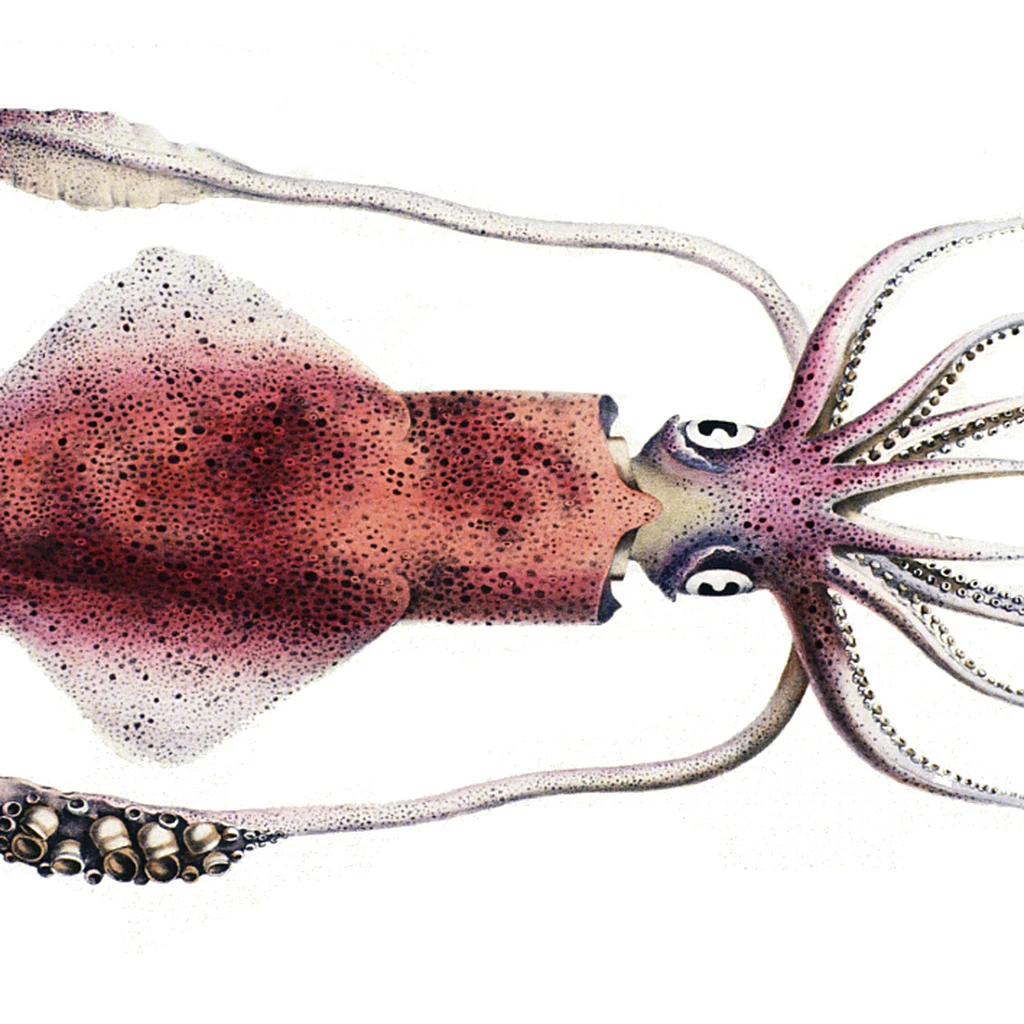
Why European Squid in Behavioral Research
The squid Loligo vulgaris contributed the giant axon preparation that founded modern neurophysiology. Its rapid chromatophore-driven body patterning, schooling behavior, and prey-strike kinematics make it a frontier cephalopod model for neuroethology and comparative cognition.
Hodgkin AL, Huxley AF. (1952). A quantitative description of membrane current and its application to conduction and excitation in nerve. J Physiol, 117(4), 500-544. PMID: 12991237
Hanlon RT, Messenger JB. (2018). Cephalopod Behaviour, 2nd ed. Cambridge University Press.
What We Measure in European Squid
Validated assays with quantitative parameter tracking for Loligo vulgaris.
Loligo captures prey by ballistic tentacle launch in ~30 ms. High-speed video quantifies launch latency, peak velocity, and accuracy of the tentacular strike.
| Parameter | Unit | Description |
|---|---|---|
| Strike latency | ms | Cue to tentacle launch |
| Peak tentacle velocity | m/s | Maximum launch speed |
| Strike accuracy | % | Successful prey contact |
| Approach distance | BL | Body-lengths to target before strike |
Kier WM, van Leeuwen JL. (1997). A kinematic analysis of tentacle extension in the squid Loligo pealei. J Exp Biol, 200(Pt 1), 41-53. PMID: 9319085
Loligo form polarized schools with high cohesion. Group polarization, nearest-neighbor distance, and turn synchronization reveal cephalopod social organization.
| Parameter | Unit | Description |
|---|---|---|
| Polarization | index | Heading alignment |
| Nearest-neighbor distance | BL | Inter-individual spacing |
| Group cohesion | index | School compactness |
| Turn synchrony | lag (ms) | Coordinated turning |
Mather JA, Anderson RC. (1993). Personalities of octopuses (Octopus rubescens). J Comp Psychol, 107, 336-340.
Loligo produce dynamic body patterns via chromatophore networks for camouflage, signaling, and courtship. Pattern type, transition latency, and bilateral asymmetry are core readouts.
| Parameter | Unit | Description |
|---|---|---|
| Pattern type | categorical | Uniform, mottle, stripe, flash |
| Pattern transition latency | ms | Stimulus to pattern change |
| Bilateral asymmetry | index | Left-right pattern difference |
| Pattern duration | s | Persistence of single pattern |
Hanlon RT. (2007). Cephalopod dynamic camouflage. Curr Biol, 17(11), R400-R404. PMID: 17550761
Threat triggers powerful mantle-driven jet escape and ink cloud release. Jet velocity, ink-deployment latency, and direction are antipredator measures.
| Parameter | Unit | Description |
|---|---|---|
| Jet escape velocity | m/s | Peak speed |
| Ink-cloud latency | ms | Threat to ink release |
| Escape direction | deg | Heading away from threat |
| Pseudomorph events | count | Mucus-bound ink decoys |
Bush SL, Robison BH. (2007). Ink utilization by mesopelagic squid. Mar Biol, 152, 485-494.
Males perform stereotyped chromatic and postural displays toward females and rival males. Display rate, duration, and outcome (mate vs deter) index reproductive behavior.
| Parameter | Unit | Description |
|---|---|---|
| Display rate | displays/min | Signaling output |
| Display duration | s | Per-display length |
| Mate-vs-rival pattern fraction | % | Audience-specific signaling |
| Mating success | % | Spermatophore transfer |
Hanlon RT, Messenger JB. (2018). Cephalopod Behaviour, 2nd ed. Cambridge.
More Behavioral Tests for European Squid
Feeding Choice
Key Parameters: Prey type preference, capture rate
Boyle PR, Rodhouse PG. (2005). Cephalopods: Ecology and Fisheries.
Sleep / Rest States
Key Parameters: Quiescent posture, chromatophore activity
Frank MG, et al. (2012). PMID: 23015815
Learning (Visual Discrimination)
Key Parameters: Trials to criterion, retention
Boycott BB, Young JZ. (1955). Proc R Soc B, 143, 449-480.
Defensive Posturing
Schooling Disruption (Predator Cue)
Key Parameters: Polarization collapse, scatter
Hurley AC. (1978). Anim Behav, 26, 880-890.
ConductScience Hardware for European Squid Research
Large Seawater Holding Tank
Squid maintenance and behavior
High-Speed Video System (>500 fps)
Strike kinematics
Schooling Arena with Multi-Cam
Group dynamics
Chromatophore Imaging System
Body-patterning quantification
Predator-Cue Stimulus Setup
Antipredator response
Citations & Further Reading
- Hodgkin AL, Huxley AF. (1952). A quantitative description of membrane current and its application to conduction and excitation in nerve. J Physiol, 117(4), 500-544. PMID: 12991237
- Hanlon RT, Messenger JB. (2018). Cephalopod Behaviour, 2nd ed. Cambridge University Press.
- Kier WM, van Leeuwen JL. (1997). A kinematic analysis of tentacle extension in the squid Loligo pealei. J Exp Biol, 200(Pt 1), 41-53. PMID: 9319085
- Mather JA, Anderson RC. (1993). Personalities of octopuses (Octopus rubescens). J Comp Psychol, 107, 336-340.
- Hanlon RT. (2007). Cephalopod dynamic camouflage. Curr Biol, 17(11), R400-R404. PMID: 17550761
- Bush SL, Robison BH. (2007). Ink utilization by mesopelagic squid. Mar Biol, 152, 485-494.
- Hanlon RT, Messenger JB. (2018). Cephalopod Behaviour, 2nd ed. Cambridge.
Other Model Systems

Discuss Your Squid Research
Tell us about your models, assays, and experimental goals — we’ll show you how ConductVision fits your workflow.