Behavioral Tracking for Rhesus Macaque
Macaca mulatta
Cognition, social behavior, and translational neuroscience in Macaca mulatta. ConductVision delivers automated tracking and quantitative parameter extraction across the full assay catalog below.
Why Rhesus Macaque in Behavioral Research
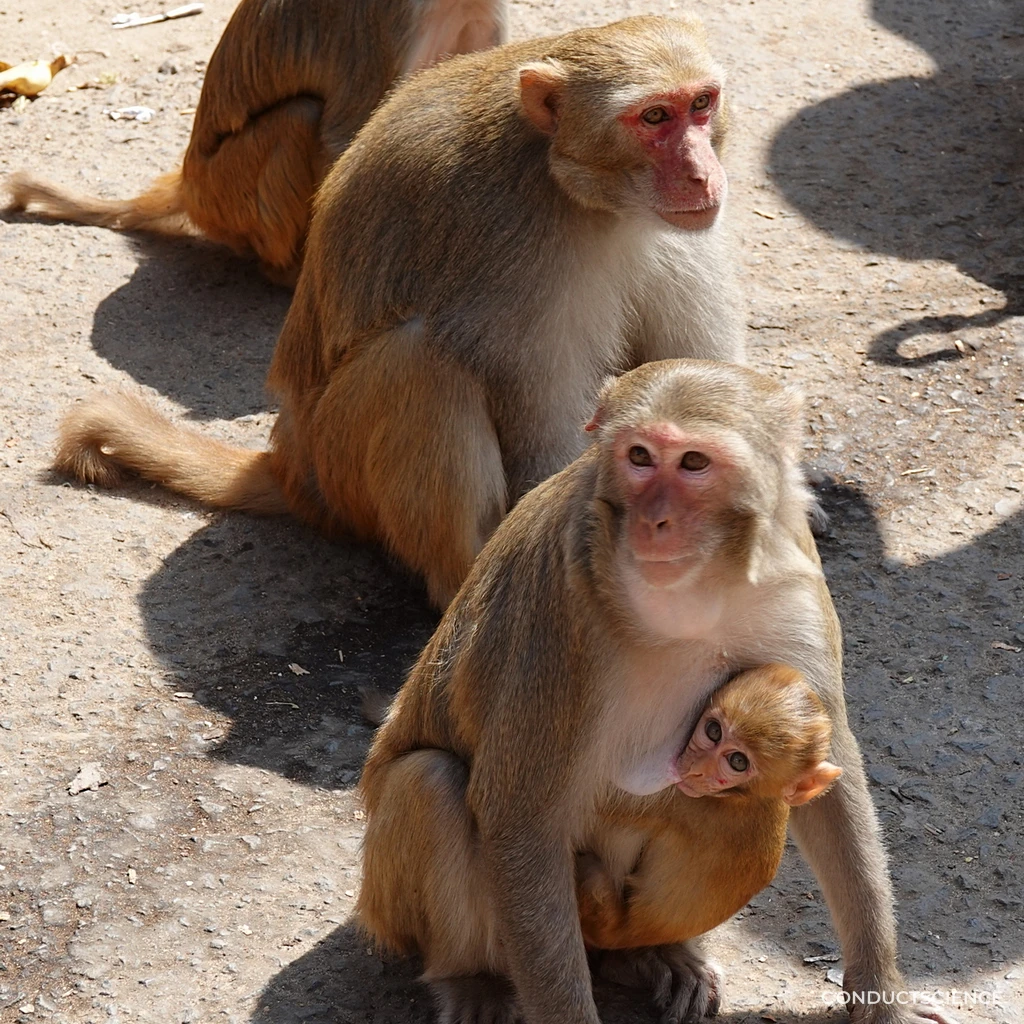
The rhesus macaque is the leading non-human primate model for systems neuroscience, sensorimotor research, and translational behavioral pharmacology. Its 93% genome similarity to humans, complex social structure, and large brain support studies of attention, decision-making, working memory, and social cognition that bridge directly to human function.
Mitchell JF, Leopold DA. (2015). The marmoset monkey as a model for visual neuroscience. Neurosci Res, 93, 20-46. PMID: 25683292
Roelfsema PR, Treue S. (2014). Basic neuroscience research with nonhuman primates: a small but indispensable component of biomedical research. Neuron, 82(6), 1200-1204. PMID: 24945764
What We Measure in Rhesus Macaque
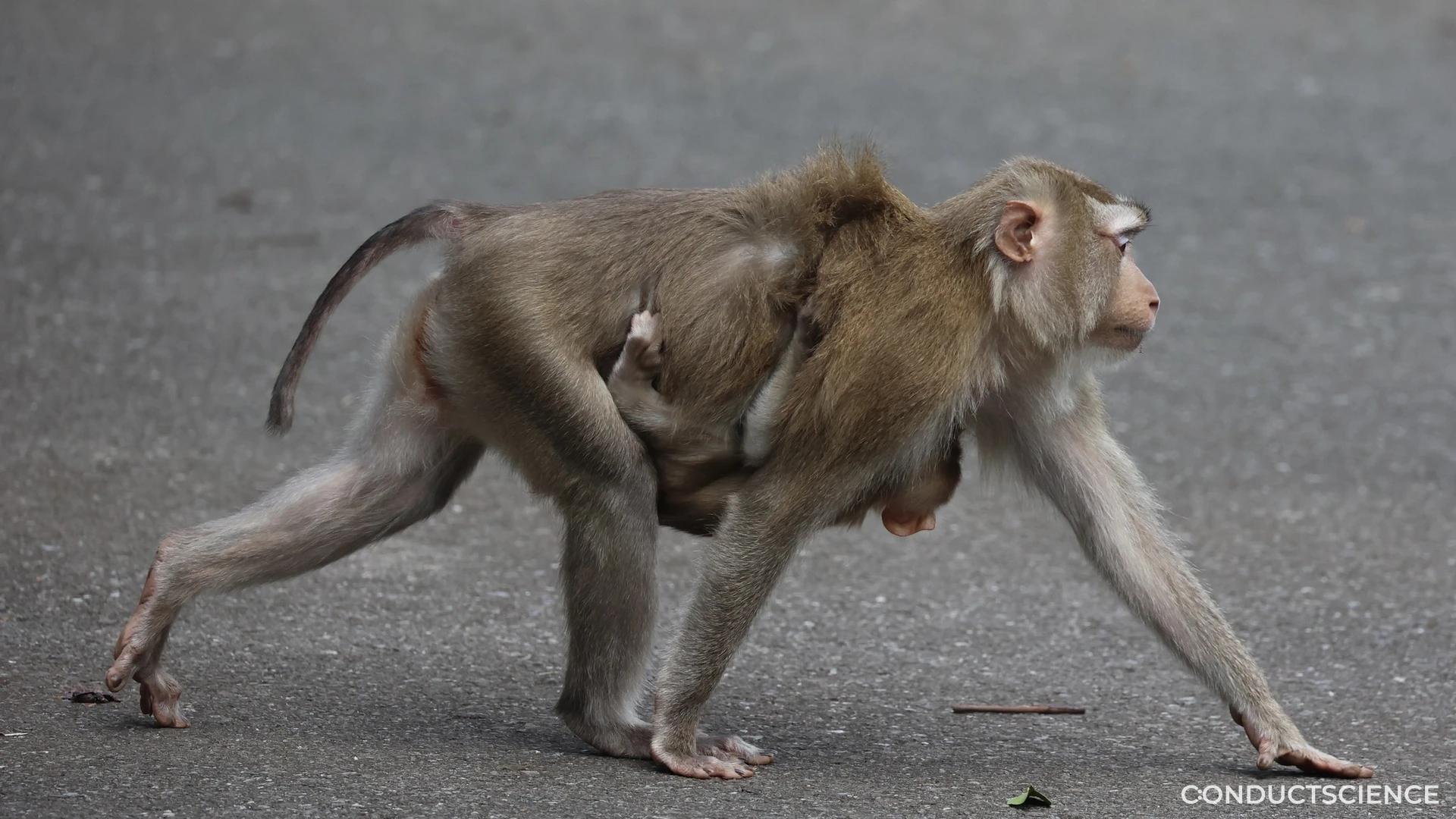
Validated assays with quantitative parameter tracking for Macaca mulatta.
Macaques perform delayed-response and delayed match-to-sample tasks that quantify maintenance of information across short delays. Performance scales with delay duration and reveals prefrontal contributions to working memory.
| Parameter | Unit | Description |
|---|---|---|
| Response accuracy | % | Correct trials at criterion delay |
| Maximum delay tolerated | s | Longest delay above chance |
| Reaction time | ms | Touch/saccade latency |
| Set size effects | slope | Accuracy vs items held |
Funahashi S, et al. (1989). Mnemonic coding of visual space in the monkey’s dorsolateral prefrontal cortex. J Neurophysiol, 61(2), 331-349. PMID: 2918358
Macaques are the gold standard for systems studies of attention and oculomotor control. Saccade latency, fixation accuracy, and target detection under distractor load map onto frontal eye field, LIP, and superior colliculus circuits.
| Parameter | Unit | Description |
|---|---|---|
| Saccade latency | ms | Cue to saccade onset |
| Fixation accuracy | deg | Eye position vs target |
| Detection accuracy | % | Target hit rate |
| Distractor cost | ms | RT slowing with distractors |
Goldberg ME, Wurtz RH. (1972). Activity of superior colliculus in behaving monkey. J Neurophysiol, 35(4), 542-559. PMID: 4624739
Captive macaque groups form linear dominance hierarchies stabilized by grooming and agonistic interactions. Dominance index, grooming network metrics, and approach/avoidance reveal social cognition and stress biology.
| Parameter | Unit | Description |
|---|---|---|
| Dominance index | rank | Win-loss ratio in dyads |
| Grooming time | s/day | Allogrooming duration |
| Agonistic events | count/day | Threats, displacements |
| Approach/avoidance | ratio | Social tolerance metric |
Maestripieri D. (2007). Macachiavellian Intelligence: How Rhesus Macaques and Humans Have Conquered the World. University of Chicago Press.
Reach-to-grasp tasks quantify primate manual dexterity and underlie motor cortex and corticospinal research. Reach trajectory, grip aperture, and force scaling are measured for translational motor recovery work.
| Parameter | Unit | Description |
|---|---|---|
| Reach time | ms | Movement duration |
| Grip aperture | mm | Maximum hand opening |
| Grip force | N | Pinch or power grasp force |
| Success rate | % | Object acquisition accuracy |
Lemon RN. (2008). Descending pathways in motor control. Annu Rev Neurosci, 31, 195-218. PMID: 18558853
Macaques solve object permanence and simple tool-use tasks that probe primate cognition. Trials to criterion, manipulation strategies, and transfer across novel problems index cognitive flexibility.
| Parameter | Unit | Description |
|---|---|---|
| Trials to criterion | count | Acquisition speed |
| Manipulation time | s | Time per problem |
| Success rate | % | Solved trials |
| Transfer accuracy | % | Performance on novel variant |
Macellini S, et al. (2012). Individual and social learning processes involved in the acquisition and generalization of tool use in macaques. Phil Trans R Soc B, 367(1585), 24-36. PMID: 22106425
More Behavioral Tests for Rhesus Macaque
Vocal Repertoire (Coos, Grunts, Screams)
Key Parameters: Call type, rate, response to playback
Hauser MD. (1996). The Evolution of Communication. MIT Press.
Threat Display / Open-Mouth Stare
Key Parameters: Frequency, latency, escalation
de Waal FBM. (1986). Class structure in a rhesus monkey group. Anim Behav, 34, 1033-1040.
Pavlovian Fear Conditioning
Key Parameters: Freezing, heart rate, skin conductance
Antoniadis EA, et al. (2007). Brain Res, 1131, 89-101. PMID: 17169341
Probabilistic Gambling Task
Key Parameters: Choice latency, risk preference
McCoy AN, Platt ML. (2005). Risk-sensitive neurons in macaque posterior cingulate cortex. Nat Neurosci, 8(9), 1220-1227. PMID: 16116449
Set-Shifting / Rule Reversal
Key Parameters: Perseverative errors, trials to criterion
Dias R, et al. (1996). Nature, 380(6569), 69-72. PMID: 8598908
Food Preference / Foraging Choice
Key Parameters: Time per patch, choice consistency
Stephens DW, Krebs JR. (1986). Foraging Theory. Princeton.
ConductScience Hardware for Rhesus Macaque Research
NHP Behavioral Chair / Touchscreen
Cognitive task delivery
Eye-Tracking System (Sampling >500 Hz)
Saccade and fixation analysis
Reach Kinematic Capture System
Marker-based motor analysis
Social Housing Arena with Overhead Camera
Group behavior tracking
Automated Home-Cage Monitoring
Activity and welfare metrics
Citations & Further Reading
- Mitchell JF, Leopold DA. (2015). The marmoset monkey as a model for visual neuroscience. Neurosci Res, 93, 20-46. PMID: 25683292
- Roelfsema PR, Treue S. (2014). Basic neuroscience research with nonhuman primates: a small but indispensable component of biomedical research. Neuron, 82(6), 1200-1204. PMID: 24945764
- Funahashi S, et al. (1989). Mnemonic coding of visual space in the monkey’s dorsolateral prefrontal cortex. J Neurophysiol, 61(2), 331-349. PMID: 2918358
- Goldberg ME, Wurtz RH. (1972). Activity of superior colliculus in behaving monkey. J Neurophysiol, 35(4), 542-559. PMID: 4624739
- Maestripieri D. (2007). Macachiavellian Intelligence: How Rhesus Macaques and Humans Have Conquered the World. University of Chicago Press.
- Lemon RN. (2008). Descending pathways in motor control. Annu Rev Neurosci, 31, 195-218. PMID: 18558853
- Macellini S, et al. (2012). Individual and social learning processes involved in the acquisition and generalization of tool use in macaques. Phil Trans R Soc B, 367(1585), 24-36. PMID: 22106425
Other Model Systems
Discuss Your Macaque Research
Tell us about your models, assays, and experimental goals — we’ll show you how ConductVision fits your workflow.