Primary Assay — Rhesus Macaque
Social Hierarchy / Grooming
Macaca mulatta
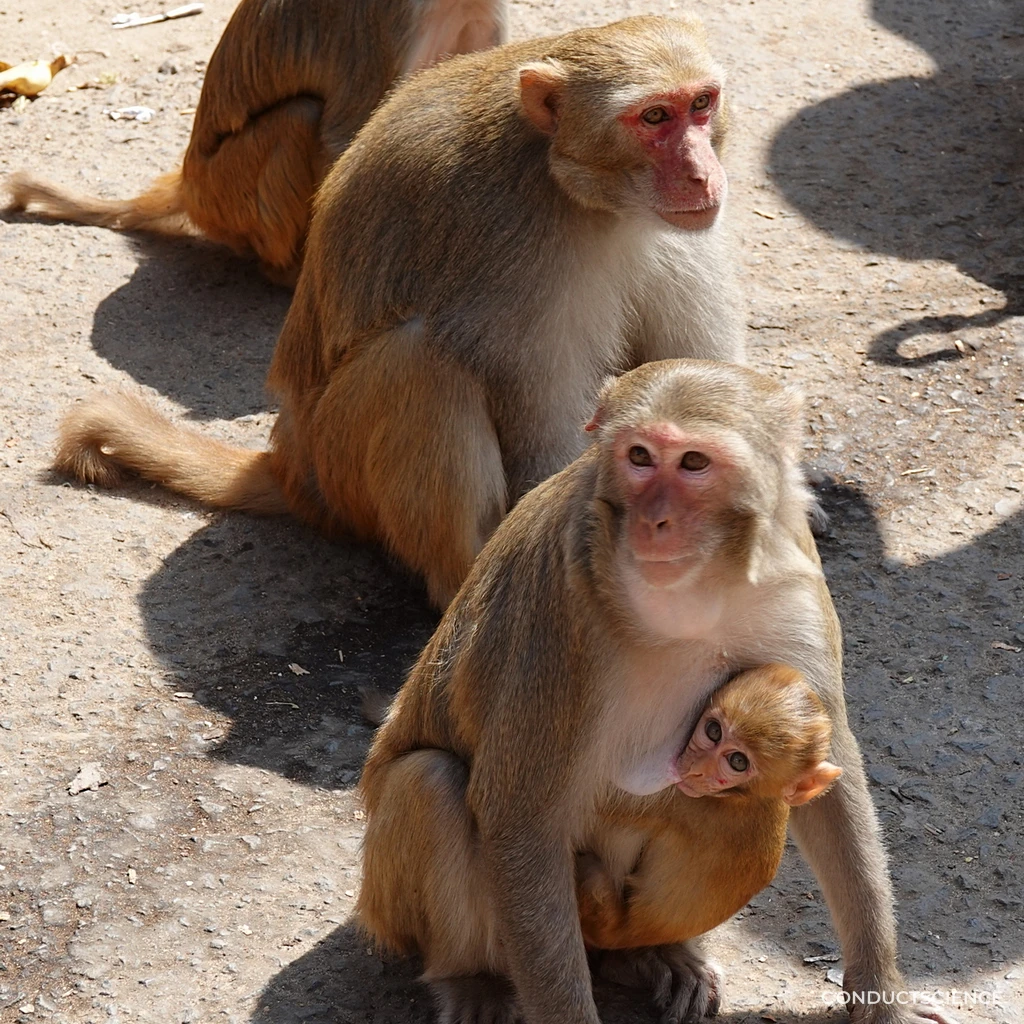
Captive macaque groups form linear dominance hierarchies stabilized by grooming and agonistic interactions. Dominance index, grooming network metrics, and approach/avoidance reveal social cognition and stress biology.
Quantitative Output
Measured Parameters
Every parameter is automatically tracked frame-by-frame in the ConductVision pipeline for Macaca mulatta.
| Parameter | Unit | Description |
|---|---|---|
| Dominance index | rank | Win-loss ratio in dyads |
| Grooming time | s/day | Allogrooming duration |
| Agonistic events | count/day | Threats, displacements |
| Approach/avoidance | ratio | Social tolerance metric |
References
Citations for Social Hierarchy / Grooming
- Maestripieri D. (2007). Macachiavellian Intelligence: How Rhesus Macaques and Humans Have Conquered the World. University of Chicago Press.
Compatible Equipment
Hardware for Rhesus Macaque Research
NHP Behavioral Chair / Touchscreen
Cognitive task delivery
Eye-Tracking System (Sampling >500 Hz)
Saccade and fixation analysis
Reach Kinematic Capture System
Marker-based motor analysis
Social Housing Arena with Overhead Camera
Group behavior tracking
Automated Home-Cage Monitoring
Activity and welfare metrics
Related Assays
Other Rhesus Macaque Primary Assays
06
Working Memory (Delayed Response)
Macaca mulatta
Macaques perform delayed-response and delayed match-to-sample tasks that quantify maintenance of information across shor…
06
Visual Attention / Saccade Tasks
Macaca mulatta
Macaques are the gold standard for systems studies of attention and oculomotor control. Saccade latency, fixation accura…
06
Reaching / Grasping Kinematics
Macaca mulatta
Reach-to-grasp tasks quantify primate manual dexterity and underlie motor cortex and corticospinal research. Reach traje…
Run Social Hierarchy / Grooming on ConductVision
Our team will configure the protocol, camera rig, and analysis pipeline for your rhesus macaque facility.