Behavioral Tracking for Mexican Cavefish
Astyanax mexicanus
Sleep loss, sensory adaptation, and evolutionary neurobiology in Astyanax mexicanus. ConductVision delivers automated tracking and quantitative parameter extraction across the full assay catalog below.
Why Mexican Cavefish in Behavioral Research
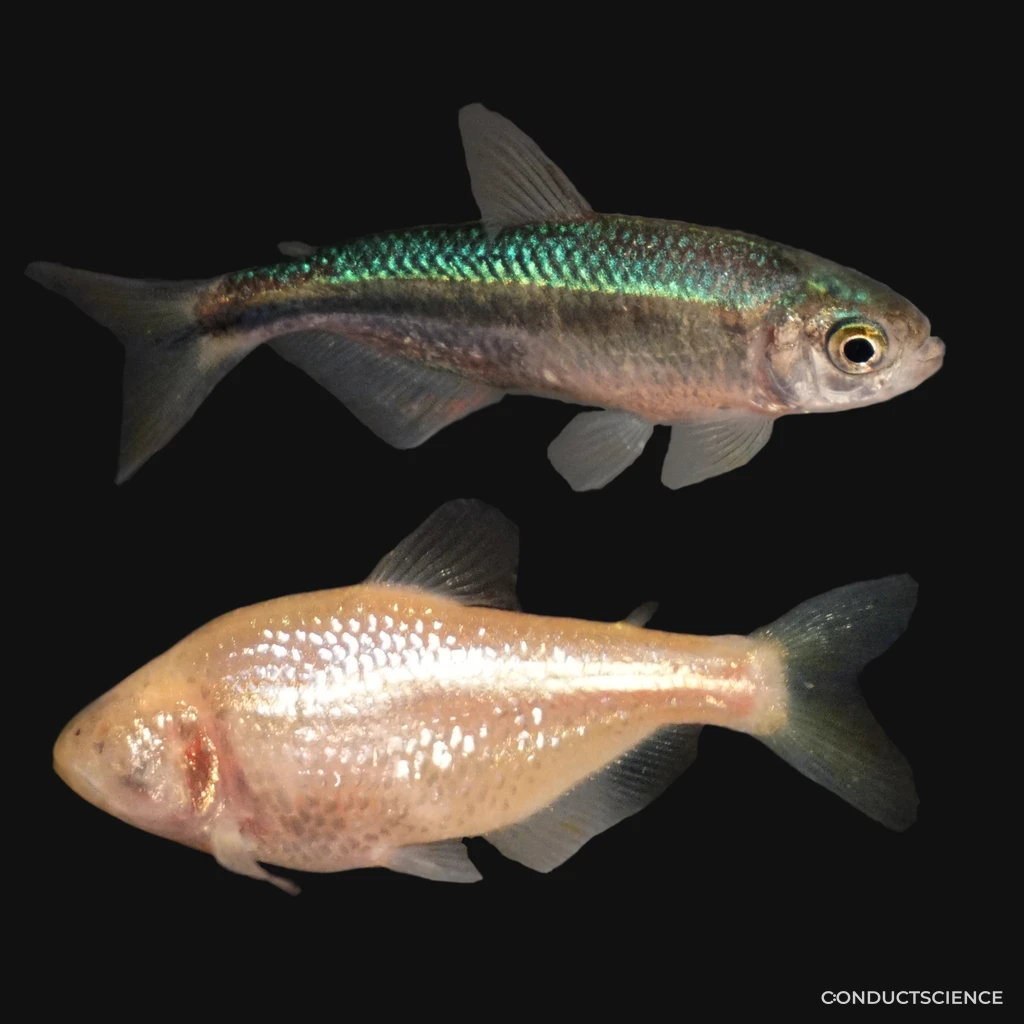
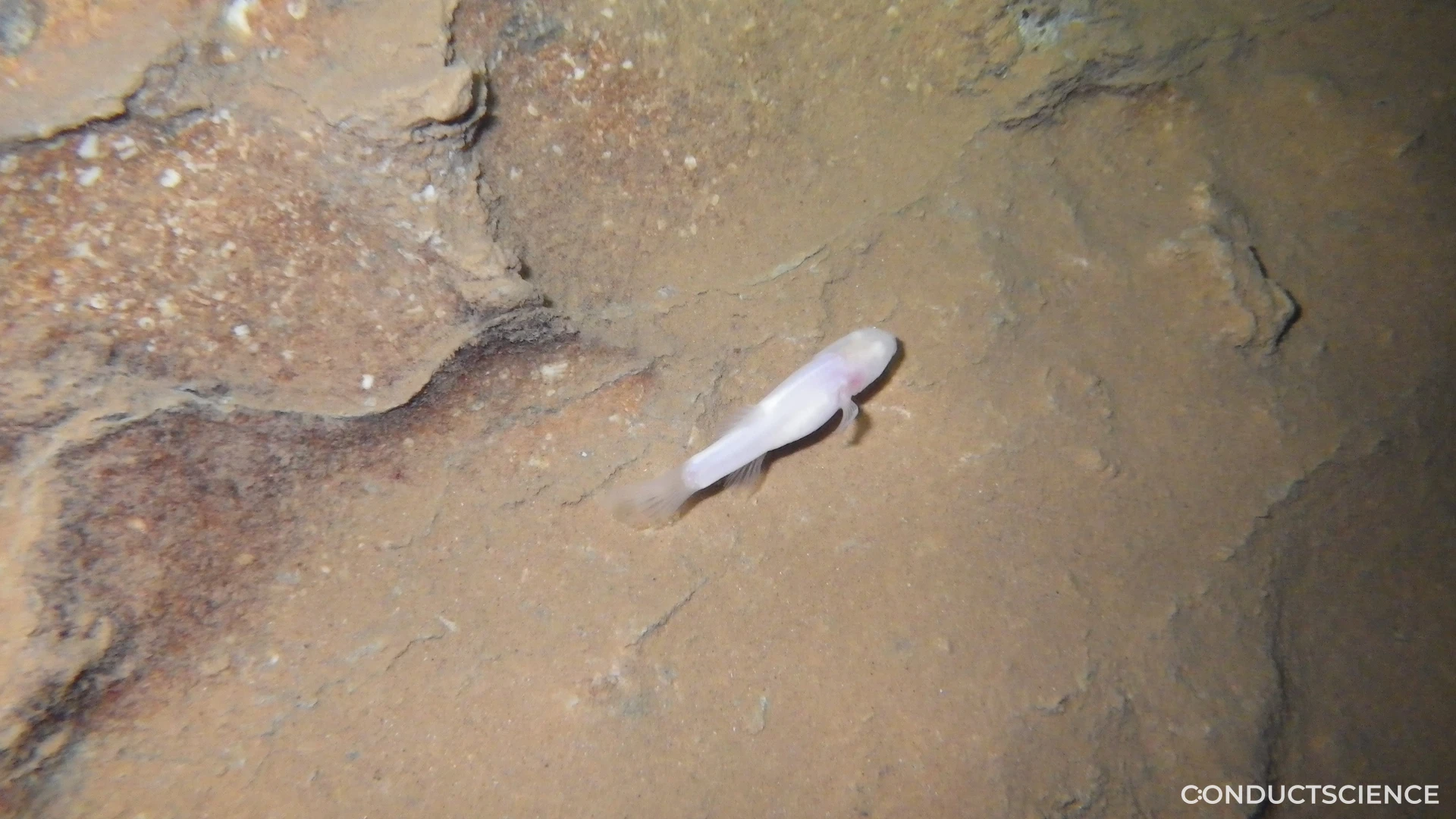
Astyanax mexicanus is a powerful evo-devo model with surface and cave morphs that diverge in sleep, vision, schooling, and feeding behavior. It enables direct comparative studies of how nervous systems evolve under extreme selection within a single species.
Jeffery WR. (2009). Regressive evolution in Astyanax cavefish. Annu Rev Genet, 43, 25-47. PMID: 19640230
Duboué ER, Keene AC, Borowsky RL. (2011). Evolutionary convergence on sleep loss in cavefish populations. Curr Biol, 21(8), 671-676. PMID: 21474315
What We Measure in Mexican Cavefish
Validated assays with quantitative parameter tracking for Astyanax mexicanus.
Cave morphs of Astyanax show dramatically reduced sleep relative to surface morphs. Total rest time, bout structure, and arousal threshold are core metrics.
| Parameter | Unit | Description |
|---|---|---|
| Total rest | min/24h | Cumulative sleep |
| Number of rest bouts | count/24h | Sleep fragmentation |
| Mean rest-bout duration | s | Sleep consolidation |
| Arousal threshold | stim. intensity | Sleep depth |
Duboué ER, et al. (2011). PMID: 21474315
Surface fish school strongly while cavefish do not. Polarization, nearest-neighbor distance, and shoaling cohesion benchmark social behavior evolution.
| Parameter | Unit | Description |
|---|---|---|
| Polarization | index | Group heading alignment |
| Nearest-neighbor distance | BL | Inter-fish spacing in body lengths |
| Shoaling time | % | Time within group |
| Cohesion radius | BL | Group spread |
Kowalko JE, et al. (2013). Loss of schooling behavior in cavefish through sight-dependent and sight-independent mechanisms. Curr Biol, 23(19), 1874-1883. PMID: 24035545
Cavefish are attracted to mechanical vibrations via enhanced lateral-line input. Approach latency to a vibrating rod indexes the VAB phenotype.
| Parameter | Unit | Description |
|---|---|---|
| Approach latency | s | Time to contact rod |
| Approaches per 90s | count | Engagement frequency |
| VAB index | fold change | Cave vs surface ratio |
| Distance to rod | BL | Mean approach distance |
Yoshizawa M, et al. (2010). Evolution of a behavioral shift mediated by superficial neuromasts helps cavefish find food in darkness. Curr Biol, 20(18), 1631-1636. PMID: 20705469
Cavefish forage at a steeper angle than surface fish, an adaptation to substrate feeding in darkness. Feeding-angle distribution indexes the evolved foraging mode.
| Parameter | Unit | Description |
|---|---|---|
| Feeding angle | deg | Body axis vs substrate |
| Bottom-feeding fraction | % | Substrate engagement |
| Strike rate | strikes/min | Foraging frequency |
| Capture success | % | Successful prey hits |
Schemmel C. (1980). Studies on the genetics of feeding behaviour in the cave fish Astyanax mexicanus. Z Tierpsychol, 53(1), 9-22.
Cavefish avoid obstacles in the dark using superficial neuromasts. Wall-following and obstacle-collision metrics quantify lateral-line-mediated navigation.
| Parameter | Unit | Description |
|---|---|---|
| Wall-following time | % | Lateral-line use |
| Collision rate | collisions/min | Navigation accuracy |
| Distance to wall | BL | Stand-off distance |
| Mapping ability | index | Repeat-trial improvement |
Patton P, et al. (2010). The role of the lateral line in feeding behavior of the Mexican blind cavefish (Astyanax mexicanus). J Exp Biol, 213, 4055-4064. PMID: 21075948
More Behavioral Tests for Mexican Cavefish
Novel Tank / Bottom Dwelling
Key Parameters: Time at bottom, latency to upper half
Wark AR, et al. (2011). PMID: 21437262
Light/Dark Preference
Key Parameters: Time in light vs dark zone
Stahl BA, et al. (2018). J Exp Biol, 221.
Aggression / Territoriality
Key Parameters: Bites, attacks per min
Burchards H, et al. (1985). Z Tierpsychol, 67, 102-117.
Stress Cortisol Response
Key Parameters: Whole-body cortisol after handling
Chin JS, et al. (2018). Comp Biochem Physiol A, 224, 1-7. PMID: 29870827
Pigment / Eye Loss Correlates
Key Parameters: Body color, eye area
Protas ME, et al. (2006). Nat Genet, 38(1), 107-111. PMID: 16341223
ConductScience Hardware for Mexican Cavefish Research
Aquatic Activity Tracker (24h)
Sleep/wake monitoring
Vibration Generator with Rod Probe
VAB assay
Schooling / Shoaling Arena
Social behavior quantification
Lateral-Line Stim System
Neuromast-based sensory testing
Multi-Tank Sleep Imaging Rig
Long-term rest assays
Citations & Further Reading
- Jeffery WR. (2009). Regressive evolution in Astyanax cavefish. Annu Rev Genet, 43, 25-47. PMID: 19640230
- Duboué ER, Keene AC, Borowsky RL. (2011). Evolutionary convergence on sleep loss in cavefish populations. Curr Biol, 21(8), 671-676. PMID: 21474315
- Duboué ER, et al. (2011). PMID: 21474315
- Kowalko JE, et al. (2013). Loss of schooling behavior in cavefish through sight-dependent and sight-independent mechanisms. Curr Biol, 23(19), 1874-1883. PMID: 24035545
- Yoshizawa M, et al. (2010). Evolution of a behavioral shift mediated by superficial neuromasts helps cavefish find food in darkness. Curr Biol, 20(18), 1631-1636. PMID: 20705469
- Schemmel C. (1980). Studies on the genetics of feeding behaviour in the cave fish Astyanax mexicanus. Z Tierpsychol, 53(1), 9-22.
- Patton P, et al. (2010). The role of the lateral line in feeding behavior of the Mexican blind cavefish (Astyanax mexicanus). J Exp Biol, 213, 4055-4064. PMID: 21075948
Other Model Systems
Discuss Your Cavefish Research
Tell us about your models, assays, and experimental goals — we’ll show you how ConductVision fits your workflow.