Behavioral Tracking for Zebra Finch
Taeniopygia guttata
ConductVision delivers automated song learning analysis, vocal syntax quantification, mate preference scoring, and social proximity tracking for Taeniopygia guttata research.

Why Zebra Finches in Behavioral Research
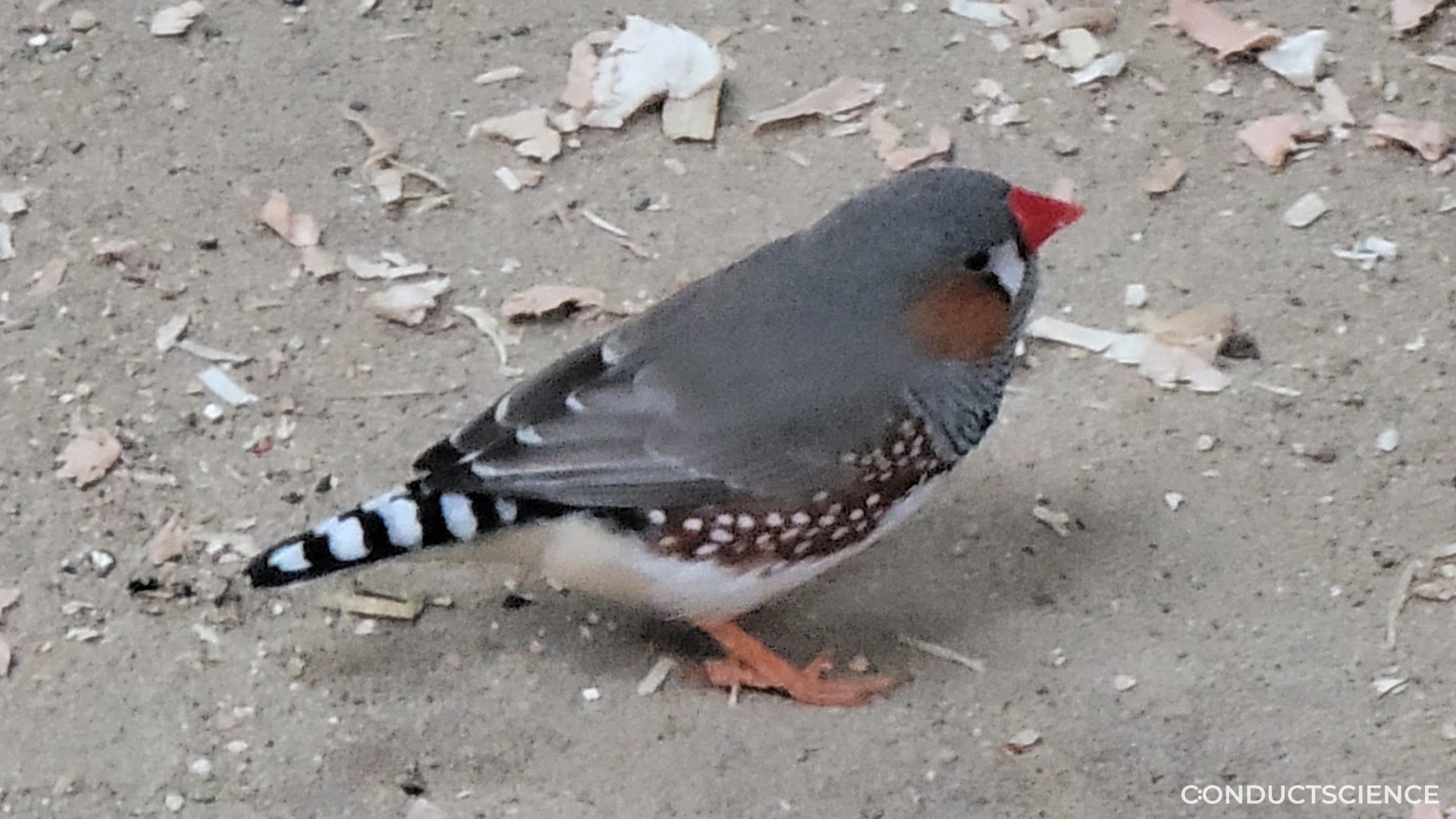
The zebra finch (Taeniopygia guttata) is the leading model for studying vocal learning — one of the few non-human species that learns vocalizations through imitation. Song crystallization, syntax analysis, and tutor-pupil similarity measurements offer direct parallels to human speech acquisition. Their well-characterized social behavior, mate choice paradigms, and neophobia assays make them invaluable for studies of learning, communication, and social cognition.
Mello CV. (2014). The zebra finch: an avian model for investigating the neurobiological basis of vocal learning. Cold Spring Harb Protoc, 2014(10), pdb.emo084574. PMID: 25342070
Williams H. (2004). Birdsong and singing behavior. Ann N Y Acad Sci, 1016, 1-30. PMID: 15313767
What We Measure in Zebra Finch
Validated assays with quantitative parameter tracking for Taeniopygia guttata.
Longitudinal analysis of song development from subsong through crystallization. Spectral cross-correlation with tutor song quantifies learning fidelity, while stereotypy indices track motor consolidation.
| Parameter | Unit | Description |
|---|---|---|
| Song similarity to tutor | % | Spectral cross-correlation |
| Syllable stereotypy index | 0-1 | Rendition-to-rendition consistency |
| Crystallization age | days post-hatch | Onset of stable song |
| Song bout length | s | Duration of continuous singing |
Johnson F, et al. (2002). Quantifying song bout production during zebra finch sensory-motor learning. Behav Brain Res, 131(1-2), 57-65. PMID: 11844572
Gobes SMH, et al. (2019). The sensitive period for auditory-vocal learning in the zebra finch. Behav Processes, 163, 70-79. PMID: 28743517
Two-choice preference assay measuring female attraction to male song and plumage. Time allocation, approach frequency, and preference indices reveal mate selection criteria.
| Parameter | Unit | Description |
|---|---|---|
| Time near stimulus male | s | Preference duration |
| Approach frequency | count | Active choice events |
| Preference index | ratio | Relative time allocation |
Burley NT, et al. (2018). Mate choice decision rules: Trait synergisms and preference shifts. Ecol Evol, 8(6), 3350-3360. PMID: 29531661
Kniel N, et al. (2015). Quality of public information matters in mate-choice copying in female zebra finches. Front Zool, 12, 18. PMID: 26435729
Information-theoretic analysis of syllable sequencing and transition probabilities. Entropy measures capture the combinatorial complexity of song, with parallels to human language syntax.
| Parameter | Unit | Description |
|---|---|---|
| Syllable transition entropy | bits | Sequence unpredictability |
| Motif stereotypy | 0-1 | Pattern consistency |
| Inter-syllable gap | ms | Timing between elements |
Lipkind D, et al. (2013). Stepwise acquisition of vocal combinatorial capacity in songbirds and human infants. Nature, 498(7452), 104-108. PMID: 23719373
Imai R, et al. (2016). A quantitative method for analyzing species-specific vocal sequence pattern. J Neurosci Methods, 272, 1-12. PMID: 27373995
Automated tracking of inter-individual distance, allopreening events, and proximity zone occupancy. Reveals pair bonding strength and vasotocin-mediated social attachment.
| Parameter | Unit | Description |
|---|---|---|
| Inter-individual distance | cm | Closeness to conspecific |
| Affiliative contact rate | events/min | Allopreening frequency |
| Proximity zone time | s | Time within 5 cm of partner |
Baran NM, et al. (2016). Developmental effects of vasotocin and nonapeptide receptors on early social attachment in the zebra finch. Horm Behav, 78, 20-31. PMID: 26476409
Latency and avoidance measures in response to novel objects placed near a food source. Neophobia is sensitive to early-life stress and corticosterone exposure.
| Parameter | Unit | Description |
|---|---|---|
| Latency to approach novel object | s | Fear of novelty |
| Time near novel vs familiar | s | Neophobic avoidance |
| Feeding suppression | % | Reduced eating near novel stimulus |
Spencer KA, et al. (2007). Delayed behavioral effects of postnatal exposure to corticosterone in the zebra finch. Horm Behav, 51(2), 273-282. PMID: 17196201
More Behavioral Tests for Zebra Finch
Mirror Test
Key Parameters: Time near mirror, directed vocalizations, agonistic displays
Parishar P, et al. (2021). PMID: 33935888
ConductScience Hardware for Zebra Finch Research
Sound-Attenuated Recording Chamber
Song recording and analysis
Acoustic Microphone Array
Multi-channel song capture
Two-Choice Preference Chamber
Mate choice and social preference
Video Tracking System
Social proximity and neophobia
Song Analysis Software Module
Spectrogram and syntax tools
Citations & Further Reading
- Mello CV. (2014). The zebra finch: an avian model for investigating the neurobiological basis of vocal learning. Cold Spring Harb Protoc, 2014(10), pdb.emo084574. PMID: 25342070
- Williams H. (2004). Birdsong and singing behavior. Ann N Y Acad Sci, 1016, 1-30. PMID: 15313767
- Johnson F, et al. (2002). Quantifying song bout production during zebra finch sensory-motor learning. Behav Brain Res, 131(1-2), 57-65. PMID: 11844572
- Gobes SMH, et al. (2019). The sensitive period for auditory-vocal learning in the zebra finch. Behav Processes, 163, 70-79. PMID: 28743517
- Burley NT, et al. (2018). Mate choice decision rules: Trait synergisms and preference shifts. Ecol Evol, 8(6), 3350-3360. PMID: 29531661
- Kniel N, et al. (2015). Quality of public information matters in mate-choice copying in female zebra finches. Front Zool, 12, 18. PMID: 26435729
- Lipkind D, et al. (2013). Stepwise acquisition of vocal combinatorial capacity in songbirds and human infants. Nature, 498(7452), 104-108. PMID: 23719373
- Imai R, et al. (2016). A quantitative method for analyzing species-specific vocal sequence pattern. J Neurosci Methods, 272, 1-12. PMID: 27373995
- Baran NM, et al. (2016). Developmental effects of vasotocin and nonapeptide receptors on early social attachment in the zebra finch. Horm Behav, 78, 20-31. PMID: 26476409
- Spencer KA, et al. (2007). Delayed behavioral effects of postnatal exposure to corticosterone in the zebra finch. Horm Behav, 51(2), 273-282. PMID: 17196201
Other Model Systems

Discuss Your Zebra Finch Research
Tell us about your models, assays, and experimental goals — we’ll show you how ConductVision fits your workflow.