Behavioral Tracking for Zebrafish
Danio rerio
Quantify locomotion, anxiety-like behavior, social dynamics, and learning in Danio rerio using automated, high-throughput behavioral tracking.
Why Zebrafish in Behavioral Research
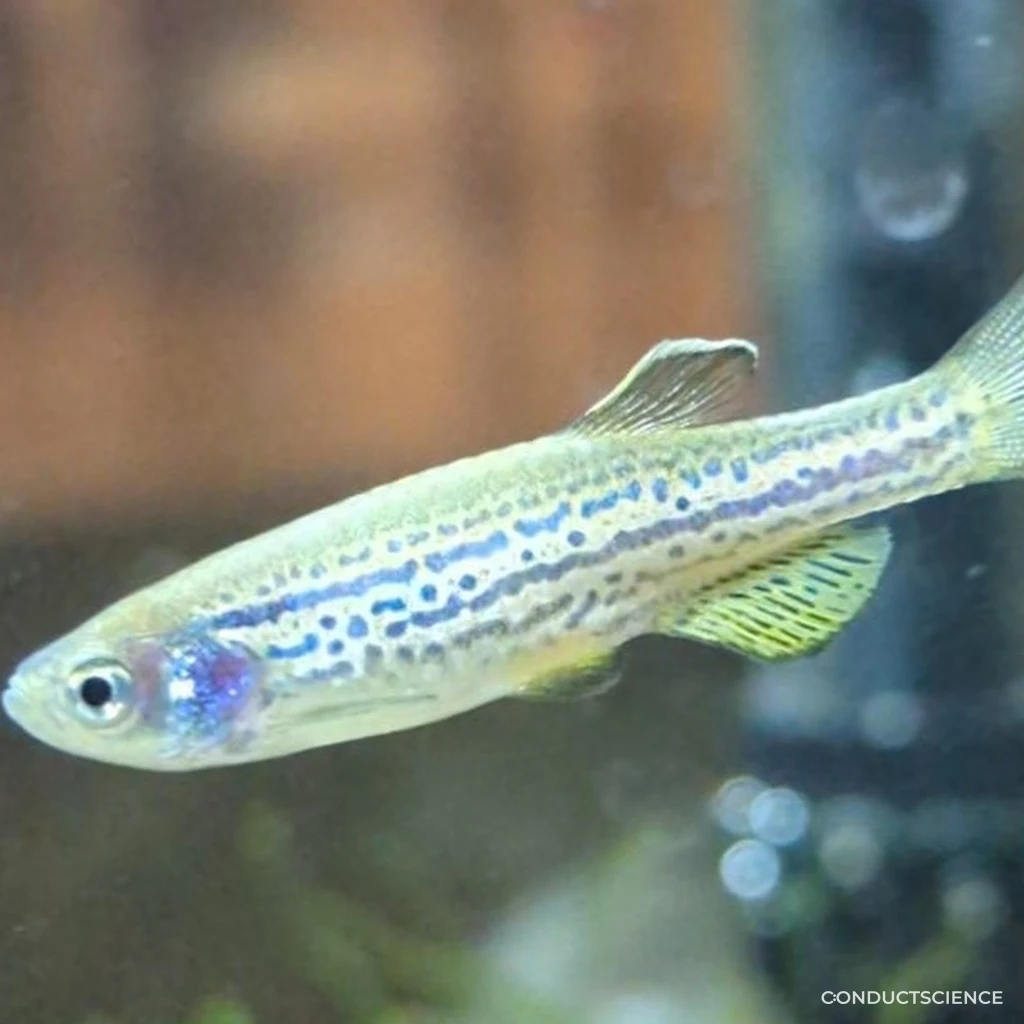
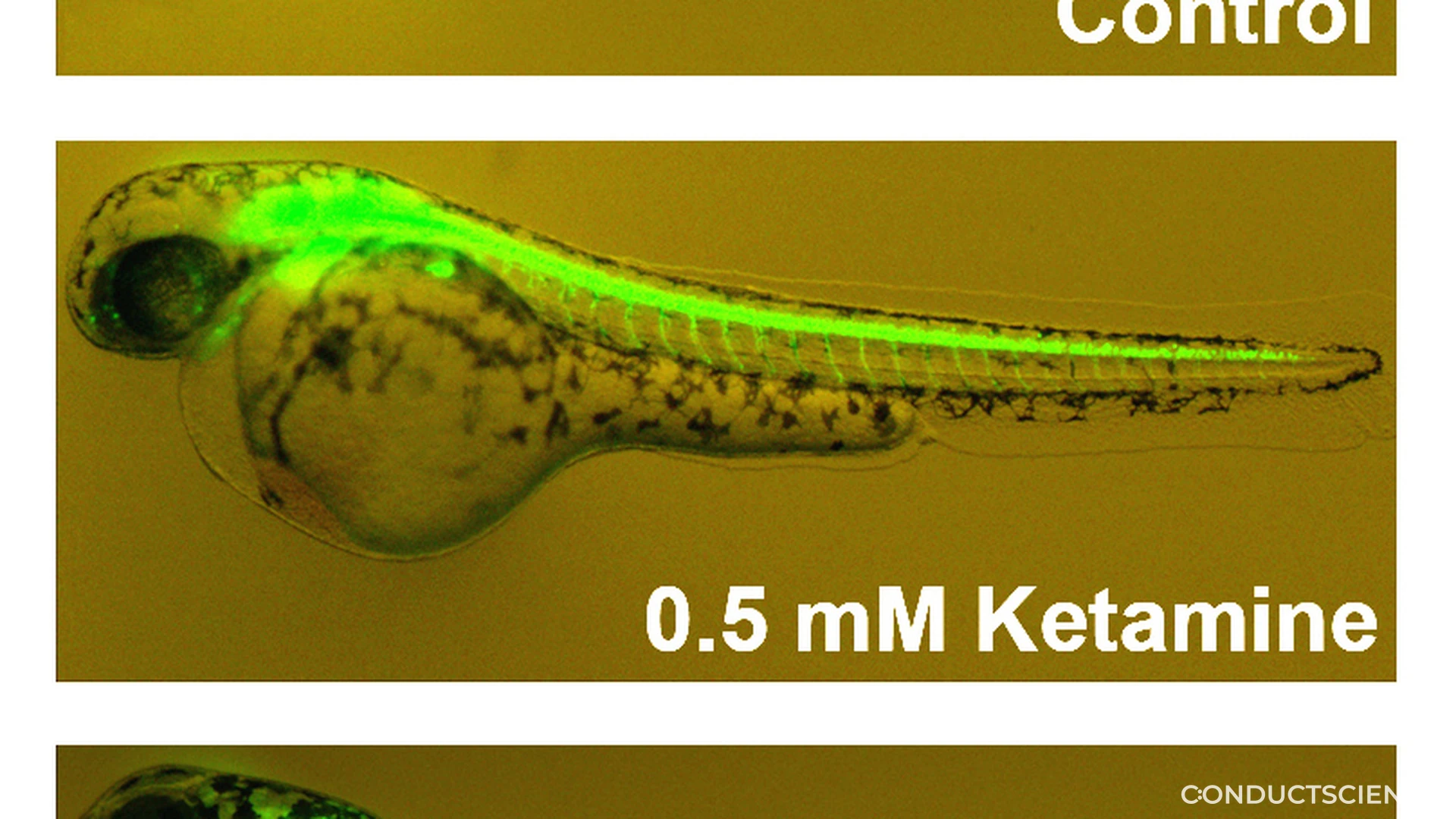
Zebrafish have become one of the most widely used vertebrate models in behavioral neuroscience, toxicology, and drug discovery. Their genetic tractability, transparent larval stages, and compatibility with 96-well high-throughput screening make them ideal for scalable behavioral phenotyping. Conserved neurotransmitter systems and well-characterized behavioral repertoires enable translational insights into anxiety, social behavior, learning, and neurodegeneration.
Kalueff AV, Stewart AM, Gerlai R. (2014). Zebrafish as an emerging model for studying complex brain disorders. Trends Pharmacol Sci, 35(2), 63-75. PMID: 24412421
Stewart AM, Braubach O, Spitsbergen J, Gerlai R, Kalueff AV. (2014). Zebrafish models for translational neuroscience research. Biochim Biophys Acta, 1842(10), 1898-1910. PMID: 24794530
Basnet RM, Zizioli D, Taweedet S, Bhattarai P, Bhatt DK. (2019). Zebrafish larvae as a behavioral model in neuropharmacology. Biomedicines, 7(1), 23. PMID: 30909635
What We Measure in Zebrafish
Validated assays with quantitative parameter tracking for Danio rerio.
Larval zebrafish exhibit robust locomotor changes when alternating between light and dark phases, with dark phases triggering hyperactivity interpreted as light-searching behavior. This is the most widely used high-throughput larval assay.
| Parameter | Unit | Description |
|---|---|---|
| Distance moved | mm | Total path length per phase |
| Mean velocity | mm/s | Average swimming speed |
| Activity bouts | count | Number of movement initiations |
| Dark-phase hyperactivity index | ratio | Dark vs light activity ratio |
| Freezing episodes | count/duration | Immobility bouts >2s |
Burgess HA, Granato M. (2007). Modulation of locomotor activity in larval zebrafish during light adaptation. J Exp Biol, 210(Pt 14), 2526-2539. PMID: 17601957
Emran F, Rihel J, Dowling JE. (2008). A behavioral assay to measure responsiveness of zebrafish to changes in light intensities. J Vis Exp, (20), 923. PMID: 19078942
Larval and adult zebrafish display increased wall-proximity behavior in anxiogenic conditions, analogous to rodent thigmotaxis in open field tests. Attenuated by anxiolytics (diazepam), enhanced by anxiogenics (caffeine).
| Parameter | Unit | Description |
|---|---|---|
| % time in edge zone | % | Proportion of time within 1 body-length of wall |
| Wall proximity | mm | Mean distance to nearest wall |
| Center-edge transitions | count | Number of crossings between zones |
| Edge zone path length | mm | Distance traveled in peripheral zone |
| Anxiolytic response | Δ% | Change in edge time after drug treatment |
Schnörr SJ, Steenbergen PJ, Richardson MK, Champagne DL. (2012). Measuring thigmotaxis in larval zebrafish. Behav Brain Res, 228(2), 367-374. PMID: 22197677
Champagne DL, Hoefnagels CC, de Kloet RE, Richardson MK. (2010). Translating rodent behavioral repertoire to zebrafish (Danio rerio): relevance for stress research. Behav Brain Res, 214(2), 332-342. PMID: 20540966
Adult zebrafish initially dive to the bottom of a novel tank and gradually explore upper regions. Bottom-dwelling time serves as an anxiety-like index, analogous to the rodent open field center avoidance.
| Parameter | Unit | Description |
|---|---|---|
| Time in bottom third | s | Duration in lower zone (anxiety proxy) |
| Latency to top | s | Time until first entry to upper third |
| Top-bottom transitions | count | Vertical exploration frequency |
| Erratic movements | count | Sharp directional changes >90° |
| Freezing bouts | count/s | Immobility episodes and total duration |
Levin ED, Bencan Z, Cerutti DT. (2007). Anxiolytic effects of nicotine in zebrafish. Physiol Behav, 90(1), 54-58. PMID: 17049956
Egan RJ, Bergner CL, Hart PC, et al. (2009). Understanding behavioral and physiological phenotypes of stress and anxiety in zebrafish. Behav Brain Res, 205(1), 38-44. PMID: 19540270
Zebrafish are social species that form cohesive groups (shoals). Disrupted shoaling serves as a readout for social deficits, anxiogenic states, or neurotoxicity.
| Parameter | Unit | Description |
|---|---|---|
| Inter-individual distance | mm | Mean distance between all fish pairs |
| Nearest neighbor distance | mm | Distance to closest conspecific |
| Polarization | 0-1 | Alignment of swimming direction |
| Cohesion index | mm² | Area of convex hull around group |
| Shoal preference time | s | Time spent near shoal vs alone |
Miller N, Gerlai R. (2012). From schooling to shoaling: patterns of collective motion in zebrafish (Danio rerio). PLoS ONE, 7(11), e48865. PMID: 23155420
Green J, Collins C, Kyzar EJ, et al. (2012). Automated high-throughput neurophenotyping of zebrafish social behavior. J Neurosci Methods, 210(2), 266-271. PMID: 22890236
A tap or acoustic stimulus triggers a rapid C-shaped body bend mediated by Mauthner neurons. Prepulse inhibition (PPI) of this startle is conserved from fish to humans and is disrupted in schizophrenia models.
| Parameter | Unit | Description |
|---|---|---|
| Response latency | ms | Time from stimulus to first movement |
| C-bend angle | degrees | Maximum body curvature during startle |
| Response probability | % | Proportion of trials eliciting C-bend |
| Habituation rate | slope | Decline in response across repeated trials |
| PPI ratio | % | Startle reduction with prepulse |
Burgess HA, Granato M. (2007). Sensorimotor gating in larval zebrafish. J Neurosci, 27(18), 4984-4994. PMID: 17475807
Best JD, Berghmans S, Hunt JJ, Clarke SC, Fleming A, Goldsmith P. (2008). Non-associative learning in larval zebrafish. Neuropsychopharmacology, 33(5), 1206-1215. PMID: 17625499
Baseline locomotor activity quantifies general motor function, neurological status, and drug effects. Measured in both larvae (96-well plates) and adults (open tank).
| Parameter | Unit | Description |
|---|---|---|
| Total distance | mm | Cumulative path length |
| Mean velocity | mm/s | Average speed over session |
| Maximum velocity | mm/s | Peak instantaneous speed |
| Angular velocity | °/s | Rate of directional change |
| Meandering | °/mm | Turning per unit distance |
| Immobility time | s | Total time below velocity threshold |
Padilla S, Hunter DL, Padnos B, Frady S, MacPhail RC. (2011). Assessing locomotor activity in larval zebrafish: influence of extrinsic and intrinsic variables. Neurotoxicol Teratol, 33(6), 624-630. PMID: 21871562
Ingebretson JJ, Bhatt DK. (2014). Quantitative behavioral analyses of larval zebrafish. J Vis Exp, (84), e50838. PMID: 24561567
More Behavioral Tests for Zebrafish
Social Preference (binary choice)
Key Parameters: Time near stimulus fish, approach frequency, preference index
Dreosti E, et al. (2015). Development of social behavior in young zebrafish. Front Neural Circuits, 9:39. PMID: 26347614
T-maze / Y-maze Learning
Key Parameters: Correct arm %, latency to choice, alternation rate, learning curve
Cognato GP, et al. (2012). Y-maze memory task in zebrafish: the role of glutamatergic and cholinergic systems. Neurosci Lett, 522(2), 104-108. PMID: 22698583
Predator Avoidance
Key Parameters: Escape latency, erratic movement count, freezing duration, thigmotaxis shift
Bass SL, Gerlai R. (2008). Zebrafish (Danio rerio) responds differentially to stimulus fish. Behav Brain Res, 186(1), 107-117. PMID: 17716752
Optomotor Response
Key Parameters: Following index, directional bias, response threshold
Neuhauss SC, et al. (1999). Genetic disorders of vision revealed by a behavioral screen of 400 essential loci in zebrafish. J Neurosci, 19(19), 8603-8615. PMID: 10493760
Conditioned Place Preference
Key Parameters: Time in drug-paired vs unpaired compartment, preference score
Mathur P, Berberoglu MA, Bhatt DK. (2011). Conditioned place preference behavior in zebrafish. Nat Protoc, 6(3), 338-345. PMID: 21372815
Habituation (non-associative learning)
Key Parameters: Response decrement slope, trials to criterion, spontaneous recovery
Roberts AC, et al. (2011). Habituation of the C-start response in larval zebrafish. Learn Mem, 18(9), 620-625. PMID: 21878530
Aggression (mirror/dyadic)
Key Parameters: Lateral displays, bites, charges, chase duration, dominance index
Oliveira RF, Silva JF, Simoes JM. (2011). Fighting zebrafish: characterization of aggressive behavior and winner-loser effects. Zebrafish, 8(2), 73-81. PMID: 21612540
Feeding Behavior
Key Parameters: Bite rate, prey capture latency, consumption per unit time
Muto A, Bhatt DK, Bhatt DK. (2005). Real-time visualization of neuronal activity during perception. Curr Biol, 15(14), 1286-1295. PMID: 16051172
Sleep/Wake Activity
Key Parameters: Total sleep time, bout duration, sleep latency, arousal threshold
Yokogawa T, et al. (2007). Characterization of sleep in zebrafish and insomnia in hypocretin receptor mutants. PLoS Biol, 5(10), e277. PMID: 17941721
Color/Visual Conditioning
Key Parameters: Discrimination accuracy, trials to criterion, reversal learning
Oliveira J, et al. (2015). Visual discrimination learning in the zebrafish (Danio rerio). Anim Cogn, 18(5), 1071-1081. PMID: 25987194
ConductScience Hardware for Zebrafish Research
DanioVision Observation Chamber
Larval 96-well locomotion and light/dark assays
ZebraBox Multi-Well System
High-throughput larval screening
Zebrafish Behavioral Tank
Adult novel tank, shoaling, social preference
T-Maze for Zebrafish
Spatial learning and memory
Infrared Camera System
Dark-phase recording without light artifact
Citations & Further Reading
- Kalueff AV, Stewart AM, Gerlai R. (2014). Zebrafish as an emerging model for studying complex brain disorders. Trends Pharmacol Sci, 35(2), 63-75. PMID: 24412421
- Stewart AM, Braubach O, Spitsbergen J, Gerlai R, Kalueff AV. (2014). Zebrafish models for translational neuroscience research. Biochim Biophys Acta, 1842(10), 1898-1910. PMID: 24794530
- Basnet RM, Zizioli D, Taweedet S, Bhattarai P, Bhatt DK. (2019). Zebrafish larvae as a behavioral model in neuropharmacology. Biomedicines, 7(1), 23. PMID: 30909635
- Burgess HA, Granato M. (2007). Modulation of locomotor activity in larval zebrafish during light adaptation. J Exp Biol, 210(Pt 14), 2526-2539. PMID: 17601957
- Emran F, Rihel J, Dowling JE. (2008). A behavioral assay to measure responsiveness of zebrafish to changes in light intensities. J Vis Exp, (20), 923. PMID: 19078942
- Schnörr SJ, Steenbergen PJ, Richardson MK, Champagne DL. (2012). Measuring thigmotaxis in larval zebrafish. Behav Brain Res, 228(2), 367-374. PMID: 22197677
- Champagne DL, Hoefnagels CC, de Kloet RE, Richardson MK. (2010). Translating rodent behavioral repertoire to zebrafish (Danio rerio): relevance for stress research. Behav Brain Res, 214(2), 332-342. PMID: 20540966
- Levin ED, Bencan Z, Cerutti DT. (2007). Anxiolytic effects of nicotine in zebrafish. Physiol Behav, 90(1), 54-58. PMID: 17049956
- Egan RJ, Bergner CL, Hart PC, et al. (2009). Understanding behavioral and physiological phenotypes of stress and anxiety in zebrafish. Behav Brain Res, 205(1), 38-44. PMID: 19540270
- Miller N, Gerlai R. (2012). From schooling to shoaling: patterns of collective motion in zebrafish (Danio rerio). PLoS ONE, 7(11), e48865. PMID: 23155420
- Green J, Collins C, Kyzar EJ, et al. (2012). Automated high-throughput neurophenotyping of zebrafish social behavior. J Neurosci Methods, 210(2), 266-271. PMID: 22890236
- Burgess HA, Granato M. (2007). Sensorimotor gating in larval zebrafish. J Neurosci, 27(18), 4984-4994. PMID: 17475807
- Best JD, Berghmans S, Hunt JJ, Clarke SC, Fleming A, Goldsmith P. (2008). Non-associative learning in larval zebrafish. Neuropsychopharmacology, 33(5), 1206-1215. PMID: 17625499
- Padilla S, Hunter DL, Padnos B, Frady S, MacPhail RC. (2011). Assessing locomotor activity in larval zebrafish: influence of extrinsic and intrinsic variables. Neurotoxicol Teratol, 33(6), 624-630. PMID: 21871562
- Ingebretson JJ, Bhatt DK. (2014). Quantitative behavioral analyses of larval zebrafish. J Vis Exp, (84), e50838. PMID: 24561567
Other Model Systems

Discuss Your Zebrafish Research
Tell us about your models, assays, and experimental goals — we’ll show you how ConductVision fits your workflow.
