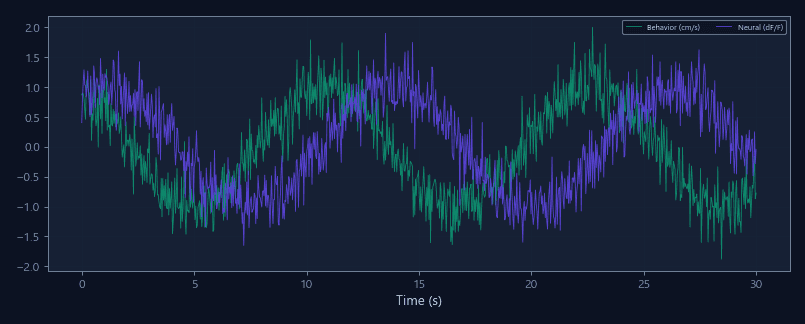
Time-aligned behavioral and physiological data
Behavioral metrics (position, velocity, zone, behavior label) with timestamps synchronized to electrophysiology or imaging frame clocks.
CSVJSON
Align behavioral tracking with electrophysiology, calcium imaging, and other data streams
Timestamp-synchronized multi-modal data acquisition — correlate neural activity with behavioral events without post-hoc clock alignment.
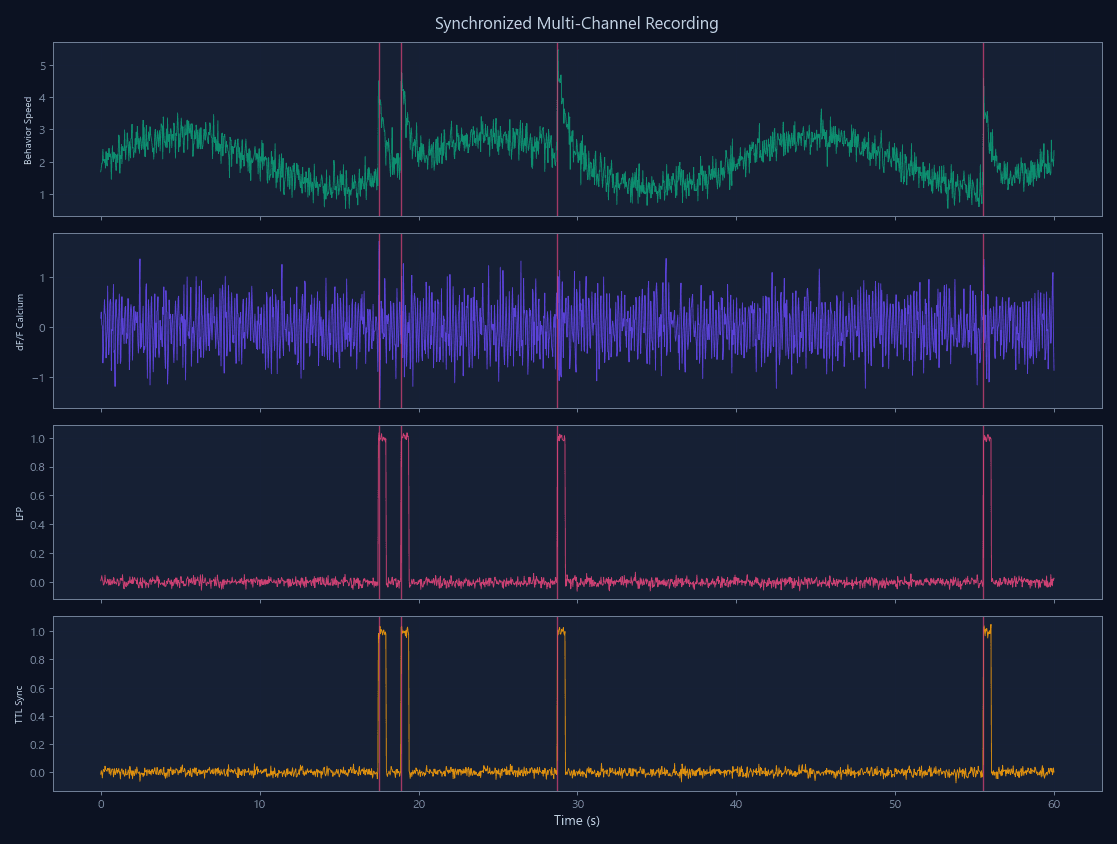
Recording behavior on one system and electrophysiology or imaging on another creates alignment challenges. Clock drift, missing sync pulses, and manual timestamp matching introduce errors that propagate through analysis.
ConductVision outputs TTL sync signals that external recording systems can capture. Behavioral events and physiological data reference the same time base from acquisition.
Behavioral metrics (position, velocity, zone, behavior label) with timestamps synchronized to electrophysiology or imaging frame clocks.
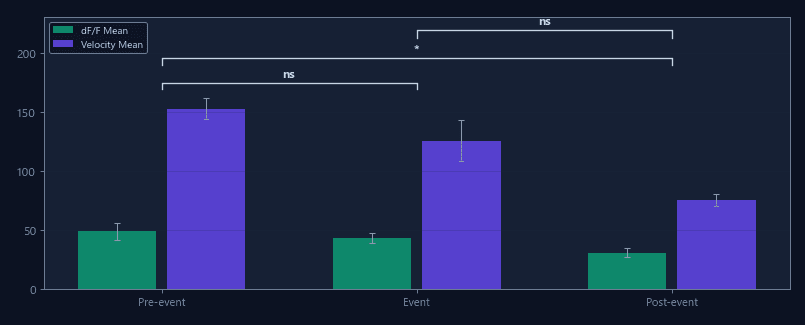
Extract behavioral epochs around physiological events (spikes, calcium transients) or physiological responses around behavioral events (zone entry, freezing onset).
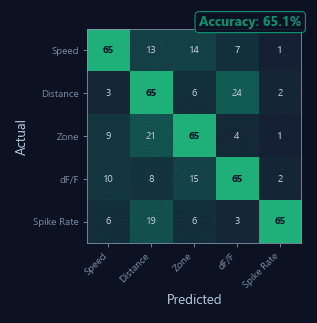
Compute temporal correlations between behavioral variables and physiological signals at synchronized time resolution.
Correlate single-unit or LFP activity with precisely timed behavioral events — zone entries, freezing onset, social approach — without temporal uncertainty.
Align dopamine transients from fiber photometry with locomotor events, reward encounters, and spatial decisions at frame-level resolution.
Deliver light stimulation and measure behavioral responses in the same timeline. Quantify latency, magnitude, and duration of stimulation effects.
Synchronize EEG-defined sleep stages with video-based behavioral scoring (immobility, position, posture) for sleep research.
| Feature | ConductVision | Typical systems |
|---|---|---|
| Sync method | TTL frame-sync at acquisition | Post-hoc timestamp matching |
| Temporal precision | Frame-level (33ms at 30fps) | Variable, depends on alignment |
| Multi-modal support | Ephys, photometry, imaging, EEG | TTL output only |
| Event-locked analysis | Built-in | External scripting required |
| Clock drift | None — shared time base | Accumulates over session |
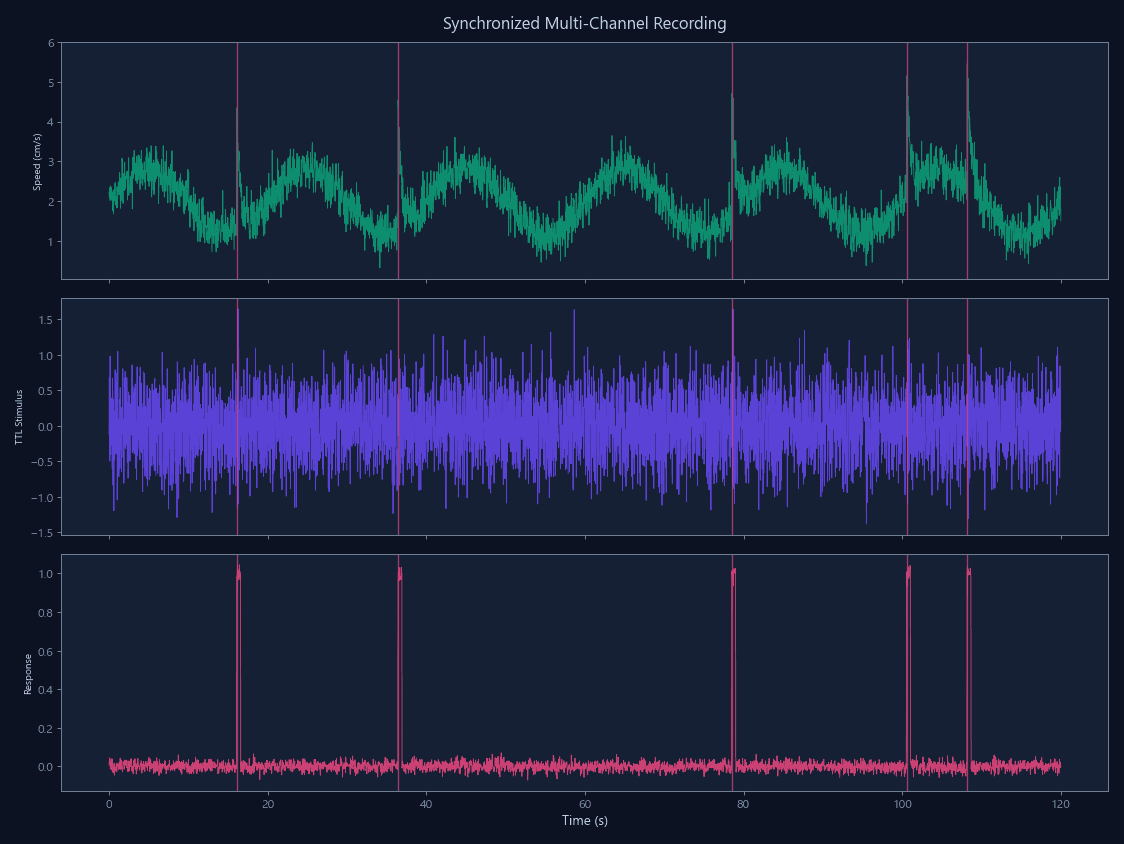
Direct apparatus control via serial/TTL from within the tracking interface.
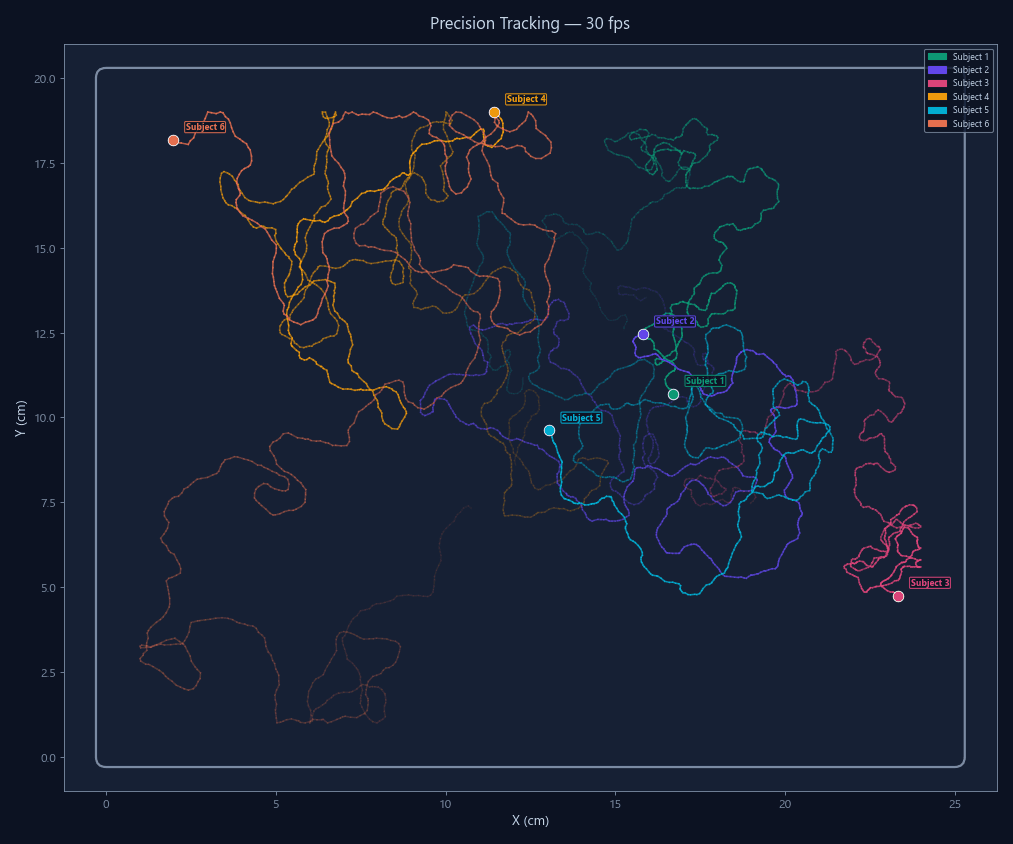
High-resolution 30 fps tracking that captures sub-second behavioral events conventional systems miss.
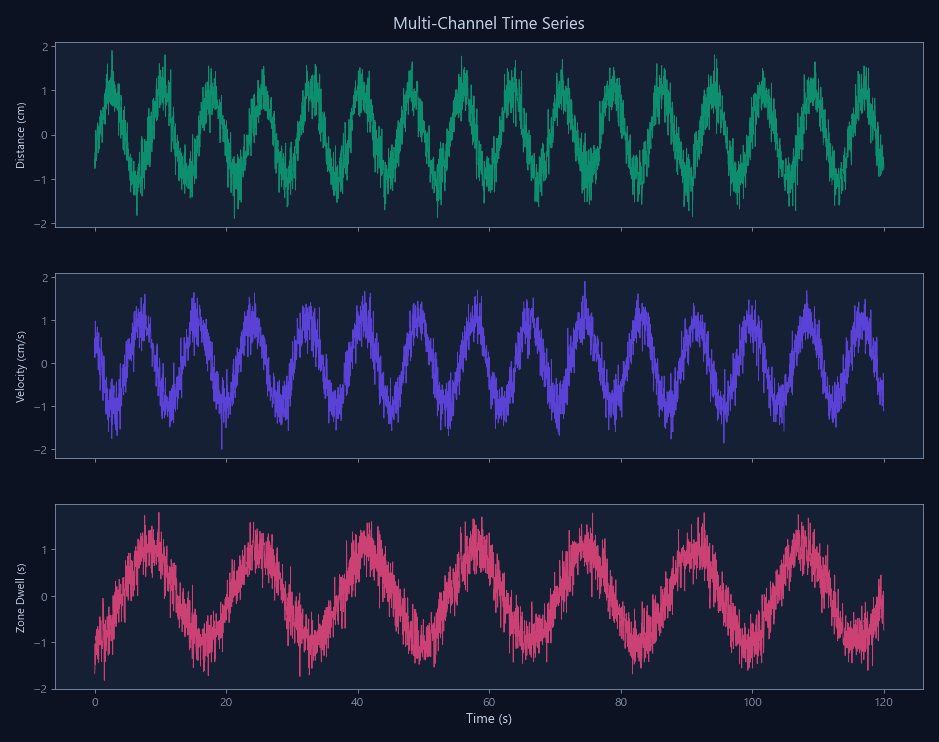
Live behavioral metrics during acquisition — distance, velocity, and zone occupancy update as the session runs.
Connect a TTL cable and start collecting aligned multi-modal data in your next session.