16-Channel Parallel Microfluidic Chip
16-channel parallel microfluidic chip in standard slide format for ultra-high-throughput screening applications with simultaneous multi-sample processing capabilities.
Reusable chip — designed for multiple experimental runs. Compatible with standard microfluidic tubing: steel pins (0.7 mm ID / 1.0 mm OD) and silicone tubing (0.8 mm ID / 1.9 mm OD). Available in bulk packs (5‑, 10‑, and 25‑unit) for lab-scale and consumable workflows.

Louise Corscadden, PhD
Director of Science · ConductScience
Ask Louise about 16-Channel Parallel Microfluidic Chip fit, setup, configuration, or quote prep.
Already working with us? Sign in to connect this with My Scientist.
Key Specifications
Full details →- Model fit
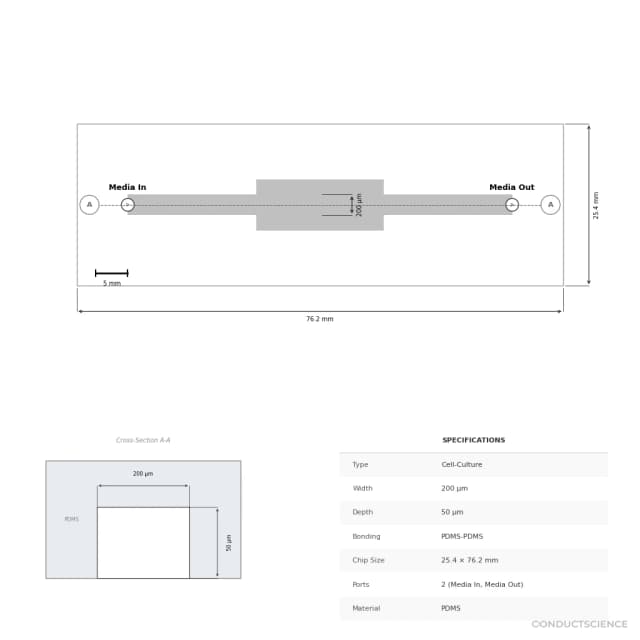
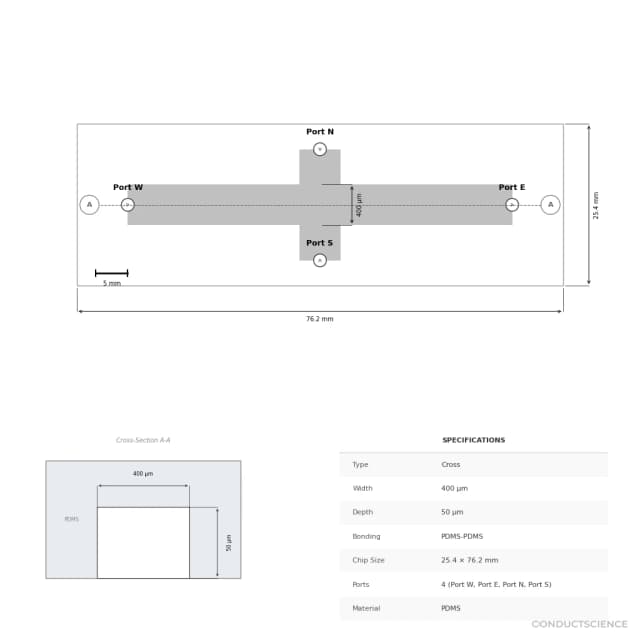
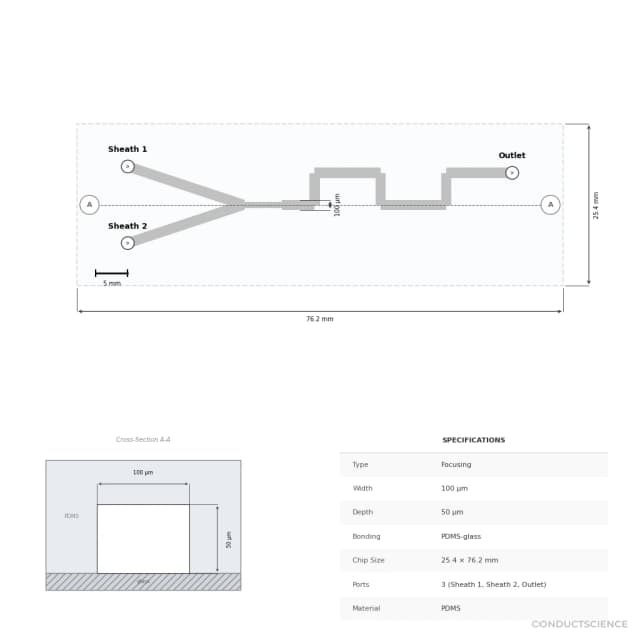
- 3 selectable configurations
- SKU family
- WHM-0121
- Shipping box
- 181.8 x 136.3 x 90.9 cm
- Ordering
- Online checkout and quote request available
- Category
- Microfluidic Chips
- Build notes
- Confirm accessories, station layout, and support needs before purchase
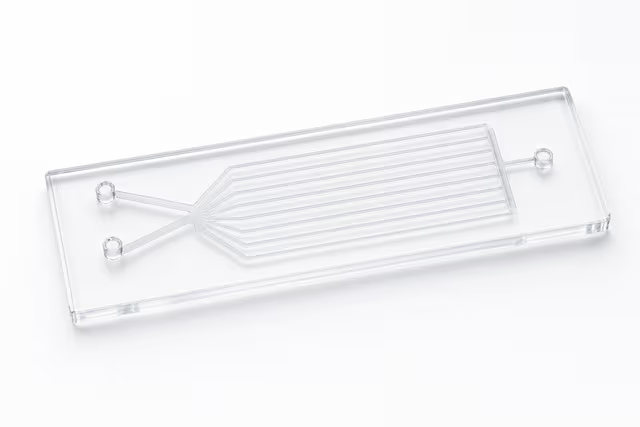
The 16-Channel Parallel Microfluidic Chip is a high-throughput microfluidic device designed for ultra-high-throughput screening applications. Manufactured in the standard 25 x 76 mm slide format, this chip provides 16 parallel microfluidic channels that enable simultaneous processing of multiple samples or conditions within a single experimental run.
The parallel channel architecture allows researchers to conduct dose-response studies, drug screening assays, and comparative analyses with significantly reduced reagent consumption and experimental time compared to conventional multi-well plate approaches. The slide format ensures compatibility with standard microscopy systems and automated imaging platforms commonly used in research laboratories.
How It Works
The 16-Channel Parallel Microfluidic Chip operates on the principle of controlled fluid flow through precisely fabricated microchannels. Each of the 16 parallel channels functions as an independent microreactor, allowing for simultaneous processing of different samples, concentrations, or experimental conditions. The microfluidic channels are designed to maintain laminar flow conditions, ensuring predictable fluid behavior and minimal cross-contamination between channels.
Sample introduction and flow control are typically achieved through pressure-driven flow or syringe pump systems connected to the chip's inlet ports. The parallel architecture enables researchers to create concentration gradients, perform serial dilutions, or test multiple conditions simultaneously while using minimal sample volumes. The standard slide format (25 x 76 mm) allows for real-time optical monitoring using standard microscopy equipment.
The chip's design facilitates precise control over residence times, mixing ratios, and reaction kinetics within each channel, making it suitable for applications requiring temporal and spatial control of experimental parameters.
Features & Benefits
Shipping weight
- 3.3 lb
Shipping box
- L: 181.8 cm
- W: 136.3 cm
- H: 90.9 cm
| Feature | This Product | Typical Alternative | Advantage |
|---|---|---|---|
| Number of Parallel Channels | 16 independent channels | Entry-level devices typically offer 2-4 parallel channels | Higher channel count enables more comprehensive dose-response studies and multi-parameter screening in a single experiment. |
| Chip Format | Standard 25 x 76 mm slide format | Custom chip geometries requiring specialized fixtures | Standard slide format ensures immediate compatibility with existing microscopy equipment and automated systems. |
| Throughput Capability | Ultra-high-throughput screening | Lower throughput devices with fewer parallel processing capabilities | Enables comprehensive screening studies while reducing experimental time and reagent consumption. |
| Application Focus | Designed specifically for ultra-high-throughput screening | General-purpose microfluidic devices with broader but less specialized capabilities | Optimized channel architecture and design specifically supports high-throughput screening workflows. |
This 16-channel parallel microfluidic chip provides specialized ultra-high-throughput screening capabilities in a standard slide format. The parallel architecture enables simultaneous multi-condition experiments while maintaining compatibility with standard laboratory equipment.
| Model | SKU | Listed price | Status | Shipping box |
|---|---|---|---|---|
| 25-Pack | WHM-0121-25PK | Quote | Available | 181.8 x 136.3 x 90.9 cm |
| 10-Pack | WHM-0121-10PK | $1,490.00 | Available | 181.8 x 136.3 x 90.9 cm |
| 5-Pack | WHM-0121-5PK | Quote | Available | 181.8 x 136.3 x 90.9 cm |
Practical Tips
Verify flow uniformity across all 16 channels by measuring residence times with fluorescent tracers before beginning experiments.
Why: Flow variations between channels can lead to inconsistent experimental conditions and compromised data quality.
Flush all channels with appropriate cleaning solutions immediately after each experiment to prevent channel clogging.
Why: Microfluidic channels are susceptible to blockage from protein precipitation or particle accumulation.
Use degassed solutions and maintain consistent temperature to minimize bubble formation in the microchannels.
Why: Air bubbles can disrupt laminar flow patterns and create inconsistent mixing or reaction conditions.
If flow rates become uneven between channels, check for partial blockages or air bubbles in the connecting tubing.
Why: Flow imbalances often originate from fluidic connections rather than the chip itself.
Include control channels with known conditions to validate experimental consistency across the parallel channels.
Why: Control channels provide internal validation of experimental conditions and help identify systematic variations.
Always verify chemical compatibility of solvents and samples with the chip material before introducing them to the channels.
Why: Incompatible chemicals can cause chip degradation or release of potentially harmful substances.
Establish consistent priming and loading protocols to ensure reproducible startup conditions across experiments.
Why: Standardized procedures minimize experiment-to-experiment variability and improve data reproducibility.
Setup Guide
What’s in the Box
- 16-Channel Parallel Microfluidic Chip
- User manual with setup instructions (typical)
- Certificate of specifications (typical)
- Protective storage case (typical)
Warranty
ConductScience provides a standard 1-year manufacturer warranty covering defects in materials and workmanship. Technical support is available for setup guidance and troubleshooting assistance.
Compliance
References
Background reading relevant to this product:
What flow rate range is supported across the 16 parallel channels?
Flow rate specifications depend on channel geometry and pressure capabilities. Consult the product datasheet for specific flow rate ranges and recommended operating parameters for each channel.
How do I ensure uniform flow distribution across all 16 channels?
Flow uniformity is achieved through careful pressure balancing and channel design. Use calibrated pressure controllers or syringe pumps, and verify flow rates in each channel during setup.
What types of samples and solvents are compatible with the chip material?
Chemical compatibility depends on the chip substrate material. Consult the product datasheet for specific solvent compatibility and recommended cleaning procedures.
Can the chip be reused for multiple experiments?
Reusability depends on the experimental conditions and cleaning protocols. Follow manufacturer guidelines for cleaning and sterilization between uses to maintain channel integrity.
What microscopy systems are compatible with this slide format chip?
The standard 25 x 76 mm slide format is compatible with most inverted and upright microscope systems. Verify stage compatibility and working distance requirements for your specific microscope model.
How do I prevent cross-contamination between parallel channels?
The chip design includes physical separation between channels. Maintain appropriate pressure differentials and avoid overfilling channels to prevent cross-talk between parallel experiments.
What sample volumes are required for each channel?
Sample volume requirements depend on channel dimensions and experimental duration. Consult the product datasheet for specific volume specifications and dead volume calculations.
Have a question about this product?
Have a question? Just ask.
Send it over and we'll email you a personalized answer — no call, no scheduling.
Prefer to talk it through?