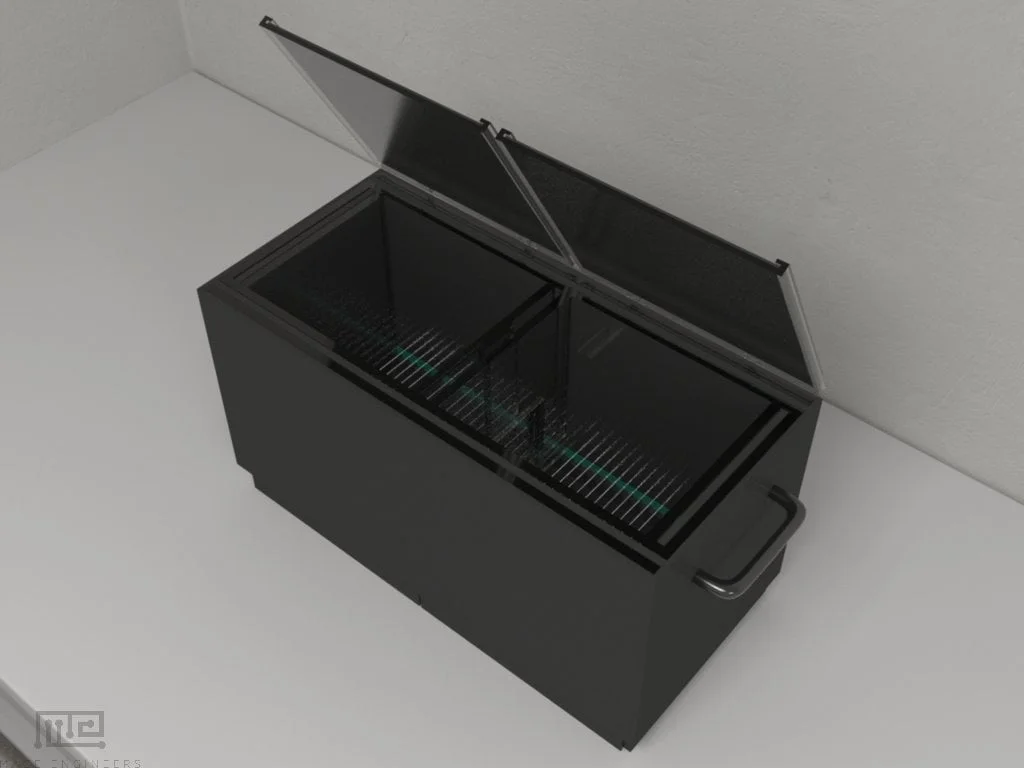
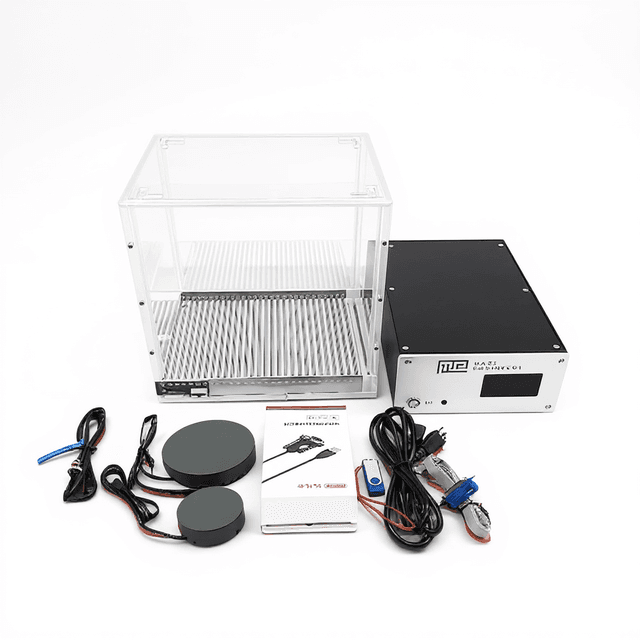
The shuttle box operates on principles of classical and operant conditioning, where animals learn to associate environmental cues with aversive stimuli and modify their behavior accordingly. In active avoidance protocols, animals learn to shuttle between compartments in response to conditioned stimuli (typically auditory or visual cues) to avoid or escape mild electric shocks delivered through the grid floor. The temporal relationship between conditioned stimulus presentation and shock delivery determines the learning paradigm.
Passive avoidance protocols utilize the natural exploratory behavior of rodents, where animals initially explore both compartments but learn to avoid the compartment previously associated with aversive stimuli. The configurable acrylic plating creates distinct visual contexts that serve as discriminative cues, with black/black configurations typically used for active avoidance and white/black configurations for passive avoidance paradigms.
Independent control systems for each compartment enable sophisticated experimental designs including discrimination learning, where animals must distinguish between safe and aversive contexts, and reversal learning protocols that assess behavioral flexibility and memory updating mechanisms.