Air Quality Detection Microfluidic Chip
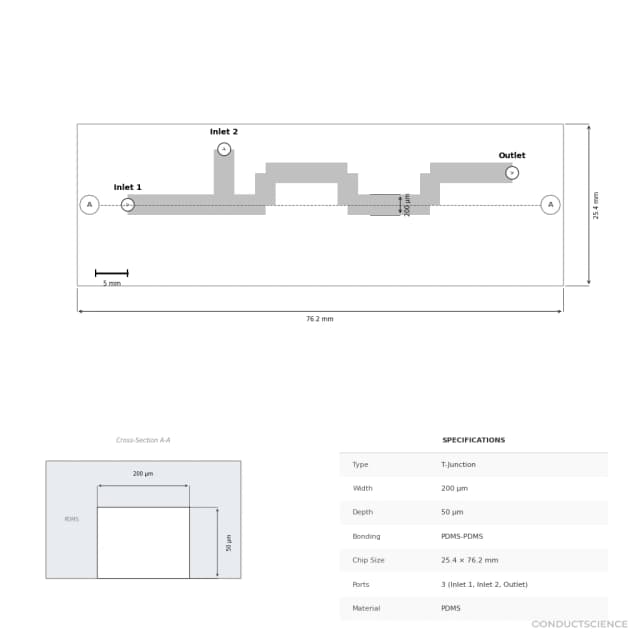
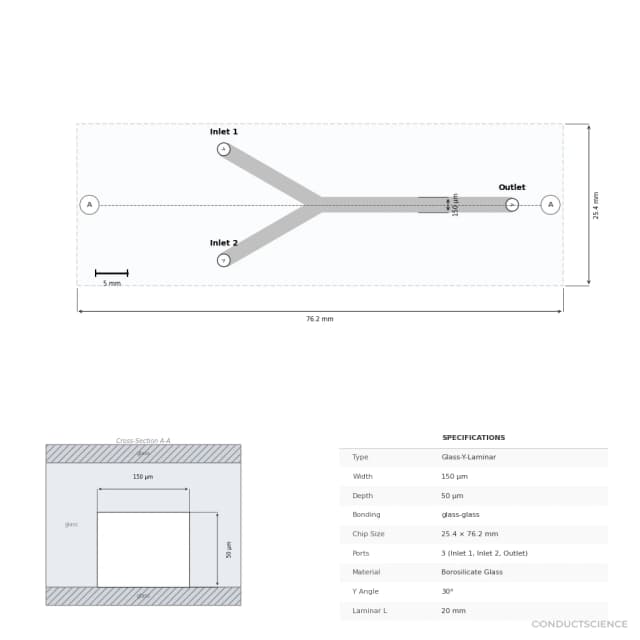
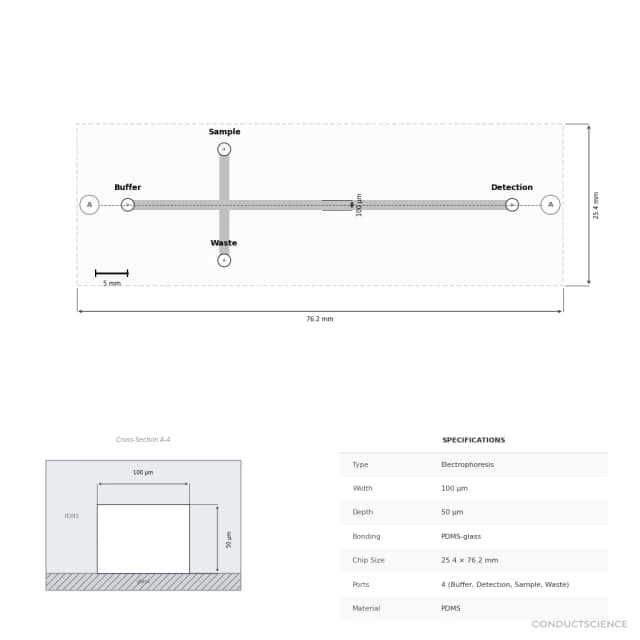
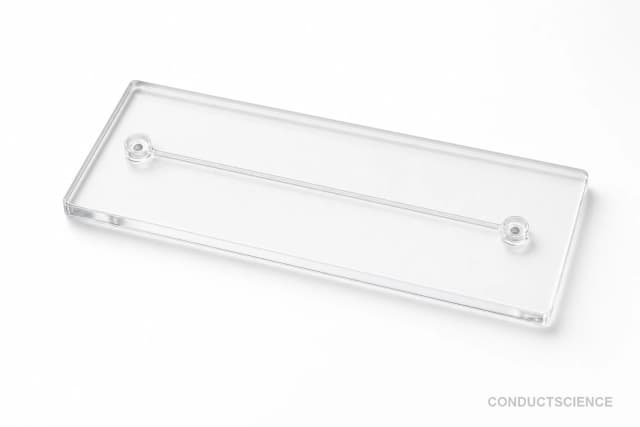
Microfluidic chip with 3-electrode array for electrochemical detection of seven atmospheric gases including CO, H2S, SO2, NO, NH3, Cl2, and O3 for air quality monitoring applications.
Reusable chip — designed for multiple experimental runs. Compatible with standard microfluidic tubing: steel pins (0.7 mm ID / 1.0 mm OD) and silicone tubing (0.8 mm ID / 1.9 mm OD). Available in bulk packs (5‑, 10‑, and 25‑unit) for lab-scale and consumable workflows.

Louise Corscadden, PhD
Director of Science · ConductScience
Ask Louise about Air Quality Detection Microfluidic Chip fit, setup, configuration, or quote prep.
Already working with us? Sign in to connect this with My Scientist.
Key Specifications
Full details →- Model fit
- 3 selectable configurations
- SKU family
- WHM-0136
- Shipping box
- 181.8 x 136.3 x 90.9 cm
- Ordering
- Online checkout and quote request available
- Category
- Environmental Detection Chips
- Build notes
- Confirm accessories, station layout, and support needs before purchase
The Air Quality Detection Microfluidic Chip (WHM-0136) is a specialized electrochemical sensor platform designed for real-time monitoring of multiple atmospheric pollutants. This chip integrates a 3-electrode array configuration optimized for detecting seven critical gas species: carbon monoxide (CO), hydrogen sulfide (H2S), sulfur dioxide (SO2), nitric oxide (NO), ammonia (NH3), chlorine (Cl2), and ozone (O3).
The microfluidic architecture enables precise analyte transport and controlled electrochemical reactions within microscale channels, providing researchers with a compact platform for environmental gas analysis. The multi-target detection capability makes this chip particularly valuable for comprehensive air quality assessments in industrial, environmental, and occupational health monitoring applications where simultaneous measurement of multiple gaseous contaminants is required.
How It Works
The Air Quality Detection Microfluidic Chip operates on electrochemical principles using a 3-electrode array configuration consisting of working, reference, and counter electrodes. Gas samples are introduced into microfluidic channels where target analytes undergo specific electrochemical reactions at the working electrode surface. The applied potential between working and reference electrodes drives selective oxidation or reduction reactions characteristic of each target gas species.
Current generated from these electrochemical reactions is measured and correlated to analyte concentration through calibrated response curves. The microfluidic channel design ensures controlled mass transport and minimizes interference effects, while the multi-electrode array enables simultaneous detection of the seven target gases (CO, H2S, SO2, NO, NH3, Cl2, O3) through selective electrode surface chemistries and optimized potential windows.
The compact chip architecture reduces sample volumes and response times compared to conventional gas sensors while maintaining analytical selectivity through electrochemical specificity and microfluidic control of reaction conditions.
Features & Benefits
Shipping weight
- 3.3 lb
Shipping box
- L: 181.8 cm
- W: 136.3 cm
- H: 90.9 cm
| Feature | This Product | Typical Alternative | Advantage |
|---|---|---|---|
| Number of Target Gases | Detects 7 gases simultaneously (CO, H2S, SO2, NO, NH3, Cl2, O3) | Single-analyte sensors require separate units for each gas type | Reduces system complexity and enables comprehensive air quality profiling with a single device |
| Electrode Configuration | 3-electrode array with working, reference, and counter electrodes | Basic sensors often use 2-electrode configurations | Provides better electrochemical control and reference stability for accurate measurements |
| Platform Architecture | Microfluidic chip design with integrated channels | Conventional sensors use bulk solution chambers | Enables precise mass transport control and reduced sample volume requirements |
| Detection Approach | Electrochemical detection with selective electrode reactions | Some alternatives rely on optical or thermal detection methods | Provides chemical selectivity and real-time response suitable for continuous monitoring |
This microfluidic chip offers simultaneous detection of seven atmospheric gases using a 3-electrode array configuration within a compact platform. The integrated microfluidic design enables precise analytical control while reducing system complexity compared to multiple single-analyte sensors.
| Model | SKU | Listed price | Status | Shipping box |
|---|---|---|---|---|
| 25-Pack | WHM-0136-25PK | Quote | Available | 181.8 x 136.3 x 90.9 cm |
| 10-Pack | WHM-0136-10PK | $1,490.00 | Available | 181.8 x 136.3 x 90.9 cm |
| 5-Pack | WHM-0136-5PK | Quote | Available | 181.8 x 136.3 x 90.9 cm |
Practical Tips
Use certified reference gas standards spanning the expected concentration range for each target analyte when establishing calibration curves.
Why: Accurate calibration across the working range ensures reliable quantitative measurements in unknown samples.
Flush microfluidic channels with clean carrier gas between sample measurements to prevent analyte carryover and maintain baseline stability.
Why: Regular cleaning prevents cross-contamination and ensures consistent electrode response over multiple analyses.
Monitor electrode response stability during extended measurement sessions and perform periodic blank measurements to verify system performance.
Why: Tracking baseline drift helps identify when recalibration or electrode maintenance is needed.
Record environmental conditions (temperature, humidity, pressure) during measurements as these factors can affect electrochemical sensor response.
Why: Environmental compensation improves measurement accuracy and enables proper data interpretation across different conditions.
If electrode responses become sluggish or noisy, check for bubble formation in microfluidic channels and verify flow rate stability.
Why: Gas bubbles or flow irregularities disrupt mass transport and electrode kinetics leading to poor analytical performance.
Use appropriate ventilation and personal protective equipment when working with toxic gas standards for calibration procedures.
Why: Many target analytes (H2S, Cl2, NH3, NO) are hazardous and require proper safety protocols during handling.
Allow adequate equilibration time after changing gas samples to achieve stable electrode responses before recording measurements.
Why: Electrode equilibration ensures accurate steady-state measurements and prevents errors from transient response artifacts.
Setup Guide
What’s in the Box
- Air Quality Detection Microfluidic Chip (typical)
- Electrode connection leads (typical)
- Fluidic connection fittings (typical)
- User manual and technical specifications (typical)
- Quality control certificate (typical)
Warranty
ConductScience provides a one-year manufacturer warranty covering defects in materials and workmanship. Technical support is available for setup assistance and troubleshooting throughout the warranty period.
Compliance
What is the detection limit for each target gas species?
Specific detection limits for CO, H2S, SO2, NO, NH3, Cl2, and O3 should be consulted in the product datasheet as these parameters depend on electrode surface chemistry and measurement conditions.
How do I prevent cross-interference between different gas analytes?
The 3-electrode array design provides electrochemical selectivity through optimized potential windows for each analyte. Proper calibration with mixed gas standards helps identify and compensate for any residual cross-sensitivities.
What carrier gas is recommended for sample introduction?
Clean nitrogen or compressed air is typically used as carrier gas. The choice depends on your specific analytical requirements and should be electrochemically inert relative to the target analytes.
How often does the chip require recalibration?
Calibration frequency depends on usage intensity and drift characteristics. Regular verification with certified reference standards is recommended, with full recalibration when response shifts exceed acceptable analytical tolerances.
Can the chip detect gas mixtures or only individual analytes?
The electrochemical array can simultaneously detect multiple gases in complex mixtures. However, quantitative analysis may require deconvolution algorithms when significant spectral overlap occurs between analyte responses.
What sample flow rates are compatible with the microfluidic channels?
Optimal flow rates depend on channel dimensions and electrode kinetics. Consult the product datasheet for recommended flow ranges that balance response time with measurement stability.
How does this compare to conventional gas chromatography methods?
The microfluidic chip provides real-time detection without sample pretreatment or separation steps required by GC methods. However, GC offers superior selectivity for complex mixtures and lower detection limits for some analytes.
What maintenance is required for long-term operation?
Regular cleaning of microfluidic channels and electrode surface maintenance are essential. Specific protocols for electrode conditioning and replacement criteria should be followed according to manufacturer recommendations.
Have a question about this product?
Have a question? Just ask.
Send it over and we'll email you a personalized answer — no call, no scheduling.
Prefer to talk it through?