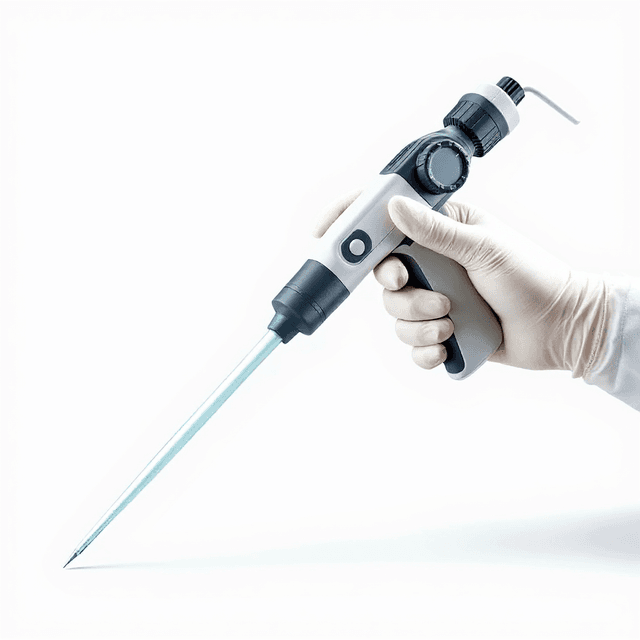
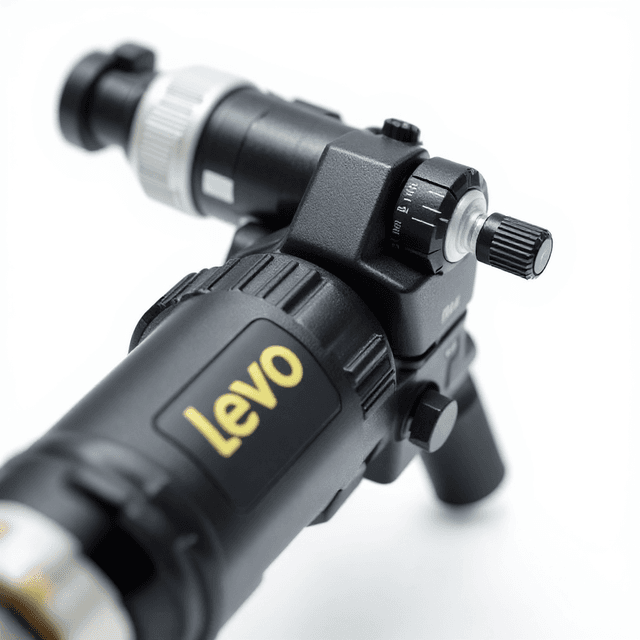
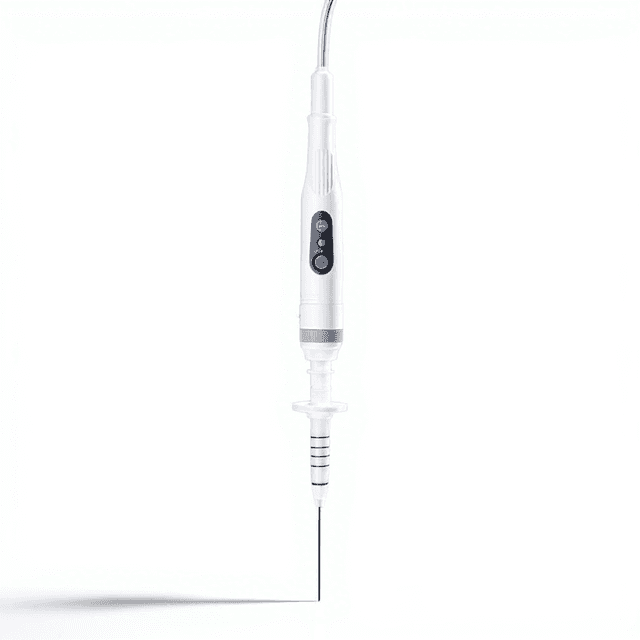
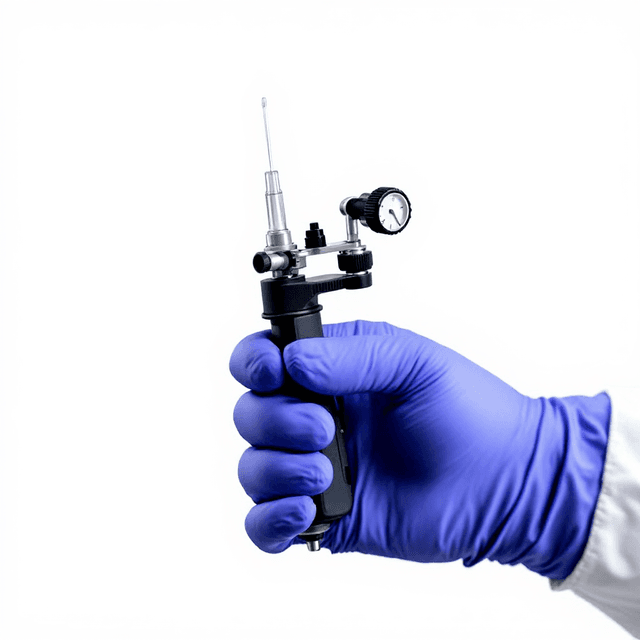
Automatic Micro Liquid Dispenser
Automated precision liquid dispenser for accurate, reproducible small volume dispensing in laboratory applications.

Louise Corscadden, PhD
Director of Science · ConductScience
Ask Louise about Automatic Micro Liquid Dispenser fit, setup, configuration, or quote prep.
Already working with us? Sign in to connect this with My Scientist.
Key Specifications
Full details →- Model fit
- Configured during quote
- SKU family
- BIO-0639
- Shipping box
- 42.0 x 43.6 x 38.0 cm
- Ordering
- Online checkout and quote request available
- Category
- Liquid Handling
- Build notes
- Confirm accessories, station layout, and support needs before purchase
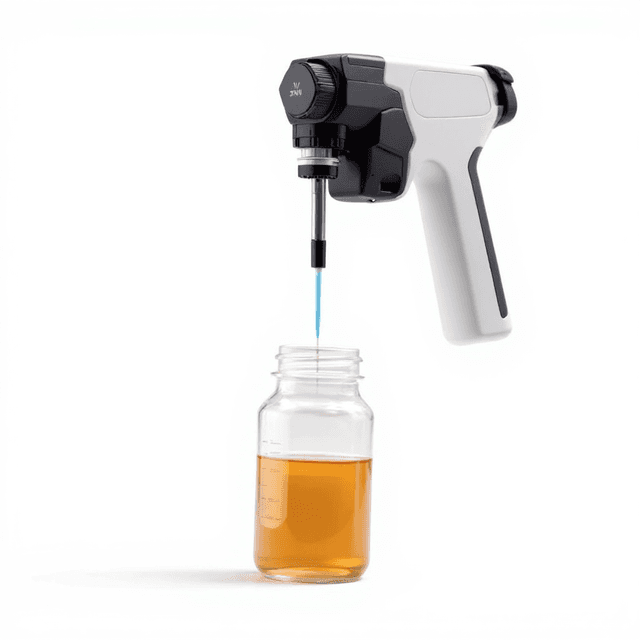
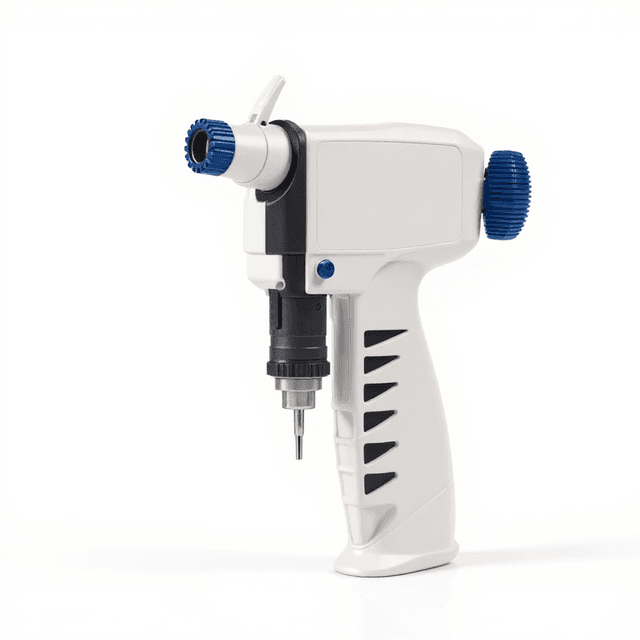
The Automatic Micro Liquid Dispenser is a precision liquid handling instrument designed for accurate, reproducible dispensing of small volume liquids in laboratory applications. This automated dispenser eliminates manual pipetting variability and enables consistent delivery of reagents, standards, and samples across multiple experiments.
The system provides programmable dispensing protocols for various liquid types, supporting research workflows that require precise volume control and minimal cross-contamination. The automated operation reduces operator fatigue and improves throughput in repetitive dispensing tasks commonly encountered in analytical laboratories.
How It Works
The automatic micro liquid dispenser operates using precision pump mechanisms that control fluid displacement through programmable volume settings. The system employs positive displacement pumps or syringe-based mechanisms to achieve accurate liquid delivery, with electronic control systems managing flow rates and dispensing volumes.
The dispensing mechanism is designed to minimize dead volume and prevent cross-contamination between samples. The automated control system allows for programmable dispensing sequences, enabling complex protocols with multiple reagent additions at specified intervals.
Features & Benefits
Automation Level
- semi-automated
Brand
- ConductScience
Research Domain
- Analytical Chemistry
- Cell Biology
- Clinical Diagnostics
- Materials Science
- Microbiology
- Pharmaceutical QC
Shipping weight
- 29.98 lb
Shipping box
- L: 42.0 cm
- W: 43.6 cm
- H: 38.0 cm
| Feature | This Product | Typical Alternative | Advantage |
|---|---|---|---|
| Dispensing Accuracy | Consult product datasheet for specific accuracy specifications | Entry-level dispensers often provide basic accuracy suitable for general applications | Higher accuracy reduces experimental variability and improves data quality in precision applications |
| Programming Capability | Programmable volume settings and dispensing protocols | Manual dispensers require operator control for each dispensing event | Automated protocols reduce operator involvement and enable consistent multi-step procedures |
| Throughput Capacity | Continuous operation mode for extended dispensing sequences | Manual systems require individual operation for each dispensing cycle | Higher throughput capability supports demanding experimental workflows and sample processing requirements |
| Volume Range | Multi-volume capability from microliters to milliliters | Fixed-volume systems often limited to single volume ranges | Versatile volume range accommodates diverse experimental requirements without instrument changes |
This automatic micro liquid dispenser combines programmable dispensing protocols with precision volume control for improved laboratory productivity. The system supports continuous operation modes and multi-volume applications for versatile liquid handling workflows.
Practical Tips
Perform volume calibration verification using the same liquid type and temperature conditions as your experimental protocol.
Why: Liquid properties affect dispensing accuracy, and matching calibration conditions to experimental conditions ensures optimal performance.
Replace tubing regularly according to usage frequency and chemical exposure to maintain dispensing accuracy.
Why: Tubing degradation from chemical exposure or wear affects volume precision and can introduce contamination.
Allow the system to equilibrate to ambient temperature before beginning precision dispensing operations.
Why: Temperature variations affect liquid density and viscosity, which can impact dispensing accuracy.
If dispensing volumes become inconsistent, check for air bubbles in the tubing system and re-prime as needed.
Why: Air bubbles compress during dispensing cycles and cause volume variations that compromise experimental reproducibility.
Record dispensing parameters and batch information for each experimental run to enable protocol traceability.
Why: Documentation supports data integrity requirements and enables troubleshooting of experimental variations.
Use appropriate personal protective equipment when handling hazardous liquids and ensure proper ventilation for volatile solvents.
Why: Automated dispensing may increase exposure duration compared to manual pipetting, requiring enhanced safety precautions.
Clean the dispensing pathways thoroughly between different reagent types to prevent cross-contamination.
Why: Residual reagents can interfere with subsequent experiments and compromise data quality.
Setup Guide
What’s in the Box
- Automatic micro liquid dispenser main unit (typical)
- Power adapter and cable (typical)
- Dispensing tubing set (typical)
- Dispensing tips assortment (typical)
- User manual and quick start guide (typical)
- Calibration verification protocol (typical)
Warranty
ConductScience provides a standard one-year manufacturer warranty covering defects in materials and workmanship, with technical support available for setup and operational guidance.
Compliance
What is the typical volume accuracy and precision achievable with this dispenser?
Volume accuracy and precision specifications depend on the dispensing range and liquid properties. Consult the product datasheet for detailed accuracy specifications for your intended volume range and application.
Can the dispenser handle viscous liquids or organic solvents?
Liquid compatibility depends on the tubing materials and pump mechanism design. Check the chemical compatibility chart in the user manual for specific solvents and viscosity limitations.
How do I prevent cross-contamination between different reagents?
Use dedicated tubing sets for each reagent type, implement thorough cleaning protocols between samples, and consider using disposable dispensing tips for critical applications.
What maintenance procedures are required for optimal performance?
Regular maintenance includes tubing inspection and replacement, pump mechanism cleaning, volume calibration verification, and preventive maintenance according to the manufacturer's schedule.
Can the dispensing protocols be saved and recalled for repeated experiments?
Protocol storage capabilities depend on the control system features. Consult the user manual for specific programming and data storage options available with your model.
How does this compare to manual pipetting for high-throughput applications?
Automated dispensing provides superior reproducibility and reduces operator fatigue compared to manual pipetting, while enabling consistent performance during extended dispensing sequences.
Have a question about this product?
Have a question? Just ask.
Send it over and we'll email you a personalized answer — no call, no scheduling.
Prefer to talk it through?
Accessories
Enhance your setup with compatible accessories
Frequently Bought Together