Balance Beam Test
Motor coordination assessment apparatus featuring multiple beam widths (6-48mm) and elevated platforms for evaluating balance, coordination, and motor learning in mice and rats.
| beam_variants | ['Ledge Tapered Beam', 'Clear Acrylic Beam', 'Spiked Beam', 'Round Beam'] |
| height_adjustable | adjustable height settings |
| essential_components | ['End platform', 'Beams'] |
| optional_components | ['Start Platform', 'Encatchment'] |
| beam_shapes | ['square', 'rounded'] |
| customizable_features | ['various beam lengths', 'various beam widths', 'enclosed spaces at beam ends', 'start or end platforms', 'extra flat beam for support', 'catchment area'] |

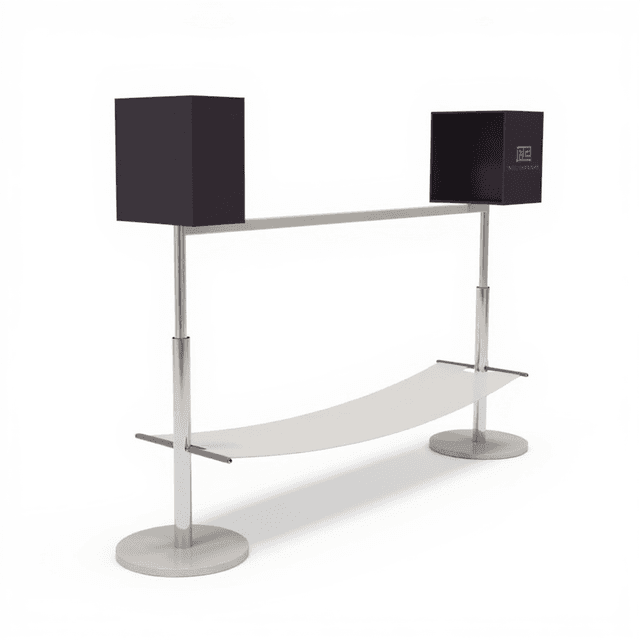
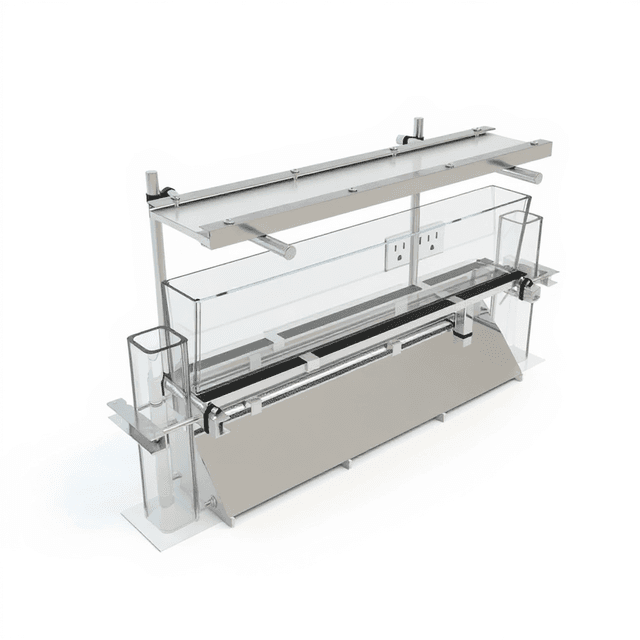
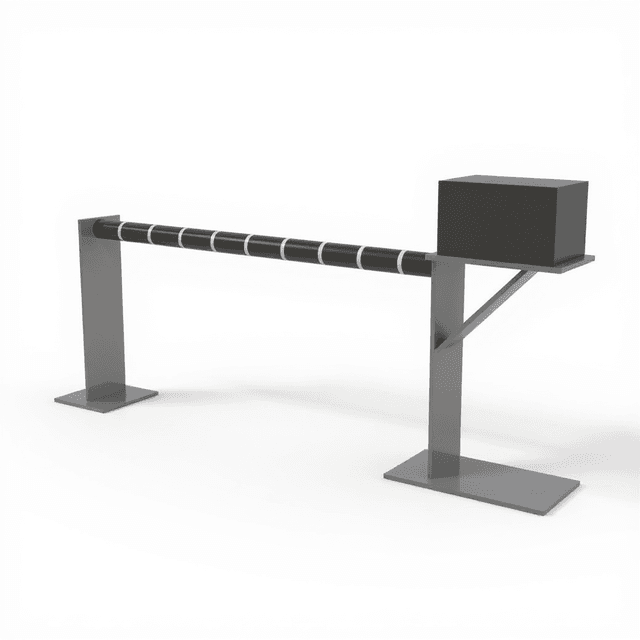
The Balance Beam Test is a fundamental motor coordination assessment apparatus designed to evaluate sensorineural balance, coordination, and motor learning in rodent models. The system consists of narrow elevated beams of varying widths (6, 12, 24, and 48mm) that subjects traverse between two platforms, providing quantitative measures of balance performance and motor skill acquisition.
Constructed from clear acrylic with species-specific dimensions (100cm length for mice, 125cm for rats), the apparatus includes end platforms (20x20x20cm for mice, 25x25x25cm for rats) at a standard 50cm height. Multiple beam widths allow progressive difficulty assessment, while optional modifications including start platforms, encatchment areas, and adjustable height/angle configurations enable protocol customization for specific research requirements.
How It Works
The balance beam test operates on the principle of challenging postural control and motor coordination through progressive task difficulty. Subjects must traverse narrow elevated beams using precise limb placement and dynamic balance adjustments. The varying beam widths (6-48mm) create a gradient of difficulty, with narrower beams requiring greater precision and balance control.
Motor performance is assessed through multiple parameters including traversal time, number of foot slips or falls, hesitation time, and successful completion rate. The elevated design (50cm height) introduces consequences for balance failures, motivating careful movement execution. Clear acrylic construction allows unobstructed observation and video recording for detailed kinematic analysis.
The test exploits the natural aversion of rodents to elevated, narrow spaces while utilizing their motivation to reach the safety of the end platform. Repeated trials enable assessment of motor learning, with performance improvements indicating successful skill acquisition and motor memory formation.
Features & Benefits
Species
- Mouse
- Rat
beam_variants
- ['Ledge Tapered Beam', 'Clear Acrylic Beam', 'Spiked Beam', 'Round Beam']
height_adjustable
- adjustable height settings
essential_components
- ['End platform', 'Beams']
optional_components
- ['Start Platform', 'Encatchment']
beam_shapes
- ['square', 'rounded']
customizable_features
- ['various beam lengths', 'various beam widths', 'enclosed spaces at beam ends', 'start or end platforms', 'extra flat beam for support', 'catchment area']
Behavioral Construct
- Motor coordination
- Balance
- Motor learning
- Motor skill acquisition
- Postural control
Automation Level
- manual
Material
- Clear Acrylic
Display Type
- None
Weight
- 27 lb
Research Domain
- Aging Research
- Behavioral Pharmacology
- Motor Function
- Neurodegeneration
- Neuroscience
- Toxicology
Weight
- 6.06 kg
Dimensions
- L: 65.0 mm
- W: 36.0 mm
- H: 27.0 mm
Comparison Guide
| Feature | This Product | Typical Alternative | Advantage |
|---|---|---|---|
| Beam Width Options | Four widths included (6, 12, 24, 48mm) | Fixed width systems often provide single beam dimension | Progressive difficulty assessment enables comprehensive motor function profiling across skill levels |
| Construction Material | Clear acrylic throughout | Wooden or painted metal construction limits visibility | Unobstructed observation enables detailed behavioral scoring and high-quality video documentation |
| Species Optimization | Dedicated mouse (100cm) and rat (125cm) versions | One-size-fits-all designs compromise performance scaling | Appropriate proportions ensure natural locomotor behavior and consistent challenge across species |
| Platform Integration | Integrated end platforms (20x20x20cm mice, 25x25x25cm rats) | Separate platform components require additional setup | Standardized goal areas provide consistent motivation and reduce setup complexity |
| Optional Enhancements | Start platforms, encatchment, height/angle adjustment available | Limited customization options in basic models | Protocol flexibility enables specialized applications and progressive training paradigms |
| Beam Profile Options | Rectangular standard, round beams upon request | Single profile limits challenge variation | Surface geometry variation enables advanced motor challenge protocols and grip strength assessment |
This balance beam apparatus provides comprehensive motor assessment capabilities through multiple beam widths, clear acrylic construction for optimal observation, and species-specific optimization. The modular design with optional enhancements supports diverse research applications from basic motor screening to complex learning paradigms.
Practical Tips
Verify beam levelness using a precision spirit level before each testing session and document any height variations.
Why: Slight inclines can bias performance measures and introduce confounding variables in motor assessment.
Inspect beam mounting points weekly for wear or looseness, particularly after extended use with heavier animals.
Why: Secure connections prevent mid-trial structural failure that could injure animals or invalidate data.
Allow 2-3 minutes between trials for subject recovery and maintain consistent inter-trial intervals throughout testing.
Why: Standardized rest periods prevent fatigue confounds and enable reliable performance measurement across sessions.
Record ambient temperature and humidity during testing sessions as environmental factors can affect grip and performance.
Why: Environmental conditions influence motor control and should be documented for data interpretation and replication.
If subjects consistently refuse to traverse, reduce beam height or use food reward in end platform to increase motivation.
Why: Task aversion can prevent data collection and may indicate excessive difficulty or insufficient training.
Position soft padding beneath the apparatus during initial trials to prevent injury while maintaining behavioral consequences.
Why: Safety measures reduce animal welfare concerns while preserving the motivational aspects of the elevated design.
Clean beam surfaces with ethanol between subjects and allow complete drying to maintain consistent grip characteristics.
Why: Surface contamination from previous subjects can alter traction and introduce variability in performance measures.
Mark consistent starting positions on the start platform to standardize initial subject placement across trials.
Why: Standardized starting positions reduce variability in task initiation and improve measurement reliability.
Setup Guide
What’s in the Box
- Main balance beam apparatus frame
- Four interchangeable beams (6mm, 12mm, 24mm, 48mm widths)
- Two end platforms (species-appropriate dimensions)
- Mounting hardware and assembly tools
- User manual with protocol guidelines (typical)
- Start platform (if ordered separately)
- Encatchment area (if ordered separately)
Warranty
ConductScience provides a standard one-year manufacturer warranty covering defects in materials and workmanship, with comprehensive technical support for setup and protocol optimization.
Compliance
What parameters can be measured during balance beam testing?
Primary measures include traversal latency, number of foot slips, falls or balance corrections, hesitation time, and successful completion rate. Video analysis enables detailed scoring of gait parameters, limb placement precision, and movement kinematics.
How do I determine appropriate beam width progression for my study?
Begin with the widest beam (48mm) to establish baseline performance, then progress to narrower widths based on subject performance. Typical protocols use 3-5 trials per width with 24-48 hour intervals between width changes.
What training is required before formal testing?
Most protocols include 2-3 habituation sessions using the widest beam to reduce anxiety and establish basic task understanding. Training duration varies by species and experimental goals, typically requiring 3-7 days.
How does beam shape affect performance measurement?
Rectangular beams provide consistent edge definition for standardized foot placement, while round beams increase difficulty through unstable surface geometry. Round beams are recommended for advanced motor challenge protocols.
What factors should I consider for video documentation setup?
Position cameras for side view analysis with high-speed capability (minimum 120 fps) for detailed gait analysis. Clear acrylic construction eliminates reflection issues when proper lighting angles are maintained.
How do optional components enhance experimental capabilities?
Start platforms standardize trial initiation and reduce handling stress, while encatchment areas enable consequence-based learning without injury risk. Height/angle adjustability allows progressive difficulty manipulation within subjects.
What maintenance is required for consistent performance?
Clean all surfaces with appropriate disinfectant between subjects and sessions. Inspect beam attachments regularly for secure mounting and verify height measurements periodically for protocol consistency.
How does this apparatus compare to other motor coordination tests?
The balance beam provides specific assessment of dynamic balance and precision motor control, complementing rotarod (continuous motor challenge) and grid walking tests (discrete step placement). It offers intermediate difficulty between open field locomotion and complex obstacle courses.
Have a question about this product?
Accessories
Enhance your setup with compatible accessories

Frequently Bought Together

Upgrade Options