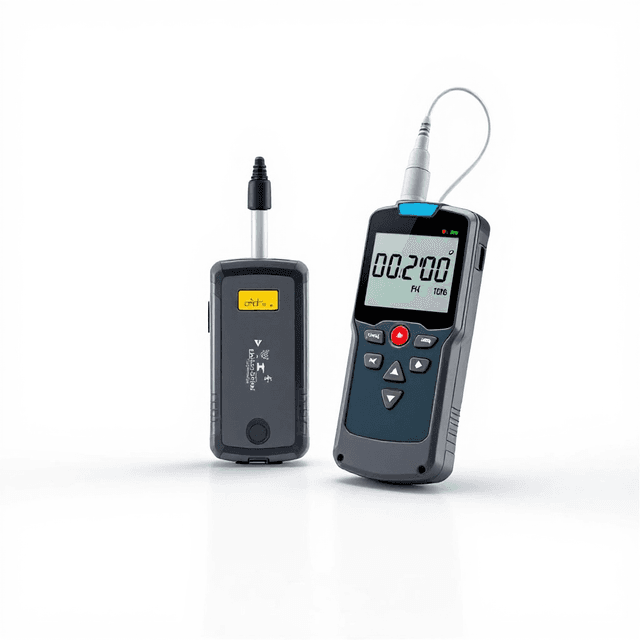
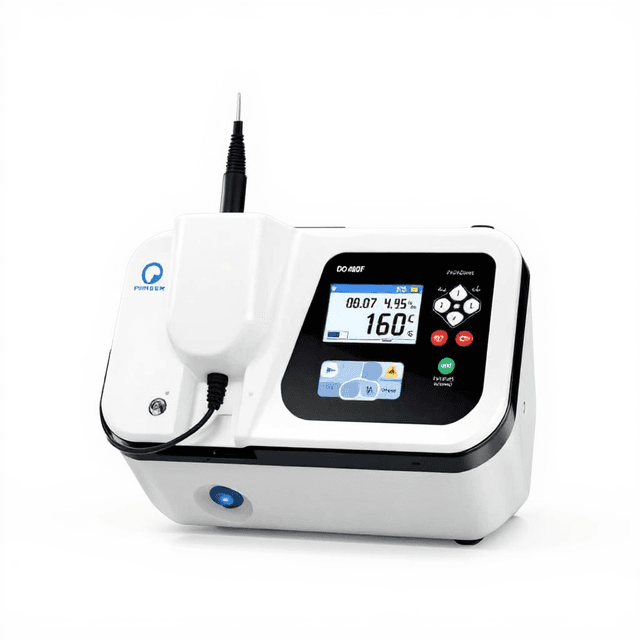
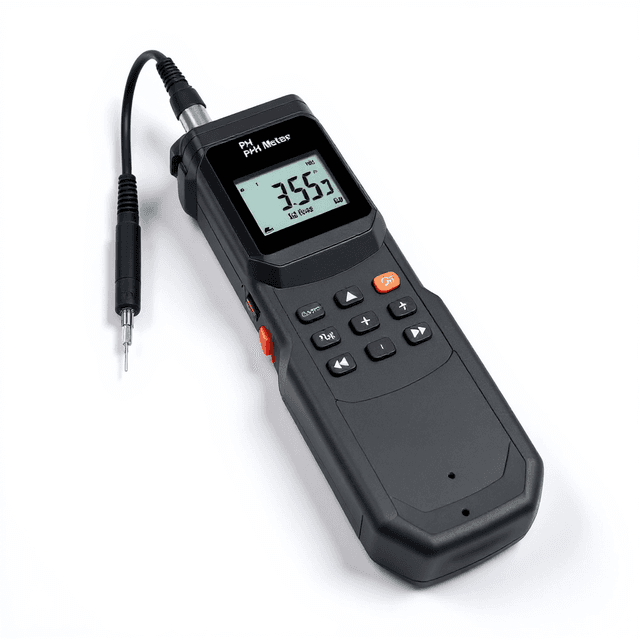
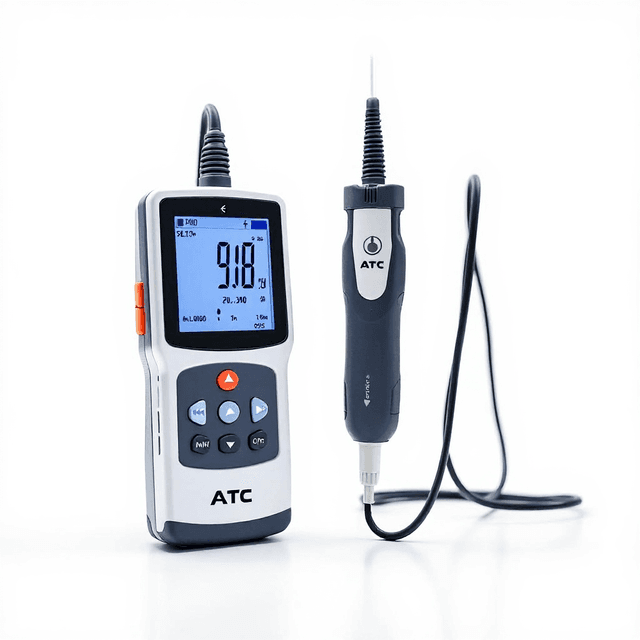
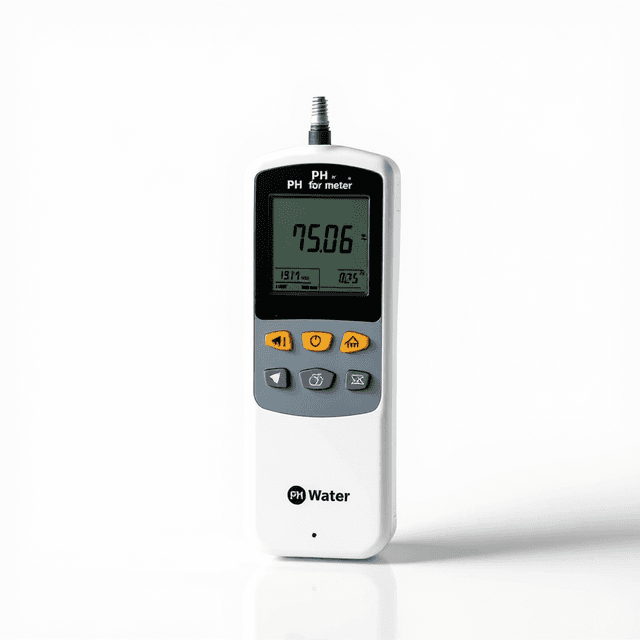
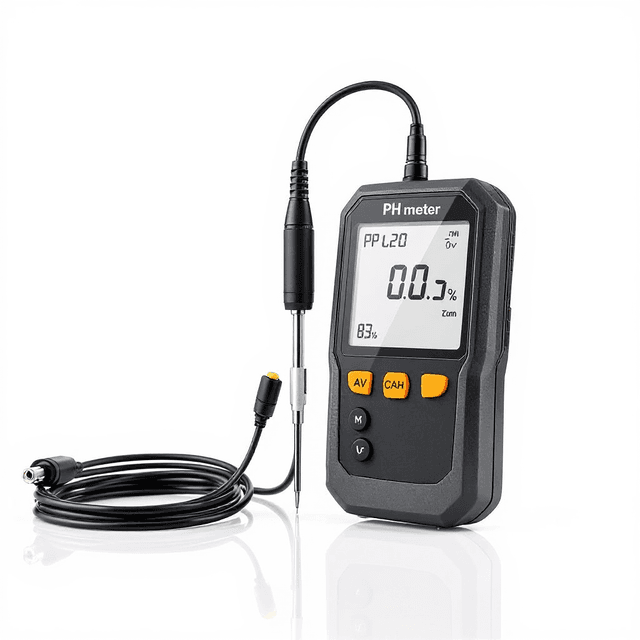
Benchtop Dissolved Oxygen Meter
Benchtop dissolved oxygen meter with automatic temperature and barometric compensation, featuring 500-point data storage and manual salinity correction for aquatic research applications.

The Benchtop Dissolved Oxygen Meter provides precise measurement of dissolved oxygen concentration in aqueous samples for laboratory research applications. This compact instrument features automatic temperature compensation across 0-50°C and manual salinity compensation from 0-45 ppt, enabling accurate measurements across diverse sample conditions. The unit includes automatic barometric pressure compensation (0-200.0 kPa) to account for atmospheric variations that affect oxygen solubility.
With 500 data storage groups and temperature resolution of 0.1°C (±0.2°C accuracy), the meter supports systematic data collection for environmental monitoring, aquatic research, and water quality assessment protocols. The compact benchtop design (200×170×64mm) integrates into existing laboratory workflows while maintaining measurement precision required for quantitative dissolved oxygen analysis.
How It Works
The dissolved oxygen meter operates using an electrochemical sensor that measures oxygen concentration through amperometric detection. The sensor contains a cathode and anode separated by an electrolyte solution and covered with an oxygen-permeable membrane. Dissolved oxygen molecules diffuse through the membrane and undergo reduction at the cathode, generating a current proportional to oxygen concentration.
Temperature significantly affects oxygen solubility, requiring automatic compensation to maintain measurement accuracy. The instrument continuously monitors sample temperature and applies correction factors to account for temperature-dependent solubility changes. Barometric pressure compensation automatically adjusts readings based on atmospheric pressure, as oxygen solubility varies with ambient pressure conditions.
Manual salinity compensation allows users to input sample salinity levels (0-45 ppt), enabling accurate measurements in marine samples or brackish water where dissolved salts affect oxygen solubility. The combined compensation systems ensure reliable dissolved oxygen quantification across diverse aquatic environments and experimental conditions.
Features & Benefits
Model
- BIO-0382 — Current Model, 0-50°C, 0-200kPa
- BIO-0362 — Current Model, 0-50°C, 0-200kPa
- Legacy Model — 0-40°C, 60-112kPa, ±10°C comp
Weight
- 2.1 kg
Dimensions
- L: 6.4 mm
- W: 20.0 mm
- H: 17.0 mm
Comparison Guide
| Feature | This Product | Typical Alternative | Advantage |
|---|---|---|---|
| Temperature Compensation Range | Automatic compensation 0-50°C with 0.1°C resolution | Basic models often provide narrower ranges or manual compensation only | Covers full laboratory and environmental temperature ranges without user intervention, reducing measurement errors. |
| Salinity Compensation | Manual compensation 0-45 ppt range | Entry-level meters may lack salinity compensation entirely | Enables accurate measurements in marine and brackish samples where salt content significantly affects oxygen solubility. |
| Data Storage Capacity | 500 measurement groups | Basic meters often store fewer data points or lack internal storage | Supports extended monitoring studies without external data logging equipment. |
| Barometric Compensation | Automatic compensation 0-200.0 kPa | Many portable meters lack automatic pressure compensation | Maintains measurement accuracy across different altitudes and atmospheric conditions without manual adjustments. |
| Temperature Accuracy | ±0.2°C accuracy with 0.1°C resolution | Standard meters may offer lower temperature precision | Precise temperature monitoring ensures accurate dissolved oxygen calculations and reliable compensation corrections. |
| Compact Design | 200×170×64mm benchtop footprint, 567g net weight | Varies by model - some larger benchtop units require more space | Space-efficient design fits into crowded laboratory environments while providing stable measurement platform. |
The dissolved oxygen meter combines automatic temperature and barometric compensation with manual salinity correction across 0-45 ppt, providing measurement flexibility for diverse aquatic research applications. With 500-point data storage and compact benchtop design, the instrument supports both routine analysis and extended monitoring studies in space-constrained laboratory environments.
Practical Tips
Perform calibration at the same temperature as your samples when possible, and always use fresh calibration solutions for accurate two-point calibration.
Why: Temperature-matched calibration minimizes compensation errors and fresh solutions ensure accurate reference standards.
Store the electrode in appropriate storage solution between uses and replace the membrane when response time becomes sluggish or readings drift.
Why: Proper storage prevents membrane drying while timely replacement maintains measurement accuracy and response speed.
Gently stir samples during measurement to ensure representative dissolved oxygen readings and prevent localized oxygen depletion at the electrode surface.
Why: Sample movement eliminates concentration gradients that can cause artificially low readings due to oxygen consumption at the electrode.
If readings appear unstable, check electrode membrane for bubbles or damage and verify proper electrolyte level in the electrode.
Why: Membrane integrity and proper electrolyte contact are essential for stable electrochemical oxygen detection.
Record salinity values for all samples, even freshwater, to ensure proper documentation and enable accurate data interpretation later.
Why: Salinity documentation allows retroactive data validation and helps identify measurement inconsistencies in mixed sample sets.
Handle electrode membranes carefully and dispose of electrolyte solutions according to laboratory waste protocols.
Why: Fragile membranes are critical for accurate measurements while proper chemical disposal prevents environmental contamination.
Verify barometric pressure readings against local weather data to ensure automatic compensation is functioning correctly.
Why: Accurate pressure compensation is essential for reliable dissolved oxygen measurements, particularly in varying atmospheric conditions.
Allow samples to equilibrate to measurement temperature before analysis to minimize thermal shock effects on the electrode response.
Why: Temperature equilibration prevents measurement artifacts and ensures the automatic temperature compensation functions optimally.
Setup Guide
What’s in the Box
- Benchtop dissolved oxygen meter (main unit)
- Dissolved oxygen electrode (typical)
- DC12V power adapter
- Electrode maintenance kit (typical)
- Calibration solutions (typical)
- User manual and quick start guide (typical)
- USB cable for data transfer (typical)
Warranty
ConductScience provides a one-year manufacturer warranty covering defects in materials and workmanship, with technical support for calibration procedures and measurement troubleshooting.
Compliance
What calibration frequency is recommended for dissolved oxygen measurements?
Perform two-point calibration daily for critical measurements, or weekly for routine monitoring. Calibrate immediately after electrode maintenance or when measurements drift from known standards.
Can this meter measure oxygen in cell culture media accurately?
Yes, with proper temperature control and salinity compensation for media ionic strength. However, consider potential interference from organic compounds and verify measurements against known oxygen standards.
How does salinity compensation affect measurement accuracy?
Manual salinity input (0-45 ppt) corrects for reduced oxygen solubility in saltwater. Without proper salinity compensation, marine samples would show artificially low dissolved oxygen readings.
What electrode maintenance is required for consistent performance?
Replace electrode membrane and electrolyte solution according to manufacturer schedule, typically every 1-2 months depending on usage. Clean electrode regularly to prevent bio-fouling in environmental samples.
Can measurements be logged automatically over time?
The instrument stores 500 measurement groups but requires manual data point collection. For continuous logging, external data acquisition systems can interface with the meter's output.
How does barometric compensation improve measurement accuracy?
Automatic pressure compensation (0-200.0 kPa) adjusts for altitude and weather-related pressure changes that affect oxygen solubility, particularly important for field measurements.
What is the typical measurement stability and response time?
Consult product datasheet for specific response time and stability specifications. Response time varies with sample temperature and electrode condition.
Have a question about this product?
Accessories
Enhance your setup with compatible accessories
Frequently Bought Together
Upgrade Options