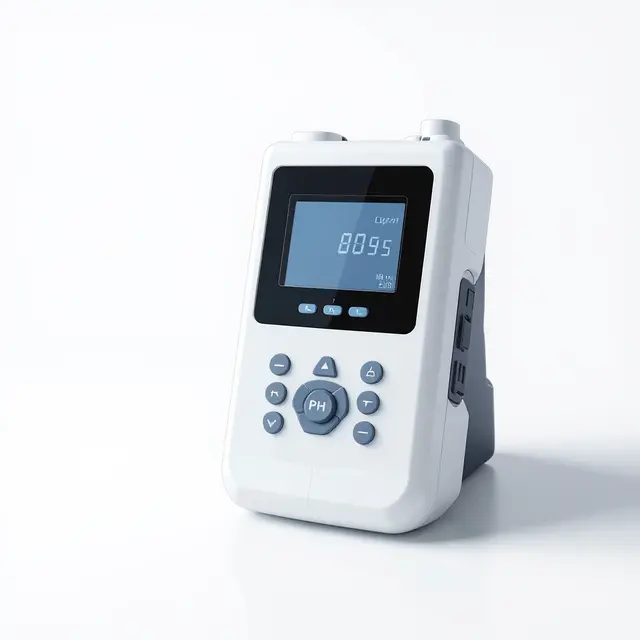
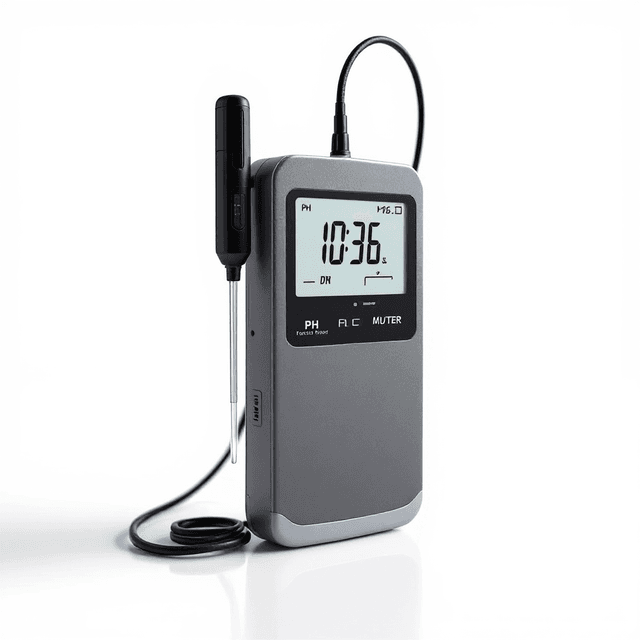
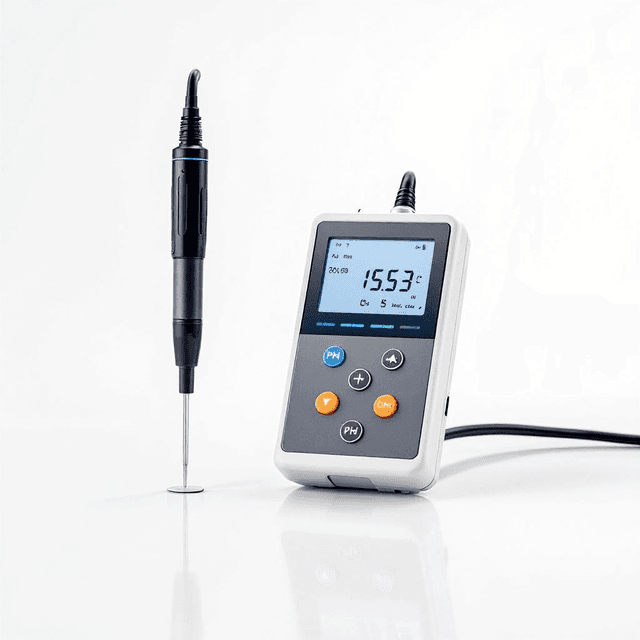
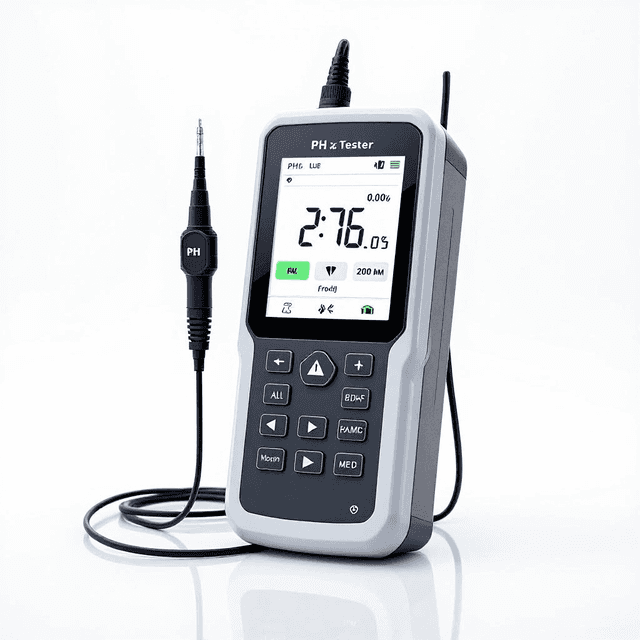
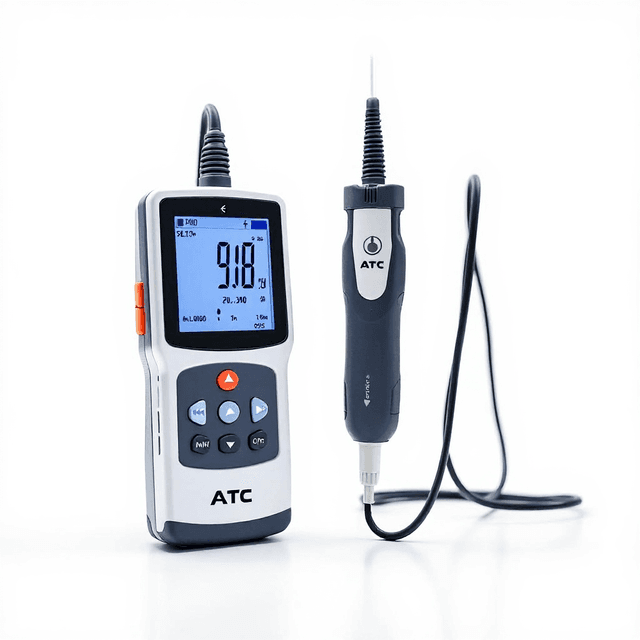
Portable Dissolved Oxygen Meter DO210E
Portable dissolved oxygen meter with barometric compensation and salinity correction for accurate field measurement of DO concentration, saturation, and temperature in aqueous samples.

Louise Corscadden, PhD
Director of Science · ConductScience
Ask Louise about Portable Dissolved Oxygen Meter DO210E fit, setup, configuration, or quote prep.
Already working with us? Sign in to connect this with My Scientist.
Key Specifications
Full details →- Model fit
- Configured during quote
- SKU family
- BIO-0368
- Shipping box
- 25.5 x 8.0 x 3.5 cm
- Ordering
- Online checkout and quote request available
- Category
- pH Meters
- Build notes
- Confirm accessories, station layout, and support needs before purchase
The Portable Dissolved Oxygen Meter DO210E provides accurate field and laboratory measurement of dissolved oxygen concentration, oxygen saturation, and temperature in aqueous samples. This handheld instrument features barometric compensation and manual salinity factor correction to ensure measurement accuracy across varying environmental conditions. With 0.1 resolution for dissolved oxygen readings and ±2.0% accuracy, the DO210E supports quantitative assessment of oxygen levels in water samples for research and monitoring applications.
The meter incorporates automatic and manual temperature compensation modes, reading prompts for measurement stability confirmation, and data storage capacity for 200 measurements. Configurable auto-shutdown intervals from 300 to 3600 seconds optimize battery life during extended field work. Calibration using air-saturated water or zero point reference ensures measurement traceability and reproducibility across sampling locations.
How It Works
Dissolved oxygen measurement employs an electrochemical sensor system consisting of a cathode and anode separated by an electrolyte solution and covered with an oxygen-permeable membrane. Oxygen molecules diffuse through the membrane at a rate proportional to the partial pressure of dissolved oxygen in the sample. At the cathode, oxygen is reduced according to the reaction: O₂ + 4H⁺ + 4e⁻ → 2H₂O, generating a current proportional to the oxygen concentration.
The DO210E incorporates temperature compensation algorithms that account for the temperature dependence of oxygen solubility in water. Barometric compensation adjusts readings for atmospheric pressure variations that affect oxygen saturation levels. Manual salinity factor correction accounts for the reduced oxygen solubility in saline solutions, allowing accurate measurements in brackish or marine samples.
Calibration using air-saturated water establishes the 100% oxygen saturation reference point at the measurement temperature and barometric pressure. Zero point calibration in oxygen-free solution (sodium sulfite solution) establishes the baseline for accurate low-concentration measurements.
Features & Benefits
Automation Level
- manual
DO Concentration
- Range
Temperature Range
- Range
Calibration Points
- Air-saturated water or zero point
Barometric Compensation
- Yes
Manual Salinity Factor Correction
- Yes
DO Saturation
- Range
Relative Accuracy
- ±0.2
Measurement
- Reading Mode
Reading Prompts
- Reading, stable, connector
Temp. Compensation
- ATC, MTC
Data Storage
- 200 result each
Auto Shutdown
- 300, 600, 1200, 1800, 3600sec. off
Brand
- ConductScience
Research Domain
- Analytical Chemistry
- Environmental Monitoring
- Food Science
- Microbiology
- Pharmaceutical QC
Accuracy
- ±2.0%
Shipping weight
- 1.0 lb
Shipping box
- L: 25.5 cm
- W: 8.0 cm
- H: 3.5 cm
| Feature | This Product | Typical Alternative | Advantage |
|---|---|---|---|
| Measurement Accuracy | ±2.0% accuracy with 0.1 resolution | Entry-level models often provide ±3-5% accuracy with limited resolution | Higher precision enables detection of small dissolved oxygen changes critical for environmental monitoring and process control applications. |
| Environmental Compensation | Barometric compensation and manual salinity correction | Basic meters may lack barometric compensation or salinity correction | Ensures measurement accuracy across varying field conditions without requiring separate correction calculations. |
| Data Storage Capacity | 200 measurement storage with identification | Many portable meters offer limited or no data storage | Eliminates manual data recording errors and enables batch processing of field sampling results. |
| Calibration Options | Air-saturated water or zero point calibration | Some meters require specific calibration solutions | Air-saturated water calibration reduces dependency on specialized standards for field calibration procedures. |
| Temperature Compensation | Automatic and manual temperature compensation modes | Basic models may offer only automatic compensation | Manual mode provides flexibility for specialized applications requiring custom temperature correction protocols. |
| Power Management | Configurable auto-shutdown from 300 to 3600 seconds | Fixed auto-shutdown intervals or manual power control only | Optimizes battery life for different sampling protocols while preventing accidental power drain during field work. |
The DO210E combines research-grade accuracy with practical field features including environmental compensation, flexible calibration, and data storage. The instrument provides comprehensive dissolved oxygen measurement capabilities suitable for both laboratory and field research applications.
Practical Tips
Perform air-saturated water calibration at the expected measurement temperature and allow adequate equilibration time for accurate reference establishment.
Why: Temperature affects oxygen solubility and sensor response, making temperature-matched calibration critical for measurement accuracy.
Store the electrode in electrode fill solution between uses and inspect the membrane regularly for damage or contamination buildup.
Why: Proper storage maintains electrode performance while membrane inspection prevents measurement drift from physical damage.
Ensure adequate sample volume around the electrode probe and gentle stirring to maintain consistent oxygen diffusion to the membrane surface.
Why: Insufficient sample volume or stagnant conditions create oxygen depletion around the probe, leading to artificially low readings.
Verify barometric pressure readings using a separate barometer when maximum accuracy is required for field measurements.
Why: Barometric pressure directly affects oxygen saturation calculations, and independent verification ensures compensation accuracy.
If readings appear unstable, check for air bubbles under the membrane and ensure proper electrode fill solution levels.
Why: Air bubbles interfere with oxygen diffusion while insufficient fill solution affects electrochemical sensor function.
Record sample temperature, salinity, and barometric pressure with each measurement for complete documentation and data validation.
Why: Environmental parameters affect dissolved oxygen solubility and enable post-measurement verification of compensation accuracy.
Allow the meter to equilibrate to sample temperature before measurement, especially when moving between different temperature environments.
Why: Temperature gradients between instrument and sample can cause measurement errors until thermal equilibrium is established.
Use appropriate personal protective equipment when measuring dissolved oxygen in unknown water samples or chemical solutions.
Why: Sample composition may include hazardous chemicals or biological contaminants requiring standard laboratory safety precautions.
Setup Guide
What’s in the Box
- DO210E dissolved oxygen meter (typical)
- Dissolved oxygen electrode probe (typical)
- Electrode fill solution (typical)
- Calibration standards kit (typical)
- Power adapter/battery (typical)
- Carrying case (typical)
- User manual and calibration certificate (typical)
Warranty
ConductScience provides a standard 1-year manufacturer warranty covering defects in materials and workmanship. Technical support includes calibration guidance, troubleshooting assistance, and electrode maintenance procedures.
Compliance
What calibration solutions are required for accurate dissolved oxygen measurement?
The DO210E uses air-saturated water (100% oxygen saturation) as the primary calibration standard and sodium sulfite solution for zero point calibration. Air-saturated water can be prepared by aerating distilled water or using water in equilibrium with atmospheric oxygen.
How does salinity affect dissolved oxygen measurements and correction procedures?
Salinity reduces oxygen solubility in water, requiring manual salinity factor correction for accurate measurements in brackish or marine samples. The meter allows input of salinity values to automatically adjust readings based on the reduced oxygen solubility coefficient.
What is the typical response time for dissolved oxygen measurements in different sample types?
Response time depends on sample temperature, stirring, and oxygen concentration gradients. The meter provides stability prompts to indicate when readings have equilibrated, typically within 30-60 seconds for well-mixed samples at room temperature.
How frequently should the dissolved oxygen electrode membrane be replaced?
Membrane replacement frequency depends on usage intensity and sample types, typically every 3-6 months for regular use. Replace immediately if the membrane shows visible damage, slow response, or calibration drift beyond acceptable limits.
Can the meter measure dissolved oxygen in samples with high organic content or suspended solids?
The electrochemical sensor can measure dissolved oxygen in samples with organic content, though membrane fouling may occur with heavy contamination. Pre-filtering turbid samples may extend membrane life while maintaining measurement accuracy.
What temperature range limitations apply to dissolved oxygen measurements?
Consult product datasheet for specific temperature range specifications. The meter provides automatic temperature compensation within its operating range, with manual compensation available for specialized applications outside automatic range.
How does barometric pressure variation affect dissolved oxygen readings?
Barometric pressure directly affects oxygen saturation levels in water samples. The DO210E automatically compensates for pressure variations, ensuring accurate readings across different altitudes and weather conditions without manual adjustment.
What data export options are available for the stored measurements?
The meter stores up to 200 measurements with sample identification. Consult product datasheet for specific data transfer capabilities and software compatibility for exporting stored results to computer systems.
Have a question about this product?
Have a question? Just ask.
Send it over and we'll email you a personalized answer — no call, no scheduling.
Prefer to talk it through?