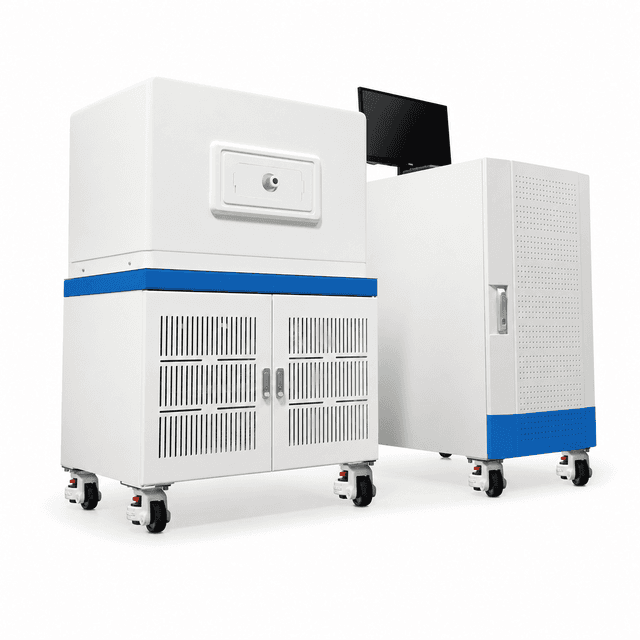
Compact NMR Food Analyzer (25 mm)
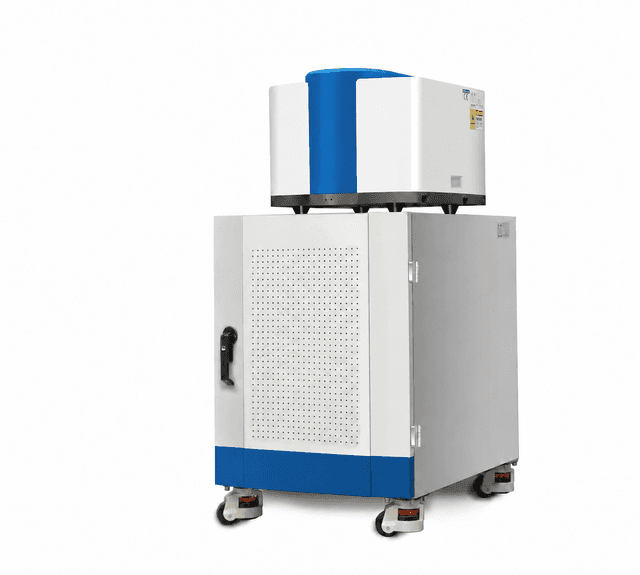
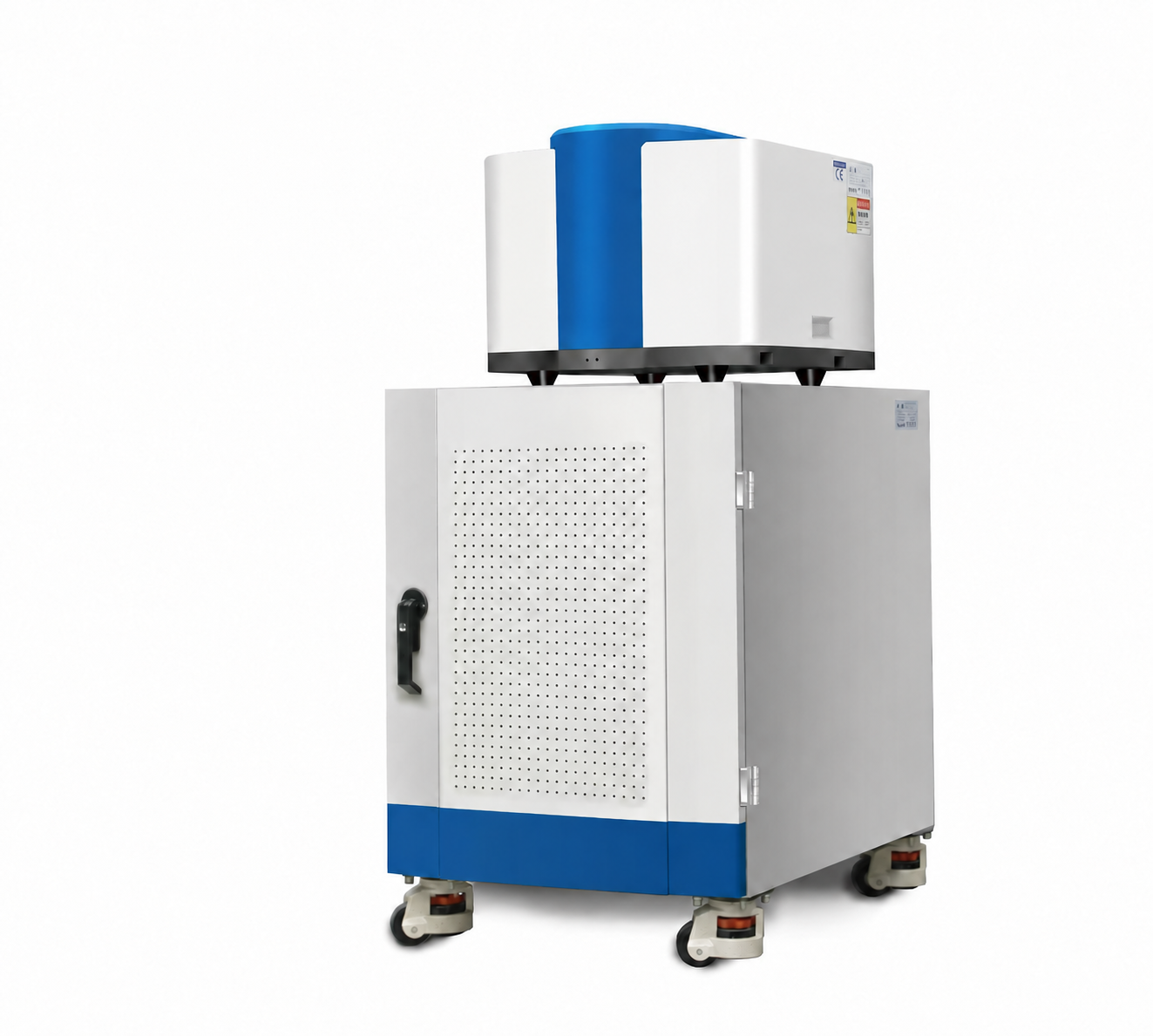
Compact 0.5 T NMR analyzer with 25 mm vertical bore for non-destructive food composition analysis, moisture content determination, and texture characterization in small samples.

Louise Corscadden, PhD
Director of Science · ConductScience
Ask Louise about Compact NMR Food Analyzer (25 mm) fit, setup, configuration, or quote prep.
Already working with us? Sign in to connect this with My Scientist.
Key Specifications
Full details →- Model fit
- Configured during quote
- SKU family
- NMS-NMI20-025
- Shipping box
- 80.0 x 60.0 x 80.0 cm
- Ordering
- Online checkout and quote request available
- Category
- NMR Spectroscopy
- Build notes
- Confirm accessories, station layout, and support needs before purchase
The Compact NMR Food Analyzer (25 mm) provides nuclear magnetic resonance imaging and relaxation analysis capabilities in a space-efficient vertical bore configuration. Operating at 0.5 T (20 MHz), this benchtop system enables non-destructive analysis of food composition, moisture content, and structural properties in samples up to 25 mm diameter. The vertical orientation facilitates easy sample loading and positioning for routine quality control and research applications.
This system delivers the core NMR functionality required for food science research while occupying minimal laboratory bench space. The compact design makes it suitable for laboratories with spatial constraints that require quantitative analysis of fat content, moisture distribution, and texture parameters in food materials. For research and industrial use only.
How It Works
Nuclear magnetic resonance spectroscopy exploits the magnetic properties of atomic nuclei, primarily hydrogen-1 (protons) in food systems. When placed in the 0.5 Tesla magnetic field, hydrogen nuclei align with the field direction. Radiofrequency pulses at the resonant frequency (20 MHz) excite these nuclei, causing them to absorb energy and change alignment. As the nuclei return to equilibrium, they emit detectable RF signals whose intensity correlates with hydrogen concentration.
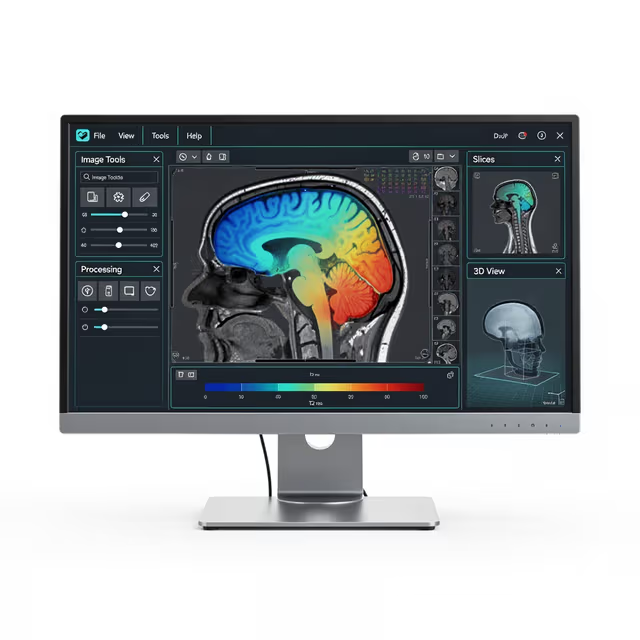
The vertical bore configuration allows gravitational settling of samples while maintaining uniform magnetic field exposure across the 25 mm sample volume. Relaxation time measurements (T1 and T2) provide information about molecular environment and mobility, enabling differentiation between bound and free water, fat phases, and protein matrices. Imaging sequences generate spatial maps of these properties, revealing moisture gradients and structural heterogeneities within food samples.
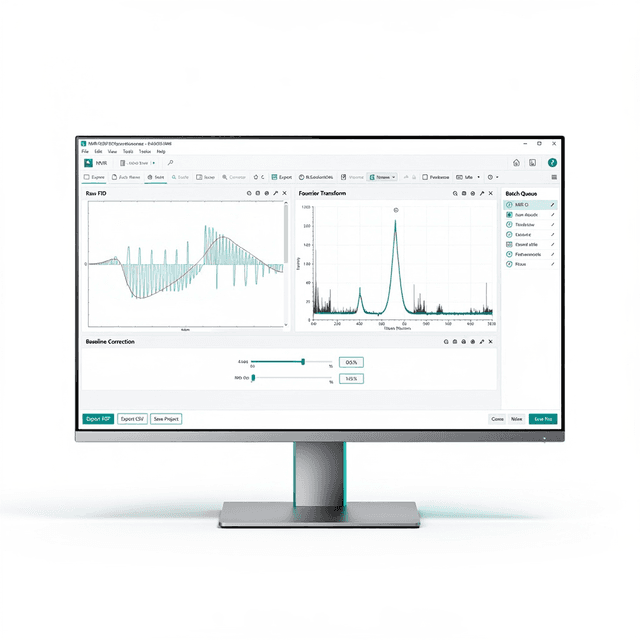
Signal processing converts the time-domain NMR data into frequency-domain spectra and relaxation curves. Peak integration quantifies component concentrations, while relaxation parameters characterize molecular dynamics and phase behavior relevant to texture, shelf stability, and processing effects.
Features & Benefits
Field Strength
- 0.5 T (20 MHz)
Bore Diameter
- 25 mm
Automation Level
- semi-automated
Brand
- Greenwaves Scientific
Research Domain
- Agricultural Research
- Analytical Chemistry
- Food Science
- Materials Science
- Pharmaceutical QC
Shipping weight
- 150.0 lb
Shipping box
- L: 80.0 cm
- W: 60.0 cm
- H: 80.0 cm
| Feature | This Product | Typical Alternative | Advantage |
|---|---|---|---|
| Magnetic Field Strength | 0.5 T (20 MHz) | Entry-level systems often operate at 0.3-0.4 T | Higher field strength improves signal-to-noise ratio and measurement precision for quantitative food analysis. |
| Bore Diameter | 25 mm vertical bore | Compact systems commonly offer 15-20 mm bores | Larger bore diameter accommodates a wider range of food sample sizes and container formats. |
| Orientation | Vertical configuration | Many benchtop systems use horizontal orientations | Vertical design facilitates natural sample settling and reduces air bubble interference in liquid samples. |
| System Weight | 150 kg | Ultra-compact models may weigh 50-100 kg | Substantial mass provides magnetic field stability and vibration resistance for consistent measurements. |
| Imaging Capability | Full NMR imaging functionality | Basic models may offer only relaxation measurements | Imaging capability reveals spatial distribution of moisture and composition within food samples. |
This analyzer combines 0.5 T field strength with 25 mm bore capacity in a vertical configuration optimized for food analysis workflows. The system provides both relaxation analysis and imaging capabilities while maintaining a compact benchtop footprint suitable for space-constrained laboratories.
Practical Tips
Use reference standards that match your sample matrix composition for most accurate calibration curves.
Why: Matrix effects can influence relaxation behavior and require matrix-matched calibration for quantitative accuracy.
Monitor magnetic field drift regularly and perform shimming adjustments as needed to maintain field homogeneity.
Why: Field drift affects measurement reproducibility and can introduce systematic errors in quantitative analysis.
Allow samples to equilibrate to measurement temperature for at least 15 minutes before analysis.
Why: Temperature gradients cause inconsistent relaxation times and affect the accuracy of composition measurements.
Check for air bubbles in liquid samples which can cause signal artifacts and measurement errors.
Why: Air bubbles create magnetic susceptibility differences that distort the magnetic field and degrade image quality.
Optimize pulse sequence parameters for your specific sample type to maximize signal-to-noise ratio.
Why: Sample-specific optimization improves measurement precision and reduces acquisition time requirements.
Remove all ferromagnetic materials from the measurement area before system operation.
Why: Ferromagnetic objects can be attracted to the magnet, causing safety hazards and magnetic field disturbances.
Use consistent sample preparation protocols including mixing, temperature control, and container selection.
Why: Standardized preparation reduces measurement variability and improves reproducibility across sample batches.
Record sample history including storage conditions and preparation time for accurate data interpretation.
Why: Sample age and storage affect moisture migration and fat crystallization, influencing NMR measurements.
Setup Guide
What’s in the Box
- Compact NMR Food Analyzer main unit
- Power supply and cables
- Sample tubes and holders (typical)
- Reference standards for calibration (typical)
- Control software and drivers (typical)
- User manual and documentation
- Installation and setup guide (typical)
Warranty
ConductScience provides a standard one-year manufacturer warranty covering parts and labor, with technical support available for installation, calibration, and method development assistance.
Compliance
What sample types and sizes are compatible with the 25 mm bore?
The 25 mm vertical bore accepts standard NMR tubes and small food samples up to 25 mm diameter. Sample height is limited by the active measurement region, typically accommodating samples up to several centimeters in length depending on the measurement protocol.
How does the 20 MHz frequency affect measurement sensitivity compared to higher field systems?
The 20 MHz frequency provides adequate sensitivity for food analysis applications while reducing system cost and complexity. Signal-to-noise ratio is lower than high-field systems, but sufficient for quantitative moisture, fat, and relaxation measurements in most food matrices.
What measurement time is required for typical food composition analysis?
Measurement times vary by application, with basic relaxation measurements completing in minutes and imaging sequences requiring 10-30 minutes depending on spatial resolution requirements and signal averaging needs.
Can the system distinguish between different types of fats or oils in food samples?
The system can differentiate fat phases based on relaxation behavior and mobility, but specific fat type identification requires comparison with known standards and may need complementary analytical techniques for definitive identification.
What calibration standards and maintenance procedures are required?
Regular calibration uses reference materials with known moisture and fat content. Maintenance includes periodic field homogeneity checks, probe tuning verification, and temperature stability monitoring to ensure measurement reproducibility.
How does sample temperature affect measurement accuracy?
Temperature significantly affects relaxation times and molecular mobility. Consistent sample temperature control or equilibration to room temperature is essential for reproducible quantitative measurements.
What data output formats are available for integration with laboratory information systems?
Consult product datasheet for specific data export formats and integration capabilities with common laboratory data management systems.
Have a question about this product?
Have a question? Just ask.
Send it over and we'll email you a personalized answer — no call, no scheduling.
Prefer to talk it through?
Accessories
Enhance your setup with compatible accessories
Frequently Bought Together