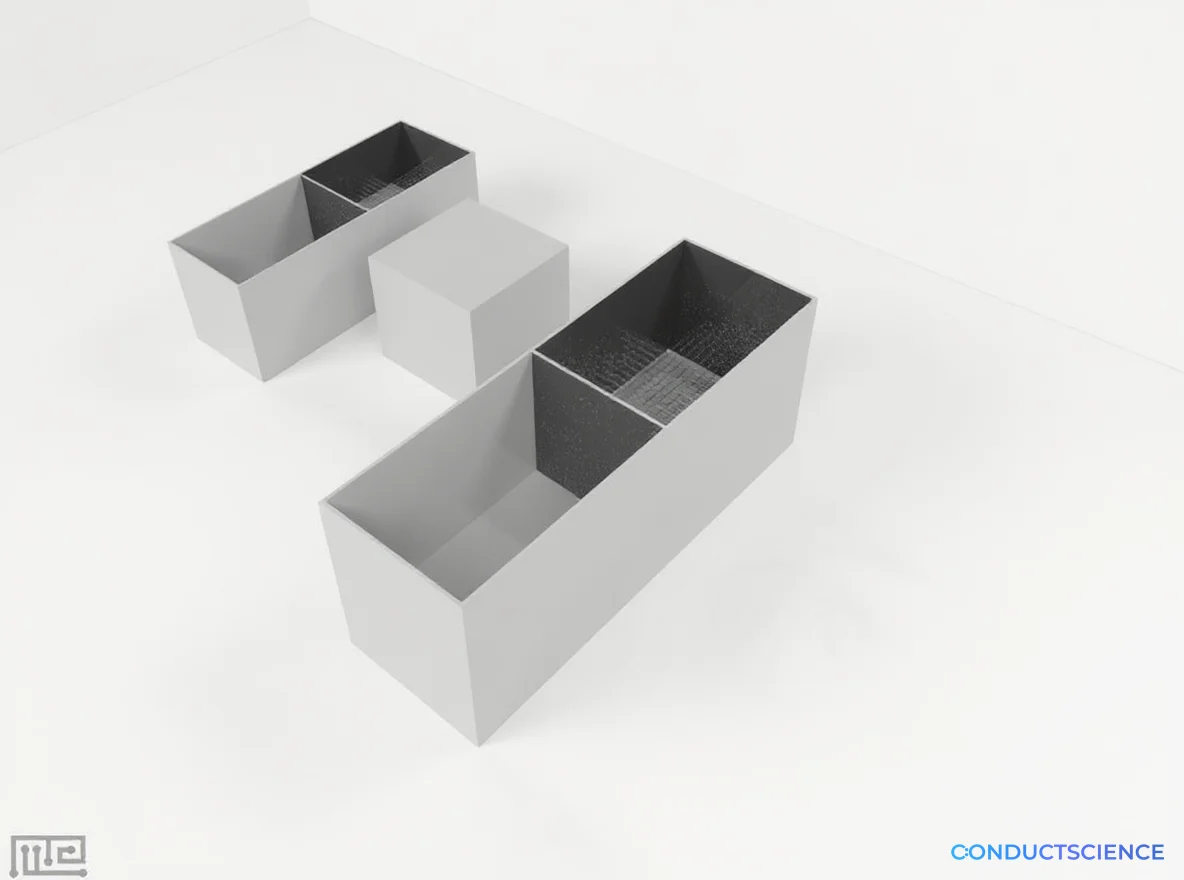
Conditioned Place Preference Calcagnetti 1996
SKU CS-958298
$1,830.00
IncludesStandard care
Behavioral testing protocol for measuring drug-induced place preference or avoidance in laboratory rodents, used to assess rewarding and aversive properties of pharmacological agents.
CE MarkedBAA available
Scientist guidance

Louise Corscadden, PhD
Director of Science · ConductScience
Ask Louise about Conditioned Place Preference Calcagnetti 1996 fit, setup, configuration, or quote prep.
Already working with us? Sign in to connect this with My Scientist.
Key Specifications
Full details →- Model fit
- Mouse, Rat
- SKU family
- CS-958298
- Shipping box
- 65.0 x 36.0 x 27.0 cm
- Ordering
- Online checkout and quote request available
- Category
- Behavioral Mazes
- Build notes
- Confirm accessories, station layout, and support needs before purchase
The Conditioned Place Preference Calcagnetti 1996 is a behavioral testing protocol designed for evaluating the rewarding or aversive properties of pharmacological agents in laboratory rodents. This paradigm measures an animal's preference for environmental contexts associated with drug administration, providing quantitative assessment of motivational states and addiction liability. The protocol follows established conditioning principles where animals learn to associate specific spatial environments with drug effects.
This testing framework enables researchers to assess both positive reinforcing effects (place preference) and aversive effects (place avoidance) of experimental compounds. The methodology provides a non-invasive approach to studying drug reward mechanisms and withdrawal states without requiring operant responding or complex behavioral training. Results from this paradigm contribute to understanding addiction neurobiology and screening potential therapeutic compounds.
How It Works
The conditioned place preference paradigm operates on principles of classical conditioning where neutral environmental stimuli become associated with drug effects through repeated pairings. During conditioning phases, animals receive drug injections in one distinct chamber and vehicle injections in an alternate chamber, creating learned associations between spatial contexts and pharmacological states.
The protocol typically consists of three phases: pre-conditioning baseline preference assessment, conditioning sessions with drug-environment pairings, and post-conditioning preference testing. Animals demonstrate conditioned place preference by spending increased time in drug-associated environments during choice tests, while place avoidance indicates aversive drug effects. The magnitude of preference or avoidance reflects the strength of drug-induced motivational states.
Behavioral responses are quantified by measuring time spent in each chamber during preference tests, with statistical comparisons between pre- and post-conditioning sessions revealing significant shifts in spatial preferences. This approach provides objective measurement of subjective drug effects without requiring complex behavioral training or invasive procedures.
Features & Benefits
Non-invasive behavioral assessment
Measures drug effects without surgical procedures or complex training protocols, reducing experimental variables and animal stress.
Standardized conditioning protocol
Follows established Calcagnetti 1996 methodology for consistent results across laboratories and experimental conditions.
Bidirectional response measurement
Detects both rewarding (preference) and aversive (avoidance) drug effects within the same experimental paradigm.
Quantitative behavioral metrics
Provides objective time-based measurements for statistical analysis of drug-induced spatial preferences.
Multi-phase experimental design
Includes baseline, conditioning, and testing phases for comprehensive assessment of learned associations.
Environmental conditioning approach
Utilizes spatial context associations to reveal motivational effects of pharmacological agents.
Behavioral Construct
- Place Preference
- Conditioned Learning
- Spatial Memory
- Drug Reward
Automation Level
- manual
Research Domain
- Addiction Research
- Behavioral Pharmacology
- Learning and Memory
- Neuroscience
Species
- Mouse
- Rat
Compatible Tracking Software
- ConductVision
Shipping weight
- 6.06 lb
Shipping box
- L: 65.0 cm
- W: 36.0 cm
- H: 27.0 cm
| Feature | This Product | Typical Alternative | Advantage |
|---|---|---|---|
| Protocol Standardization | Based on established Calcagnetti 1996 methodology | Many laboratories use modified or non-standardized protocols | Ensures reproducible results and facilitates cross-laboratory comparisons of drug effects. |
| Behavioral Assessment Approach | Non-invasive spatial preference measurement | Some protocols require surgical procedures or complex training | Reduces experimental variables and animal stress while maintaining sensitivity to drug effects. |
| Response Detection | Measures both preference and avoidance behaviors | Some paradigms focus only on positive or negative effects | Provides comprehensive assessment of drug motivational properties within a single protocol. |
| Implementation Requirements | Requires basic behavioral chambers with environmental discrimination | Complex protocols may need specialized equipment or extensive training | Enables implementation in standard laboratory settings without specialized apparatus. |
This protocol provides a standardized, non-invasive approach for evaluating drug reward and aversion effects through spatial conditioning. The methodology offers comprehensive behavioral assessment capabilities while maintaining practical implementation requirements for laboratory settings.
Behavioral Pharmacology
Screening novel compounds for abuse liability by measuring conditioned place preference responses following repeated drug-context pairings.
Addiction Research
Investigating reward mechanisms and withdrawal states associated with drugs of abuse through spatial conditioning paradigms.
Neuroscience
Studying neural circuits underlying reward and aversion by measuring behavioral preferences in genetically modified animals or following targeted lesions.
Learning and Memory
Examining associative learning processes and memory consolidation through environmental context-drug association formation.
Pharmaceutical QC
Evaluating side effect profiles and therapeutic indices of drug candidates by assessing both rewarding and aversive behavioral responses.
Practical Tips
Best Practices
Counterbalance drug-chamber assignments across subjects to control for inherent spatial preferences.
Why: Eliminates potential bias from pre-existing chamber preferences that could confound conditioning effects.
Data Quality
Record locomotor activity alongside preference measurements to distinguish drug effects from motor impairment.
Why: Ensures that changes in spatial distribution reflect preference rather than drug-induced motor deficits.
Best Practices
Maintain consistent injection timing relative to chamber placement to optimize drug-environment associations.
Why: Standardized timing enhances conditioning strength and reduces variability in behavioral responses.
Troubleshooting
If animals show strong baseline chamber bias, implement a biased design using the initially non-preferred chamber for drug pairing.
Why: Prevents ceiling effects and allows detection of drug-induced preference shifts in animals with strong spatial biases.
Data Quality
Include vehicle control groups to distinguish drug-specific effects from handling and injection stress.
Why: Controls for non-specific effects of experimental procedures on spatial preference behaviors.
Best Practices
Clean chambers thoroughly between sessions with species-appropriate disinfectants to eliminate olfactory cues.
Why: Prevents contamination of environmental discrimination and maintains consistent conditioning contexts.
Setup Guide
Chamber Preparation
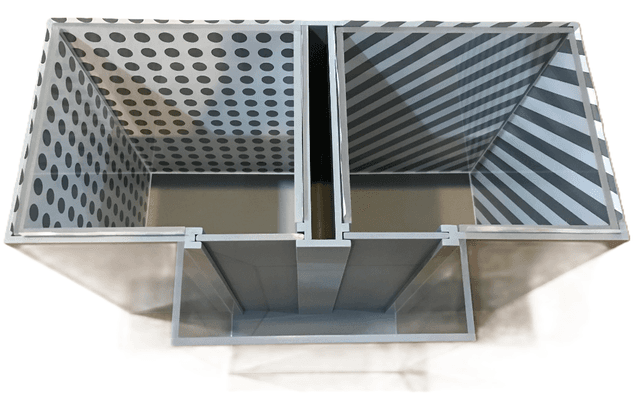
Configure testing apparatus with distinct visual, tactile, or olfactory cues for each chamber to ensure clear environmental discrimination.
Baseline Assessment
Conduct pre-conditioning sessions to measure initial chamber preferences and identify any inherent spatial biases.
Conditioning Protocol
Implement alternating drug and vehicle injection sessions with animals confined to designated chambers according to treatment schedule.
Environmental Controls
Maintain consistent lighting, temperature, and ambient noise conditions throughout all experimental phases.
Preference Testing
Allow free access to all chambers during post-conditioning tests while recording time spent and locomotor activity in each zone.
Data Collection
Document behavioral measurements including chamber occupancy times, transitions between chambers, and total locomotor activity.
What’s in the Box
- Detailed protocol documentation (typical)
- Behavioral scoring guidelines (typical)
- Data collection templates (typical)
- Chamber configuration specifications (typical)
- Statistical analysis recommendations (typical)
Warranty
ConductScience provides standard protocol documentation and technical support for implementation guidance. Ongoing consultation available for experimental design optimization and troubleshooting.
Compliance
NIH Guidelines for Laboratory Animal CareSupports behavioral research workflows conducted under institutional animal care and use oversight.
ARRIVE GuidelinesCommonly used in studies reported according to animal research reporting standards for behavioral pharmacology.
Q
What are the standard conditioning session parameters for this protocol?
A
Consult product datasheet for specific session durations, inter-session intervals, and number of conditioning trials following the Calcagnetti 1996 methodology.
Q
How should chamber dimensions be optimized for different rodent species?
A
Chamber size should accommodate natural locomotor behavior while preventing spatial preference bias; specific dimensions depend on species body size and experimental requirements.
Q
What statistical approaches are recommended for analyzing preference data?
A
Typically involves paired t-tests comparing pre- and post-conditioning chamber occupancy times, with ANOVA for multi-group designs and effect size calculations.
Q
How long should the drug-free interval be before preference testing?
A
The washout period depends on drug pharmacokinetics and half-life; generally 24-48 hours to avoid acute drug effects during preference assessment.
Q
Can this protocol be adapted for withdrawal-induced place aversion studies?
A
Yes, the paradigm can be modified to study withdrawal states by conducting preference tests during precipitated or spontaneous withdrawal periods.
Q
What environmental cues provide optimal chamber discrimination?
A
Effective cues include distinct visual patterns, floor textures, lighting conditions, or olfactory stimuli that create clearly distinguishable spatial contexts.
Have a question about this product?
Track rodents with ConductVision
ConductVision is our video-tracking software. Record your sessions on video, and it scores standard rodent tests, such as those listed below.
Examples of tests it scores
To check whether ConductVision scores your protocol in this apparatus, ask in your quote request.
Ask a question
Have a question? Just ask.
Send it over and we'll email you a personalized answer — no call, no scheduling.
Personalized email reply
Usually within one business day
Helpful answers published here
Prefer to talk it through?
Accessories
Enhance your setup with compatible accessories
Total: $0.00
Frequently Bought Together
Total: $7,790.00

Conditioned Place Preference Calcagnetti 1996
$1,830.00
Added to quoteView Quote
