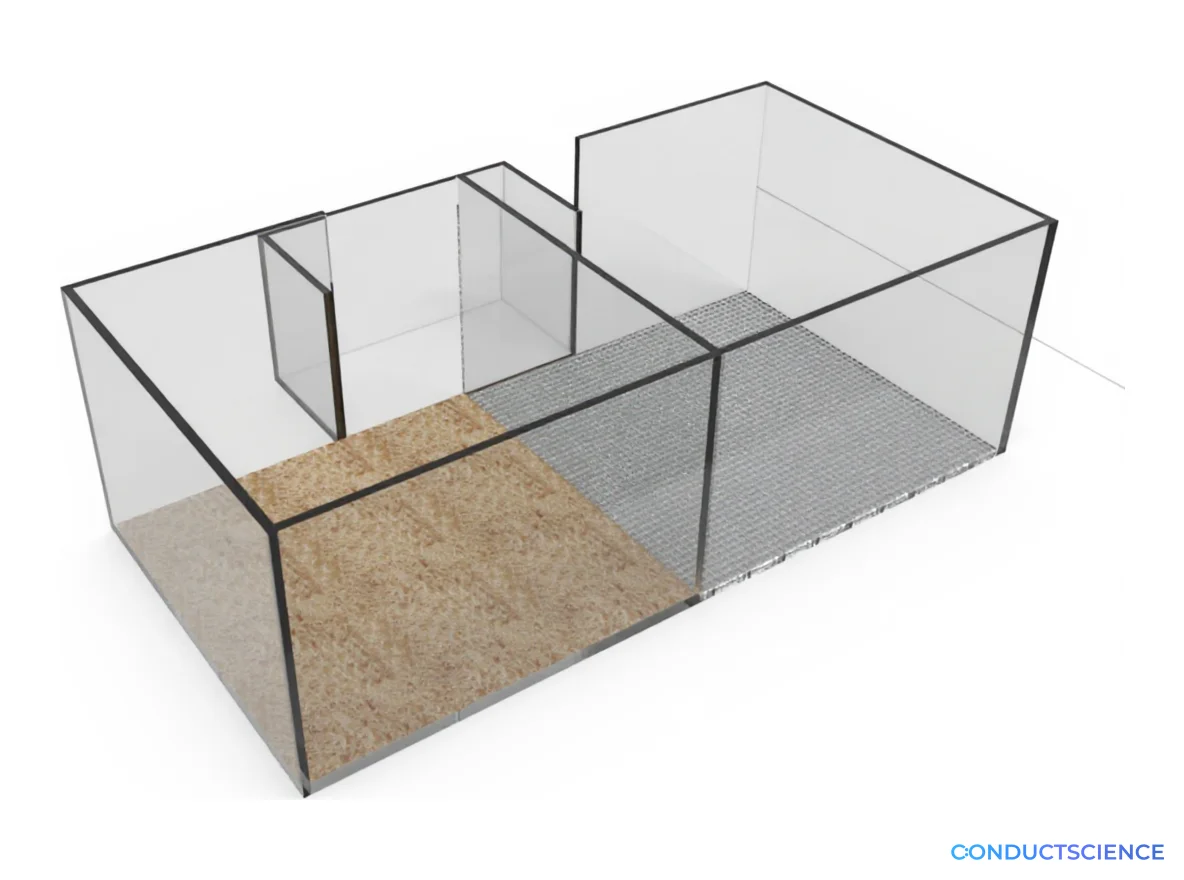
Conditioned Place Preference Carr 1983
SKU CS-958297
$1,830.00
IncludesStandard care
Behavioral apparatus for measuring conditioned place preference in laboratory animals, used to assess reward and aversion learning through environmental association paradigms.
CE MarkedBAA available
Scientist guidance

Louise Corscadden, PhD
Director of Science · ConductScience
Ask Louise about Conditioned Place Preference Carr 1983 fit, setup, configuration, or quote prep.
Already working with us? Sign in to connect this with My Scientist.
Key Specifications
Full details →- Model fit
- Hamster, Mouse, Rat, Guinea pig
- SKU family
- CS-958297
- Shipping box
- 65.0 x 36.0 x 27.0 cm
- Ordering
- Online checkout and quote request available
- Category
- Behavioral Mazes
- Build notes
- Confirm accessories, station layout, and support needs before purchase
The Conditioned Place Preference (CPP) apparatus described by Carr (1983) is a fundamental behavioral testing system used to assess reward and aversion learning in laboratory animals. This paradigm measures an animal's preference for environmental cues previously associated with rewarding or aversive stimuli, providing insights into the motivational and hedonic properties of pharmacological agents, natural rewards, and environmental conditions.
The apparatus consists of distinct compartments with different visual, tactile, or olfactory cues that can be paired with specific treatments during conditioning phases. Animals are subsequently allowed to freely explore the environment, and time spent in each compartment serves as an index of learned preference or aversion. This method has become a standard approach for evaluating drug reward potential, withdrawal symptoms, and the neural mechanisms underlying associative learning and memory formation.
How It Works
The conditioned place preference paradigm operates on principles of classical conditioning, where neutral environmental stimuli acquire motivational significance through repeated pairing with rewarding or aversive experiences. During the conditioning phase, animals receive treatments (pharmacological agents, food rewards, or aversive stimuli) in one compartment while receiving control treatments in an alternate compartment with distinct environmental cues.
The strength of conditioning is subsequently measured during drug-free test sessions where animals have unrestricted access to all compartments. Time spent in each environment, along with locomotor patterns and approach behaviors, provides quantitative measures of learned preference or aversion. The paradigm exploits the natural tendency of animals to approach rewarding stimuli and avoid aversive ones, with the environmental context serving as a conditioned stimulus that elicits approach or avoidance responses.
Data analysis typically involves comparing time spent in drug-paired versus vehicle-paired compartments, with preference scores calculated as the difference between post-conditioning and pre-conditioning time distributions. This approach controls for individual baseline preferences and provides sensitive measures of treatment effects on motivated behavior.
Features & Benefits
Multi-compartment design with distinct environmental cues
Enables clear discrimination between treatment-associated and control environments for robust conditioning effects
Removable floor inserts and wall panels
Allows customization of tactile and visual cues to optimize discrimination learning for different species and experimental requirements
Open-field configuration with unrestricted movement
Provides natural exploration patterns while enabling precise measurement of spatial preferences and locomotor behavior
Standardized compartment dimensions
Ensures consistent environmental conditions and reproducible results across experimental sessions and research facilities
Compatible with automated tracking systems
Supports integration with video tracking software for objective behavioral measurements and reduced observer bias
Modular construction materials
Facilitates thorough cleaning and sterilization protocols required for multi-animal studies and contamination control
Behavioral Construct
- reward learning
- aversion learning
- place preference
- associative memory
- drug-seeking behavior
- contextual conditioning
Automation Level
- manual
Research Domain
- Addiction Research
- Anxiety and Depression
- Behavioral Pharmacology
- Learning and Memory
- Neuroscience
- Toxicology
Species
- Hamster
- Mouse
- Rat
- Guinea pig
Compatible Tracking Software
- ConductVision
Shipping weight
- 6.06 lb
Shipping box
- L: 65.0 cm
- W: 36.0 cm
- H: 27.0 cm
| Feature | This Product | Typical Alternative | Advantage |
|---|---|---|---|
| Experimental Protocol Complexity | Requires minimal training with straightforward conditioning and testing phases | Other behavioral paradigms often require extensive operant training or food restriction protocols | Reduces experimental time and potential confounds from training procedures while maintaining sensitivity to treatment effects |
| Behavioral Endpoint Sensitivity | Measures natural exploration and spatial preferences without forced choices | Binary choice paradigms may miss subtle gradations in preference strength | Provides continuous measures of motivation that capture individual differences and dose-response relationships |
| Ethical Considerations | Uses natural exploratory behavior without food or water restriction | Many reward paradigms require food deprivation to motivate responding | Minimizes animal distress while maintaining experimental validity for studies of hedonic processing |
| Experimental Throughput | Single apparatus accommodates multiple daily sessions with different animals | Operant chambers often limited to one animal per day due to session length | Enables efficient data collection across large sample sizes required for pharmacological studies |
This CPP apparatus provides a validated, efficient approach for assessing reward and aversion learning with minimal training requirements and high experimental throughput. The paradigm's reliance on natural exploratory behavior reduces ethical concerns while maintaining sensitivity to pharmacological and environmental manipulations.
Behavioral Pharmacology
Evaluating the rewarding or aversive properties of novel pharmaceutical compounds by measuring animals' learned preferences for drug-paired environmental contexts.
Addiction Research
Assessing drug-seeking behaviors and relapse potential by quantifying preference for environments previously associated with substances of abuse.
Neuroscience
Investigating the neural circuits underlying reward processing and associative memory formation through lesion studies and pharmacological manipulations.
Learning and Memory
Studying contextual learning mechanisms and the formation of stimulus-outcome associations in various experimental paradigms.
Anxiety and Depression
Examining the effects of anxiolytic and antidepressant treatments on motivated behavior and hedonic processing in animal models.
Toxicology
Determining the aversive properties of environmental toxins and contaminants through conditioned avoidance responses in exposed animals.
Practical Tips
Best Practices
Maintain consistent ambient lighting and minimize external noise during all experimental sessions to reduce environmental variability.
Why: Environmental consistency is critical for reproducible conditioning effects and prevents confounding of treatment responses with contextual changes.
Calibration
Verify compartment cue discriminability through pilot studies with drug-naive animals to ensure adequate baseline exploration of all areas.
Why: Inadequate cue discrimination can prevent conditioning formation and reduce experimental sensitivity to treatment effects.
Maintenance
Use enzyme-based cleaners followed by alcohol wipes between animals to eliminate olfactory traces without leaving chemical residues.
Why: Residual odors from previous animals can create unintended conditioning cues that confound preference measurements.
Data Quality
Record both total locomotor activity and compartment-specific movement to distinguish preference effects from general activity changes.
Why: Some treatments may alter overall activity levels, making it essential to separate locomotor effects from genuine spatial preferences.
Troubleshooting
If animals show strong baseline compartment preferences, increase the number of habituation sessions before beginning conditioning protocols.
Why: Strong initial biases can mask treatment effects and reduce the dynamic range available for measuring conditioning strength.
Safety
Ensure all removable components are securely fastened to prevent animals from accessing gaps or edges during exploration.
Why: Loose components can create safety hazards and introduce unintended environmental changes that affect behavioral measurements.
Best Practices
Counterbalance the order of compartment exposure during conditioning sessions to control for temporal effects on memory formation.
Why: Systematic ordering effects can introduce bias in conditioning strength and confound interpretation of treatment differences.
Setup Guide
Apparatus Assembly
Assemble the multi-compartment testing chamber according to specifications, ensuring distinct visual and tactile cues are properly positioned in each compartment.
Environmental Preparation
Verify that compartment cues (floor textures, wall patterns, lighting conditions) are clearly distinguishable and consistently maintained throughout the experimental period.
Baseline Assessment
Conduct pre-conditioning sessions to establish individual animals' baseline preferences for each compartment and identify any inherent biases.
Conditioning Protocol
Implement the conditioning schedule with appropriate counterbalancing of treatment-compartment pairings across subjects to control for environmental biases.
Test Session Setup
Configure the apparatus for drug-free test sessions with unrestricted access between compartments and position recording equipment for behavioral monitoring.
Data Collection
Record time spent in each compartment, locomotor activity, and other behavioral measures during standardized test sessions.
Maintenance Protocol
Clean all surfaces with appropriate disinfectants between animals and sessions to eliminate olfactory cues that could influence behavior.
What’s in the Box
- Multi-compartment testing chamber (typical)
- Interchangeable floor texture inserts (typical)
- Wall panel sets with distinct visual cues (typical)
- Assembly hardware and mounting brackets (typical)
- Protocol documentation and setup guide (typical)
- Cleaning and maintenance instructions (typical)
Warranty
ConductScience provides a standard one-year manufacturer warranty covering defects in materials and workmanship, with technical support for setup and protocol optimization.
Compliance
IACUC GuidelinesSupports behavioral studies conducted under institutional animal care and use committee oversight for research involving laboratory animals
NIH Guide for Care and Use of Laboratory AnimalsCompatible with housing and testing protocols specified in federal guidelines for research animal welfare and experimental procedures
Q
What is the optimal conditioning schedule for establishing robust place preferences?
A
Most protocols employ 3-8 conditioning sessions with alternating drug and vehicle pairings, typically 20-30 minutes per session, though optimal schedules vary by species, drug class, and experimental objectives.
Q
How do you control for baseline compartment preferences in experimental design?
A
Counterbalance drug-compartment pairings across subjects based on pre-conditioning preferences, ensuring equal numbers of animals receive treatments in each compartment regardless of initial bias.
Q
What behavioral measures beyond time spent provide additional insights into conditioning strength?
A
Locomotor activity, rearing frequency, approach latency, and transition patterns between compartments offer complementary measures of motivation and exploration that enhance interpretation of preference data.
Q
How long should test sessions last for reliable preference measurement?
A
Standard test sessions range from 15-30 minutes, with longer sessions potentially introducing habituation effects while shorter sessions may not capture stable preference patterns.
Q
What factors can produce false positive or negative results in CPP studies?
A
Environmental contamination, inadequate compartment discrimination, locomotor-impairing drug effects, stress-induced suppression of exploration, and insufficient conditioning can compromise data validity.
Q
Is the apparatus suitable for studying both acquisition and extinction of place preferences?
A
Yes, the paradigm readily accommodates extinction protocols through repeated drug-free exposures, allowing investigation of both conditioning formation and memory persistence over time.
Have a question about this product?
Track rodents with ConductVision
ConductVision is our video-tracking software. Record your sessions on video, and it scores standard rodent tests, such as those listed below.
Examples of tests it scores
To check whether ConductVision scores your protocol in this apparatus, ask in your quote request.
Ask a question
Have a question? Just ask.
Send it over and we'll email you a personalized answer — no call, no scheduling.
Personalized email reply
Usually within one business day
Helpful answers published here
Prefer to talk it through?
Accessories
Enhance your setup with compatible accessories
Total: $0.00
Frequently Bought Together
Total: $7,290.00
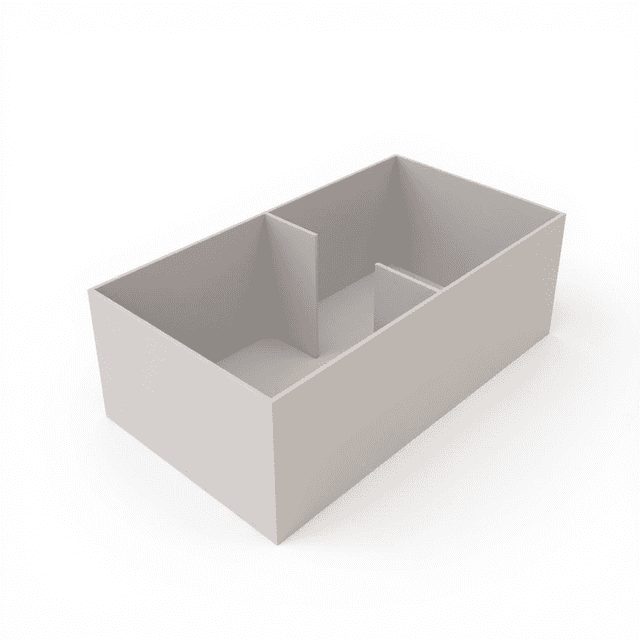



Conditioned Place Preference Carr 1983
$1,830.00
Added to quoteView Quote