Conditioned Place Preference Mucha 1985
SKU CS-958276
$1,830.00
IncludesStandard care
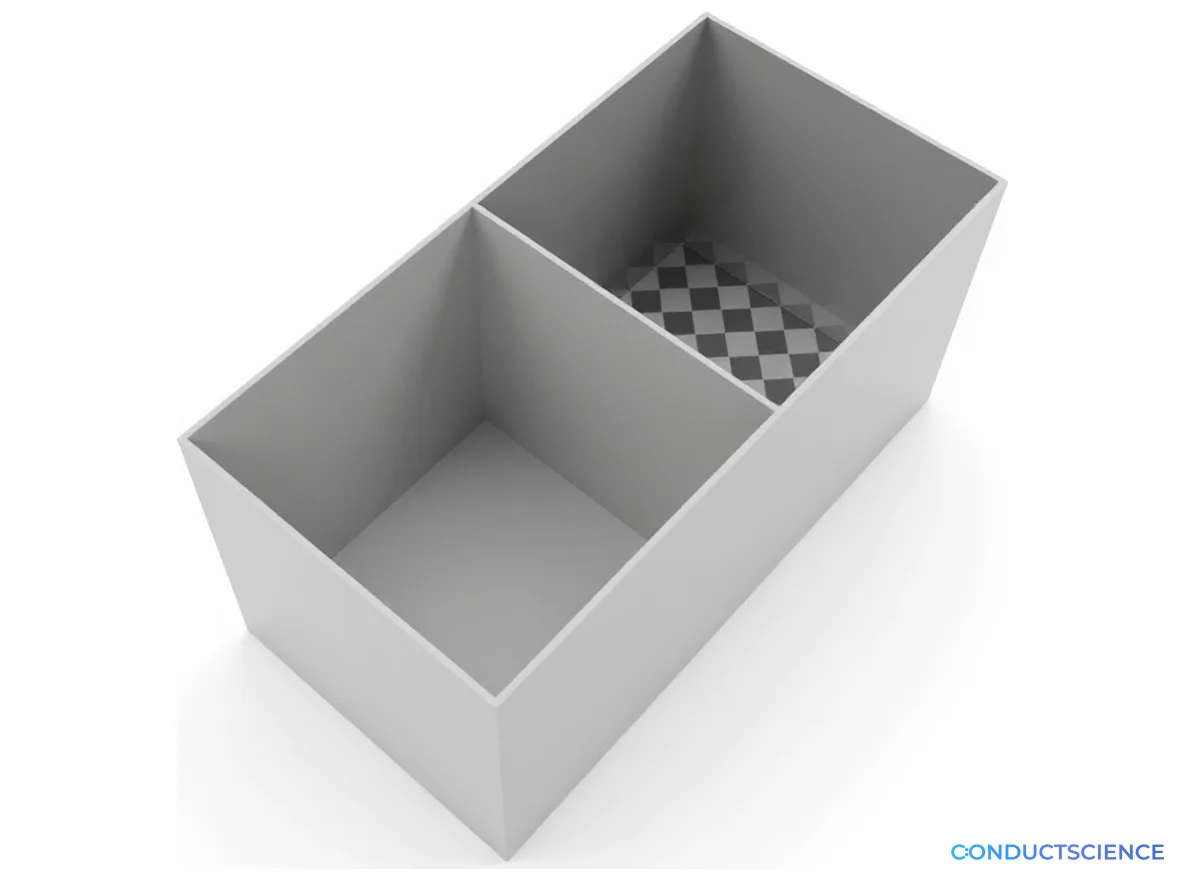
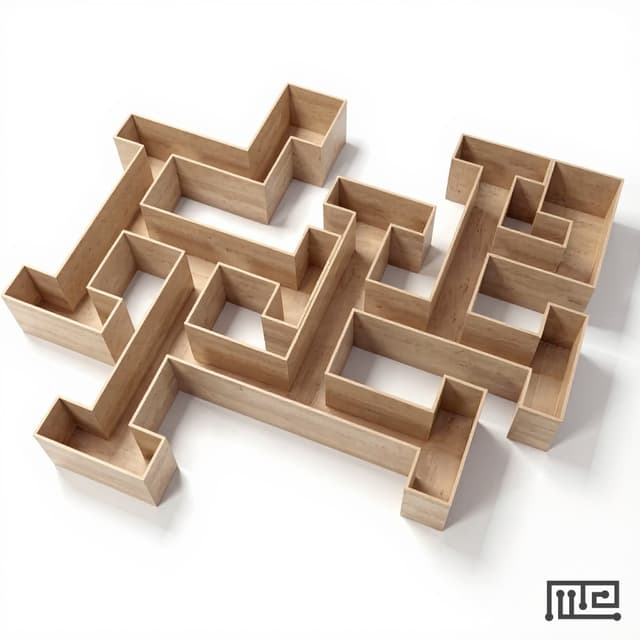
Three-compartment behavioral apparatus for measuring conditioned place preference and aversion in laboratory animals, following the established Mucha 1985 design protocol.
CE MarkedBAA available
Scientist guidance

Louise Corscadden, PhD
Director of Science · ConductScience
Ask Louise about Conditioned Place Preference Mucha 1985 fit, setup, configuration, or quote prep.
Already working with us? Sign in to connect this with My Scientist.
Key Specifications
Full details →- Model fit
- Mouse, Rat
- SKU family
- CS-958276
- Shipping box
- 65.0 x 36.0 x 27.0 cm
- Ordering
- Online checkout and quote request available
- Category
- Behavioral Mazes
- Build notes
- Confirm accessories, station layout, and support needs before purchase
The Conditioned Place Preference (CPP) apparatus based on Mucha 1985 design provides a standardized three-compartment system for assessing reward and aversion responses in laboratory animals. This behavioral paradigm allows researchers to evaluate the rewarding or aversive properties of drugs, environmental stimuli, or other experimental manipulations by measuring the time animals spend in compartments previously paired with specific treatments.
The apparatus consists of distinct compartments with different visual, tactile, and spatial cues that enable animals to form associative memories between environmental contexts and experimental conditions. Researchers can quantify preference or aversion by measuring place preference shifts following conditioning sessions, providing insights into motivated behavior, learning processes, and drug reinforcement mechanisms.
How It Works
The conditioned place preference paradigm operates on principles of classical conditioning and associative learning. During conditioning sessions, animals receive specific treatments (drugs, stimuli, or manipulations) while confined to one compartment, while control treatments are administered in another compartment. The third compartment serves as a neutral zone for pre- and post-conditioning preference assessments.
Animals form associative memories linking environmental contexts with the physiological or psychological effects of treatments. Rewarding treatments produce increased time spent in the paired compartment during test sessions, while aversive treatments result in decreased time or active avoidance of the paired environment. The magnitude of place preference or aversion reflects the strength of the conditioning effect and provides quantitative measures of treatment impact.
Preference scores are calculated by comparing time spent in treatment-paired compartments before and after conditioning, or by measuring the difference in time spent between treatment-paired and control-paired compartments during post-conditioning test sessions.
Features & Benefits
Three-compartment design
Provides neutral zone for unbiased preference assessment while allowing distinct treatment-environment pairings for conditioning protocols.
Distinct environmental cues
Enables clear discrimination between compartments for robust associative learning and accurate preference measurement.
Standardized Mucha 1985 protocol
Follows established methodology with extensive literature support for reliable cross-study comparisons and reproducible results.
Removable barriers
Allows confinement during conditioning sessions and free access during preference testing to accommodate different experimental phases.
Compatible tracking integration
Supports automated video tracking systems or manual observation methods for flexible data collection approaches.
Modular construction
Facilitates cleaning between subjects and maintenance of hygienic testing conditions for reliable behavioral assessment.
Species-appropriate dimensions
Optimized compartment size and layout for natural exploratory behavior while preventing confounding spatial preferences.
Durable materials
Withstands repeated use and standard laboratory cleaning protocols while maintaining consistent environmental cues over time.
Behavioral Construct
- Place Preference
- Associative Learning
- Reward Learning
- Aversion Learning
- Conditioned Behavior
Automation Level
- semi-automated
Research Domain
- Addiction Research
- Anxiety and Depression
- Behavioral Pharmacology
- Learning and Memory
- Neuroscience
- Toxicology
Species
- Mouse
- Rat
Compatible Tracking Software
- ConductVision
Shipping weight
- 6.06 lb
Shipping box
- L: 65.0 cm
- W: 36.0 cm
- H: 27.0 cm
| Feature | This Product | Typical Alternative | Advantage |
|---|---|---|---|
| Compartment Configuration | Three-compartment design with neutral zone | Two-compartment designs are common in entry-level systems | Neutral zone enables unbiased preference assessment and reduces stress from forced choice situations. |
| Protocol Standardization | Based on established Mucha 1985 methodology | Custom designs vary significantly between laboratories | Enables direct comparison with published literature and supports cross-laboratory reproducibility. |
| Environmental Cues | Distinct visual and tactile cues per compartment | Basic systems may rely only on visual differences | Multiple sensory cues enhance discrimination learning and strengthen associative memory formation. |
| Barrier System | Removable barriers for conditioning phases | Fixed barriers require manual animal transfer | Streamlines experimental procedures and reduces handling stress during conditioning sessions. |
This apparatus provides the standard three-compartment configuration established by Mucha 1985 with distinct environmental cues and flexible barrier systems. The design supports both manual and automated data collection while enabling direct comparison with extensive published literature using this established methodology.
Behavioral Pharmacology
Evaluating the rewarding or aversive properties of novel pharmaceutical compounds by measuring changes in place preference following drug-environment pairings.
Addiction Research
Assessing drug reward and withdrawal aversion in animal models of substance use disorders, particularly for studies of reinforcement mechanisms and relapse behavior.
Learning and Memory
Investigating associative learning processes and contextual memory formation by measuring how animals form preferences for environments paired with specific stimuli or experiences.
Anxiety and Depression
Testing the efficacy of anxiolytic or antidepressant treatments by measuring place preference changes in response to therapeutic interventions.
Neuroscience
Examining neural mechanisms underlying reward processing and motivated behavior through place preference paradigms combined with neurophysiological or pharmacological manipulations.
Toxicology
Screening environmental toxins and industrial chemicals for potential behavioral effects by assessing place preference or aversion responses following exposure.
Practical Tips
Calibration
Conduct pre-conditioning preference assessments with at least 15-minute free exploration sessions to establish baseline compartment preferences.
Why: Baseline assessment identifies inherent environmental bias and ensures valid interpretation of post-conditioning preference changes.
Best Practices
Counterbalance treatment-compartment pairings across subjects so equal numbers receive treatments in each distinctive compartment.
Why: Counterbalancing controls for any residual compartment bias and strengthens the validity of treatment effect conclusions.
Data Quality
Exclude animals showing less than 5 minutes total exploration time during 15-30 minute test sessions from analysis.
Why: Minimal exploration provides insufficient sampling of compartment preferences and may reflect stress or health issues rather than true conditioning effects.
Maintenance
Clean all surfaces with 70% ethanol between subjects and allow complete evaporation before testing the next animal.
Why: Thorough cleaning eliminates odor cues that could bias compartment choices and confound place preference measurements.
Troubleshooting
If animals cluster in corners or show minimal compartment transitions, adjust lighting levels and reduce environmental noise sources.
Why: Environmental stressors can suppress natural exploratory behavior and prevent accurate assessment of place preferences.
Safety
Monitor animals continuously during conditioning sessions when confined to individual compartments to ensure welfare and safety.
Why: Confinement stress or equipment malfunction could compromise animal welfare and experimental validity.
Best Practices
Use interim preference test sessions during extended conditioning protocols to monitor preference development over time.
Why: Tracking preference changes helps optimize conditioning duration and identifies when maximum effect has been achieved.
Data Quality
Establish inter-rater reliability >90% if using manual observation methods for compartment location scoring.
Why: High inter-rater reliability ensures consistent and accurate behavioral scoring across different observers and testing sessions.
Setup Guide
Assembly and Positioning
Assemble the three-compartment apparatus according to manufacturer specifications and position in a quiet testing room with consistent lighting and minimal external distractions.
Environmental Calibration
Verify that each compartment provides distinct visual, tactile, and spatial cues while ensuring no inherent preference bias exists in naive animals through pilot testing.
Tracking System Setup
Install and calibrate video tracking equipment or manual observation protocols to accurately record animal location and movement within each compartment.
Baseline Assessment
Conduct pre-conditioning sessions to establish baseline preference patterns and exclude animals showing strong inherent compartment bias.
Conditioning Protocol
Implement the conditioning schedule with appropriate counterbalancing of treatment-compartment pairings across subjects to control for environmental bias.
Data Collection Parameters
Establish standardized session durations, measurement intervals, and behavioral scoring criteria based on experimental objectives and published protocols.
Quality Control Procedures
Implement regular apparatus cleaning protocols and verify tracking accuracy to maintain data integrity across testing sessions.
What’s in the Box
- Three-compartment testing apparatus (typical)
- Removable barrier inserts (typical)
- Assembly hardware and instructions (typical)
- Protocol guide based on Mucha 1985 design (typical)
- Cleaning and maintenance instructions (typical)
Warranty
ConductScience provides a standard one-year manufacturer warranty covering defects in materials and workmanship, with technical support for setup and protocol implementation.
Compliance
ARRIVE GuidelinesSupports standardized reporting of animal research methods and behavioral testing protocols in publications.
IACUC Protocol RequirementsProvides structured behavioral assessment methods that facilitate institutional animal care and use committee protocol review and approval.
Good Laboratory Practice (GLP)Enables standardized behavioral testing procedures that support regulatory submission requirements for pharmaceutical research.
Q
What are the standard session durations for conditioning and testing phases?
A
Conditioning sessions typically last 30-45 minutes with animals confined to paired compartments, while preference test sessions usually run 15-30 minutes with free access to all compartments. Specific durations should be optimized based on species, treatment effects, and experimental objectives.
Q
How do you control for inherent compartment bias in naive animals?
A
Conduct pre-conditioning preference assessments to identify and exclude animals showing >65% time preference for any compartment. Use counterbalanced design where equal numbers of subjects receive treatments paired with each distinctive compartment to control for environmental bias.
Q
What constitutes a significant place preference or aversion response?
A
Significant preference typically requires >60-65% time spent in treatment-paired compartment during post-conditioning tests, or a shift of >100-150 seconds from baseline preference. Statistical significance should be determined using appropriate tests comparing pre- and post-conditioning measures or treatment vs. control groups.
Q
How should the apparatus be cleaned between subjects?
A
Clean all surfaces with 70% ethanol or appropriate disinfectant between subjects to eliminate odor cues that could influence behavior. Allow complete drying before next subject and rotate compartment assignments to prevent any residual chemical cue bias.
Q
What tracking resolution is needed for accurate data collection?
A
Video tracking should provide at least 10-15 samples per second with spatial resolution sufficient to detect compartment transitions accurately. Manual observation requires trained observers with inter-rater reliability >90% for compartment location scoring.
Q
How do you handle animals that show minimal exploration during testing?
A
Animals spending <5 minutes total exploration time during 15-30 minute test sessions should be excluded from analysis as insufficient sampling may not reflect true preference. Consider environmental factors like lighting, noise, or handling stress that may reduce exploration.
Q
What are appropriate control groups for place preference studies?
A
Include vehicle-treated controls receiving the same injection and confinement procedures, unpaired controls receiving treatments in home cages rather than apparatus compartments, and balanced placebo designs where treatments are counterbalanced across compartments and subjects.
Q
How long should conditioning periods extend for reliable preference formation?
A
Most protocols use 3-8 conditioning days with alternating treatment-compartment pairings. Stronger treatments may require fewer sessions while subtle effects may need extended conditioning. Monitor preference development with interim test sessions to optimize conditioning duration.
Have a question about this product?
Track rodents with ConductVision
ConductVision is our video-tracking software. Record your sessions on video, and it scores standard rodent tests, such as those listed below.
Examples of tests it scores
To check whether ConductVision scores your protocol in this apparatus, ask in your quote request.
Ask a question
Have a question? Just ask.
Send it over and we'll email you a personalized answer — no call, no scheduling.
Personalized email reply
Usually within one business day
Helpful answers published here
Prefer to talk it through?
Accessories
Enhance your setup with compatible accessories
Total: $0.00
Frequently Bought Together
Total: $7,790.00

Conditioned Place Preference Mucha 1985
$1,830.00
Added to quoteView Quote