Conditioned Place Preference Suzuki 1995a
SKU CS-958256
$1,830.00
IncludesStandard care
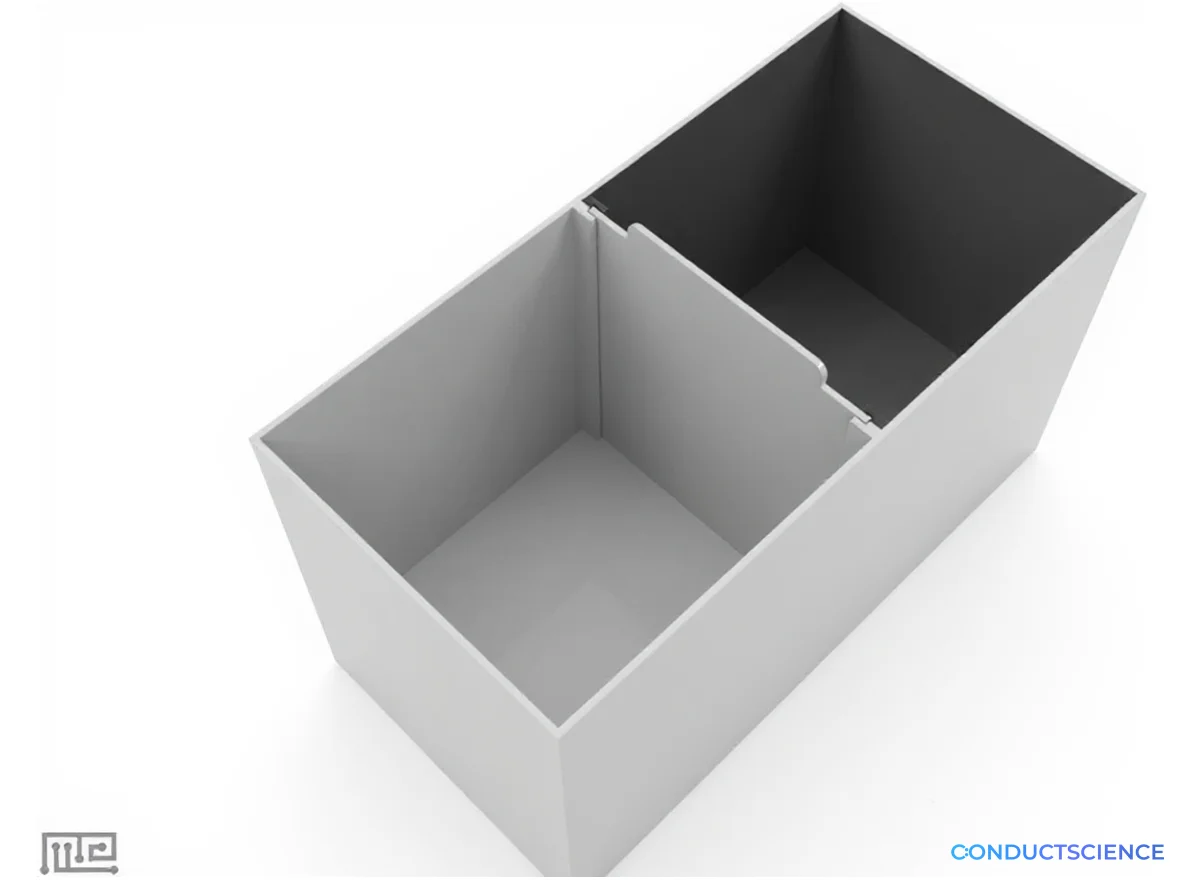
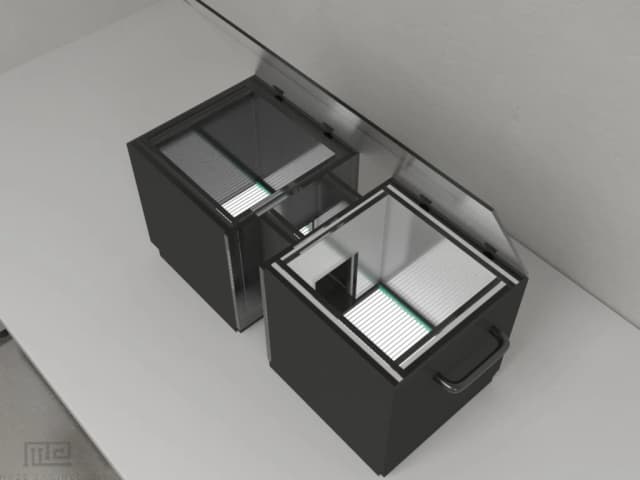
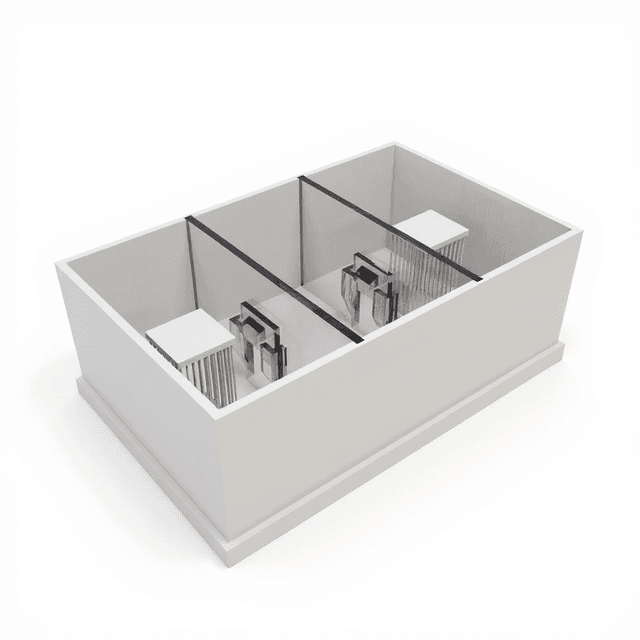
Standardized behavioral testing apparatus for evaluating conditioned place preference and associative learning in laboratory animals following established protocols.
CE MarkedBAA available
Scientist guidance

Louise Corscadden, PhD
Director of Science · ConductScience
Ask Louise about Conditioned Place Preference Suzuki 1995a fit, setup, configuration, or quote prep.
Already working with us? Sign in to connect this with My Scientist.
Key Specifications
Full details →- Model fit
- Mouse, Rat
- SKU family
- CS-958256
- Shipping box
- 65.0 x 36.0 x 27.0 cm
- Ordering
- Online checkout and quote request available
- Category
- Behavioral Mazes
- Build notes
- Confirm accessories, station layout, and support needs before purchase
The Conditioned Place Preference (CPP) apparatus described by Suzuki 1995a represents a standard behavioral testing system for evaluating associative learning and memory formation in laboratory animals. This protocol establishes a methodology for assessing an animal's preference for environmental contexts that have been paired with specific stimuli or treatments. The apparatus allows researchers to quantify place conditioning responses through systematic exposure phases and subsequent preference testing.
The system enables investigation of learned associations between environmental cues and rewarding or aversive experiences. Researchers use this paradigm to study drug reward mechanisms, memory consolidation processes, and conditioned behavioral responses. The protocol provides a controlled framework for examining how animals form spatial-contextual memories and express preferences based on prior conditioning experiences.
How It Works
The conditioned place preference paradigm operates on principles of classical conditioning, where environmental contexts serve as conditioned stimuli that become associated with unconditioned stimuli such as drug treatments or natural rewards. During conditioning phases, animals receive treatments in specific compartments, forming associative memories between the environmental cues and the treatment effects.
The testing protocol involves distinct phases: habituation to establish baseline preferences, conditioning sessions where treatments are paired with specific environments, and preference testing where animals can freely choose between compartments. The system measures time spent in each compartment and locomotor activity patterns to quantify preference strength and behavioral changes.
Preference scores are calculated by comparing time spent in treatment-paired versus vehicle-paired compartments, with statistical analysis determining significant preference shifts from baseline measurements.
Features & Benefits
Multi-compartment design
Provides distinct environmental contexts for establishing clear conditioned associations between locations and treatments.
Standardized protocol framework
Ensures reproducible experimental conditions and enables comparison across studies and laboratories.
Automated tracking compatibility
Supports integration with video tracking systems for objective measurement of position preferences and locomotor activity.
Flexible conditioning parameters
Accommodates various experimental designs including different treatment schedules and conditioning durations.
Quantitative preference scoring
Generates numerical preference indices for statistical analysis and comparison between experimental groups.
Species-adaptable configuration
Allows modification of chamber dimensions and environmental cues for different laboratory animal species.
Behavioral Construct
- place preference
- associative learning
- spatial memory
- conditioned response
- environmental conditioning
Automation Level
- semi-automated
Research Domain
- Addiction Research
- Anxiety and Depression
- Behavioral Pharmacology
- Learning and Memory
- Neuroscience
Species
- Mouse
- Rat
Compatible Tracking Software
- ConductVision
Shipping weight
- 6.06 lb
Shipping box
- L: 65.0 cm
- W: 36.0 cm
- H: 27.0 cm
| Feature | This Product | Typical Alternative | Advantage |
|---|---|---|---|
| Protocol Standardization | Follows established Suzuki 1995a methodology with validated parameters | Custom protocols may lack standardized conditioning schedules | Ensures reproducible results and facilitates comparison with published studies using the same methodology. |
| Experimental Design | Structured conditioning and testing phases with defined session parameters | Variable protocols may use different timing and conditioning approaches | Provides systematic framework for reliable preference assessment and statistical analysis. |
| Literature Support | Based on established published protocol with experimental validation | Novel designs may lack extensive literature validation | Enables researchers to build upon existing knowledge base and compare results across laboratories. |
This system implements the validated Suzuki 1995a conditioned place preference protocol, providing researchers with a standardized methodology for investigating associative learning and place conditioning in laboratory animals.
Behavioral Pharmacology
Assessing drug reward and addiction potential by measuring preference for environments previously paired with pharmacological treatments.
Learning and Memory
Investigating associative learning mechanisms and memory formation through spatial-contextual conditioning paradigms.
Neuroscience
Examining neural circuits involved in reward processing and conditioned behavioral responses using place preference protocols.
Addiction Research
Evaluating conditioned drug effects and environmental cue associations that contribute to addictive behaviors.
Anxiety and Depression
Testing anxiolytic or antidepressant compounds by measuring preference for treatment-paired environments.
Practical Tips
Best Practices
Conduct habituation sessions to establish baseline preferences before beginning conditioning phases.
Why: Baseline measurements enable proper statistical analysis and control for pre-existing environmental biases.
Best Practices
Counterbalance treatment-compartment pairings across animals to control for inherent chamber preferences.
Why: Prevents confounding of treatment effects with natural environmental preferences or apparatus biases.
Data Quality
Monitor locomotor activity during sessions to identify potential confounding effects of treatment on general mobility.
Why: Ensures preference measurements reflect genuine place conditioning rather than treatment-induced mobility changes.
Maintenance
Clean all compartments thoroughly between animals using consistent cleaning protocols.
Why: Prevents olfactory cues from previous subjects from influencing subsequent animal behavior and preferences.
Troubleshooting
Verify that environmental cues provide sufficient distinctiveness between compartments without being aversive.
Why: Inadequate or overly strong environmental differences can prevent proper conditioning or create baseline biases.
Calibration
Validate tracking system accuracy by manually confirming position detection at chamber boundaries.
Why: Accurate position tracking is essential for reliable quantification of time spent in each compartment.
Setup Guide
System Assembly
Assemble the multi-compartment testing apparatus ensuring all chambers are properly connected with functioning doors or barriers.
Environmental Configuration
Configure distinct environmental cues for each compartment including tactile flooring, visual patterns, or olfactory stimuli as specified in the protocol.
Tracking System Setup
Install and calibrate behavioral tracking equipment for automated recording of animal position and movement patterns.
Baseline Testing
Conduct habituation sessions to establish pre-conditioning preferences and ensure animals explore all compartments.
Conditioning Protocol
Implement alternating conditioning sessions pairing treatments with designated compartments according to experimental design.
Preference Assessment
Perform test sessions allowing free access to all compartments while recording time spent in each area.
What’s in the Box
- Multi-compartment testing apparatus (typical)
- Environmental cue materials (typical)
- Door/barrier mechanisms (typical)
- Protocol documentation (typical)
- Assembly instructions (typical)
Warranty
ConductScience provides standard manufacturer warranty coverage with technical support for proper apparatus setup and protocol implementation.
Compliance
ARRIVE GuidelinesSupports standardized reporting of animal behavior experiments through systematic protocol implementation.
NIH Guidelines for Animal ResearchCommonly used in behavioral studies conducted under institutional animal care and use protocols.
Q
What are the standard conditioning and testing session durations?
A
Conditioning sessions typically range from 15-30 minutes with testing sessions of 15-20 minutes, though specific durations should be optimized based on species and experimental objectives.
Q
How many conditioning trials are required for reliable preference establishment?
A
Most protocols use 4-8 conditioning sessions alternating between treatment and vehicle pairings, with the exact number depending on treatment strength and species responsiveness.
Q
Can the apparatus accommodate different animal species?
A
The system can be configured for various laboratory rodent species with appropriate chamber sizing and environmental cue modifications.
Q
What tracking systems are compatible with this apparatus?
A
The setup supports both manual observation methods and automated video tracking systems capable of position monitoring and locomotor activity analysis.
Q
How is preference strength quantified and analyzed?
A
Preference is typically measured as time spent in treatment-paired versus control compartments, with preference scores calculated as difference scores or ratios for statistical analysis.
Q
What environmental cues are most effective for conditioning?
A
Effective cues include tactile differences (wire mesh vs. smooth flooring), visual patterns (striped vs. solid walls), and spatial arrangements that create distinct contextual environments.
Have a question about this product?
Track rodents with ConductVision
ConductVision is our video-tracking software. Record your sessions on video, and it scores standard rodent tests, such as those listed below.
Examples of tests it scores
To check whether ConductVision scores your protocol in this apparatus, ask in your quote request.
Ask a question
Have a question? Just ask.
Send it over and we'll email you a personalized answer — no call, no scheduling.
Personalized email reply
Usually within one business day
Helpful answers published here
Prefer to talk it through?
Accessories
Enhance your setup with compatible accessories
Total: $0.00

Conditioned Place Preference Suzuki 1995a
$1,830.00
Added to quoteView Quote