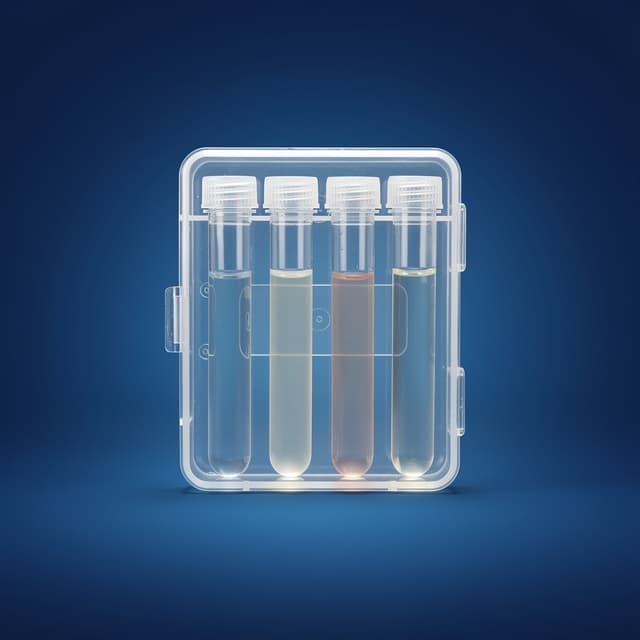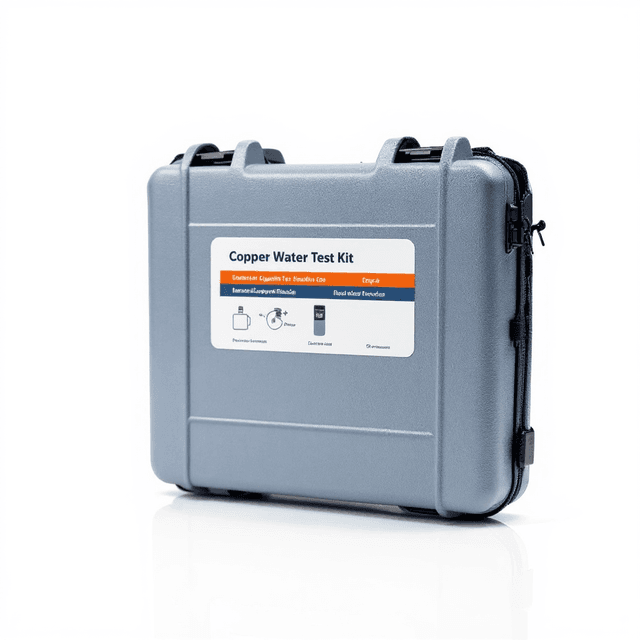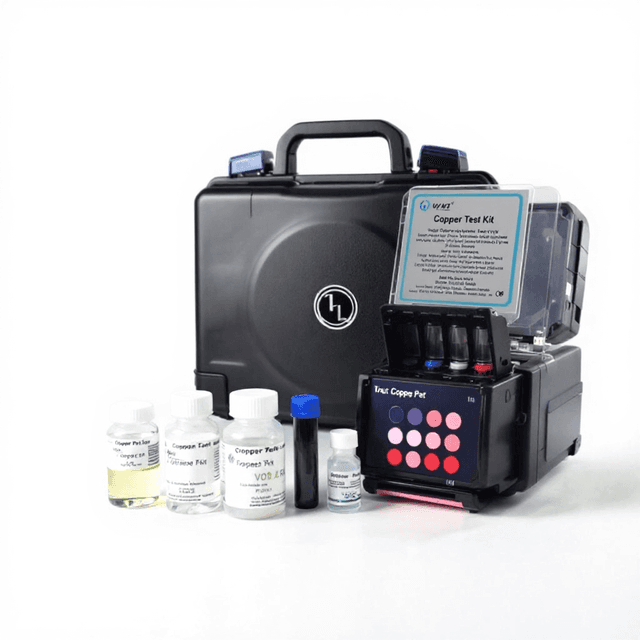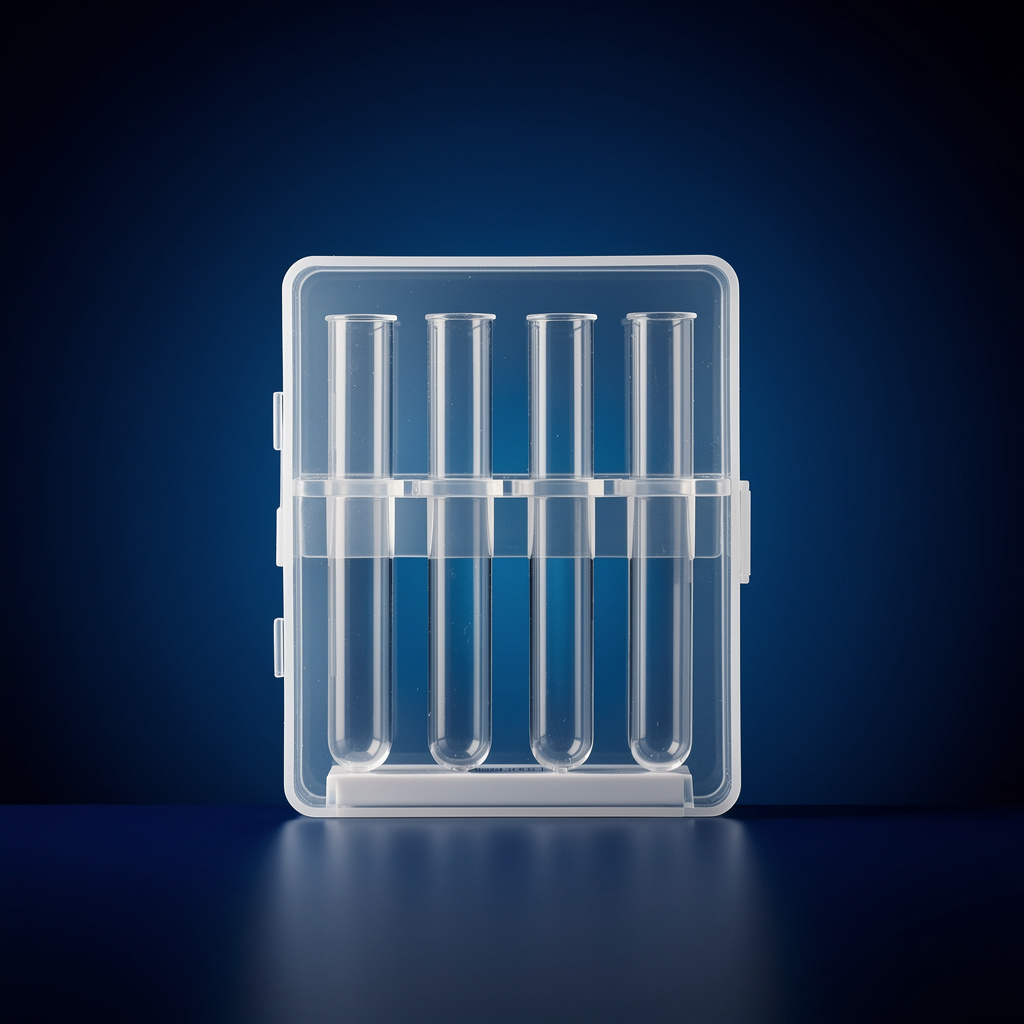
Copper Test Tube
Single-use colorimetric test tube for rapid copper concentration analysis in water samples, providing results within 3-5 minutes without laboratory equipment.

Louise Corscadden, PhD
Director of Science · ConductScience
Ask Louise about Copper Test Tube fit, setup, configuration, or quote prep.
Already working with us? Sign in to connect this with My Scientist.
Key Specifications
Full details →- Model fit
- 1 selectable configurations
- SKU family
- CS-LH-LAB017
- Shipping box
- 8.8 x 7.3 x 5.9 cm
- Ordering
- Online checkout and quote request available
- Category
- Water Test Kits
- Build notes
- Confirm accessories, station layout, and support needs before purchase
The Copper Test Tube is a water quality testing consumable designed for rapid, field-portable analysis of copper concentrations in aqueous samples. This single-use testing tube incorporates colorimetric reagents that react with dissolved copper ions to produce a measurable color change within 3-5 minutes, eliminating the need for complex laboratory instrumentation or specialized personnel.
Manufactured with PE plastic construction and aluminum foil sealing, the test tube maintains reagent stability for 18 months under normal storage conditions. The system follows international testing standards and provides quantitative results suitable for environmental monitoring, industrial water quality assessment, and laboratory screening applications where rapid copper detection is required.
How It Works
The Copper Test Tube employs colorimetric detection based on the formation of colored complexes between copper ions and specific chelating reagents pre-loaded within the tube. When the sample is introduced, dissolved copper ions react with the reagent system to produce a color change proportional to the copper concentration present in the solution.
The reaction typically involves the formation of copper-ligand complexes that absorb visible light at specific wavelengths, resulting in a characteristic color that can be compared against standardized color charts or measured photometrically. The aluminum foil seal preserves reagent integrity by preventing moisture absorption and oxidation, ensuring consistent performance throughout the 18-month shelf life.
Features & Benefits
Shipping weight
- 0.26 lb
Shipping box
- L: 8.8 cm
- W: 7.3 cm
- H: 5.9 cm
| Feature | This Product | Typical Alternative | Advantage |
|---|---|---|---|
| Reaction Time | 3-5 minutes | Laboratory methods often require 15-30 minutes for sample preparation and analysis | Enables rapid field testing and high-throughput screening for time-sensitive applications |
| Equipment Requirements | No additional equipment needed | Most methods require spectrophotometers, pipettes, and controlled laboratory environment | Provides portable testing capability for remote field locations and resource-limited settings |
| Shelf Life | 18 months with aluminum foil seal | Liquid reagents often have shorter stability periods | Reduces inventory turnover and enables stockpiling for emergency response applications |
| Sample Contamination Risk | Single-use PE plastic construction | Reusable glassware requires extensive cleaning protocols | Eliminates cross-contamination between samples and reduces quality control requirements |
The Copper Test Tube offers rapid, portable copper analysis with minimal equipment requirements and extended shelf life. The single-use design eliminates contamination risks while providing field-deployable testing capability.
Practical Tips
Allow samples to reach room temperature before testing to ensure consistent color development kinetics.
Why: Temperature variations can affect reaction rates and final color intensity measurements.
Store unused tubes in original packaging away from direct sunlight and temperature extremes.
Why: Light and heat exposure can degrade reagents and affect measurement accuracy even within the sealed tubes.
Run known standard solutions periodically to verify color development and measurement consistency.
Why: Quality control standards help identify reagent degradation or procedural errors that could affect results.
If no color development occurs, check sample pH and verify tube seal was intact before use.
Why: Extreme pH conditions or compromised reagents are common causes of poor or absent color formation.
Wear appropriate personal protective equipment and dispose of used tubes according to local regulations.
Why: Test tubes contain chemical reagents that may require special handling and disposal procedures.
Establish detection limits using known copper standards spanning the expected concentration range.
Why: Calibration with matrix-matched standards improves measurement accuracy and defines method limitations.
Setup Guide
What’s in the Box
- Copper test tube with pre-loaded reagents (typical)
- Color comparison chart (typical)
- Product instruction sheet (typical)
- Safety data sheet (typical)
Warranty
ConductScience provides standard manufacturer warranty coverage for material defects. Technical support is available for proper usage protocols and result interpretation.
Compliance
References
Background reading relevant to this product:
What is the detection limit and working range for copper measurement?
Consult product datasheet for specific detection limits and linear range. Colorimetric methods typically provide ppm-level sensitivity suitable for environmental and industrial monitoring applications.
How do interfering ions affect measurement accuracy?
Common water matrix ions may interfere with colorimetric detection. Sample pretreatment or dilution may be required for highly contaminated samples. Refer to technical documentation for specific interference studies.
Can results be quantified photometrically rather than visually?
Yes, the colored reaction product can be measured using spectrophotometers or colorimeters at the appropriate wavelength for improved precision and objectivity compared to visual color matching.
What sample volume is required for analysis?
Sample volume requirements depend on tube design and reagent loading. Consult product specifications for exact volume needed and any dilution factors that apply to final results.
How should unused tubes be stored to maintain reagent stability?
Store sealed tubes at room temperature away from direct sunlight and moisture. The aluminum foil seal maintains reagent integrity for 18 months when stored properly.
Is sample pH adjustment required before testing?
pH requirements depend on the specific reagent chemistry. Some colorimetric methods require pH buffering for optimal color development. Check technical documentation for pH specifications.
Can turbid or colored samples be analyzed directly?
Sample turbidity and background color may interfere with accurate color reading. Filtration or sample dilution may be necessary for heavily contaminated or colored samples.
Have a question about this product?
Have a question? Just ask.
Send it over and we'll email you a personalized answer — no call, no scheduling.
Prefer to talk it through?