Cuttlefish T-Maze
Specialized T-maze apparatus for assessing spatial working memory and spontaneous alternation behavior in cuttlefish and other cephalopod species.

Louise Corscadden, PhD
Director of Science · ConductScience
Ask Louise about Cuttlefish T-Maze fit, setup, configuration, or quote prep.
Already working with us? Sign in to connect this with My Scientist.
Key Specifications
Full details →- Model fit
- Configured during quote
- SKU family
- CS-958189
- Sizing
- Cuttlefish T-Maze: Length of stem 40 cm · Width of stem 40 cm
- Ordering
- Online checkout and quote request available
- Category
- Behavioral Mazes
- Build notes
- Confirm accessories, station layout, and support needs before purchase
The Cuttlefish T-Maze is a specialized apparatus designed for assessing spatial working memory and spontaneous alternation behavior in cuttlefish and other cephalopod species. This instrument provides a controlled environment for evaluating cognitive function through maze-based behavioral paradigms, particularly the well-established T-maze alternation task that measures an animal's tendency to alternate arm choices on successive trials.
The apparatus enables researchers to investigate learning and memory processes in cephalopod models, supporting studies of spatial cognition, decision-making, and the neurobiological mechanisms underlying memory formation. The T-maze design allows for both spontaneous alternation testing and reinforced alternation protocols, providing flexibility for diverse experimental approaches in comparative cognition research.
How It Works
The T-maze operates on the principle of spontaneous alternation behavior, a well-documented tendency for animals to explore novel environments and avoid recently visited locations. In the standard protocol, subjects are placed in the start arm of the T-shaped apparatus and allowed to choose between two goal arms. Working memory is assessed by measuring the animal's tendency to alternate arm choices across successive trials, with successful alternation indicating intact spatial working memory.
The behavioral paradigm exploits the natural exploratory drive of cephalopods while providing quantitative measures of cognitive performance. The apparatus can be configured for both spontaneous alternation (where alternation is intrinsically motivated) and reinforced alternation (where correct alternation is rewarded). Performance metrics include alternation percentage, response latencies, and choice patterns, which collectively provide comprehensive assessment of spatial memory function.
The design accommodates the unique locomotory patterns and environmental requirements of cephalopods, ensuring appropriate stimulus presentation and response recording for these marine invertebrate subjects.
Features & Benefits
Sizes by model
| Measurement | Cuttlefish T-Maze |
|---|---|
| Length of stem | 40 cm |
| Width of stem | 40 cm |
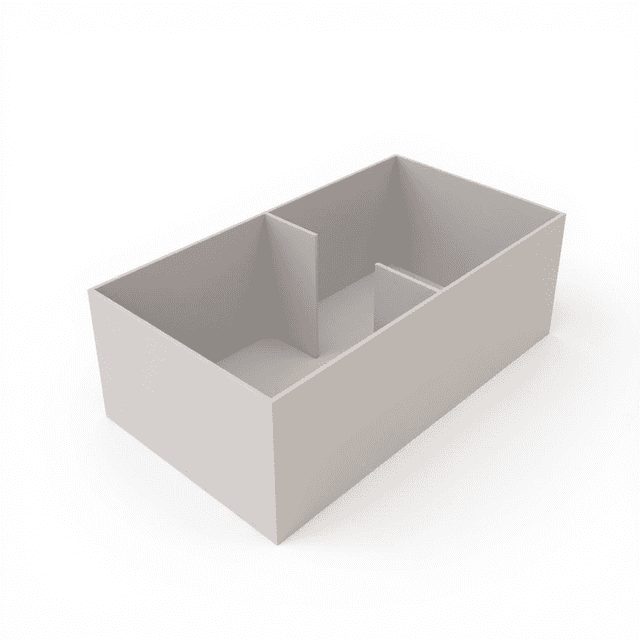
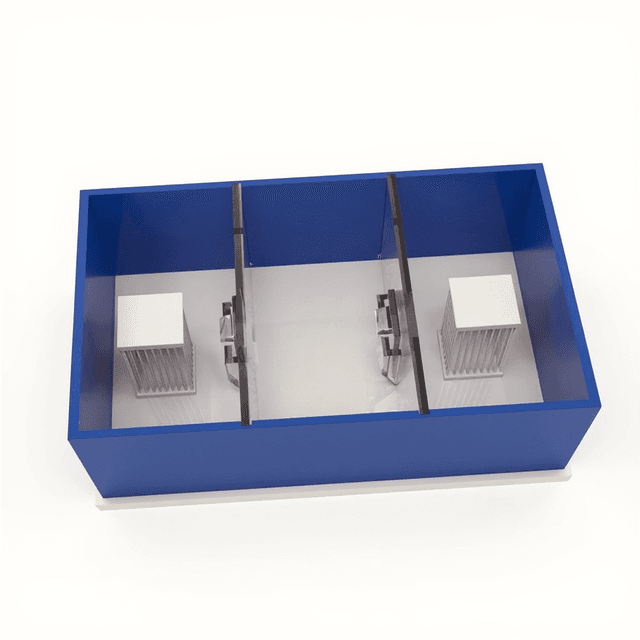
- Length of plastic tank: 200cm
- Width of plastic tank: 70cm
- Height of plastic tank: 30cm
- Length of branched arms: 80cm
- Width of branched arms: 30cm
Behavioral Construct
- spatial working memory
- spontaneous alternation
- decision-making
- cognitive flexibility
- exploratory behavior
Automation Level
- manual
Research Domain
- Behavioral Pharmacology
- Developmental Biology
- Learning & Memory
- Neurodegeneration
- Neuroscience
Compatible Tracking Software
- ConductVision
Shipping weight
- 6.06 lb
Shipping box
- L: 65.0 cm
- W: 36.0 cm
- H: 27.0 cm
| Feature | This Product | Typical Alternative | Advantage |
|---|---|---|---|
| Species Specificity | Purpose-designed for cephalopod testing | Adapted terrestrial mazes may require extensive modification | Eliminates need for experimental compromises when studying marine invertebrate cognition |
| Aquatic Operation | Native seawater medium compatibility | Most behavioral apparatus requires dry environment adaptation | Maintains physiological conditions essential for cephalopod behavior and health |
| Protocol Flexibility | Supports both spontaneous and reinforced alternation | Limited paradigm options in specialized apparatus | Enables diverse experimental approaches within single testing platform |
| Choice Detection | Adapted for cephalopod locomotion patterns | Standard detection may not accommodate invertebrate movement | Provides accurate behavioral measurement for non-vertebrate subjects |
The apparatus offers specialized capabilities for cephalopod behavioral research through purpose-built aquatic operation and species-appropriate design features. The system provides flexibility for diverse alternation protocols while maintaining standardized testing conditions.
Practical Tips
Allow adequate habituation time for subjects to acclimate to the apparatus environment before beginning formal testing.
Why: Reduces stress-related confounds that could interfere with cognitive performance assessment.
Clean all surfaces thoroughly between subjects and maintain appropriate water quality parameters throughout testing sessions.
Why: Prevents cross-contamination and ensures consistent environmental conditions for reliable behavioral measurement.
Record multiple trials per subject to establish reliable alternation patterns and account for individual variation.
Why: Spontaneous alternation can show session-to-session variability requiring adequate sampling for stable measurements.
Verify choice detection sensitivity before each testing session to ensure accurate response recording.
Why: Proper detection calibration is essential for reliable measurement of alternation behavior and response timing.
If subjects show position bias, verify environmental factors like lighting, water flow, or structural asymmetries.
Why: Systematic position preferences can indicate apparatus issues rather than genuine spatial memory deficits.
Monitor water quality parameters regularly and maintain appropriate temperature and salinity for test species.
Why: Physiological stress from poor water conditions can significantly impact cognitive performance and animal welfare.
Setup Guide
What’s in the Box
- T-maze apparatus components (typical)
- Assembly hardware and connectors (typical)
- User manual and protocol guide (typical)
- Setup and maintenance instructions (typical)
Warranty
ConductScience provides standard manufacturer warranty coverage with technical support for proper installation and operation of the T-maze apparatus.
Compliance
References
Background reading relevant to this product:
What species of cephalopods can be tested in this apparatus?
The apparatus is designed for cuttlefish and can accommodate other cephalopod species of similar size. Consult specifications for size limitations and environmental requirements.
How is spontaneous alternation quantified in this system?
Alternation percentage is calculated as the number of arm alternations divided by total possible alternations across trial sequences, with additional metrics including response latencies and choice patterns.
What water conditions are required for operation?
The apparatus operates with seawater or artificial seawater medium at appropriate salinity and temperature for the test species. Consult protocol guide for specific parameters.
Can the apparatus be used for reinforced learning paradigms?
Yes, the design supports both spontaneous alternation and reinforced alternation protocols, allowing flexibility in experimental approach and reward presentation methods.
What measures indicate successful working memory performance?
Successful performance is indicated by alternation percentages significantly above chance level (50%), with additional consideration of response consistency and latency patterns.
How does this compare to traditional rodent T-mazes?
While based on similar behavioral principles, this apparatus is specifically adapted for aquatic operation and cephalopod locomotion patterns, requiring different environmental conditions and response detection methods.
Have a question about this product?
Have a question? Just ask.
Send it over and we'll email you a personalized answer — no call, no scheduling.
Prefer to talk it through?