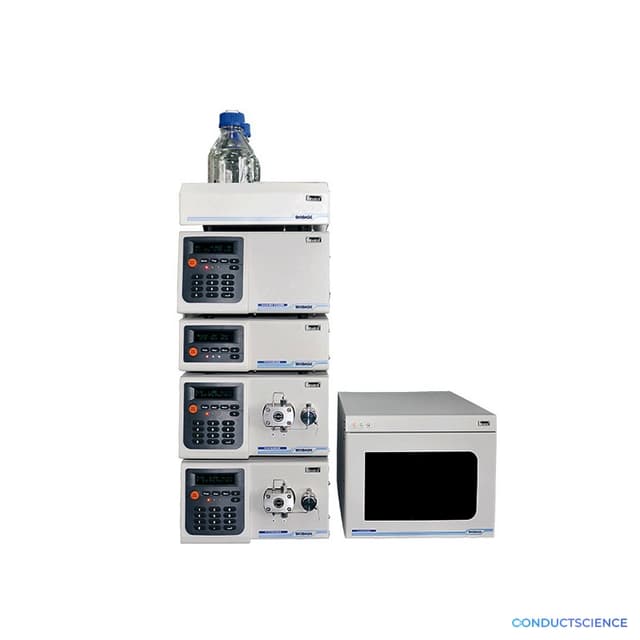
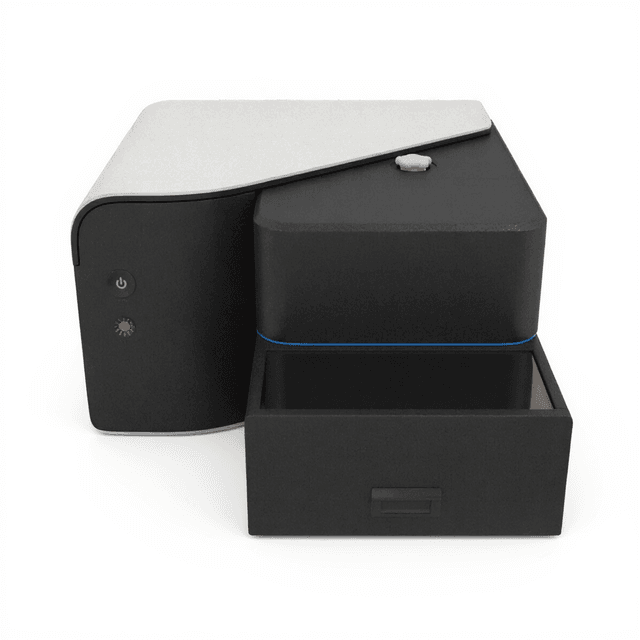
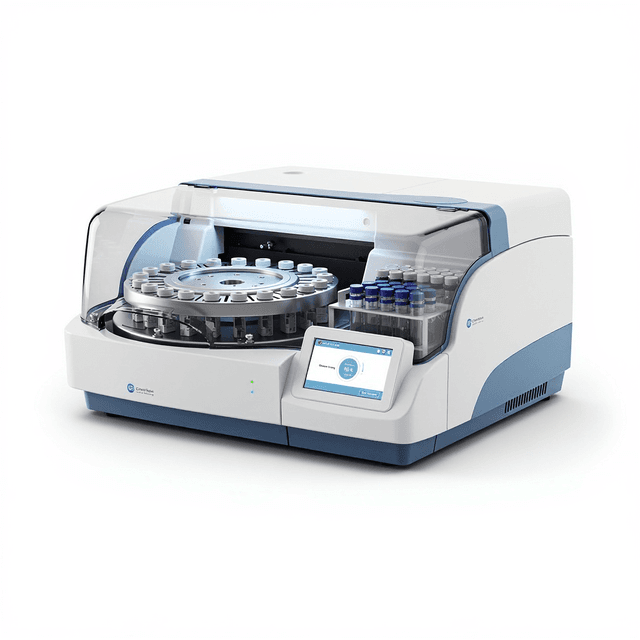
Double Beam Scanning UV/VIS Spectrophotometer
Professional double beam UV/VIS spectrophotometer with scanning capability and advanced optical design.
Available in BK-D560, BK-D580, and BK-D590 models.

Louise Corscadden, PhD
Director of Science · ConductScience
Ask Louise about Double Beam Scanning UV/VIS Spectrophotometer fit, setup, configuration, or quote prep.
Already working with us? Sign in to connect this with My Scientist.
Key Specifications
Full details →- Model fit
- 3 selectable configurations
- SKU family
- BIO-0403
- Shipping box
- 44.0 x 74.0 x 57.0 cm
- Ordering
- Online checkout and quote request available
- Category
- Imaging & Analysis
- Build notes
- Confirm accessories, station layout, and support needs before purchase
High-performance double-beam UV-Vis spectrophotometer with scanning capability from 190-1100nm wavelength range. Features deuterium and tungsten lamps, advanced optical system with 1200 lines/mm grating, and comprehensive analysis functions including photometry, quantitative, kinetics, multi-wavelength, scanning, and biology modes.
Ideal for analytical chemistry, pharmaceutical research, food science, environmental monitoring, and quality control applications requiring precise absorbance and transmittance measurements.
How It Works
Double-beam UV/VIS spectrophotometry operates on the principle of molecular absorption, where samples absorb specific wavelengths of electromagnetic radiation based on their electronic structure. The instrument employs a deuterium lamp for UV region (190-350 nm) and tungsten-halogen lamp for visible region (350-1100 nm), providing continuous wavelength coverage across the analytical spectrum.
The double-beam configuration simultaneously measures sample and reference beams through identical optical paths, automatically correcting for lamp intensity fluctuations, detector drift, and solvent absorption. A 1200 lines/mm diffraction grating disperses polychromatic light into component wavelengths, while the monochromator system selects specific bandwidths for analysis. The photomultiplier tube detector converts transmitted light intensity into electrical signals proportional to sample concentration.
Quantitative analysis follows Beer's Law (A = εbc), where absorbance correlates linearly with concentration through the molar absorptivity coefficient, path length, and analyte concentration. The variable spectral bandwidth selection (0.5-5 nm) allows optimization of resolution versus signal intensity for different analytical requirements.
Features & Benefits
Shipping weight
- 25.0 lb
Shipping box
- L: 44.0 cm
- W: 74.0 cm
- H: 57.0 cm
| Feature | This Product | Typical Alternative | Advantage |
|---|---|---|---|
| Optical Configuration | Double-beam with automatic reference correction | Entry-level models often use single-beam design | Eliminates baseline drift and lamp fluctuation artifacts without manual reference measurements. |
| Wavelength Range | 190-1100 nm continuous coverage | Some instruments offer limited UV or visible-only ranges | Enables analysis of both UV-absorbing biomolecules and visible chromophores in one instrument. |
| Spectral Bandwidth Options | Variable selection: 0.5, 1, 2, 4, 5 nm | Fixed bandwidth systems offer fewer optimization options | Allows method optimization for both high-resolution peak analysis and maximum sensitivity measurements. |
| Photometric Accuracy | ±0.002A (0-0.5 Abs), ±0.004A (0.5-1.0 Abs) | Basic models may offer lower precision specifications | Supports quantitative analysis of low-concentration samples and critical assay validation requirements. |
| Display System | 7-inch TFT LCD (480×800 resolution) | Smaller displays or basic LED readouts in economy models | Provides real-time spectral visualization for method development and troubleshooting. |
| Grating Specification | 1200 lines/mm diffraction grating | Lower line density gratings in budget instruments | Delivers superior wavelength resolution and stray light rejection for complex sample analysis. |
This spectrophotometer combines double-beam stability with comprehensive wavelength coverage and variable bandwidth selection. The 1200 lines/mm grating and high-resolution display support both routine analysis and advanced method development applications.
| Model | SKU | Listed price | Status | Shipping box |
|---|---|---|---|---|
| BK-D590 | BK-D590 | $7,990.00 | Available | 44.0 x 74.0 x 57.0 cm |
| BK-D580 | BK-D580 | $6,790.00 | Available | 44.0 x 74.0 x 57.0 cm |
| BK-D560 | BK-D560 | $5,690.00 | Available | 44.0 x 74.0 x 57.0 cm |
Practical Tips
Perform wavelength calibration using holmium oxide standards monthly and after any lamp replacement to maintain ±0.3 nm accuracy.
Why: Wavelength accuracy directly affects identification of absorption maxima and quantitative analysis reliability.
Clean optical surfaces using lint-free cloths and spectroscopic-grade solvents, avoiding fingerprints on cuvette windows.
Why: Optical contamination increases stray light and degrades photometric accuracy, particularly at low absorbance levels.
Allow 30-minute warm-up time before critical measurements to achieve specified stability and baseline performance.
Why: Thermal equilibration ensures lamp output stability and detector response consistency throughout analysis sessions.
Use matched cuvette pairs for reference and sample measurements, marking them to maintain consistent positioning.
Why: Cuvette matching minimizes optical path differences that can introduce systematic errors in quantitative determinations.
Check for air bubbles in sample cuvettes before measurement, as they scatter light and cause erratic readings.
Why: Light scattering from bubbles appears as increased baseline noise and reduced measurement precision.
Use appropriate cuvette materials for wavelength range - quartz for UV applications, glass acceptable for visible only.
Why: Glass absorbs UV radiation below 320 nm, causing measurement errors and potential photometric inaccuracy.
Select spectral bandwidth based on sample characteristics - narrow for sharp peaks, wider for broad absorption features.
Why: Bandwidth optimization balances spectral resolution against signal-to-noise ratio for accurate peak measurement.
Replace deuterium and tungsten lamps according to manufacturer specifications or when lamp energy drops below threshold levels.
Why: Aged lamps exhibit reduced intensity and increased noise, degrading photometric performance and measurement precision.
Setup Guide
What’s in the Box
- Double-beam UV/VIS spectrophotometer main unit
- Power cable and adapter
- Set of matched quartz cuvettes (typical)
- Sample holder assembly
- User manual and software documentation
- Calibration certificate (typical)
- USB cable for data transfer (typical)
Warranty
ConductScience provides a standard one-year manufacturer warranty covering parts and labor, with technical support for method development and troubleshooting. Extended service plans are available for long-term instrument maintenance and calibration services.
Compliance
What cuvette types are compatible with this spectrophotometer?
The instrument accepts standard 10 mm path length cuvettes. Use quartz cuvettes for UV applications (190-350 nm) and either quartz or glass cuvettes for visible range measurements (350-1100 nm). Matched cuvette sets are recommended for precise quantitative work.
How do I optimize spectral bandwidth for my application?
Select narrower bandwidths (0.5-1 nm) for samples with sharp absorption peaks or when high resolution is required. Use wider bandwidths (2-5 nm) for broad absorption features or when maximum signal intensity is needed for low-concentration samples.
What is the minimum sample volume required?
Consult product datasheet for specific volume requirements. Standard 10 mm cuvettes typically require 2-3 mL sample volume for proper optical path coverage and accurate measurements.
How often should wavelength calibration be performed?
Perform wavelength calibration monthly or after any significant temperature changes, lamp replacement, or when accuracy verification indicates drift beyond ±0.3 nm specification. Use internal holmium oxide standards for routine calibration.
Can this instrument perform kinetic measurements?
Yes, the system supports time-based measurements for enzyme kinetics and reaction monitoring. Configure appropriate data acquisition intervals and ensure temperature control for reproducible kinetic studies.
What data output formats are available?
Consult product datasheet for specific data export capabilities. Most modern spectrophotometers provide ASCII text files, CSV format, and integration with laboratory information management systems.
How does this compare to single-beam instruments?
Double-beam configuration automatically compensates for lamp drift and environmental fluctuations, providing superior baseline stability compared to single-beam systems. This reduces measurement uncertainty and extends calibration intervals.
What maintenance procedures are required?
Regular maintenance includes lamp replacement (typically annual), optical component cleaning, wavelength calibration verification, and photometric accuracy checks using certified reference materials. Consult user manual for detailed maintenance schedules.
Have a question about this product?
Have a question? Just ask.
Send it over and we'll email you a personalized answer — no call, no scheduling.
Prefer to talk it through?