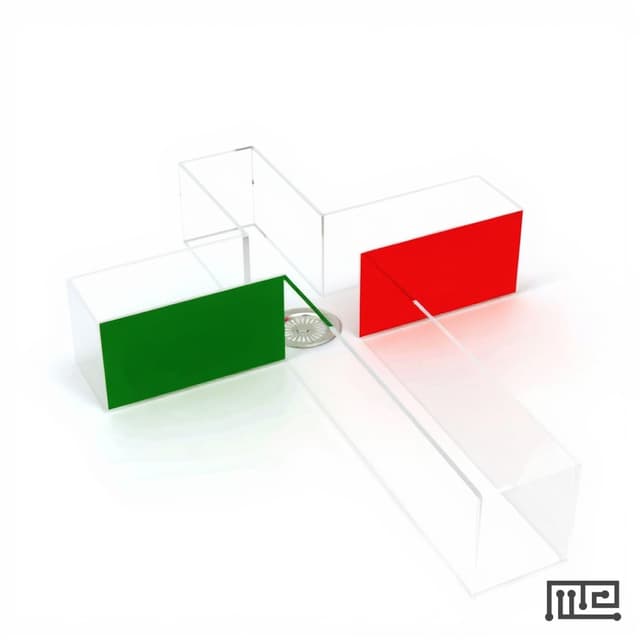
Drosophila Climbing Rack
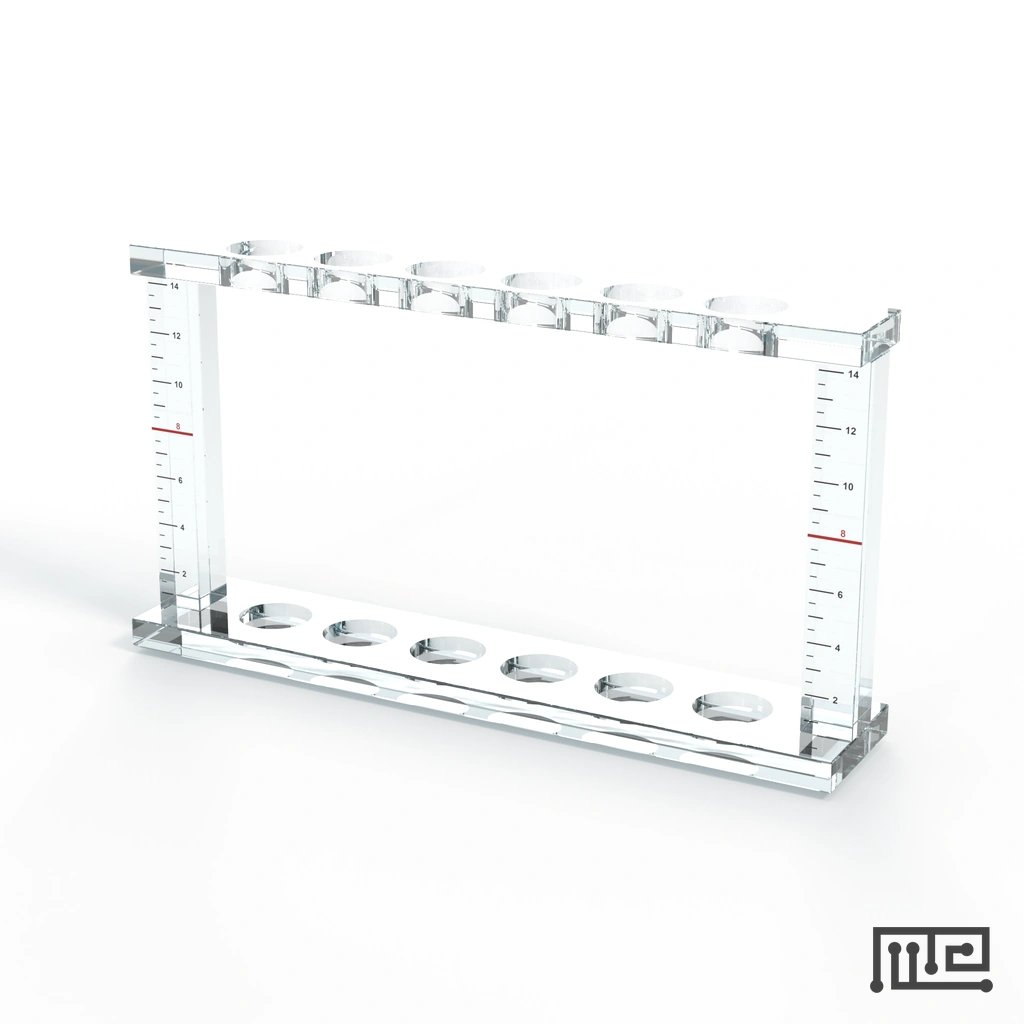
A clear acrylic rack that holds six fly vials upright for the Drosophila climbing assay, also called the negative geotaxis assay.
Tap the rack on the bench to knock the flies to the bottom, then photograph, film or count the flies that climb past the line in a set time.

Louise Corscadden, PhD
Director of Science · ConductScience
Ask Louise about Drosophila Climbing Rack fit, setup, configuration, or quote prep.
Already working with us? Sign in to connect this with My Scientist.
Papers that mention negative geotaxis and climbing assays
From 2021 to 2025, 302 animal research papers mentioned negative geotaxis and climbing assays. The count covers the test on any apparatus, not only this one.
Key Specifications
Full details →- Apparatus Type
- Climbing rack
- Species
- Drosophila
- Vials
- 6, side by side in one row
- Vial Size
- Standard 28.5 × 95 mm fly vials, alone or taped in pairs mouth to mouth (19 cm tall)
- Climbing Line
- 8 cm above the vial bottom, marked on both posts, with a centimeter scale
- Material
- Clear Acrylic
The Drosophila Climbing Rack holds six vials side by side for the climbing assay. The assay measures negative geotaxis, the escape response in which a fly tapped to the bottom of a vial climbs the wall. Tapping the rack on the bench knocks the flies in all six vials to the bottom at once, and one photo or video records every vial, as in the RING method, which photographs six vials at a time.
A strip of foam tape under the base softens the repeated taps on the bench, as in Watanabe and Riddle's rack. The rack is clear acrylic, so a light box or white panel behind it shows through and a camera sees every vial.
What labs measure
- The percentage of flies in each vial above a line when the time limit ends, such as 8 cm at 10 seconds.
- The height flies reach a few seconds after the tap, scored from photos in the RING method.
- The time each fly takes to cross the line, read from video.
- How climbing declines with age, and how genetic background changes the decline.
- Locomotor deficits in fly models of neurodegeneration.
To score climbing from video, the ConductVision Drosophila Package tracks the flies' heights in several vials at once, and reports the percentage that passed the line, climbing speed and height reached. For a choice test of whether flies move up or down, see the Drosophila Gravitaxis Maze.
How It Works
- Put a group of 10 flies of one sex in an empty vial, cover it with a second empty vial, mouth to mouth, and tape the joint.
- Stand the six vial pairs in the rack, and give the flies 1 minute to settle.
- Tap the rack on the bench so all the flies drop to the bottom, and start timing at the last tap.
- At the time limit, photograph or film the rack, and count the flies above the line in each vial.
- Run 10 trials, with 1 minute of rest between them, and average each vial's 10 percentages.
Test and species
- Behavioral test
- Negative geotaxis and climbing assays
Apparatus Type
- Climbing rack
Species
- Drosophila
Vials
- 6, side by side in one row
Vial Size
- Standard 28.5 × 95 mm fly vials, alone or taped in pairs mouth to mouth (19 cm tall)
Climbing Line
- 8 cm above the vial bottom, marked on both posts, with a centimeter scale
Material
- Clear Acrylic
Base
- Foam tape underneath, to soften the taps
Behavioral Construct
- Negative Geotaxis
- Locomotion
Research Domain
- Aging Research
- Motor Function
- Neurodegeneration
Automation Level
- manual
Compatible Tracking Software
- ConductVision Drosophila Package
What’s in the Box
- One Drosophila Climbing Rack in clear acrylic, with foam tape under its base.
- Vials are not included. The rack fits standard 28.5 × 95 mm fly vials.
References
Background reading relevant to this product:
Datasheet
Specifications, models, materials, and operating envelopes
No Q&A yet. Have a question? Ask below.
Have a question about this product?
Research data
Negative geotaxis and climbing assays in published research
302 animal research papers in PubMed from 2021 to 2025 mention negative geotaxis and climbing assays
2.2 times as many as the 136 papers from 2011 to 2015
These counts are for the test, whoever made the apparatus, not for this product.
The lists below cover 2021 to 2025, the years in the band.
Hover over a bar to see its year. Click or tap a bar to show only that year in the lists below, or drag across the bars to show a span of years. On a keyboard, use the arrow keys on the chart to read each year, and the menus below it to pick the years.
What the 302 papers from 2021 to 2025 mention
A paper can mention more than one species, test or condition, so the percentages can add up to more than 100%.
Species
- Mice 41 papers (14%)
- Rats 59 papers (20%)
Conditions they study
- Alzheimer disease 23 papers (8%)
- Parkinson disease 23 papers (8%)
- Stroke and brain ischemia 16 papers (5%)
Animal models and techniques they mention
- Exercise 13 papers (4%)
- Neonatal hypoxia-ischemia 13 papers (4%)
- High-fat diet 11 papers (4%)
Other tests they mention
- Open field 33 papers (11%)Shop open field apparatus
- Grip strength 23 papers (8%)Shop grip strength apparatus
- Rotarod 11 papers (4%)Shop rotarod apparatus
To put a whole battery on one quote, open the test battery tool and start from negative geotaxis and climbing assays. Pick the other tests your study will run, then add the apparatus we sell for each.
Where negative geotaxis and climbing assays ranks
By papers from 2021 to 2025, negative geotaxis and climbing assays ranks 35th of the 90 tests we track.
What researchers measure in negative geotaxis and climbing assays
Of the 302 papers from 2021 to 2025, 146 name climbing performance in the title or abstract.
ConductVision reports climbing performance from video.
Have a question? Just ask.
Send it over and we'll email you a personalized answer, with no call or scheduling.
Prefer to talk it through?
Frequently Bought Together