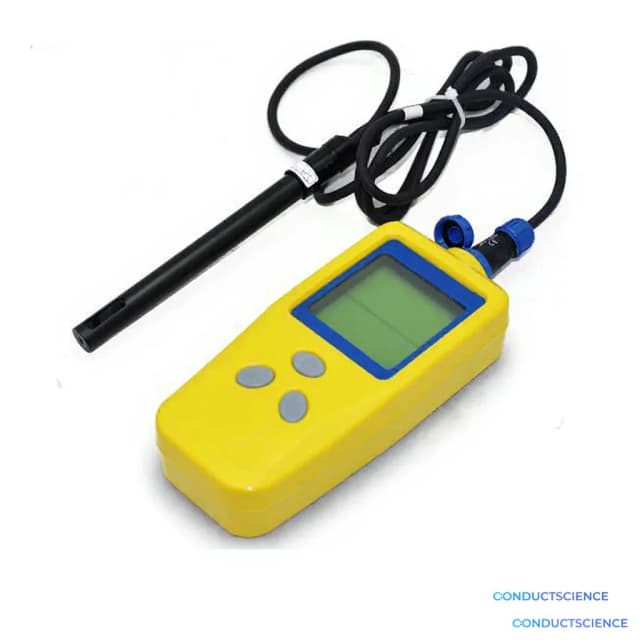
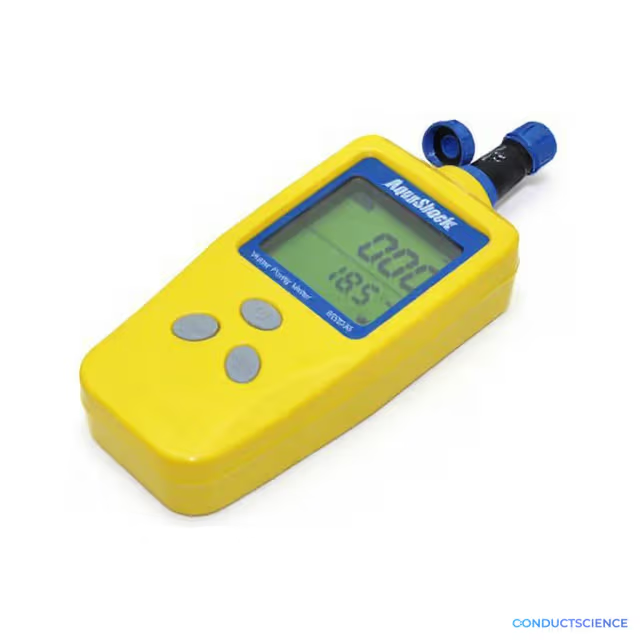
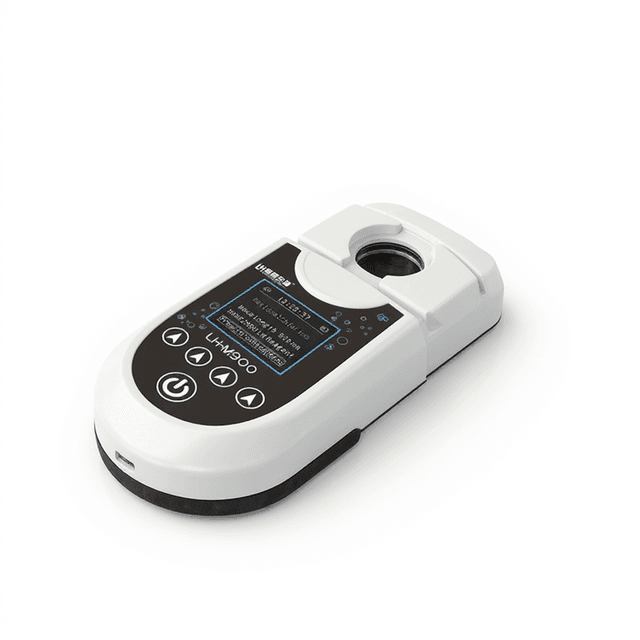
EC Meter Hydroponics
Pen-type digital conductivity meter with 0-19.99 mS/cm range and waterproof design for hydroponic monitoring and water quality analysis.
| Measuring range | 0-19.99mS/cm |
| Product name | EC meter hydroponics |
| Calibration | 1 point |
| Working condition | 5-55°C (41-131°F) |
| Automation Level | manual |
| Brand | ConductScience |

The EC Meter Hydroponics is a pen-type digital conductivity meter designed for rapid electrical conductivity measurements in aqueous solutions. With a measuring range of 0-19.99 mS/cm and 0.01 mS/cm resolution, this waterproof instrument provides accurate conductivity assessment for hydroponic systems, environmental monitoring, and water quality analysis. The meter features a backlit LCD display, data-hold function, and low voltage warning system.
Powered by four 1.5V lithium batteries, the instrument operates reliably across a temperature range of 5-55°C (41-131°F) with ±2% F·S accuracy. Single-point calibration ensures measurement traceability, while the compact 180×65×33mm form factor (130g) enables portable field measurements and laboratory bench work.
How It Works
Electrical conductivity measurement operates on the principle that ionic solutions conduct electrical current proportionally to their ionic concentration and mobility. The EC meter applies a low-voltage AC signal between two electrodes immersed in the test solution. As current flows through the solution, the instrument measures the resistance and calculates conductivity using Ohm's law, where conductivity equals the inverse of resistance normalized for electrode geometry.
The pen-type design integrates measurement electrodes within a sealed probe assembly, enabling direct immersion measurements. Digital signal processing converts the analog conductivity signal to a numerical readout displayed on the LCD screen. Temperature compensation may be applied to normalize readings to standard conditions, as ionic mobility varies with temperature.
Features & Benefits
Measuring range
- 0-19.99mS/cm
Research Domain
- Analytical Chemistry
- Environmental Monitoring
- Food Science
- Industrial Hygiene
- Materials Science
- Pharmaceutical QC
Product name
- EC meter hydroponics
Calibration
- 1 point
Working condition
- 5-55°C (41-131°F)
Automation Level
- manual
Brand
- ConductScience
Accuracy
- ±2%F·S
Power/Voltage
- 4Ã1.5V lithium batteries
Dimensions
- 180Ã65Ã33mm
Weight
- 130g
Weight
- 0.18 kg
Dimensions
- L: 7.09 mm
- W: 2.56 mm
- H: 1.3 mm
Comparison Guide
| Feature | This Product | Typical Alternative | Advantage |
|---|---|---|---|
| Measuring Range | 0-19.99 mS/cm | Entry-level models often limited to narrower ranges | Covers conductivity from pure water to concentrated solutions in a single instrument. |
| Resolution | 0.01 mS/cm | Basic meters may offer 0.1 mS/cm resolution | Enables detection of small changes in solution ionic content for precise monitoring. |
| Display Features | Backlit LCD with data-hold | Standard displays without backlighting | Facilitates measurements in various lighting conditions and allows stable reading capture. |
| Environmental Protection | Waterproof design | Many pen meters lack full waterproofing | Enables field use in wet conditions and simplifies cleaning protocols. |
| Power Management | Low voltage warning system | Basic models without battery status indication | Prevents measurement errors from insufficient power and indicates maintenance needs. |
| Operating Temperature | 5-55°C (41-131°F) | Limited temperature ranges in basic instruments | Supports measurements across typical laboratory and field temperature conditions. |
This meter combines a comprehensive conductivity range with practical features like waterproof design and backlit display. The 0.01 mS/cm resolution and data-hold function support precise measurement workflows in both laboratory and field environments.
Practical Tips
Calibrate using a standard near your expected measurement range rather than always using the same calibration solution.
Why: Reduces extrapolation errors and improves accuracy for specific applications.
Store the probe with a few drops of calibration solution in the protective cap to prevent electrode drying.
Why: Maintains electrode responsiveness and extends probe life.
Allow measurements to stabilize for 30-60 seconds, especially in solutions with high ionic strength or temperature differences.
Why: Ensures accurate readings by allowing thermal equilibrium and ion distribution.
Record sample temperature alongside conductivity values for better data interpretation and comparison.
Why: Conductivity varies significantly with temperature, affecting result comparability.
If readings drift or appear unstable, check for air bubbles on electrodes and ensure complete immersion.
Why: Air bubbles create insulating barriers that interfere with current flow measurement.
Avoid using the meter in flammable solvents or corrosive solutions outside the specified operating conditions.
Why: Prevents damage to electronics and ensures operator safety in chemical environments.
Use gentle stirring or movement to ensure solution homogeneity when measuring stratified or settling samples.
Why: Provides representative conductivity values for the entire sample volume.
Setup Guide
What’s in the Box
- EC conductivity meter (main unit)
- Protective cap
- User manual and quick start guide
- Calibration solution sachets (typical)
- Carrying case (typical)
Compliance
Warranty & ConductCare
ConductScience provides a standard one-year manufacturer warranty covering defects in materials and workmanship, with technical support for calibration and measurement questions.
What conductivity standards should be used for calibration?
Use certified conductivity standards within the 0-19.99 mS/cm range, typically 1.413 mS/cm or 12.88 mS/cm standards, stored according to manufacturer specifications and replaced regularly.
How does temperature affect conductivity measurements?
Conductivity increases approximately 2% per degree Celsius. While this meter operates from 5-55°C, consider temperature compensation or record sample temperature for accurate comparisons.
What is the recommended cleaning protocol between samples?
Rinse probe thoroughly with deionized water between samples, followed by gentle drying. For contaminated samples, use appropriate solvent rinses before final deionized water rinse.
How frequently should calibration be performed?
Perform single-point calibration daily for critical measurements, weekly for routine analysis, or whenever measurement accuracy is questioned or after extended storage.
Can this meter be used for low-conductivity measurements?
The 0.01 mS/cm resolution enables measurements of moderately pure water, though specialized low-conductivity meters may be preferred for ultra-pure water applications.
What factors can interfere with conductivity measurements?
Air bubbles on electrodes, insufficient sample volume, temperature gradients, and chemical contamination of the probe can affect accuracy. Ensure complete electrode immersion and stable conditions.
How should the meter be stored when not in use?
Store with probe cap in place, remove batteries for extended storage, and keep in a dry environment. Avoid temperature extremes and direct sunlight.
Have a question about this product?
Accessories
Enhance your setup with compatible accessories
Upgrade Options