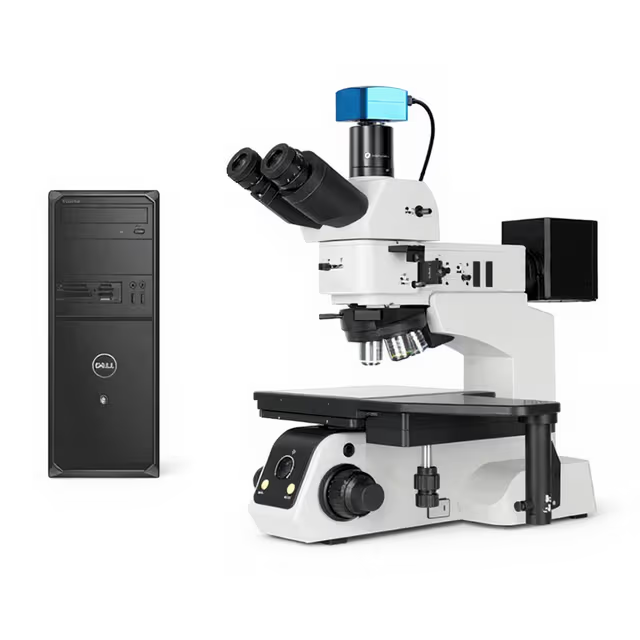
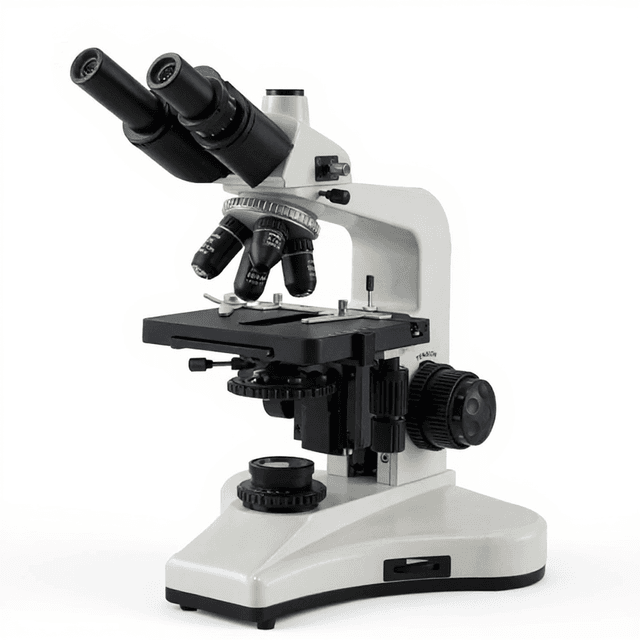
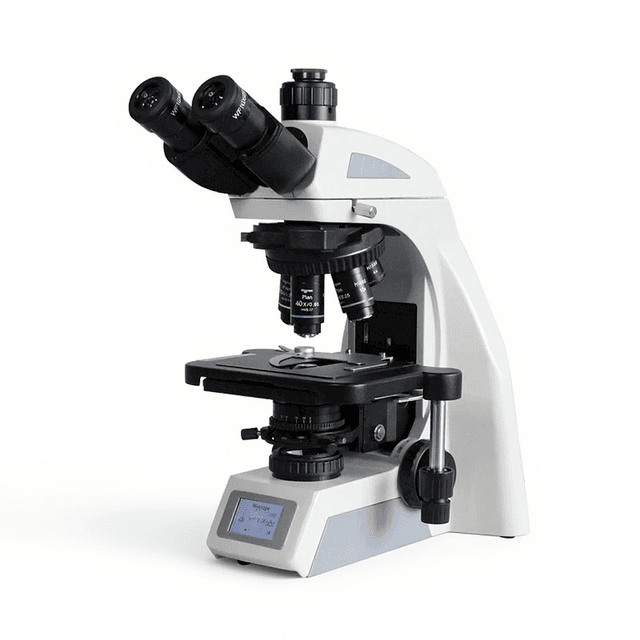
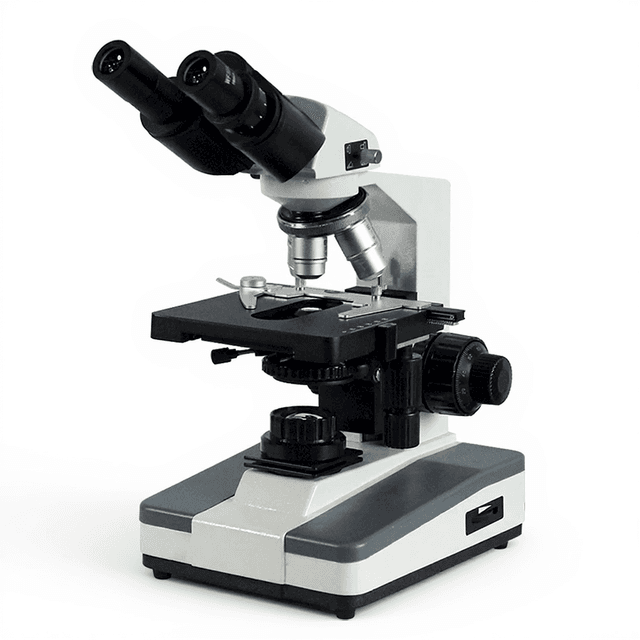
Electric Coded Nosepiece Metallurgical Microscope with 2.5X Lens & Polarizer, Analyzer
Research-grade metallurgical microscope with electric coded nosepiece, 50x-500x magnification, dual LED illumination, and integrated polarizing optics for comprehensive materials characterization and metallographic analysis.
| Automation Level | semi-automated |
| Product Type | Microscope |
| Microscope Type | Metallurgical |
| Application | Materials Science, Quality Control |
| Skill Level | Professional / Research |
| Brand | ConductScience |

The Electric Coded Nosepiece Metallurgical Microscope represents an advanced optical system designed for comprehensive materials characterization and metallographic analysis. Built with an infinite chromatic aberration correction optical system, this instrument delivers magnifications from 50x to 500x (expandable to 25x-1000x with optional lenses), enabling detailed examination of metallic structures, grain boundaries, and material defects at multiple scales.
The microscope features an electric light and dark field 5-hole coded nosepiece with DIC slot, providing both physical button and software control for seamless switching between observation modes. The 12-inch mechanical stage with 300x300mm movement stroke accommodates large specimens, while the dual 10W LED illumination system supports both reflective and transmitted light applications. Integrated polarizing optics enable strain analysis and crystallographic orientation studies essential for materials research.
How It Works
The microscope employs an infinite chromatic aberration correction optical system that eliminates color fringing and provides sharp, high-contrast images across the entire field of view. Light from the 10W adjustable LED reflective illuminator passes through a variable aperture and field aperture system, then reflects off the specimen surface and travels through the objective lens to form an intermediate image at infinity before being focused by the tube lens.
The polarizing assembly consists of a polarizer insert plate and a 360° rotary analyzer, creating crossed polarizers that reveal birefringent materials and strain patterns. When polarized light encounters anisotropic materials, it splits into two rays traveling at different velocities, creating interference patterns that appear as characteristic colors and extinction positions. This principle enables identification of crystalline phases and stress analysis in metallic specimens.
The electric coded nosepiece automatically recognizes mounted objectives and adjusts illumination parameters accordingly, while the DIC (Differential Interference Contrast) slot enables enhanced contrast imaging of surface topography and subtle height variations in polished metallographic specimens.
Features & Benefits
Automation Level
- semi-automated
Product Type
- Microscope
Microscope Type
- Metallurgical
Application
- Materials Science
- Quality Control
Skill Level
- Professional / Research
Brand
- ConductScience
Research Domain
- Analytical Chemistry
- Environmental Monitoring
- Food Science
- Industrial Hygiene
- Materials Science
- Pharmaceutical QC
Weight
- 1.9 kg
Dimensions
- L: 4.9 mm
- W: 6.6 mm
- H: 6.6 mm
Comparison Guide
| Feature | This Product | Typical Alternative | Advantage |
|---|---|---|---|
| Nosepiece Type | Electric coded 5-hole nosepiece with automatic objective recognition and dual control | Manual 4-5 hole nosepiece requiring manual adjustment | Eliminates setup errors and reduces measurement time through automated parameter adjustment. |
| Stage Size and Movement | 12-inch stage with 300x300mm mechanical movement range | Smaller 6-8 inch stages with limited movement range | Accommodates larger specimens and enables systematic scanning of extensive sample areas for comprehensive analysis. |
| Optical System Design | Infinite chromatic aberration correction optical system | Finite tube length systems with potential color fringing | Provides superior image quality with consistent performance across all magnifications for accurate materials characterization. |
| Illumination System | Dual 10W LED with separate reflective and transmitted light systems | Single halogen or basic LED illumination | Offers heat-free operation with stable, adjustable intensity for both reflective and transmitted light applications. |
| Digital Integration | Digital magnification up to 75-3000X with 12MP camera compatibility | Limited digital connectivity or lower resolution cameras | Enables comprehensive documentation and digital analysis workflows for modern laboratory requirements. |
This metallurgical microscope combines advanced electric coded nosepiece technology with a large-capacity mechanical stage and infinite optical design, providing superior workflow efficiency and image quality for demanding materials characterization applications. The dual LED illumination system and integrated polarizing optics deliver comprehensive analytical capabilities in a single instrument platform.
Practical Tips
Verify polarizer alignment monthly by rotating the analyzer through 360° and confirming four extinction positions at 90° intervals.
Why: Accurate polarizer alignment is essential for quantitative stress analysis and proper phase identification in materials studies.
Clean LED illuminator surfaces weekly with lens tissue to maintain uniform light distribution and prevent hot spots.
Why: LED surface contamination can create uneven illumination patterns that affect image quality and measurement accuracy.
Allow the electric coded nosepiece system to complete its recognition cycle before making illumination adjustments.
Why: The automatic recognition system optimizes parameters for each objective, and manual adjustments during this process can override optimal settings.
If objectives are not recognized by the coded nosepiece, clean the electrical contacts with isopropyl alcohol and ensure proper seating.
Why: Contaminated contacts prevent proper communication between objectives and the control system, disrupting automatic parameter adjustment.
Use Köhler illumination setup with properly adjusted field and aperture diaphragms for optimal resolution and contrast.
Why: Proper illumination alignment maximizes numerical aperture utilization and ensures consistent image quality across the entire field of view.
Always use appropriate eye protection when working with polarized light, especially during extended observation periods.
Why: Polarized light can cause eye strain and fatigue during prolonged use, particularly when working with highly birefringent materials.
Document stage coordinates when examining multiple areas of large specimens to enable precise relocation of regions of interest.
Why: The large mechanical stage range makes it easy to lose specific locations without proper coordinate documentation.
Calibrate magnification accuracy using a certified stage micrometer at each magnification level used for measurements.
Why: Magnification accuracy affects all dimensional measurements and must be verified to ensure data reliability and traceability.
Setup Guide
What’s in the Box
- Electric coded nosepiece metallurgical microscope main unit
- SWH10X/25mm high eye-point eyepieces (pair)
- BD Semi-Apo 2.5X/NA0.08/WD9.2 objective lens
- Polarizer and analyzer insert plates
- 12-inch mechanical stage with specimen holders
- Dual LED illumination system (reflective and transmitted)
- Roll-out achromatic condenser (N.A. 0.9)
- Power cord and cables
- User manual and calibration certificate (typical)
- Objective lens cleaning kit (typical)
- Dust cover (typical)
Warranty
ConductScience provides a comprehensive 1-year manufacturer warranty covering all optical and mechanical components, with dedicated technical support for calibration and maintenance procedures.
Compliance
References
Background reading relevant to this product:
What is the effective magnification range and can it be extended for higher magnification applications?
The standard magnification range is 50x-500x, expandable to 25x-1000x with optional 2.5X and 100X LWD objectives. Digital magnification up to 75-3000X is possible with the optional 12MP camera system and 22-inch display.
How does the electric coded nosepiece improve workflow efficiency compared to manual systems?
The electric coded nosepiece automatically recognizes mounted objectives and adjusts illumination parameters accordingly, eliminating manual calibration steps. It offers both physical button and software control with integrated DIC slot for advanced contrast techniques.
What specimen size limitations exist with the mechanical stage system?
The 12-inch stage accommodates specimens up to the 760x430mm platform area, with a glass area of 310x418mm. The 300x300mm mechanical movement range allows systematic scanning of large specimens with precise positional control.
Can this microscope perform quantitative polarized light analysis for stress measurements?
Yes, the 360° rotary polarizing assembly with polarizer and analyzer insert plates enables quantitative stress analysis and crystallographic orientation studies. The system supports standard polarized light microscopy techniques for materials characterization.
What are the illumination specifications and how do they affect image quality?
Dual 10W adjustable LED systems provide heat-free, stable illumination for both reflective and transmitted light. The BD reflective illuminator includes variable aperture, field aperture, and centering controls for optimal Köhler illumination conditions.
How does the infinite optical system design benefit materials analysis applications?
The infinite chromatic aberration correction system eliminates color fringing and provides consistent performance across all magnifications. This design enables accurate color reproduction essential for phase identification and ensures sharp, high-contrast images for precise measurements.
What maintenance procedures are required to maintain optical performance?
Regular cleaning of optical surfaces, LED inspection, and periodic calibration of the mechanical stage are recommended. The electric nosepiece requires occasional cleaning of electrical contacts, and polarizer alignment should be verified quarterly for quantitative work.
Is this microscope compatible with digital imaging systems for documentation?
Yes, the system includes a C-type camera adapter (0.65x) with focusing capability, and optional 0.5x/1x adapters are available. The microscope supports integration with digital cameras for image capture and analysis applications.
Have a question about this product?
Frequently Bought Together
Upgrade Options
Related Products