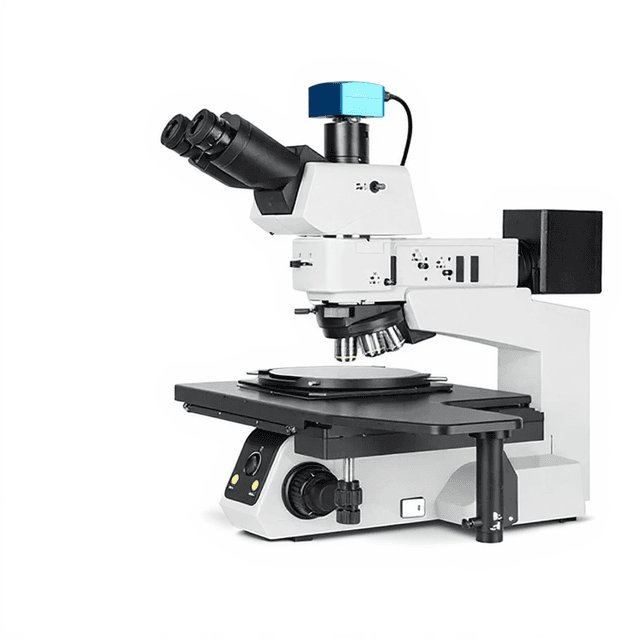
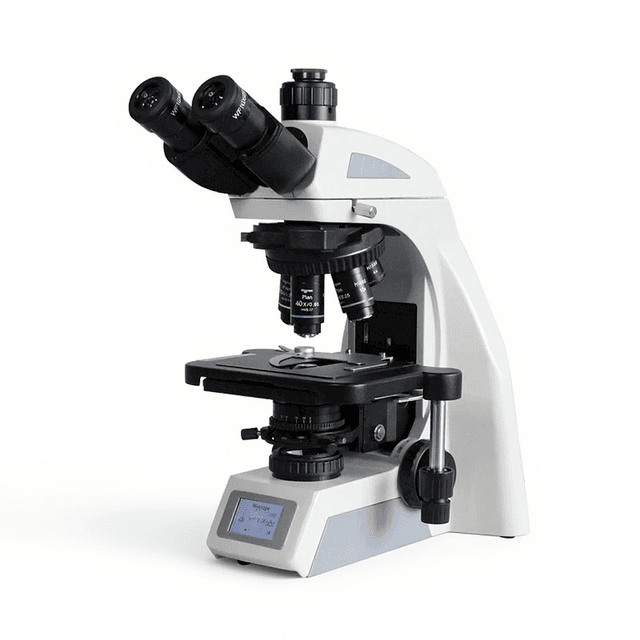
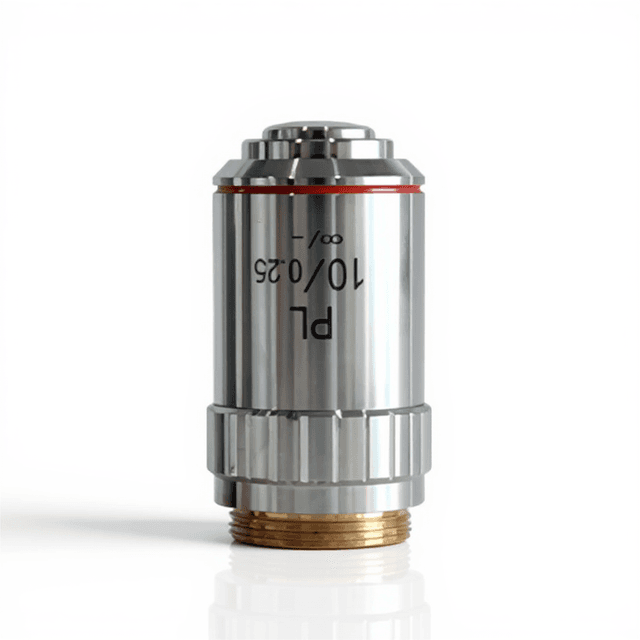
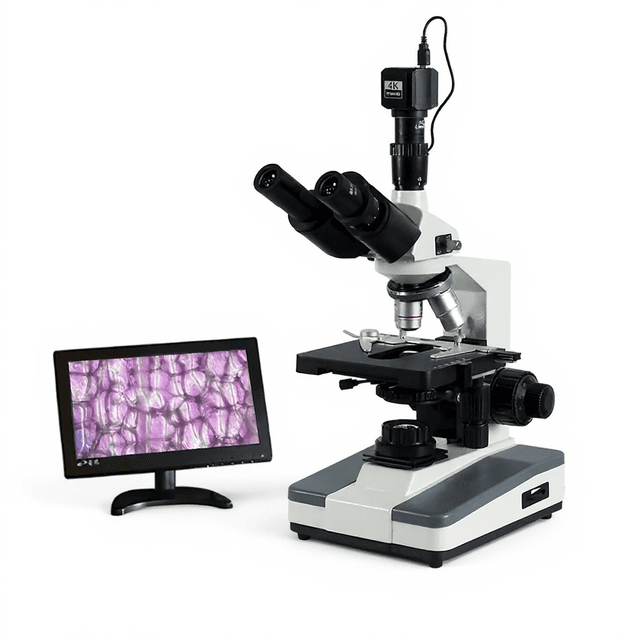
Electric Nosepiece Metallurgical Microscope with 6-inch Stage for Large-sized Specimen
Research-grade metallurgical microscope with electric nosepiece, 6-inch stage, and 50x-1000x magnification for materials characterization and industrial quality control applications.
| Automation Level | semi-automated |
| Product Type | Microscope |
| Microscope Type | Metallurgical |
| Application | Materials Science, Quality Control |
| Skill Level | Professional / Research |
| Brand | ConductScience |

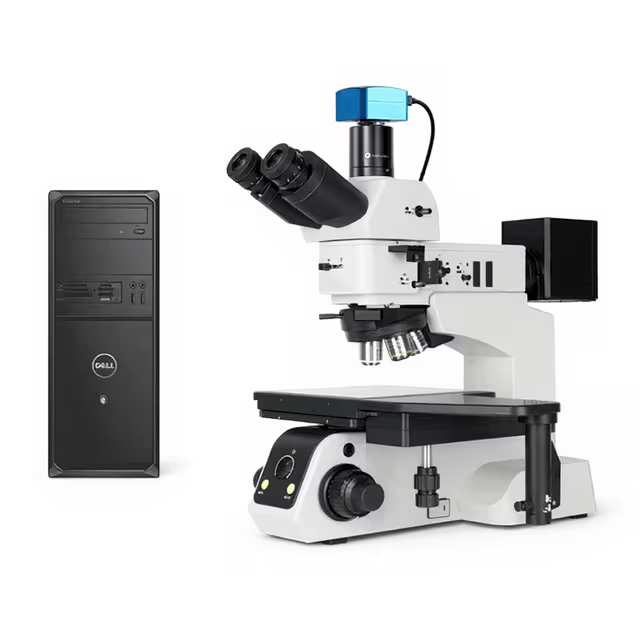
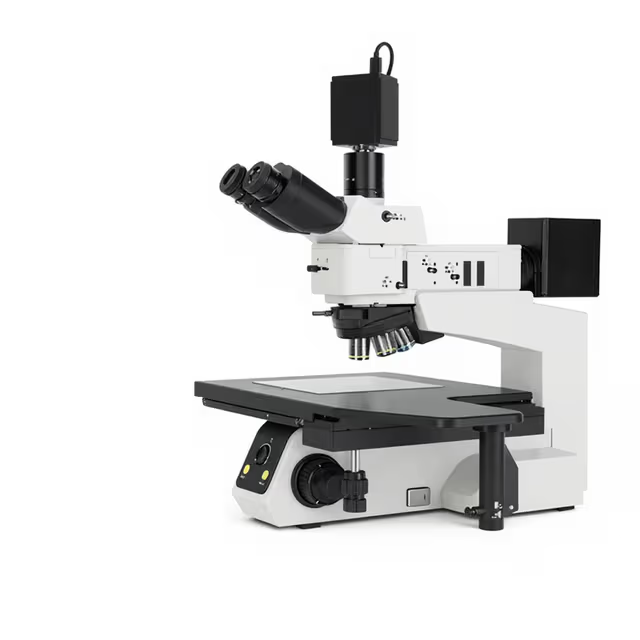
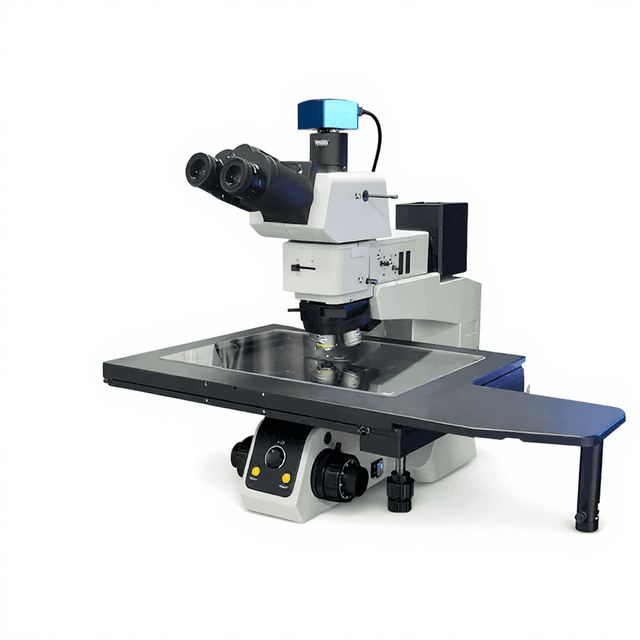
The Electric Nosepiece Metallurgical Microscope with 6-inch Stage (MCX-0021) is a research-grade reflected light microscope engineered for materials characterization and quality control applications. Built around an infinite chromatic aberration correction optical system, this instrument delivers magnifications from 50x to 1000x with long working distance BD Semi-Apo objectives optimized for opaque specimen examination. The electric 5-hole nosepiece provides rapid switching between bright field and dark field illumination modes with integrated DIC capability.
The instrument features a large 6-inch stage (450 × 240mm platform area) with 158×158mm travel range, enabling examination of substantial specimens including electronic components, semiconductor wafers, and industrial materials. The dual LED illumination system (5W adjustable) provides both reflected and transmitted light options, while the polarizing assembly supports stress analysis and crystallographic studies. Digital documentation capabilities extend magnification to 3000x when equipped with the optional 12MP camera system.
How It Works
Metallurgical microscopy employs reflected light illumination to examine opaque specimens that cannot be penetrated by transmitted light. The instrument's BD reflective illuminator directs 5W LED light through the objective lens onto the specimen surface, where it interacts with the material's microstructure. Light scattered and reflected from surface features, grain boundaries, and phase interfaces returns through the objective to form the image.
The infinite chromatic aberration correction optical system ensures consistent color reproduction across the magnification range while maintaining flat field characteristics. The electric nosepiece enables rapid switching between bright field mode (for topographical contrast) and dark field mode (for enhanced edge definition and scratch detection). The integrated DIC (Differential Interference Contrast) capability provides enhanced surface relief visualization by converting optical path differences into intensity variations.
Polarized light microscopy utilizes the instrument's 360° rotatable polarizing assembly to analyze optically anisotropic materials. When polarized light interacts with crystalline structures or stressed materials, it reveals information about crystal orientation, internal stress patterns, and phase identification based on optical properties specific to each material.
Features & Benefits
Automation Level
- semi-automated
Product Type
- Microscope
Microscope Type
- Metallurgical
Application
- Materials Science
- Quality Control
Skill Level
- Professional / Research
Brand
- ConductScience
Research Domain
- Analytical Chemistry
- Environmental Monitoring
- Food Science
- Industrial Hygiene
- Materials Science
Weight
- 1.9 kg
Dimensions
- L: 4.9 mm
- W: 6.6 mm
- H: 6.6 mm
Comparison Guide
| Feature | This Product | Typical Alternative | Advantage |
|---|---|---|---|
| Stage Size and Travel | 6-inch stage with 450×240mm platform area and 158×158mm travel range | Standard instruments often feature 4-inch stages with limited travel range | Enables examination of large semiconductor wafers, electronic assemblies, and industrial components without repositioning. |
| Nosepiece Control | Electric 5-hole nosepiece with software and physical button dual control | Manual nosepieces require hand rotation with potential for positioning errors | Provides consistent, repeatable objective positioning essential for quantitative analysis and automated documentation. |
| Illumination System | Dual 5W LED system for both reflected and transmitted light applications | Single illumination mode with halogen or basic LED sources | Offers versatility for examining both opaque materials and thin sections while minimizing heat generation. |
| Optical Magnification Range | 50x-1000x with Long Working Distance BD Semi-Apo objectives | Limited magnification range with standard working distance objectives | Accommodates irregular specimen geometries while maintaining high resolution across the full magnification range. |
| DIC Capability | Integrated DIC slot in electric nosepiece with polarizing assembly | Basic bright field and dark field illumination only | Enhances surface relief visualization for detailed microstructural analysis and defect detection. |
| Digital Integration | 12MP camera capability with magnification extension to 3000x on 22-inch display | Limited or no digital documentation capabilities | Enables detailed digital archiving, measurement, and analysis for quality control documentation requirements. |
The MCX-0021 combines research-grade optics with automation features and large specimen handling capabilities. The electric nosepiece and extensive stage travel distinguish it from basic metallurgical microscopes, while the dual illumination system and DIC integration support advanced materials characterization techniques.
Practical Tips
Calibrate the digital measurement system using a certified stage micrometer before beginning quantitative analysis sessions.
Why: Ensures measurement accuracy and traceability for quality control documentation requirements.
Clean objective lenses weekly using lens tissue and appropriate solvents, working from center outward in spiral motions.
Why: Maintains optical performance and prevents contamination buildup that degrades image quality.
Use the coaxial stage controls for fine positioning and reserve the fast-moving device for rapid specimen area changes.
Why: Prevents excessive wear on precision positioning mechanisms while maintaining positional accuracy.
If electric nosepiece positioning becomes inconsistent, verify electrical connections and perform software recalibration.
Why: Maintains repeatable objective positioning essential for quantitative measurements and automated workflows.
Optimize illumination aperture settings for each objective magnification to balance resolution and contrast for the specific material being examined.
Why: Maximizes image quality and feature visibility while preventing optical artifacts that could affect analysis results.
Always lower the stage before changing objectives or specimens to prevent contact damage to optics or samples.
Why: Protects expensive objectives from impact damage and prevents specimen contamination or destruction.
Allow LED illumination to stabilize for 10-15 minutes before critical measurements to ensure consistent light output.
Why: Eliminates measurement variability due to illumination intensity fluctuations during warm-up period.
Lubricate mechanical stage dovetails monthly with appropriate precision instrument oil to maintain smooth operation.
Why: Prevents binding and ensures accurate specimen positioning throughout the extended travel range.
Setup Guide
What’s in the Box
- Metallurgical microscope main unit (typical)
- SWH10X/25mm high eye point eyepieces
- Long Working Distance BD Semi-Apo 5X objective
- Electric 5-hole nosepiece with DIC slot
- 6-inch mechanical stage assembly
- Reflective and transmitted LED illuminators
- Polarizing assembly with 360° rotatable components
- Roll-out achromatic condenser
- Power cable and documentation (typical)
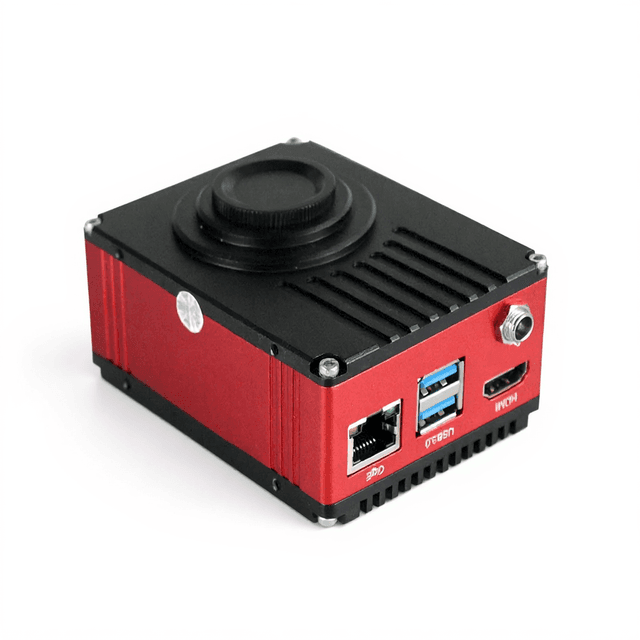
- 0.65x camera adapter (C-type interface) (typical)
Warranty
ConductScience provides a standard one-year manufacturer warranty covering defects in materials and workmanship, with technical support for installation and operational guidance.
Compliance
References
Background reading relevant to this product:
What is the working distance limitation for examining thick or irregular specimens?
The Long Working Distance BD Semi-Apo 5x objective provides 15mm working distance, adequate for most industrial components and irregular specimens. Higher magnification objectives will have shorter working distances.
Can this microscope perform quantitative measurements on digital images?
Digital measurement capabilities depend on the optional camera software package. The 12MP camera with 0.65x adapter enables calibrated measurements when used with appropriate image analysis software.
What polarization analysis capabilities are included for stress measurement?
The 360° rotatable polarizing assembly enables qualitative stress analysis and crystal orientation studies. Quantitative retardation measurements require additional compensator accessories not included.
How does the electric nosepiece improve workflow compared to manual systems?
The electric nosepiece provides consistent, repeatable positioning with software control, eliminating manual adjustment errors and enabling automated documentation workflows when integrated with camera systems.
What specimen preparation is required for optimal imaging?
Specimens require flat, polished surfaces for reflected light microscopy. Standard metallographic preparation including grinding, polishing, and etching protocols apply depending on material type and analysis requirements.
Is the illumination system suitable for heat-sensitive specimens?
The 5W LED illumination generates minimal heat compared to traditional halogen systems, making it suitable for polymer and other heat-sensitive materials during extended examination periods.
What maintenance schedule is recommended for optimal performance?
Monthly cleaning of optical surfaces, quarterly lubrication of mechanical stage components, and annual professional servicing of the electric nosepiece mechanism maintain optimal performance and accuracy.
Have a question about this product?
Frequently Bought Together
Upgrade Options
Related Products