Ferret Y Maze
Three-arm behavioral maze for assessing spatial navigation and working memory in ferrets through spontaneous alternation paradigms.

Louise Corscadden, PhD
Director of Science · ConductScience
Ask Louise about Ferret Y Maze fit, setup, configuration, or quote prep.
Already working with us? Sign in to connect this with My Scientist.
Key Specifications
Full details →- Model fit
- Ferret
- SKU family
- CS-958184
- Shipping box
- 65.0 x 36.0 x 27.0 cm
- Ordering
- Online checkout and quote request available
- Category
- Behavioral Mazes
- Build notes
- Confirm accessories, station layout, and support needs before purchase
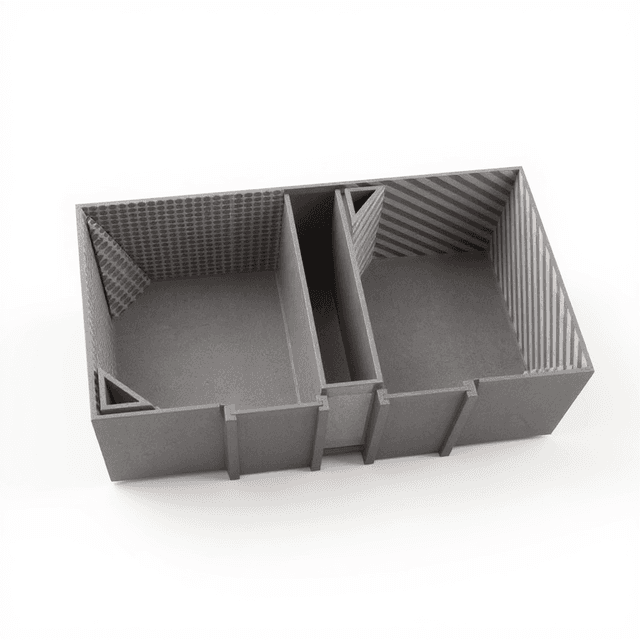
The Ferret Y Maze is a specialized behavioral testing apparatus designed for assessing spatial navigation, memory, and decision-making processes in ferrets and other similarly-sized research animals. This three-arm maze configuration provides researchers with a controlled environment for investigating cognitive function through spontaneous alternation paradigms and spatial working memory tasks.
The Y-maze design allows for the evaluation of hippocampus-dependent spatial memory through natural exploratory behavior, making it particularly valuable for neuroscience research focused on learning and memory mechanisms. The apparatus enables researchers to conduct standardized behavioral assessments while minimizing stress-induced variables that can confound experimental results.
How It Works
The Y-maze operates on the principle of spontaneous alternation behavior, a natural tendency for animals to explore novel environments rather than recently visited locations. This behavioral pattern reflects the function of spatial working memory systems, primarily mediated by the hippocampus and associated neural circuits.
During testing, the animal is placed in the central hub of the three-arm maze and allowed to explore freely. Normal spatial working memory manifests as alternation between the three arms, with healthy animals typically avoiding immediate re-entry into recently visited arms. The percentage of alternation behaviors serves as a quantitative measure of spatial memory function.
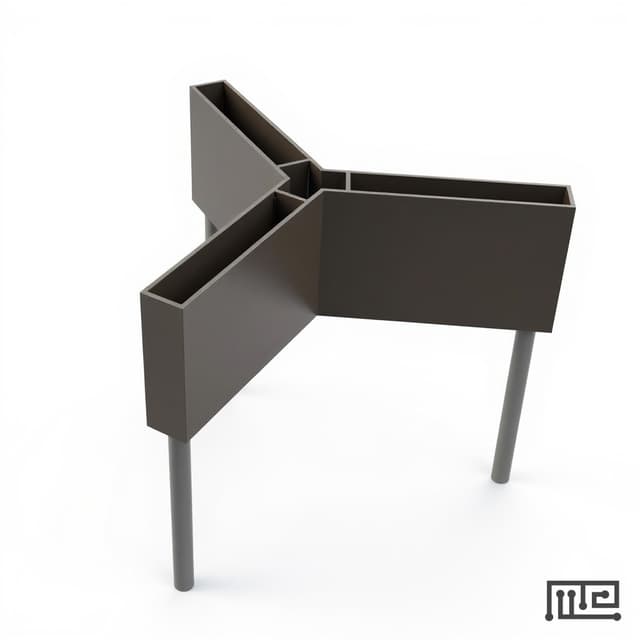
The maze design incorporates equal arm lengths and angles to eliminate spatial bias, ensuring that arm selection reflects cognitive processes rather than physical maze characteristics. Environmental cues surrounding the maze provide spatial reference points that animals use for navigation and memory formation during testing sessions.
Features & Benefits
Behavioral Construct
- Spatial Working Memory
- Spontaneous Alternation
- Spatial Navigation
- Exploratory Behavior
Automation Level
- manual
Research Domain
- Aging Research
- Behavioral Pharmacology
- Learning and Memory
- Neurodegeneration
- Neuroscience
Species
- Ferret
Compatible Tracking Software
- ConductVision
Shipping weight
- 6.06 lb
Shipping box
- L: 65.0 cm
- W: 36.0 cm
- H: 27.0 cm
| Feature | This Product | Typical Alternative | Advantage |
|---|---|---|---|
| Maze Configuration | Three-arm Y-configuration optimized for ferret subjects | Many behavioral mazes use four-arm radial designs or linear configurations | Y-maze design specifically targets spontaneous alternation behavior as a direct measure of spatial working memory function. |
| Species Optimization | Dimensions and proportions designed for ferret behavioral testing | Most commercial mazes are sized for rodent species | Appropriate scaling allows natural movement patterns and reduces size-related stress in ferret subjects. |
| Testing Protocol | Supports spontaneous alternation assessment without training requirements | Many spatial memory tests require extensive animal training periods | Eliminates training-related variables and allows rapid cognitive assessment across experimental groups. |
| Environmental Control | Open-top design with visual cue integration | Some maze designs include built-in cue systems or enclosed configurations | Flexible cue placement allows researchers to customize spatial reference points for specific experimental requirements. |
The Ferret Y Maze provides a specialized solution for spatial memory assessment in ferret models, offering species-appropriate dimensions and a testing paradigm that captures spontaneous alternation behavior without extensive training requirements. The three-arm configuration enables direct evaluation of hippocampus-dependent spatial working memory through natural exploratory behavior patterns.
Practical Tips
Verify arm angles using a protractor to ensure precise 120-degree spacing between maze arms during assembly.
Why: Accurate geometric configuration is essential for eliminating spatial bias in arm selection behavior.
Inspect maze joints and connections regularly for wear that could create gaps or instability during animal testing.
Why: Structural integrity prevents animal escape and maintains consistent environmental conditions across testing sessions.
Conduct testing during consistent time periods within the animal's active cycle to standardize motivation levels.
Why: Circadian rhythm variations can significantly impact exploratory behavior and spatial memory performance.
Allow animals to acclimate to the testing room for 5-10 minutes before maze introduction to reduce neophobia responses.
Why: Environmental familiarization minimizes stress-related variables that can mask cognitive performance capabilities.
If animals show arm preference, rotate the maze orientation between trials to identify potential environmental bias sources.
Why: Systematic rotation helps distinguish between genuine cognitive deficits and environmental factors influencing behavior.
Score only arm entries where the animal's entire body crosses into the arm to ensure consistent behavioral measurement.
Why: Standardized entry criteria improves inter-observer reliability and data reproducibility across research groups.
Use non-toxic cleaning agents and ensure complete drying before animal testing to prevent chemical exposure.
Why: Chemical residues can cause respiratory irritation or behavioral alterations that confound experimental results.
Store maze components in a dry environment to prevent material degradation and maintain structural integrity.
Why: Proper storage conditions extend maze lifespan and ensure consistent testing conditions across experimental periods.
Setup Guide
What’s in the Box
- Central hub platform (typical)
- Three maze arms (typical)
- Assembly hardware (typical)
- User manual and setup instructions (typical)
Warranty
ConductScience provides a one-year manufacturer warranty covering defects in materials and workmanship, with technical support available for setup and operational questions.
Compliance
References
Background reading relevant to this product:
What is the optimal trial duration for Y-maze testing in ferrets?
Trial duration typically ranges from 5-10 minutes, allowing sufficient time for multiple arm entries while maintaining animal motivation. Longer sessions may introduce fatigue variables that confound spatial memory assessment.
How should alternation behavior be scored and analyzed?
Alternation is calculated as the number of triads containing entries into all three arms divided by total possible triads, expressed as a percentage. Scores above 50% indicate functional spatial working memory.
What environmental factors can influence maze performance?
Consistent lighting, minimal auditory distractions, and stable visual cues are essential. Room temperature, humidity, and time of day should be standardized across testing sessions to reduce confounding variables.
How frequently should the maze be cleaned between subjects?
Clean between each animal with appropriate disinfectant to eliminate olfactory cues. Allow adequate drying time before introducing the next subject to prevent chemical irritation.
What age range is appropriate for ferret Y-maze testing?
Adult ferrets (6 months and older) typically demonstrate consistent alternation behavior. Juvenile animals may show developmental differences in spatial memory that should be considered in experimental design.
Can the maze be used for pharmacological studies?
Yes, the Y-maze is well-suited for assessing drug effects on spatial memory. Establish baseline performance before drug administration and use appropriate washout periods between treatments.
What video recording specifications are recommended?
Overhead camera positioning at sufficient height to capture all maze arms simultaneously. Minimum 30 fps recording rate with adequate resolution for accurate movement tracking and behavioral scoring.
How does ferret performance compare to rodent Y-maze data?
Ferrets typically show similar alternation patterns to rodents, though baseline performance levels may vary. Establish species-specific normative data for your laboratory conditions and ferret strain.
Have a question about this product?
Have a question? Just ask.
Send it over and we'll email you a personalized answer — no call, no scheduling.
Prefer to talk it through?
Accessories
Enhance your setup with compatible accessories

Frequently Bought Together