Fish 4 choice Maze
Controlled aquatic testing apparatus for evaluating spatial learning, memory, and decision-making processes in zebrafish and other small fish species through choice-based behavioral paradigms.

Louise Corscadden, PhD
Director of Science · ConductScience
Ask Louise about Fish 4 choice Maze fit, setup, configuration, or quote prep.
Already working with us? Sign in to connect this with My Scientist.
Key Specifications
Full details →- Model fit
- Zebrafish
- SKU family
- CS-958183
- Shipping box
- 65.0 x 36.0 x 27.0 cm
- Ordering
- Online checkout and quote request available
- Category
- Behavioral Mazes
- Build notes
- Confirm accessories, station layout, and support needs before purchase
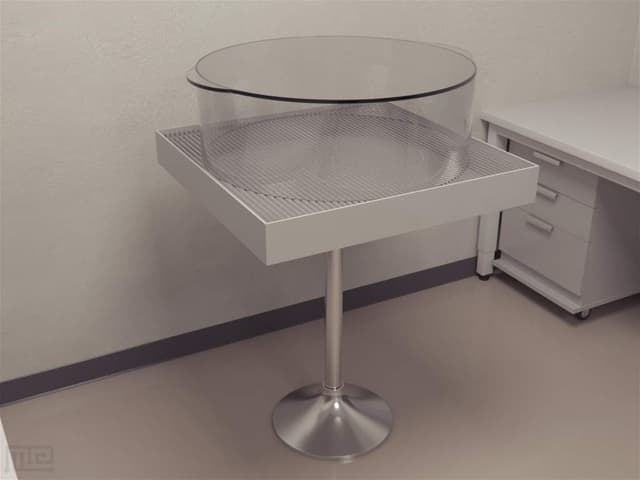
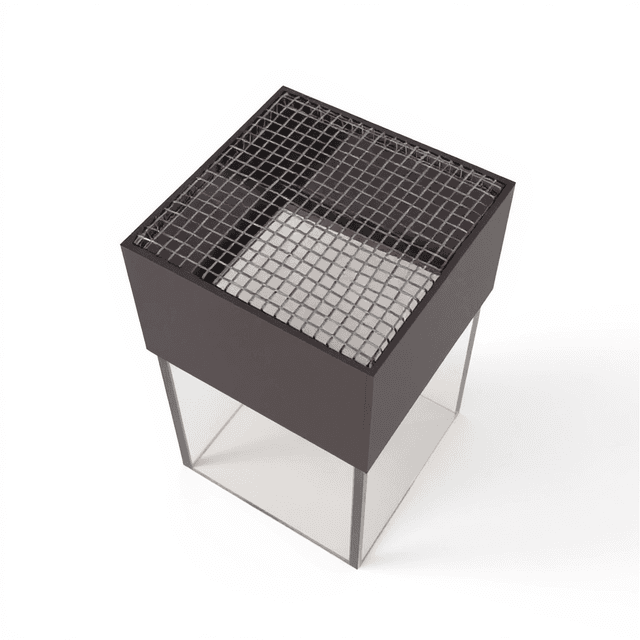
The Fish 4 Choice Maze provides a controlled aquatic testing environment for evaluating spatial learning, memory, and decision-making processes in zebrafish and other small aquatic species. This apparatus enables researchers to conduct choice-based behavioral experiments by presenting fish with multiple pathway options, allowing for systematic assessment of learning acquisition, memory retention, and cognitive flexibility in aquatic models.
The maze configuration supports protocols for investigating spatial navigation, working memory, and preference-based decision making in fish subjects. Research applications span neuroscience studies examining cognitive function, behavioral pharmacology investigations of drug effects on learning, and developmental biology research tracking cognitive maturation across life stages.
How It Works
The Fish 4 Choice Maze operates by presenting aquatic subjects with four distinct pathway options from a central starting area, allowing researchers to measure spatial learning through choice selection patterns. Fish are introduced to the maze and must navigate between different arms or chambers, with researchers recording pathway preferences, latency times, and choice accuracy over repeated trials.
The experimental paradigm relies on spatial memory formation as fish learn to associate specific pathways with positive or negative outcomes. Researchers can manipulate reward placement, pathway characteristics, or environmental cues to assess different aspects of cognitive function. The aquatic environment maintains natural swimming behavior while providing controlled conditions for systematic behavioral measurement.
Data collection involves tracking movement patterns, choice sequences, and time-based metrics to quantify learning acquisition, memory retention, and cognitive flexibility. The four-choice design enables assessment of working memory capacity and spatial navigation strategies specific to aquatic vertebrate models.
Features & Benefits
Behavioral Construct
- Spatial Learning
- Working Memory
- Decision Making
- Spatial Navigation
- Memory Retention
- Cognitive Flexibility
Automation Level
- manual
Research Domain
- Behavioral Pharmacology
- Developmental Biology
- Learning and Memory
- Neurodegeneration
- Neuroscience
- Toxicology
Species
- Zebrafish
Compatible Tracking Software
- ConductVision
Shipping weight
- 6.06 lb
Shipping box
- L: 65.0 cm
- W: 36.0 cm
- H: 27.0 cm
| Feature | This Product | Typical Alternative | Advantage |
|---|---|---|---|
| Choice Options | Four distinct pathway choices from central chamber | T-maze systems typically offer two-choice paradigms with simpler decision requirements | Enables assessment of more complex working memory and decision-making processes |
| Aquatic Environment | Designed specifically for aquatic behavioral testing | Many behavioral mazes are designed for terrestrial species and require adaptation for aquatic use | Maintains natural swimming behavior and species-appropriate testing conditions |
| Species Compatibility | Optimized for small fish species including zebrafish | General maze designs may not account for fish-specific behavioral requirements | Provides standardized testing environment validated for aquatic vertebrate research |
| Modular Design | Configurable pathway arrangement for experimental customization | Fixed maze configurations limit experimental flexibility | Allows protocol adaptation for different cognitive assessments and research questions |
The Fish 4 Choice Maze offers aquatic-specific four-choice behavioral testing with modular configuration options. Designed for standardized cognitive assessment in fish models with natural swimming behavior maintenance.
Practical Tips
Allow subjects to acclimate to maze environment for several minutes before trial initiation.
Why: Reduces stress-related behavioral artifacts and ensures natural swimming behavior during testing.
Rinse all surfaces thoroughly between subjects and replace water as needed to maintain quality.
Why: Prevents chemical cue contamination that could influence subsequent subject behavior.
Position recording equipment directly overhead to capture complete pathway choice sequences.
Why: Ensures accurate measurement of choice latency and movement patterns for reliable data collection.
Verify consistent water depth across all maze sections before each testing session.
Why: Maintains standardized swimming conditions and prevents depth-related behavioral biases.
Monitor water temperature and quality parameters to ensure subject welfare throughout testing.
Why: Prevents physiological stress that could confound cognitive performance measurements.
If subjects show pathway avoidance, check for visual obstructions or environmental factors affecting choice behavior.
Why: Ensures behavioral responses reflect cognitive processes rather than environmental artifacts.
Randomize reward placement or cue positioning across trials to prevent position-based learning strategies.
Why: Isolates spatial memory and cognitive function from simple associative learning patterns.
Setup Guide
What’s in the Box
- Central chamber section (typical)
- Four pathway arm sections (typical)
- Connecting hardware and seals (typical)
- Assembly instructions (typical)
- Experimental protocol guide (typical)
Warranty
ConductScience provides standard manufacturer warranty coverage with technical support for setup and operational guidance. Typical coverage includes one-year protection against manufacturing defects.
Compliance
References
Background reading relevant to this product:
What water depth should be maintained for zebrafish testing protocols?
Consult product datasheet for recommended water depth specifications. Typical zebrafish behavioral testing uses depths sufficient for natural swimming while preventing jumping behavior.
How do I standardize trial initiation across testing sessions?
Use the central chamber as a consistent starting point, allowing subjects to acclimate before pathway access. Maintain standardized timing for chamber confinement and choice availability.
Can the maze configuration be modified for different experimental designs?
The modular design supports pathway customization and spatial cue integration. Specific modification options depend on experimental requirements and should be evaluated for each protocol.
What parameters should be measured during choice trials?
Standard measurements include choice latency, pathway selection frequency, time spent in each arm, and choice accuracy. Video tracking enables detailed movement pattern analysis.
How do I maintain consistent water conditions between trials?
Monitor water temperature, quality, and depth between sessions. Replace water as needed to maintain consistent environmental conditions and prevent stress-related behavioral artifacts.
What cleaning protocols are recommended between subjects?
Rinse thoroughly between subjects to remove chemical cues or contaminants. Use appropriate disinfection methods that are safe for subsequent aquatic use.
How many trials are typically required for learning assessment?
Trial requirements vary by experimental design and learning paradigm. Consult established protocols for specific cognitive assessments and statistical power calculations.
Have a question about this product?
Have a question? Just ask.
Send it over and we'll email you a personalized answer — no call, no scheduling.
Prefer to talk it through?