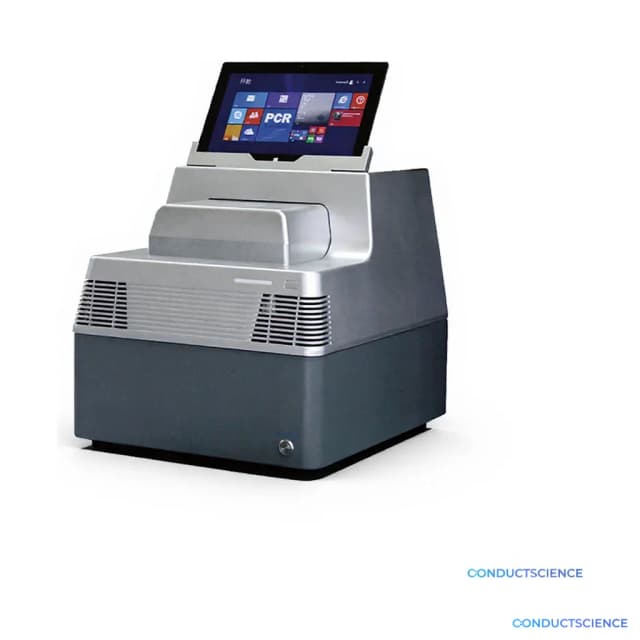
Fluorescent Quantitative PCR Detection System
4-channel real-time PCR system with 96-well capacity, LED excitation, and dynamic range detection from 1 to 10¹⁰ copies for quantitative nucleic acid analysis.
| Automation Level | semi-automated |
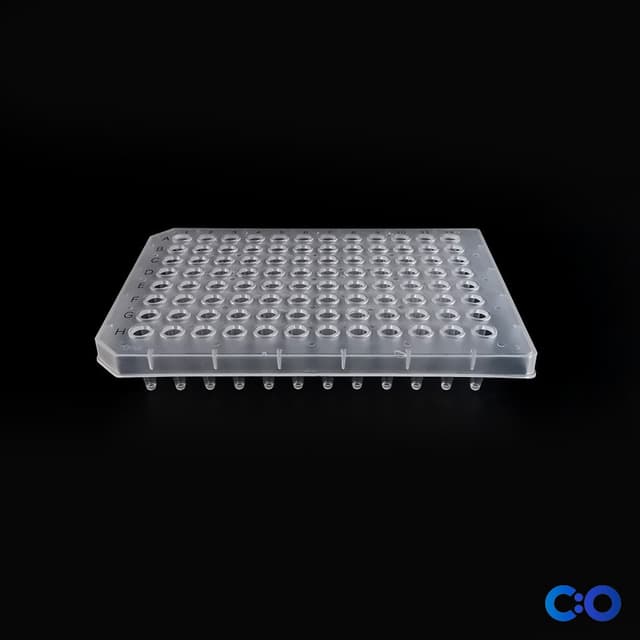
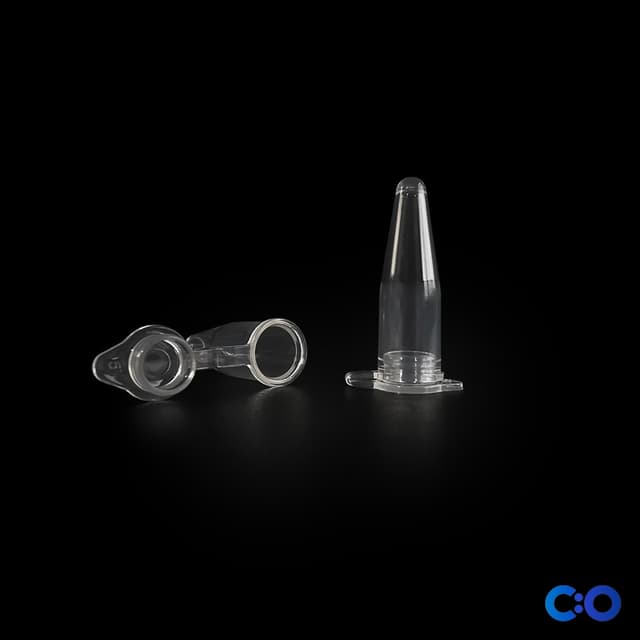
| Sample Capacity | 96*0.1ml PCR plate, 12*8-strip tubes, 96*0.1ml single tube (Transparent Cover) |
| Reaction System | 5~50μl |
| Dynamics Range | 1~10¹⁰ copies |
| Channel | 4 |
| Emission Light | LED |

The Fluorescent Quantitative PCR Detection System (BIO-0652) is a 4-channel real-time PCR instrument designed for quantitative nucleic acid analysis in research and diagnostic applications. The system accommodates flexible sample formats including 96-well plates, 8-strip tubes, and individual tubes, with reaction volumes from 5-50μl to support diverse experimental requirements.
Built with LED excitation sources and photodiode detectors, this system provides precise fluorescence detection across excitation wavelengths of 455-650nm and detection wavelengths of 510-710nm. The instrument delivers quantitative analysis with fluorescence detection repeatability CV≤3% and accuracy CV≤5%, supporting dynamic range detection from 1 to 10¹⁰ copies for applications requiring high sensitivity and broad quantitative range.
How It Works
Real-time PCR combines DNA amplification with fluorescent detection to monitor product accumulation throughout the reaction. During each thermal cycle, target sequences are denatured, primers anneal, and DNA polymerase extends the products. Fluorescent reporters—either DNA-binding dyes or sequence-specific probes—increase proportionally to the amplified DNA.
The system employs LED excitation sources spanning 455-650nm to excite various fluorophores, while photodiode detectors measure emission from 510-710nm. Four independent optical channels enable multiplex detection of different targets or internal controls within each reaction. Precise thermal cycling between 4-105°C with ±0.5°C accuracy ensures optimal enzyme activity and specificity.
Quantification relies on the cycle threshold (Ct) value—the cycle at which fluorescence exceeds background levels. Lower Ct values indicate higher initial template concentrations, enabling absolute quantification through standard curves or relative quantification using reference genes.
Features & Benefits
Automation Level
- semi-automated
Sample Capacity
- 96*0.1ml PCR plate, 12*8-strip tubes, 96*0.1ml single tube (Transparent Cover)
Reaction System
- 5~50μl
Dynamics Range
- 1~10¹⁰ copies
Channel
- 4
Emission Light
- LED
Detector
- PD
Excitation Wavelength
- 455~650nm
Detection Wavelength
- 510~710nm
Fluorescence Detection Repeatability
- CV≤3%
Fluorescence Detection Accuracy
- CV≤5%
Fluorescence Detection Linearity
- r≥0.995
Module Temp. Range
- 4~105℃
Ramp Rate
- 7.0℃/s(max)
Temp. Accuracy
- ±0.5℃
Brand
- ConductScience
Research Domain
- Cell Biology
- Clinical Diagnostics
- Environmental Monitoring
- Food Science
- Microbiology
- PCR and Genomics
- Pharmaceutical QC
Weight
- 28.0 kg
Dimensions
- L: 37.5 mm
- W: 37.5 mm
- H: 50.5 mm
Comparison Guide
| Feature | This Product | Typical Alternative | Advantage |
|---|---|---|---|
| Detection Channels | 4 independent fluorescence channels | Entry-level models often offer 2 channels, limiting multiplex capabilities | Enables simultaneous detection of multiple targets, references, and controls in each reaction. |
| Dynamic Range | 1-10¹⁰ copies quantification range | Standard systems may offer 6-8 log dynamic range | Accommodates both low-abundance transcripts and high-copy genomic targets in the same assay. |
| Fluorescence Repeatability | CV≤3% measurement precision | Basic models may show higher variability between replicates | Ensures reliable statistical analysis and data reproducibility across experimental replicates. |
| Sample Format Flexibility | 96-well plates, 8-strip tubes, and individual tubes | Some systems are limited to single format types | Matches experimental throughput requirements from small pilot studies to high-throughput screening. |
| Thermal Cycling Speed | 7.0°C/s maximum ramp rate | Standard systems typically offer 3-5°C/s ramp rates | Reduces total analysis time for urgent diagnostic applications and high-throughput workflows. |
This system combines 4-channel detection with 10-log dynamic range and CV≤3% repeatability for precise quantitative PCR analysis. The flexible sample handling and rapid thermal cycling support both research applications and diagnostic workflows requiring reliable quantification.
Practical Tips
Perform optical calibration monthly or after any instrument movement using the provided calibration standards across all four channels.
Why: Maintains accurate fluorescence measurements and ensures consistent quantification results over time.
Use reaction volumes between 10-25μl to optimize signal-to-noise ratio while conserving reagents.
Why: Balances detection sensitivity with cost-effectiveness for routine quantitative applications.
Clean optical windows weekly with lint-free wipes and isopropanol to prevent fluorescence signal degradation.
Why: Contamination on optical surfaces reduces light transmission and affects quantification accuracy.
Include no-template controls and reference gene controls in every run to monitor assay performance and sample quality.
Why: Ensures detection of contamination and validates amplification efficiency for reliable quantification.
If Ct values shift unexpectedly, verify temperature calibration using the built-in verification protocol.
Why: Temperature variations affect amplification efficiency and can cause systematic errors in quantification.
Always wear appropriate PPE when handling samples and ensure proper ventilation in the work area.
Why: PCR amplification can create aerosols, and samples may contain infectious agents requiring containment.
Design multiplexed assays with fluorophores separated by at least 20nm emission wavelengths to minimize spectral overlap.
Why: Adequate spectral separation prevents cross-channel interference and maintains quantification accuracy in multiplex reactions.
Setup Guide
What’s in the Box
- Fluorescent Quantitative PCR Detection System main unit
- Power adapter and cable
- USB communication cable (typical)
- Sample block adapters for multiple tube formats (typical)
- Calibration standards and verification protocols (typical)
- Analysis software and user manual (typical)
- Quick start guide (typical)
Warranty
ConductScience provides a standard one-year manufacturer warranty covering defects in materials and workmanship, with technical support for installation, operation, and maintenance procedures.
Compliance
References
Background reading relevant to this product:
What fluorophores are compatible with the 4-channel system?
The excitation range of 455-650nm and detection range of 510-710nm accommodate standard fluorophores including SYBR Green, FAM, HEX, VIC, ROX, Texas Red, and Cy5. Consult the optical specifications for specific channel configurations.
How does the dynamic range of 1-10¹⁰ copies compare to other systems?
This 10-log dynamic range supports quantification from single-copy sensitivity to high-abundance targets, covering the full range typically required for viral load testing, gene expression analysis, and copy number variation studies.
What maintenance is required for optimal performance?
Regular calibration verification, optical window cleaning, and temperature accuracy checks are recommended. The LED light sources and photodiode detectors require minimal maintenance compared to traditional lamp-based systems.
Can the system handle both absolute and relative quantification?
Yes, the software supports both absolute quantification using standard curves and relative quantification methods including comparative Ct and advanced algorithms for efficiency correction.
What data formats are supported for export?
Consult the software documentation for supported export formats. Most systems provide raw fluorescence data, amplification curves, and calculated results in standard formats compatible with analysis software.
How does the 7.0°C/s ramp rate affect assay performance?
Rapid thermal transitions reduce total cycle time while maintaining accuracy. The controlled ramp rate prevents thermal overshoot that could affect primer annealing specificity or enzyme stability.
What quality control features are integrated?
The system includes optical calibration protocols, temperature verification, and fluorescence repeatability testing. CV≤3% repeatability and ±0.5°C temperature accuracy provide quality metrics for assay validation.
Have a question about this product?
Accessories
Enhance your setup with compatible accessories
Replacement Parts & Consumables
Frequently Bought Together