Hand Hold Brix Refractometer
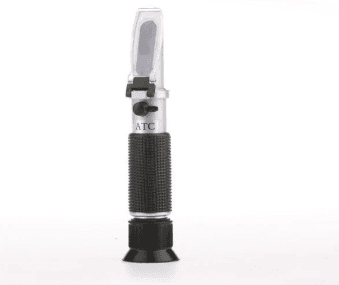
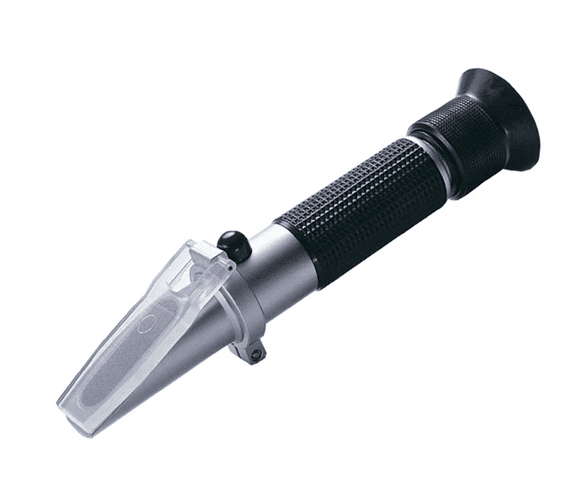
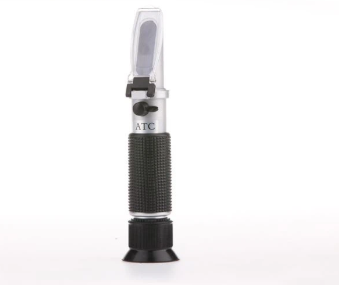
Handheld precision refractometer for measuring 0-32% Brix sugar concentration in liquids with 0.2% resolution, designed for rapid quality control in food processing and agricultural applications.

Louise Corscadden, PhD
Director of Science · ConductScience
Ask Louise about Hand Hold Brix Refractometer fit, setup, configuration, or quote prep.
Already working with us? Sign in to connect this with My Scientist.
Key Specifications
Full details →- Model fit
- Configured during quote
- SKU family
- CS-LH-T32
- Shipping box
- 6.3 x 1.57 x 1.06 cm
- Ordering
- Online checkout and quote request available
- Category
- Refractometers
- Build notes
- Confirm accessories, station layout, and support needs before purchase
The Hand Hold Brix Refractometer (Model LH-T32) is a precision optical instrument designed for rapid sugar content analysis in aqueous solutions. This handheld device measures the refractive index of liquid samples and converts readings directly to percent Brix concentration, providing immediate quantitative assessment of dissolved sugar content. The instrument features a measurement range of 0-32% Brix with 0.2% resolution, enabling accurate analysis across a wide spectrum of sugar concentrations commonly encountered in food processing, agricultural quality control, and beverage production.
The refractometer operates on the principle of critical angle refractometry, measuring the boundary line between light and dark fields created when light passes through the sample-prism interface. Temperature compensation and optical precision ensure reliable measurements under varying environmental conditions. At 180g and measuring 160mm in length, the instrument provides laboratory-grade accuracy in a portable format suitable for field testing, production line monitoring, and laboratory analysis. The device includes adjustable eyepiece optics and calibration controls for maintaining measurement precision over extended use periods.
How It Works
The refractometer measures the refractive index of liquid samples based on Snell's law of light refraction. When light passes from the sample medium into the optical prism at the critical angle, total internal reflection occurs, creating a distinct boundary between light and dark regions in the optical field. The position of this boundary line correlates directly with the refractive index of the sample, which is then converted to Brix percentage using established calibration curves.
Sugar molecules in solution increase the optical density of the medium, causing light to bend at greater angles proportional to concentration. The instrument's precision optics focus this boundary line onto a graduated scale visible through the eyepiece, where the Brix reading can be directly observed. Internal temperature compensation algorithms account for thermal effects on refractive index, ensuring measurement accuracy across varying environmental conditions.
The measurement process requires only 1-2 drops of sample applied to the daylight plate. Light entering through the prism assembly creates the critical angle conditions necessary for boundary formation. The user observes the scale through the adjustable eyepiece and records the Brix value where the light-dark boundary intersects the graduated measurement scale.
Features & Benefits
Model
- LH-T32
Measuring range
- 0~32%
Division value
- 0.2
Dimension and weight
- 27*40*160mm (180g)
Automation Level
- manual
Brand
- ConductScience
Research Domain
- Agricultural Quality Control
- Analytical Chemistry
- Environmental Monitoring
- Food Science
- Pharmaceutical QC
Shipping weight
- 0.4 lb
Shipping box
- L: 6.3 cm
- W: 1.57 cm
- H: 1.06 cm
| Feature | This Product | Typical Alternative | Advantage |
|---|---|---|---|
| Measurement Range | 0-32% Brix | Entry-level models often provide 0-18% or 0-20% ranges | Extended range accommodates concentrated syrups and processing streams without requiring dilution procedures. |
| Resolution Precision | 0.2% Brix increments | Basic models typically offer 0.5% resolution | Finer resolution enables detection of subtle concentration changes during process optimization and quality control monitoring. |
| Weight and Portability | 180g handheld design | Portable units range from 150g to 300g depending on features | Balanced weight distribution reduces operator fatigue during extended field testing sessions while maintaining measurement stability. |
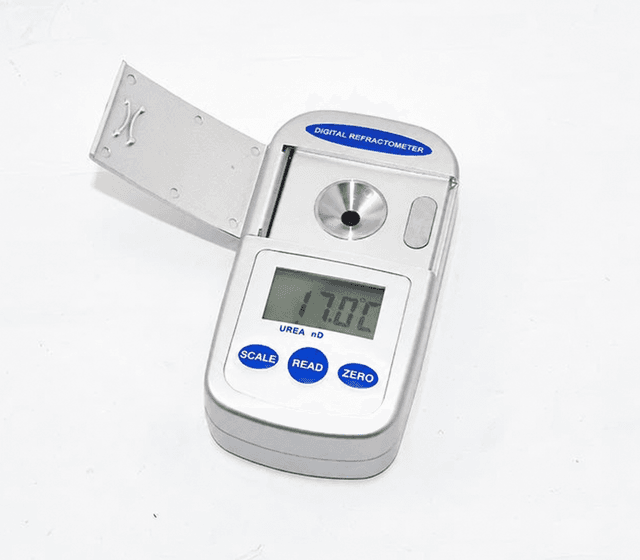
| Power Requirements | Battery-free optical operation | Digital models require battery replacement or charging | Eliminates power-related downtime and reduces operational costs for field applications and remote testing locations. |
| Calibration Method | Manual screw adjustment with distilled water | Digital models often use automated calibration routines | Simple mechanical calibration can be performed anywhere without requiring specific reference solutions or electronic procedures. |
This refractometer provides an extended 0-32% measurement range with 0.2% resolution in a battery-free design weighing 180g. The combination of precision optics, portable form factor, and manual reliability makes it well-suited for both laboratory and field applications requiring immediate sugar content analysis.
Practical Tips
Calibrate with distilled water at the same temperature as your samples to minimize thermal drift effects.
Why: Temperature differences between calibration and measurement can introduce systematic errors of up to 0.1% per degree Celsius difference.
Store the instrument with a few drops of distilled water on the daylight plate to prevent mineral deposits from forming.
Why: Dry storage can allow residual salts to crystallize on optical surfaces, creating measurement artifacts and boundary line distortion.
Apply samples immediately after extraction from fruit or processing streams to minimize evaporation and concentration changes.
Why: Sample concentration can increase by 0.5-1.0% Brix within minutes due to water evaporation, particularly in warm environments.
If the boundary line appears fuzzy or indistinct, clean both sides of the cover plate and reapply fresh sample.
Why: Protein deposits, oils, or dried residue on optical surfaces scatter light and prevent formation of a sharp refractive boundary.
Take three consecutive readings and report the average to improve measurement precision and identify systematic errors.
Why: Replicate measurements reduce random error and help detect sample heterogeneity or instrument drift between readings.
Allow hot samples to cool below 40°C before measurement to prevent thermal damage to the optical components.
Why: Excessive heat can cause permanent damage to adhesives and optical elements, leading to measurement drift and reduced instrument lifespan.
Document environmental temperature and humidity conditions with measurements for quality assurance record keeping.
Why: Environmental data helps identify sources of measurement variation and supports troubleshooting of unexpected results during audits.
Verify calibration using certified sucrose reference solutions monthly to detect optical component degradation.
Why: Systematic drift in optical components occurs gradually and may not be detected through water-only calibration procedures.
Setup Guide
What’s in the Box
- Hand Hold Brix Refractometer main unit
- Protective carrying case (typical)
- Calibration adjustment screwdriver
- Cleaning cloth (typical)
- User manual and calibration instructions
- Calibration reference solutions (typical)
Warranty
ConductScience provides a standard one-year manufacturer warranty covering defects in materials and workmanship, with technical support available for calibration procedures and measurement troubleshooting.
Compliance
References
Background reading relevant to this product:
How frequently should the refractometer be calibrated for accurate measurements?
Daily calibration with distilled water is recommended for routine use, with additional calibration checks using certified reference standards every 4-6 hours during continuous operation or when measuring across different concentration ranges.
What temperature effects should be considered during measurement?
Refractive index varies approximately 0.00045 per degree Celsius for sugar solutions. Allow samples to equilibrate to ambient temperature (20-25°C) for 2-3 minutes before measurement, and maintain consistent environmental conditions between calibration and sample analysis.
Can this refractometer measure non-sugar dissolved solids accurately?
The instrument measures total dissolved solids based on refractive index but is calibrated specifically for sucrose solutions. Other dissolved compounds will affect readings differently, requiring separate calibration curves for accurate quantification of non-sugar solutes.
What sample preparation is required for turbid or colored liquids?
Filtration through 0.45μm filters removes particulates that can scatter light and affect boundary line clarity. Highly colored samples may require dilution with distilled water followed by mathematical correction, or comparison with colorless reference standards of known concentration.
How does measurement precision compare to digital refractometers?
Manual reading precision depends on operator skill and viewing conditions, typically achieving ±0.1-0.2% reproducibility under controlled conditions. Digital instruments may provide slightly better precision (±0.05%) but require power sources and regular electronic calibration.
What maintenance procedures ensure long-term measurement accuracy?
Clean optical surfaces daily with distilled water and lint-free cloths, store in protective case when not in use, and perform monthly calibration verification using certified sucrose reference solutions spanning the measurement range. Annual professional calibration service is recommended for critical applications.
Can the instrument measure sugar content in alcoholic beverages accurately?
Alcohol affects refractive index independently of sugar content, requiring correction factors or specialized calibration curves. For wine and beer analysis, measure before fermentation or use alcohol-specific refractometers designed for dual-component solutions.
What factors can cause measurement interference or errors?
Air bubbles trapped under the cover plate, temperature gradients between sample and instrument, incomplete sample coverage of the measurement surface, and contamination from previous samples can all affect accuracy. Proper cleaning protocols and sample application techniques minimize these sources of error.
Have a question about this product?
Have a question? Just ask.
Send it over and we'll email you a personalized answer — no call, no scheduling.
Prefer to talk it through?