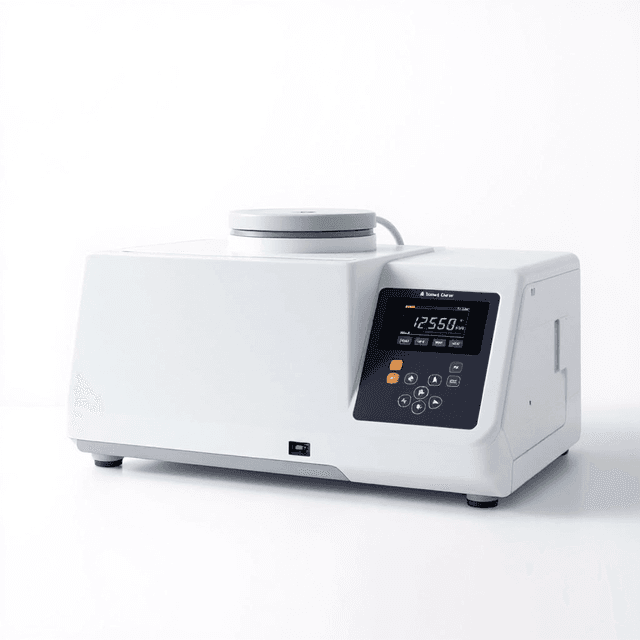
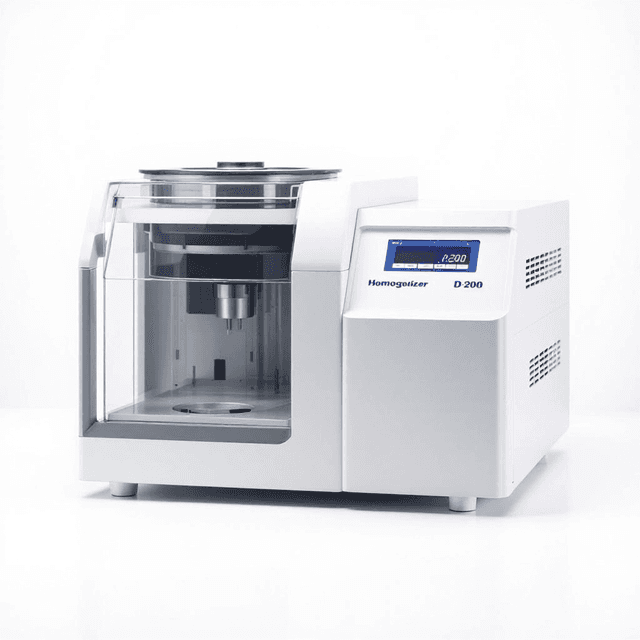
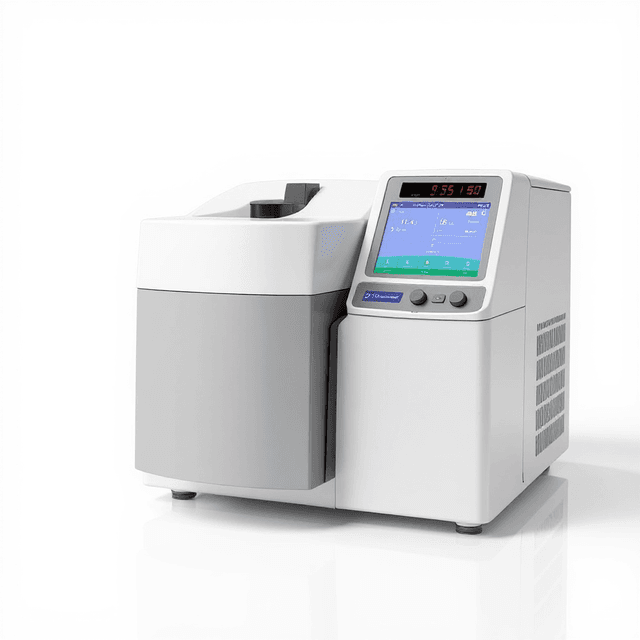
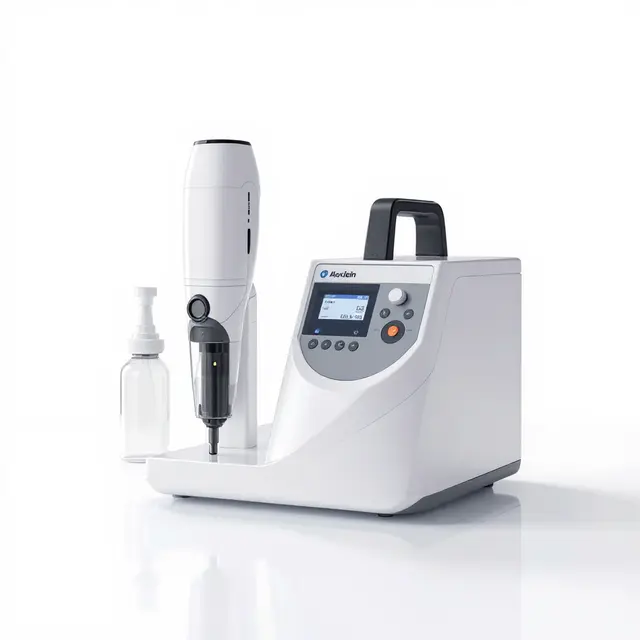
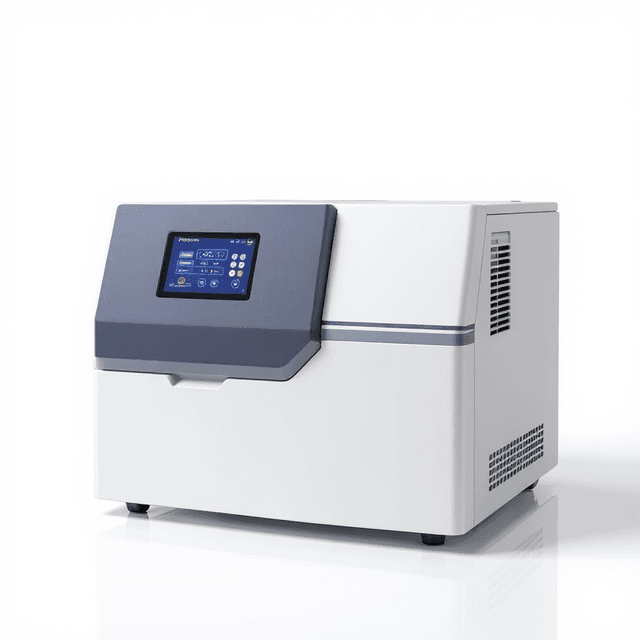
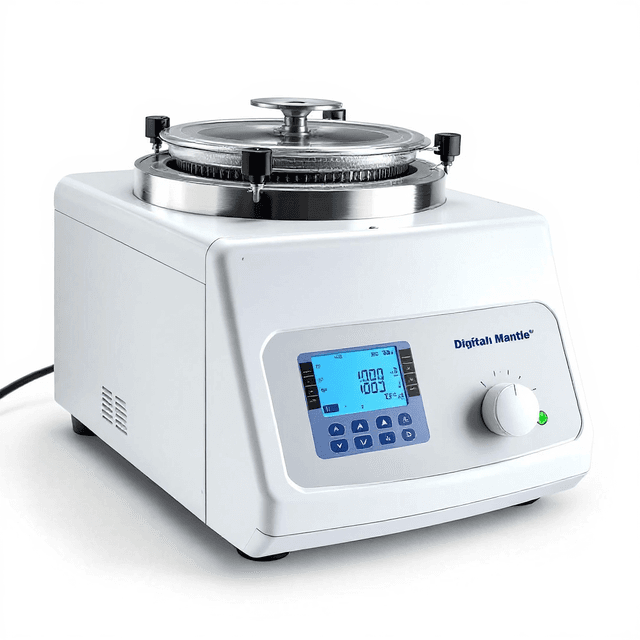
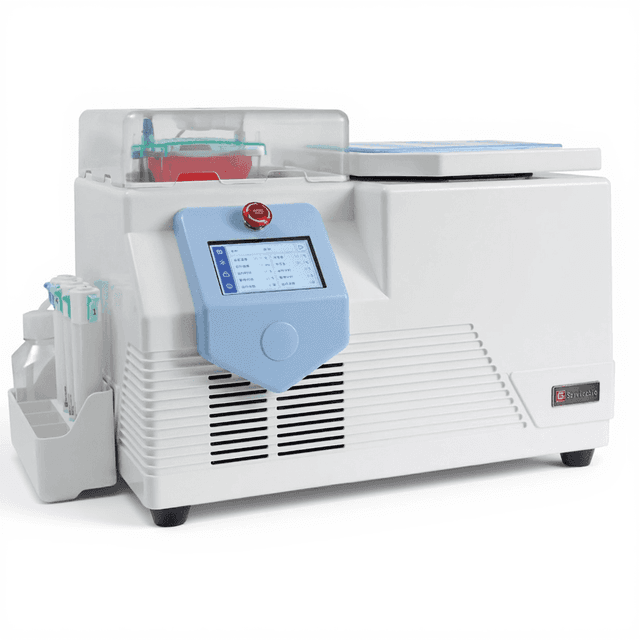
High Speed Ultrasonic Homogenizer
Dual-function ultrasonic homogenizer and high-speed emulsifier with programmable timing, temperature control (-10°C to 199°C), and variable speed emulsification (4,000-26,000 rpm) for comprehensive sample disruption and processing.
| Automation Level | semi-automated |
| Timing Range | 0~99h59m59s |
| Consumption Regulation | Automatic recognition |
| Working Head Size | Φ40*250mm |
| Working Head Type | Slub type |
| Minimum Immersion Depth | 150~300mm |

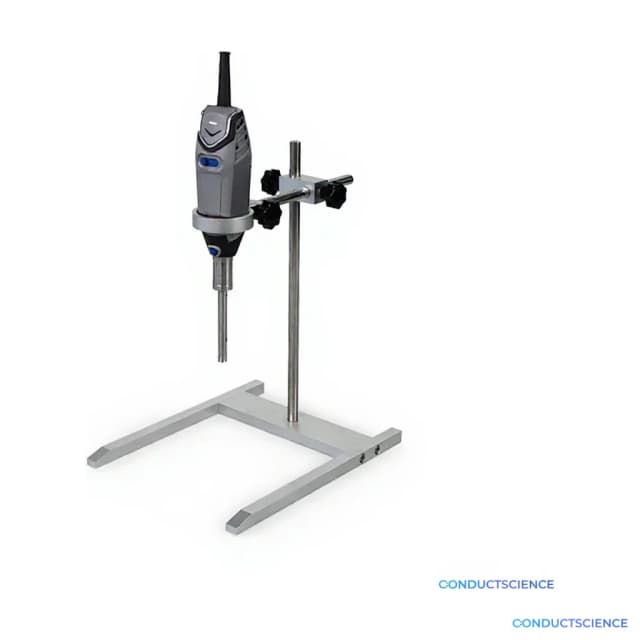
The High Speed Ultrasonic Homogenizer (BIO-0590) is a dual-function benchtop instrument combining ultrasonic disruption and high-speed emulsification capabilities for comprehensive sample processing. The system features ultrasonic homogenization with automatic consumption regulation and programmable timing up to 99 hours, 59 minutes, and 59 seconds, controlled through a 7-inch touchscreen display. The integrated emulsification module operates at speeds from 4,000 to 26,000 rpm with a maximum shear speed of 47 m/s, utilizing a 316L stainless steel working head for chemical resistance and durability.
This instrument addresses the need for consistent, reproducible sample disruption across varied sample types and volumes. The temperature control range from -10°C to 199°C accommodates both ambient and temperature-sensitive applications, while the slub-type working head design with Φ40×250mm dimensions and minimum immersion depth of 150-300mm ensures effective processing of sample volumes from small laboratory preparations to moderate batch sizes.
How It Works
The ultrasonic homogenization function operates through high-frequency acoustic waves that create alternating compression and rarefaction cycles in the sample medium. During rarefaction phases, microscopic bubbles form and rapidly collapse through cavitational forces, generating localized high-pressure and high-temperature conditions that mechanically disrupt cellular structures, particle aggregates, and molecular complexes. The automatic consumption regulation system monitors power delivery to maintain consistent processing conditions regardless of sample viscosity or volume changes.
The integrated emulsification system employs mechanical shearing through a high-speed rotor-stator configuration. The 316L stainless steel working head generates intense hydraulic shear forces as sample material is drawn into the rotor assembly and expelled through precision gaps at speeds up to 26,000 rpm. This dual-action approach combines the molecular-level disruption of ultrasonic cavitation with the macroscopic mixing efficiency of high-speed emulsification, enabling complete sample homogenization across multiple length scales.
Temperature control throughout both processes prevents thermal degradation of sensitive samples while allowing temperature-dependent applications. The programmable timing system enables reproducible processing protocols, while real-time monitoring through the LCD display provides feedback on processing parameters and energy consumption.
Features & Benefits
Automation Level
- semi-automated
Timing Range
- 0~99h59m59s
Consumption Regulation
- Automatic recognition
Working Head Size
- Φ40*250mm
Working Head Type
- Slub type
Minimum Immersion Depth
- 150~300mm
Emulsification Display
- LCD display
Emulsification Speed
- 4000~26000rpm adjustable
Emulsification Head Material
- 316L
Emulsification Head Diameter
- Stator outer diameter 30mm
Maximum Shear Speed
- 47m/s
Emulsification Input Consumption
- 1050W
Brand
- ConductScience
Research Domain
- Analytical Chemistry
- Cell Biology
- Food Science
- Materials Science
- Microbiology
- Pharmaceutical QC
Capacity
- Consumption Adjustment Mode
Display Type
- 7 inches touch screen display
Temperature Range
- -10~199℃
Weight
- 13.0 kg
Dimensions
- L: 15.0 mm
- W: 81.0 mm
- H: 41.0 mm
Comparison Guide
| Feature | This Product | Typical Alternative | Advantage |
|---|---|---|---|
| Processing Methods | Dual ultrasonic and high-speed emulsification (4,000-26,000 rpm) | Single-method systems offering either ultrasonic or mechanical homogenization | Combines molecular-level cavitation with mechanical shearing for more complete sample disruption across different structural scales. |
| Temperature Control Range | Wide range from -10°C to 199°C | Basic models often limited to ambient or narrow temperature ranges | Accommodates both temperature-sensitive samples and high-temperature applications in a single instrument. |
| Timing Capability | Programmable up to 99h59m59s | Many systems limited to minutes or short-duration cycles | Enables extended extraction protocols and complex multi-stage processing procedures. |
| Working Head Material | 316L stainless steel construction | Entry-level models may use standard stainless steel or coated materials | Provides superior chemical resistance and durability for aggressive solvents and extended use. |
| Control Interface | 7-inch touchscreen display with LCD emulsification readout | Basic models typically offer simple digital displays or analog controls | Enables intuitive protocol programming and comprehensive real-time monitoring of processing parameters. |
| Power Regulation | Automatic consumption regulation with real-time adjustment | Fixed power output systems without adaptive control | Maintains consistent processing conditions across different sample types for improved reproducibility. |
This homogenizer combines ultrasonic cavitation and high-speed mechanical emulsification with advanced temperature control and programmable timing. The 316L stainless steel construction and automatic consumption regulation provide enhanced durability and reproducibility compared to single-function homogenizers.
Practical Tips
Verify immersion depth using a test sample before processing valuable samples, as the minimum 150mm depth requirement is critical for effective cavitation.
Why: Insufficient immersion depth reduces processing efficiency and can cause equipment damage.
Clean the working head immediately after each use and inspect for signs of cavitation erosion on the surface.
Why: Residual sample material can affect subsequent processing and erosion patterns indicate optimal replacement timing.
Start with lower emulsification speeds and shorter processing times, then optimize based on sample response and desired particle size.
Why: Over-processing can generate excessive heat and potentially degrade sensitive sample components.
Allow adequate pre-cooling time when processing temperature-sensitive samples below ambient temperature.
Why: The system's wide temperature range requires equilibration time to achieve stable processing conditions.
Always ensure the working head is fully immersed before activating ultrasonic or emulsification functions.
Why: Operating without proper immersion can damage the equipment and create safety hazards from uncontrolled cavitation.
Document all processing parameters including temperature, speed, duration, and sample volume for each protocol.
Why: Comprehensive documentation enables reproducible results and troubleshooting of processing variables.
If processing efficiency decreases, check for air bubble entrapment around the working head and adjust sample positioning.
Why: Air bubbles interfere with ultrasonic transmission and reduce cavitational effectiveness.
Setup Guide
What’s in the Box
- High Speed Ultrasonic Homogenizer main unit
- 316L stainless steel working head assembly
- Power cord and adapter
- Operating manual and safety guidelines
- USB cable for data transfer (typical)
- Calibration certificate (typical)
- Sample processing protocols guide (typical)
Warranty
ConductScience provides a one-year manufacturer warranty covering defects in materials and workmanship, with comprehensive technical support for installation, operation, and maintenance procedures.
Compliance
References
Background reading relevant to this product:
What sample volumes can be effectively processed with this homogenizer?
The minimum immersion depth requirement of 150-300mm and working head dimensions of Φ40×250mm indicate optimal processing volumes from approximately 200ml to several liters, depending on container geometry and sample viscosity.
How does the automatic consumption regulation affect processing consistency?
The automatic consumption regulation monitors and adjusts power delivery in real-time to maintain consistent energy input regardless of sample property changes, ensuring reproducible disruption across different sample types and viscosities.
What maintenance is required for the 316L stainless steel working head?
The 316L construction allows cleaning with most laboratory solvents and detergents. Regular inspection for wear patterns and periodic calibration checks ensure optimal performance. Consult product datasheet for specific maintenance intervals.
Can the system handle temperature-sensitive biological samples?
Yes, the temperature control range from -10°C to 199°C allows processing of heat-sensitive samples at reduced temperatures while the programmable timing enables optimization of processing duration to minimize thermal exposure.
How does the dual ultrasonic and emulsification approach compare to single-method homogenizers?
The combination provides both cavitational disruption at the molecular level and mechanical shearing for larger particles, enabling more complete homogenization than either method alone, particularly for complex samples with multiple structural components.
What data output and documentation capabilities are available?
The 7-inch touchscreen display provides real-time parameter monitoring and protocol management. Specific data logging and export capabilities should be confirmed in the product datasheet.
Is the system suitable for sterile or aseptic processing applications?
The 316L stainless steel construction allows standard sterilization procedures, though specific validation for aseptic applications would depend on your facility's requirements and should be evaluated during qualification.
Have a question about this product?
Upgrade Options