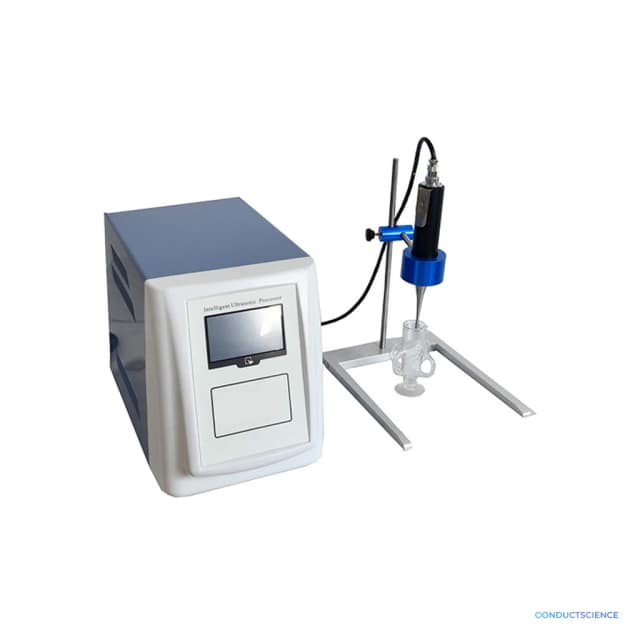
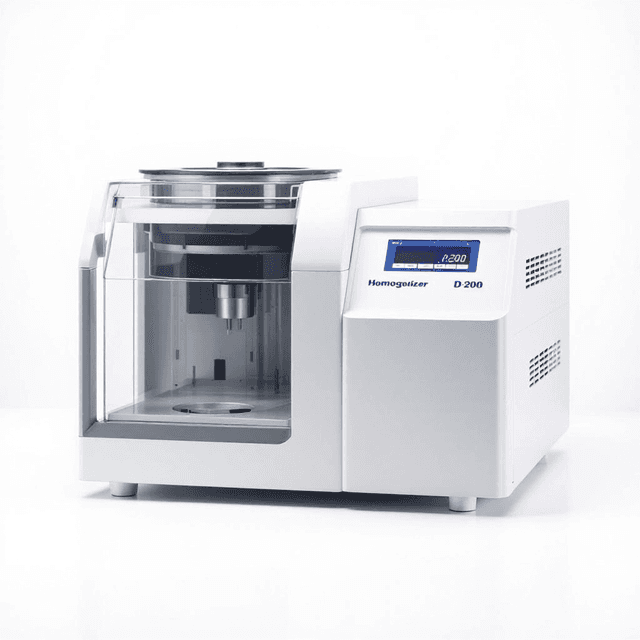
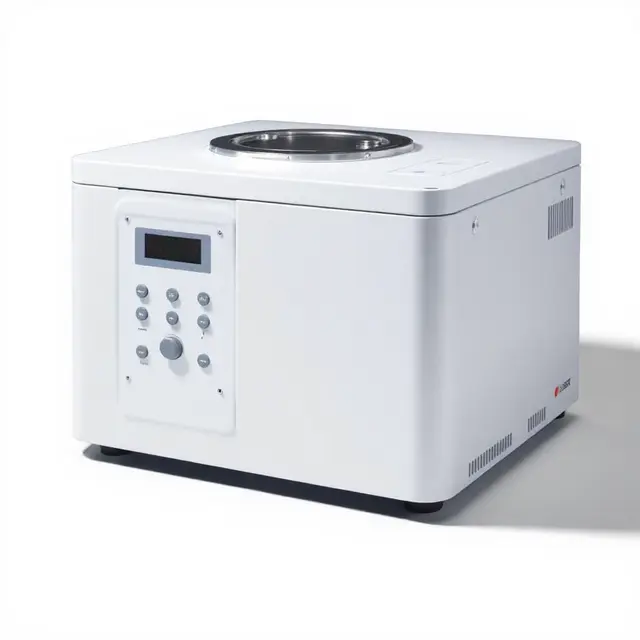
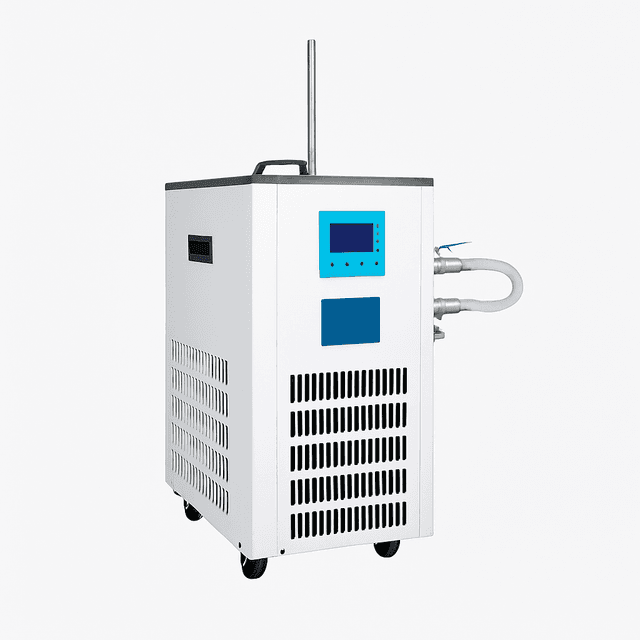
Handheld High-Speed Homogenizer
Portable high-speed mechanical homogenizer for rapid tissue disruption and sample preparation in laboratory and field applications.

Louise Corscadden, PhD
Director of Science · ConductScience
Ask Louise about Handheld High-Speed Homogenizer fit, setup, configuration, or quote prep.
Already working with us? Sign in to connect this with My Scientist.
Key Specifications
Full details →- Model fit
- Configured during quote
- SKU family
- BIO-0586
- Shipping box
- 38.0 x 65.0 x 46.0 cm
- Ordering
- Online checkout and quote request available
- Category
- Benchtop Instruments
- Build notes
- Confirm accessories, station layout, and support needs before purchase
The Handheld High-Speed Homogenizer is a portable mechanical tissue disruption instrument designed for rapid sample preparation in laboratory and field applications. This compact device utilizes high-speed rotor-stator technology to achieve effective mechanical homogenization of biological tissues, plant materials, and other samples requiring cellular disruption for downstream analysis.
The handheld design provides researchers with the flexibility to perform homogenization directly at sample collection sites or in confined laboratory spaces where benchtop units may be impractical. The instrument's compact form factor (38 x 65 x 46 mm) and lightweight construction (3.1 kg) make it suitable for fieldwork applications while maintaining the processing capability required for consistent sample preparation across various research protocols.
How It Works
The handheld homogenizer operates through high-speed mechanical disruption using a rotor-stator system. The rotating shaft generates shear forces and cavitation effects within the sample matrix, breaking down cellular structures and tissue architecture through multiple mechanisms including mechanical impact, fluid shear, and pressure fluctuations.
During operation, the sample is subjected to intensive mixing action as the rotor creates turbulent flow patterns within the stator housing. This mechanical action disrupts cell membranes, breaks intercellular connections, and reduces particle size through controlled mechanical stress. The homogenization process can be adjusted through operational parameters such as processing time and rotor speed to optimize disruption efficiency for different sample types.
The compact design incorporates sealed bearing systems and robust motor construction to maintain consistent performance across varying sample viscosities and densities. The handheld configuration allows for direct insertion into sample containers, minimizing sample transfer steps and reducing potential contamination risks during processing.
Features & Benefits
Automation Level
- manual
Research Domain
- Analytical Chemistry
- Cell Biology
- Environmental Monitoring
- Food Science
- Materials Science
- Microbiology
- Pharmaceutical QC
Shipping weight
- 3.1 lb
Shipping box
- L: 38.0 cm
- W: 65.0 cm
- H: 46.0 cm
| Feature | This Product | Typical Alternative | Advantage |
|---|---|---|---|
| Portability | Handheld design with 3.1 kg weight | Benchtop units often weigh 10-20 kg and require dedicated workspace | Enables field sampling and processing in space-constrained laboratory environments |
| Sample Processing | Direct immersion rotor-stator system | Some models require sample transfer to dedicated chambers | Reduces contamination risk and processing steps by working directly in sample containers |
| Size and Storage | Compact 38 x 65 x 46 mm dimensions | Benchtop units typically require significant laboratory bench space | Minimal storage requirements and easy transport to field sites or shared laboratory spaces |
| Operation Mode | Manual handheld operation | Automated systems often provide programmable cycles | Direct operator control allows real-time adjustment of processing parameters based on sample response |
| Setup Requirements | Simple plug-and-operate design | Larger units may require installation and calibration procedures | Immediate operational capability without complex setup or calibration protocols |
This handheld homogenizer provides mechanical tissue disruption capability in a portable format suitable for field applications and space-constrained laboratories. The compact design maintains processing effectiveness while offering operational flexibility not available with fixed benchtop systems.
Practical Tips
Pre-cool samples and processing tubes when working with temperature-sensitive materials to minimize heat generation during homogenization.
Why: Mechanical processing generates heat that can denature proteins or affect sample integrity.
Inspect rotor-stator assembly regularly for signs of wear or damage, particularly after processing abrasive samples.
Why: Worn components reduce homogenization efficiency and can introduce metal particles into samples.
Verify speed settings periodically using a tachometer to ensure consistent processing parameters across experiments.
Why: Motor performance can drift over time affecting reproducibility of homogenization protocols.
Always ensure complete rotor immersion before starting and maintain firm grip on the instrument during operation.
Why: Improper immersion can cause splashing and vibration that may lead to sample loss or operator injury.
Process duplicate samples when developing new protocols to establish optimal time and speed parameters.
Why: Processing conditions significantly affect downstream analytical results and require empirical optimization.
If homogenization appears incomplete, increase processing time rather than speed to avoid overheating samples.
Why: Extended processing at moderate speeds often provides better results than brief high-speed treatment.
Use pulse processing techniques for heat-sensitive samples, allowing cooling periods between processing intervals.
Why: Intermittent operation prevents thermal damage while maintaining effective mechanical disruption.
Setup Guide
What’s in the Box
- Handheld homogenizer main unit (typical)
- Rotor-stator assembly (typical)
- Power adapter and cable (typical)
- User manual and operation guide (typical)
- Cleaning brush set (typical)
- Sample processing tubes (typical)
Warranty
ConductScience provides a standard one-year manufacturer warranty covering defects in materials and workmanship. Technical support is available for operational questions and troubleshooting assistance throughout the warranty period.
Compliance
References
Background reading relevant to this product:
What sample volumes can be effectively processed with this handheld homogenizer?
Processing capacity depends on sample type and container configuration. Consult product datasheet for specific volume recommendations and optimal rotor immersion depths for different applications.
How do I prevent cross-contamination between samples?
Implement thorough cleaning protocols between samples including disinfectant rinses and multiple wash cycles. Consider using disposable rotor tips if available for high-risk contamination applications.
What maintenance is required for consistent performance?
Regular cleaning of rotor-stator assembly, periodic lubrication of sealed bearings, and inspection of electrical connections. Follow manufacturer guidelines for replacement of wear components.
Can this instrument handle tough fibrous tissues?
Processing capability varies with tissue type and fiber density. Start with lower speeds and gradually increase while monitoring sample consistency. Some highly fibrous materials may require pre-cutting or alternative preparation methods.
What speed settings should I use for different sample types?
Begin with lower speeds for delicate samples and increase as needed. Soft tissues typically require moderate speeds, while harder materials may need higher settings. Optimize empirically for your specific applications.
How does this compare to benchtop homogenizers for sample quality?
Handheld units provide comparable homogenization for many applications with the advantage of portability. Benchtop models may offer more precise speed control and larger volume capacity for high-throughput applications.
What containers are compatible with this homogenizer?
Most standard laboratory containers can accommodate the rotor assembly. Ensure adequate clearance around the rotor and sufficient sample depth for complete immersion during processing.
Have a question about this product?
Have a question? Just ask.
Send it over and we'll email you a personalized answer — no call, no scheduling.
Prefer to talk it through?
Accessories
Enhance your setup with compatible accessories