Homogenizer D-200
Benchtop tissue homogenizer with variable speed control (2,000-20,000 rpm) and 20-1,200 ml processing capacity for sample preparation and cell disruption applications.

Louise Corscadden, PhD
Director of Science · ConductScience
Ask Louise about Homogenizer D-200 fit, setup, configuration, or quote prep.
Already working with us? Sign in to connect this with My Scientist.
Key Specifications
Full details →- Model fit
- Configured during quote
- SKU family
- BIO-0588
- Shipping box
- 60.0 x 36.0 x 32.0 cm
- Ordering
- Online checkout and quote request available
- Category
- Benchtop Instruments
- Build notes
- Stainless steel and PTFE
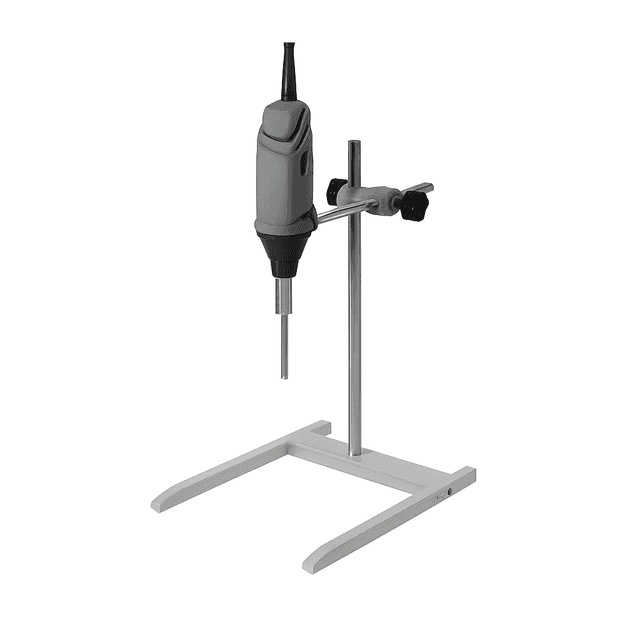
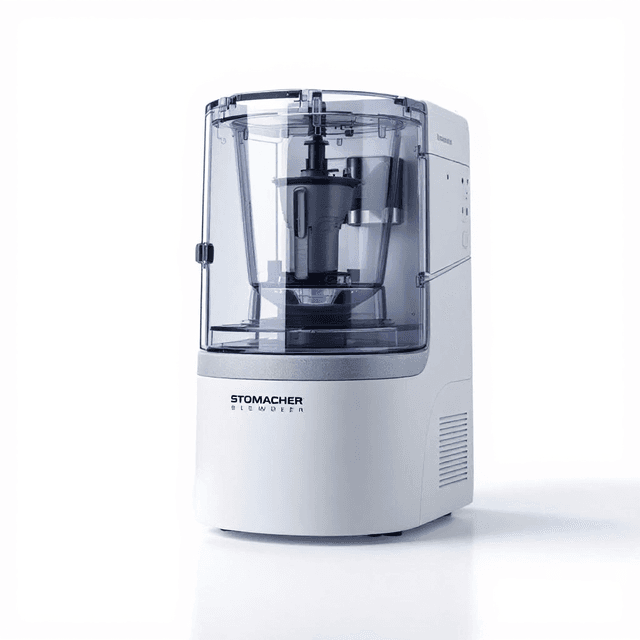
The Homogenizer D-200 is a benchtop tissue and sample homogenizer designed for mechanical disruption of biological samples across a broad volume range. With variable speed control from 2,000 to 20,000 rpm and processing capacity from 20 to 1,200 ml, this instrument provides consistent homogenization for sample preparation in research and analytical workflows.
The system features stainless steel and PTFE contact surfaces for chemical compatibility and easy cleaning. The knob-operated infinitely variable speed control allows precise adjustment for different sample types and viscosities up to 5,000 mPa·s. The instrument includes a small capacity blade set optimized for efficient tissue disruption and cell lysis applications.
How It Works
The Homogenizer D-200 operates through high-speed mechanical shearing using a rotating blade assembly. The stainless steel blade creates turbulent flow patterns within the sample container, generating shear forces that disrupt cell walls, membranes, and tissue structures. The variable speed control allows optimization of shear rate based on sample viscosity and desired degree of homogenization.
The infinitely variable speed control system provides precise adjustment from 2,000 to 20,000 rpm, enabling researchers to match processing parameters to specific sample requirements. Lower speeds are suitable for gentle mixing and emulsification, while higher speeds achieve complete cell lysis and tissue disruption. The PTFE-coated surfaces minimize sample adhesion and facilitate thorough cleaning between samples.
The 200W motor provides consistent torque across the full speed range, maintaining stable processing conditions even with viscous samples up to 5,000 mPa·s. The mechanical disruption approach ensures rapid and reproducible sample preparation without the heat generation associated with ultrasonic methods.
Features & Benefits
Automation Level
- manual
Item No.
- 8034121202
Speed Range
- 2000~20000rpm
Processing Volume
- 20~1200ml
Adjustment Method
- Knob infinitely variable speed control
Maximum Viscosity
- 5000mpas
Blade
- Set 1: Small capacity blade
Material of Contact Substance
- Stainless steel and PTFE
Protection Type
- IP20
Consumption
- 200W
External Size(Including Bracket)(L*W*H)
- 360*320*600mm
Packing Size(L*W*H)
- 480*330*165mm
Brand
- ConductScience
Research Domain
- Analytical Chemistry
- Cell Biology
- Food Science
- Histopathology
- Microbiology
- Pharmaceutical QC
Power/Voltage
- AC110~120V, 60Hz or AC220~240V, 50~60Hz
Weight
- 6kg
Shipping weight
- 4.0 lb
Shipping box
- L: 60.0 cm
- W: 36.0 cm
- H: 32.0 cm
| Feature | This Product | Typical Alternative | Advantage |
|---|---|---|---|
| Speed Range | 2,000-20,000 rpm with infinitely variable control | Many models offer fixed speed steps or narrower ranges | Enables precise optimization for different sample types and processing requirements |
| Processing Volume | 20-1,200ml capacity range | Entry-level units often limited to smaller volumes | Single instrument handles both analytical samples and preparative volumes |
| Viscosity Handling | Processes samples up to 5,000 mPa·s | Standard mixers typically limited to lower viscosity samples | Enables processing of gels, pastes, and concentrated suspensions |
| Contact Materials | Stainless steel and PTFE surfaces | Some models use plastic components | Provides superior chemical compatibility and easier decontamination |
| Motor Power | 200W motor with consistent torque | Lower power units may struggle with viscous samples | Maintains stable processing conditions across full viscosity range |
The Homogenizer D-200 provides versatile sample processing with its broad speed and volume ranges, robust construction, and chemical-resistant contact surfaces. The infinitely variable speed control and high viscosity handling capability make it well-suited for diverse sample preparation workflows.
Practical Tips
Start homogenization at lower speeds and gradually increase to minimize sample foaming and heat generation.
Why: Prevents sample degradation and ensures consistent processing results.
Clean blade assembly immediately after each use to prevent sample buildup and cross-contamination.
Why: Maintains homogenization efficiency and prevents carryover between samples.
Verify speed settings periodically using a tachometer, especially for quantitative applications.
Why: Ensures reproducible processing conditions for method validation and regulatory compliance.
Secure sample containers in the bracket assembly before starting and never operate without proper blade guards in place.
Why: Prevents sample spillage and protects operator from rotating blade hazards.
Process duplicate samples at identical speed and time settings to assess method reproducibility.
Why: Validates homogenization consistency and identifies potential method optimization needs.
If experiencing inadequate homogenization, check blade depth and ensure sample volume is sufficient for proper vortex formation.
Why: Optimal blade positioning is critical for effective sample disruption and mixing.
Allow viscous samples to reach room temperature before processing to improve homogenization efficiency.
Why: Reduces apparent viscosity and enables more effective mechanical disruption.
Setup Guide
What’s in the Box
- Homogenizer D-200 main unit
- Bracket assembly for sample positioning
- Small capacity blade set
- Power cord
- User manual and specifications
- Warranty documentation
Warranty
ConductScience provides a standard one-year manufacturer warranty covering parts and labor, with technical support available for troubleshooting and method development assistance.
Compliance
References
Background reading relevant to this product:
What sample viscosities can this homogenizer handle effectively?
The unit processes samples up to 5,000 mPa·s viscosity, suitable for most biological samples, gels, and concentrated suspensions. For reference, this covers everything from water (1 mPa·s) to thick pastes.
How do I select the optimal speed for different sample types?
Start at 2,000-5,000 rpm for gentle mixing and emulsification, use 8,000-12,000 rpm for standard tissue homogenization, and employ 15,000-20,000 rpm for complete cell lysis. Adjust based on sample response and required processing time.
What cleaning protocols are recommended between samples?
The stainless steel and PTFE surfaces allow cleaning with most laboratory detergents and solvents. Rinse with appropriate solvent, wash with detergent solution, and sterilize if required. Avoid abrasive cleaners that could damage PTFE coating.
Can this unit process both aqueous and organic solvent-based samples?
Yes, the stainless steel and PTFE contact materials provide chemical compatibility with most aqueous and organic solvents commonly used in sample preparation protocols.
What is the minimum effective sample volume?
While the unit handles volumes from 20ml, optimal homogenization typically requires sufficient volume to ensure proper blade immersion and vortex formation. Consult product datasheet for specific blade depth requirements.
How does this compare to ultrasonic homogenization methods?
Mechanical homogenization generates less heat than ultrasonic methods, making it preferable for heat-sensitive samples. It also provides more consistent results with viscous samples and larger processing volumes.
Have a question about this product?
Have a question? Just ask.
Send it over and we'll email you a personalized answer — no call, no scheduling.
Prefer to talk it through?
Accessories
Enhance your setup with compatible accessories
Upgrade Options