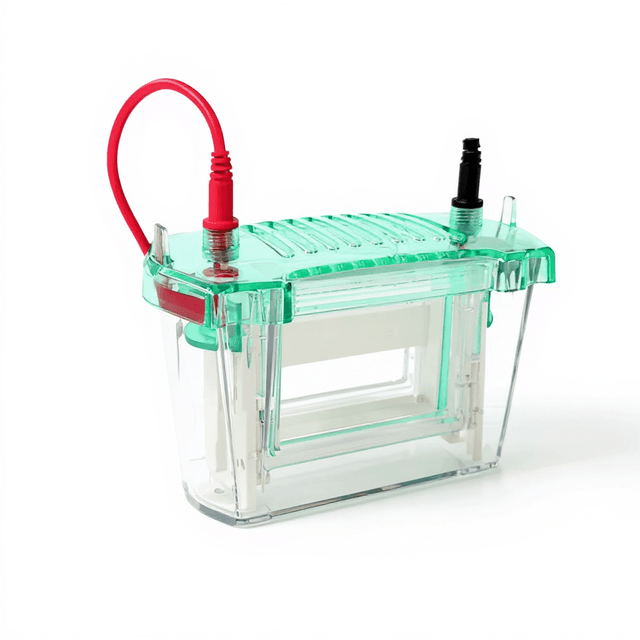
Horizontal Electrophoresis Tank
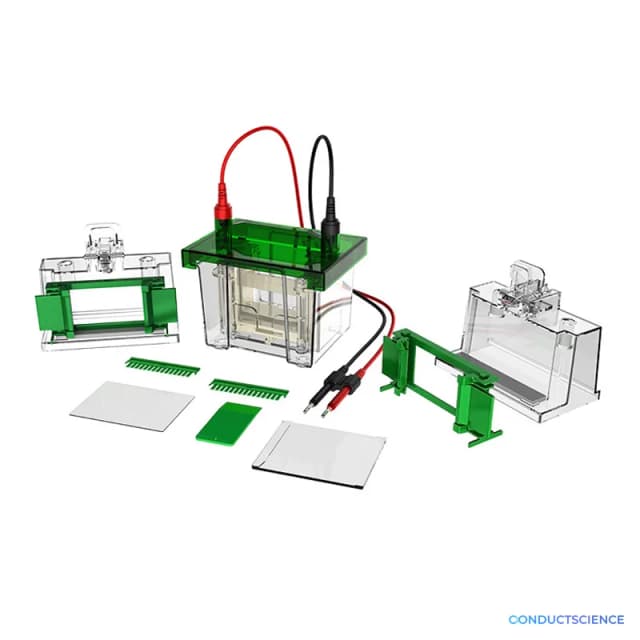
Compact horizontal electrophoresis tank for routine DNA and RNA separation, accommodating 6-22 samples with 75×60mm gel trays and 300ml buffer capacity.

The Horizontal Electrophoresis Tank provides reliable nucleic acid separation for routine molecular biology applications. This compact system accommodates 75×60mm gel trays with buffer volumes up to 300ml, supporting 6-22 samples per run using interchangeable combs with 1.0mm and 1.5mm thickness options.
The horizontal configuration enables submerged gel electrophoresis with integrated electrodes creating a uniform electric field across the gel matrix. Buffer circulation maintains consistent temperature during separation, while the 180×90×70mm footprint conserves bench space. The system includes gel trays, casting box, and multiple comb configurations to accommodate varying sample throughput requirements in DNA and RNA analysis workflows.
How It Works
Horizontal electrophoresis separates nucleic acids based on size-dependent migration through an agarose gel matrix under an applied electric field. DNA and RNA molecules, negatively charged due to their phosphate backbone, migrate toward the positive electrode at rates inversely proportional to their molecular weight. Smaller fragments navigate through the gel pores more readily than larger fragments, creating size-based separation along the gel lane.
The agarose gel matrix forms a three-dimensional network of polysaccharide chains that act as a molecular sieve. Pore size depends on agarose concentration, with typical concentrations of 0.8-2.0% accommodating DNA fragments from 200bp to 25kb. The horizontal configuration allows complete gel submersion in buffer, ensuring uniform current distribution and preventing gel desiccation during extended runs.
Integrated electrodes create a homogeneous electric field across the gel width, promoting consistent migration patterns across all sample lanes. Buffer circulation helps dissipate heat generated by current flow, maintaining stable pH and ionic strength conditions throughout the separation process.
Features & Benefits
Weight
- 2.54 kg
Dimensions
- L: 2952.76 mm
- W: 2362.2 mm
- H: 35.5 mm
Comparison Guide
| Feature | This Product | Typical Alternative | Advantage |
|---|---|---|---|
| Gel Tray Size | 75×60mm format | Varies by model from mini-gels to large format systems | Optimal size provides sufficient separation distance while minimizing reagent consumption and bench space requirements. |
| Sample Capacity Range | 6-22 samples per run | Fixed capacity systems often accommodate fewer configuration options | Flexible capacity allows researchers to match throughput to experimental scale without wasting gel lanes. |
| Comb Thickness Options | Interchangeable 1.0mm and 1.5mm combs included | Many systems include only single thickness combs | Multiple well depths optimize sample loading volume and resolution for different experimental requirements. |
| Buffer Volume | 300ml capacity | Varies by tank size and design | Adequate volume maintains stable buffer conditions throughout extended runs while remaining economical for routine use. |
| System Weight | 1.15kg total weight | Weight varies significantly with tank size and construction | Lightweight design enables easy transport between workstations while maintaining operational stability. |
| Footprint Efficiency | 180×90×70mm dimensions | Footprint varies with gel capacity and design philosophy | Compact design maximizes bench space utilization in shared laboratory environments without sacrificing functionality. |
This electrophoresis tank provides versatile sample handling with interchangeable comb options and flexible capacity scaling. The compact design optimizes bench space while maintaining adequate buffer volume for consistent separation performance across routine molecular biology applications.
Practical Tips
Pre-cool gel casting trays to room temperature before pouring agarose to prevent thermal shock and ensure uniform polymerization.
Why: Temperature consistency during gelation produces more uniform pore structure and better separation reproducibility.
Clean electrode surfaces with 70% ethanol after every 5-10 runs to remove oxidation products and maintain optimal conductivity.
Why: Clean electrodes ensure consistent current distribution and prevent voltage fluctuations during electrophoresis.
Include molecular weight markers in every gel run, positioning them in the first and last lanes for accurate size determination.
Why: Regular marker use accounts for run-to-run variations in migration patterns and enables precise fragment size calculation.
If bands appear streaky or distorted, reduce sample loading volume by 20-30% and verify sample ionic strength compatibility.
Why: Overloading or high salt concentrations disrupt uniform migration and reduce separation resolution.
Document gel concentration, buffer type, voltage, and run time for each experiment to ensure reproducible separation conditions.
Why: Systematic documentation enables protocol optimization and troubleshooting when separation results vary.
Always disconnect power before handling gels or adding samples to prevent electrical shock and ensure operator safety.
Why: Electrical safety protocols prevent injury and equipment damage while maintaining laboratory safety standards.
Allow fresh agarose solutions to cool to 60°C before adding temperature-sensitive staining dyes to preserve dye activity.
Why: Excessive temperature denatures intercalating dyes and reduces staining efficiency for band visualization.
Store gel trays horizontally in a clean, dry environment to prevent warping that could affect gel casting consistency.
Why: Flat storage maintains tray geometry and ensures uniform gel thickness for consistent separation performance.
Setup Guide
What’s in the Box
- Horizontal electrophoresis tank
- Gel tray (75×60mm)
- Casting box
- 1.0mm thickness comb
- 1.5mm thickness comb
- Power leads with safety connectors
- User manual with protocols
Warranty
ConductScience provides a one-year manufacturer warranty covering defects in materials and workmanship, with technical support available for setup and operational guidance.
Compliance
References
Background reading relevant to this product:
What gel concentrations are compatible with this tank size?
The 75×60mm gel tray accommodates standard agarose concentrations from 0.8-2.5%. Lower concentrations (0.8-1.0%) separate large fragments (1-25kb), while higher concentrations (1.5-2.5%) optimize resolution for smaller fragments (100-1000bp).
How do I choose between 1.0mm and 1.5mm comb thickness?
Use 1.0mm combs for higher resolution separations with smaller sample volumes (5-15μL), ideal for precise band analysis. Select 1.5mm combs for larger loading volumes (15-30μL) when sample concentration is limiting or when loading multiple replicates.
What voltage settings work best with this tank configuration?
Optimal voltage ranges from 80-120V (4-6 V/cm) for this gel length. Lower voltages (80-90V) provide better resolution for closely sized fragments, while higher voltages (100-120V) reduce run times for routine separations.
How do I prevent band distortion during long runs?
Maintain buffer temperature below 30°C through adequate buffer volume (full 300mL capacity) and avoid excessive voltage. Use buffer circulation if available, and consider running gels at 4°C for overnight separations.
What is the effective separation range for DNA fragments?
Fragment separation range depends on agarose concentration. With 1% agarose, effective separation spans 200bp to 10kb. Consult gel electrophoresis protocols for specific concentration recommendations based on target fragment sizes.
How do I troubleshoot uneven migration patterns?
Uneven migration typically results from non-uniform gel thickness, inadequate buffer coverage, or air bubbles. Ensure level casting surface, maintain 2-3mm buffer coverage above gel, and remove air bubbles during gel preparation.
What maintenance is required for consistent performance?
Clean tank and electrodes with distilled water after each use to remove buffer salts. Inspect electrode contacts regularly for corrosion and ensure proper electrical continuity. Store gel trays dry to prevent warping.
Can this system handle RNA electrophoresis protocols?
Yes, the tank accommodates RNA electrophoresis using appropriate denaturing conditions. Use RNase-free buffers and maintain sterile technique. Consider using MOPS or bis-tris buffer systems for optimal RNA separation and integrity preservation.
Have a question about this product?
Accessories
Enhance your setup with compatible accessories
Frequently Bought Together