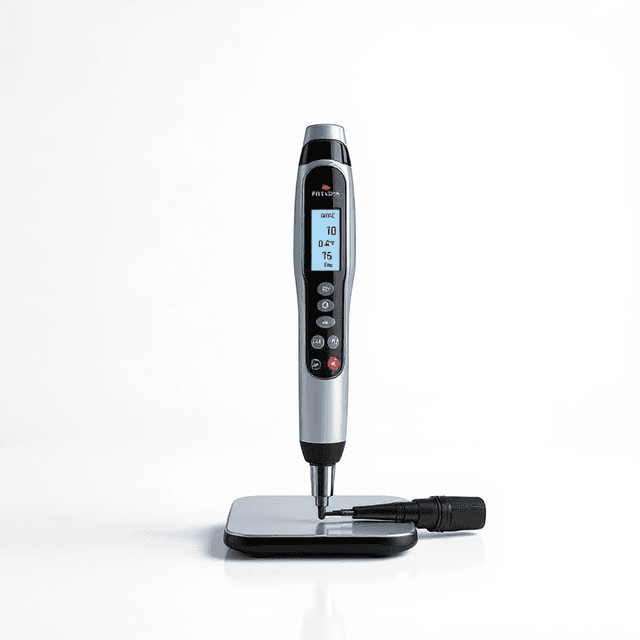
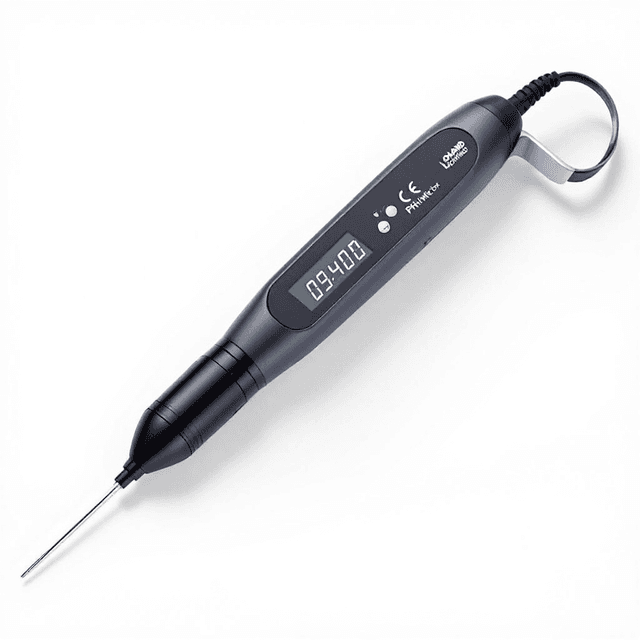
Hydroponic pH Meter
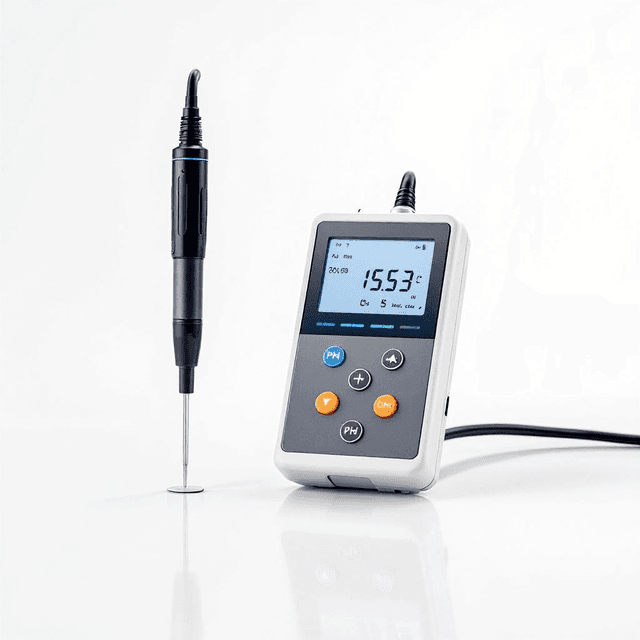
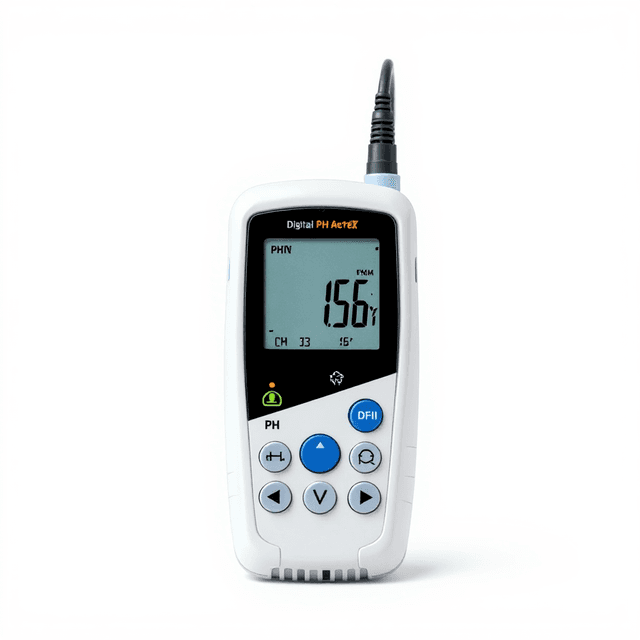
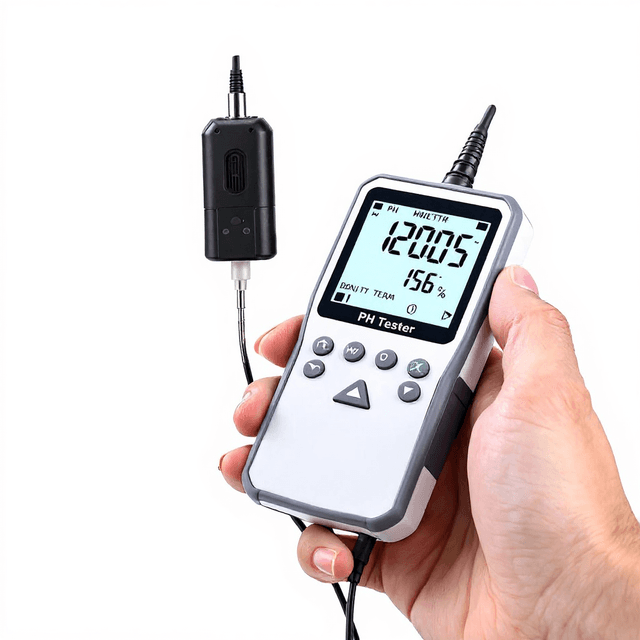
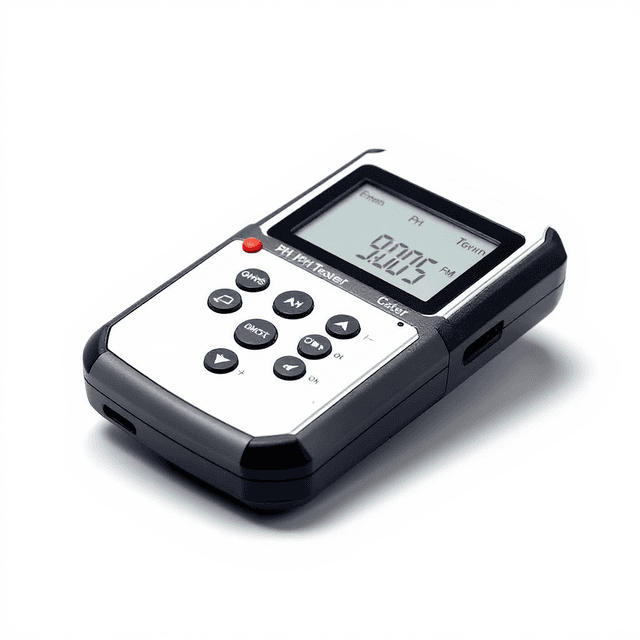
Digital pH meter with detachable electrode for hydroponic systems and water quality monitoring, featuring dual power options and 0-45°C operating range.
| Model | pH-025 |
| Automation Level | manual |
| Brand | ConductScience |

The CS-LH-PH-025 Hydroponic pH Meter provides potentiometric pH measurement for aquatic systems, hydroponics, and general laboratory applications. This digital meter features a detachable electrode design that facilitates electrode replacement and maintenance workflows. The unit operates across a temperature range of 0-45°C and offers dual power options including battery operation (4×1.5V AG13) or AC adapter (220V) for continuous monitoring applications.
The meter's aquarium-compatible design makes it suitable for monitoring pH in controlled aquatic environments, nutrient solutions, and water quality testing protocols. The detachable electrode configuration allows researchers to select appropriate electrode types for specific measurement conditions and replace electrodes as needed to maintain measurement reliability.
How It Works
The CS-LH-PH-025 operates on potentiometric measurement principles, utilizing a pH-sensitive electrode to generate a voltage potential proportional to hydrogen ion activity in solution. The electrode system typically consists of a glass membrane electrode sensitive to H+ ions and a reference electrode that provides a stable potential. When immersed in solution, the pH electrode develops a potential difference that correlates with the pH value according to the Nernst equation.
The digital display converts the electrode potential into pH units through internal signal conditioning and calibration algorithms. The detachable electrode design allows the measurement system to be optimized for different sample types by selecting appropriate electrode configurations. Temperature compensation may be incorporated to account for the temperature dependence of pH measurements in the 0-45°C operating range.
Features & Benefits
Model
- pH-025
Automation Level
- manual
Brand
- ConductScience
Research Domain
- Analytical Chemistry
- Environmental Monitoring
- Food Science
- Materials Science
- Microbiology
- Pharmaceutical QC
Weight
- 0.2 kg
Dimensions
- L: 20.0 mm
- W: 10.0 mm
- H: 5.0 mm
Comparison Guide
| Feature | This Product | Typical Alternative | Advantage |
|---|---|---|---|
| Electrode Configuration | Detachable electrode system | Many entry-level meters feature fixed electrodes | Enables electrode replacement and selection of specialized electrodes for different sample types. |
| Power Supply Options | Dual power (4×1.5V AG13 or AC 220V) | Single power source designs are common | Provides flexibility for both portable and continuous monitoring applications. |
| Operating Temperature | 0-45°C operating range | Temperature ranges vary by model | Covers typical laboratory and controlled environment temperature conditions. |
| Application Focus | Aquarium-compatible design | General-purpose pH meters without aquatic optimization | Specifically designed for aquatic research and hydroponic applications. |
The CS-LH-PH-025 offers detachable electrode flexibility and dual power options in an aquarium-compatible design. The 0-45°C operating range and specialized aquatic application focus distinguish it from general-purpose pH meters.
Practical Tips
Calibrate using buffers at the same temperature as your samples when working in the 0-45°C range.
Why: Temperature affects both electrode response and buffer pH values.
Store the detachable electrode in appropriate storage solution between measurements.
Why: Proper storage prevents electrode dehydration and maintains measurement stability.
Rinse the electrode with distilled water between samples to prevent cross-contamination.
Why: Sample carryover can affect measurement accuracy, especially with different ionic strength solutions.
Check electrode connection if readings appear unstable or drift excessively.
Why: Loose connections in detachable electrode systems can cause measurement instability.
Allow readings to stabilize before recording values, especially in temperature-variable environments.
Why: Thermal equilibration affects both electrode response and sample pH.
Use AC adapter only in dry laboratory environments away from water sources.
Why: Electrical safety is critical when combining AC power with aqueous measurements.
Setup Guide
What’s in the Box
- CS-LH-PH-025 pH meter main unit
- pH electrode (detachable)
- AC 220V power adapter
- Battery compartment for AG13 cells (typical)
- User manual and calibration instructions (typical)
- Electrode storage solution (typical)
Compliance
References
Background reading relevant to this product:
Warranty & ConductCare
ConductScience provides a standard one-year manufacturer warranty covering defects in materials and workmanship, with technical support for calibration and operation questions.
What electrode types are compatible with the detachable interface?
The detachable design allows use of standard pH electrodes, but specific connector compatibility should be verified with the manufacturer for electrode selection.
How does temperature affect measurement accuracy in the 0-45°C range?
pH measurements show temperature dependence; the meter may include temperature compensation, but manual temperature correction may be required for precise work.
What is the measurement resolution and accuracy of this meter?
Specific resolution and accuracy specifications should be consulted in the product datasheet for quantitative analytical work requirements.
Can this meter be used for continuous monitoring applications?
Yes, the AC 220V power option enables continuous operation for long-term monitoring, though data logging capability depends on the specific model features.
What maintenance is required for the detachable electrode?
Regular electrode cleaning, proper storage in appropriate solution, and periodic replacement are necessary to maintain measurement reliability.
Is this meter suitable for measurements in organic solvents?
The meter is designed for aqueous solutions; use with organic solvents requires verification of electrode compatibility and may require specialized electrodes.
What calibration frequency is recommended for analytical work?
Daily calibration is typical for analytical applications, though frequency depends on measurement precision requirements and electrode stability.
Have a question about this product?
Upgrade Options