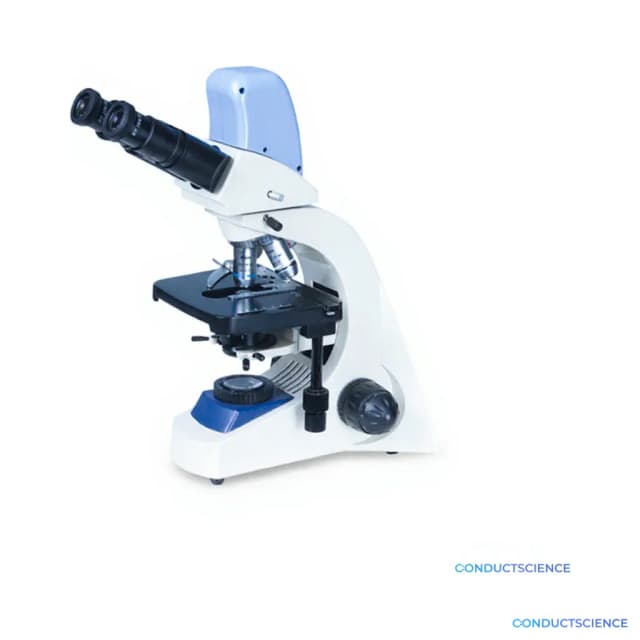
Inverted Fluorescence Microscope(Customized)
Research-grade inverted fluorescence microscope with dual illumination, phase contrast capabilities, and integrated digital imaging system for cell biology applications.
| Automation Level | manual |
| Drawtube | Articulated drawtube, inclined at 45° |
| Total Magnification | 100X~400X(Eyepiece x Objective) |
| Mechanical Tube Length | Infinite distance |
| Plan Wide Field Eyepiece | WF10X/Φ22 |
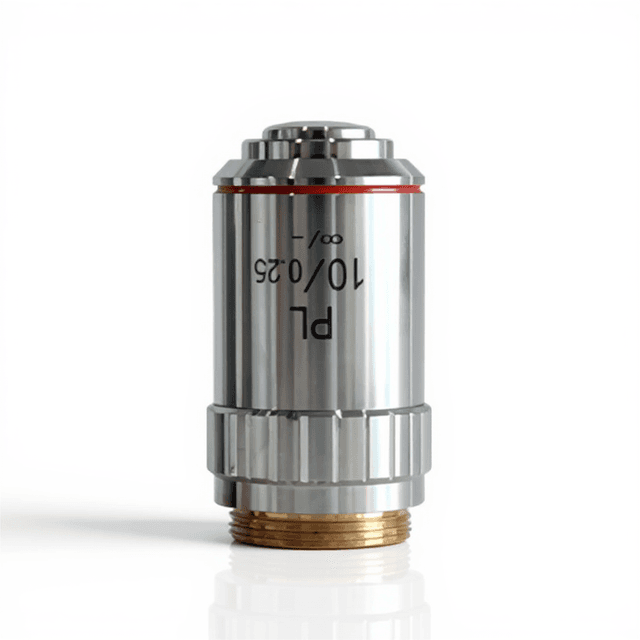
| Plane Infinite Achromatic Objective | ∞10X/0.25 WD4.3mm, ∞20X/0.40 WD8.0mm, ∞40X(S)0.60 WD3.5mm |

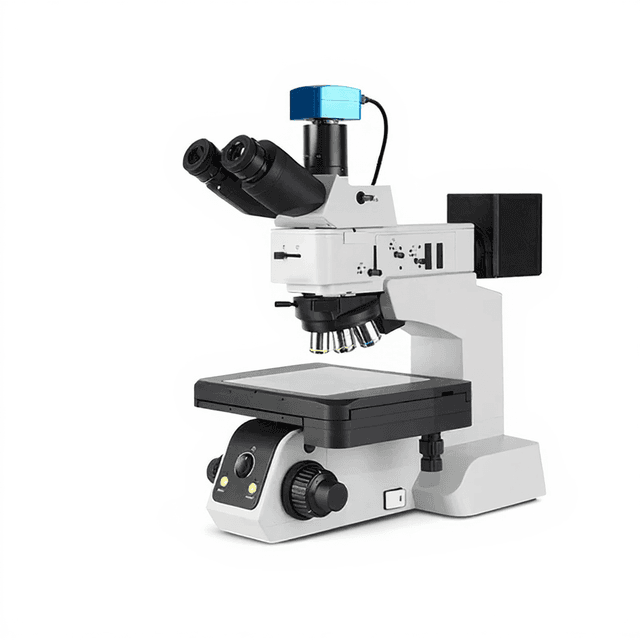
The Inverted Fluorescence Microscope (BIO-0494) is a research-grade inverted microscope system designed for fluorescence imaging applications in cell biology and live cell studies. This customized system features dual illumination pathways with both epi-fluorescence (mercury lamp) and transmitted light (halogen) capabilities, enabling comprehensive brightfield and fluorescence imaging protocols.
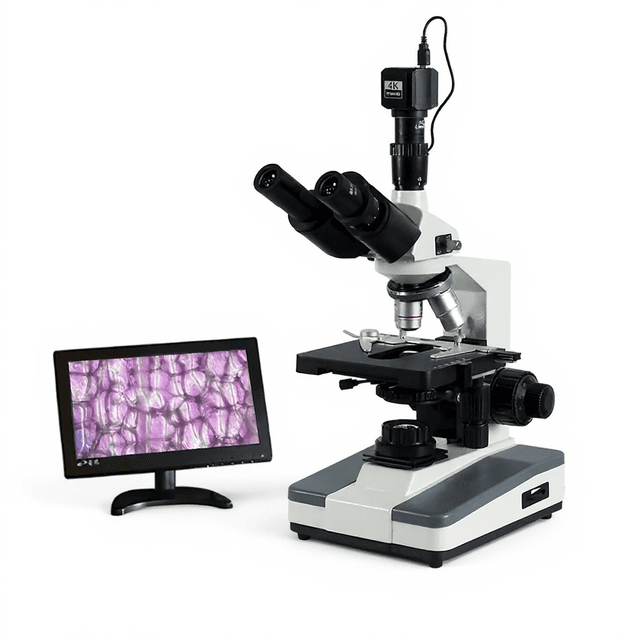
The microscope incorporates infinite optical design with achromatic and phase contrast objectives spanning 10X to 40X magnification, providing researchers with versatile imaging options for specimens cultured in plates, flasks, or dishes. The integrated CMOS camera system and computer interface facilitate digital image capture and analysis workflows essential for modern microscopy applications.
How It Works
Inverted fluorescence microscopy operates on the principle of epi-illumination, where excitation light passes through the objective lens to illuminate the specimen from above while the detector captures emitted fluorescence from below. The inverted configuration positions the objective beneath the specimen stage, allowing observation of samples in culture vessels without disturbing the growth medium or requiring coverslip mounting.
The dual illumination system provides both transmitted brightfield illumination through a halogen source with condenser optics and fluorescence excitation via a mercury arc lamp. The infinite optical design eliminates spherical aberration by using parallel light rays between the objective and tube lens, enabling insertion of optical components like filters and beam splitters without affecting image quality. Phase contrast capabilities enhance visualization of unstained specimens by converting phase differences into amplitude variations, revealing cellular structures with improved contrast.
The rotatable phase contrast condenser with 55mm working distance accommodates various culture vessel thicknesses while maintaining proper Köhler illumination. Digital image capture through the CMOS camera system converts optical signals to electronic data for quantitative analysis and documentation.
Features & Benefits
Automation Level
- manual
Drawtube
- Articulated drawtube, inclined at 45°
Total Magnification
- 100X~400X(Eyepiece x Objective)
Mechanical Tube Length
- Infinite distance
Plan Wide Field Eyepiece
- WF10X/Φ22
Plane Infinite Achromatic Objective
- ∞10X/0.25 WD4.3mm, ∞20X/0.40 WD8.0mm, ∞40X(S)0.60 WD3.5mm
Plane Infinite Phase Contrast
- ∞10X0.25 WD4.3mm, ∞20X0.40 WD8.0mm, ∞40X(S)0.60 WD3.5mm
Interpupil Distance
- 53~75mm
Nosepiece
- Fivetuple Nosepiece
Double Layers Mechanical Stage
- Stage Size: 260*208mm, Moving Range: 77*134.5mm
Condenser
- Rotatable-phase contrast condenser, working distance 55mm
Light Source-Epi-illumination
- 230V(110V)/100W mercury lamp, power supply box
Light Source-Transmission Illuminate
- Halogen bulb 6V/30W, Adjustable brightness
Computer Image-forming System
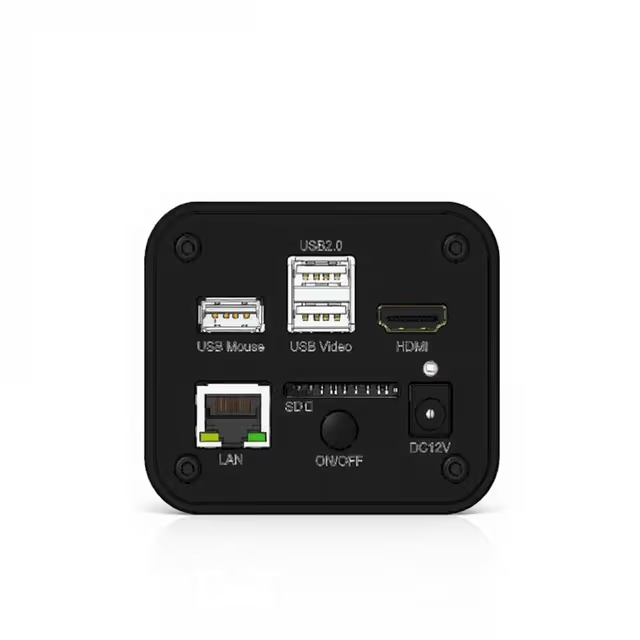
- Fluorescent CMOS camera, adapter
Brand
- ConductScience
Research Domain
- Cancer Research
- Cell Biology
- Developmental Biology
- Immunology
- Neuroscience
- Pharmaceutical QC
Species
- C. elegans
- Drosophila
- Mouse
- Rat
- Zebrafish
Weight
- 29.98 kg
Dimensions
- L: 42.0 mm
- W: 43.6 mm
- H: 38.0 mm
Comparison Guide
| Feature | This Product | Typical Alternative | Advantage |
|---|---|---|---|
| Objective Configuration | Dual sets of infinity objectives (achromatic and phase contrast) in 10X, 20X, 40X magnifications | Single objective set or limited phase contrast options | Provides immediate switching between contrast methods without objective changes, accelerating protocol workflows. |
| Stage Travel Range | 77×134.5mm XY movement on 260×208mm stage platform | Smaller travel ranges often limit scanning area | Accommodates larger culture vessels and enables systematic scanning of multiple sample areas. |
| Illumination Systems | 100W mercury epi-fluorescence plus adjustable halogen transmitted light | Single illumination type or lower power sources | Supports comprehensive imaging protocols from brightfield to multi-fluorescence applications in one session. |
| Optical Design | Infinite distance mechanical tube length with articulated drawtube | Finite tube length systems with fixed viewing angles | Eliminates optical aberrations when adding filters and provides ergonomic viewing flexibility. |
| Condenser Working Distance | 55mm working distance with rotatable phase contrast turret | Shorter working distances limit vessel compatibility | Accommodates thick culture vessels while maintaining proper illumination geometry for phase contrast. |
This customized system integrates dual contrast methods, extended working distances, and comprehensive illumination in a single platform. The infinity optical design and integrated digital imaging provide research-grade performance for demanding cell biology applications.
Practical Tips
Align phase contrast rings using a phase telescope before each imaging session to ensure optimal contrast enhancement.
Why: Proper ring alignment is critical for phase contrast image quality and cannot be adequately assessed through eyepiece observation alone.
Replace mercury lamp when output drops below 80% of initial intensity or after 400 hours of operation.
Why: Declining lamp output reduces fluorescence excitation efficiency and increases background noise in imaging.
Allow 30 minutes warm-up time for mercury lamp stabilization before critical fluorescence measurements.
Why: Arc stability and spectral output require thermal equilibration for reproducible quantitative results.
Check condenser height adjustment if phase contrast halos appear uneven or asymmetric across the field.
Why: Incorrect condenser positioning disrupts the optical path geometry essential for phase contrast formation.
Use neutral density filters to prevent photobleaching when imaging live cells with fluorescent proteins.
Why: Excessive excitation intensity damages fluorophores and alters cellular physiology during time-lapse studies.
Always wear UV-protective eyewear when aligning or servicing the mercury illumination system.
Why: Mercury arc lamps emit harmful UV radiation that can cause retinal damage even with brief exposure.
Store objectives in a desiccated environment and avoid touching lens surfaces with bare hands.
Why: Moisture and skin oils create optical artifacts and can permanently damage lens coatings.
Verify camera pixel size calibration using a stage micrometer at each magnification before quantitative measurements.
Why: Accurate dimensional measurements require precise pixel-to-micron conversion factors specific to each optical configuration.
Setup Guide
What’s in the Box
- Inverted microscope body with articulated drawtube
- WF10X/ø22 wide field eyepieces (pair)
- Three infinity achromatic objectives (10X, 20X, 40X)
- Three infinity phase contrast objectives (10X, 20X, 40X)
- Fivetuple objective nosepiece
- Rotatable phase contrast condenser
- Double-layer mechanical stage
- 100W mercury lamp with power supply
- 6V/30W halogen illumination system
- CMOS fluorescence camera with adapter
- Computer interface cables (typical)
- User manual and optical alignment tools (typical)
- Power cords and fuses (typical)
Warranty
ConductScience provides a standard one-year manufacturer warranty covering defects in materials and workmanship, with technical support for optical alignment and system troubleshooting. Extended service plans are available for mercury lamp replacement and optical component maintenance.
Compliance
What fluorescence filter sets are compatible with the mercury illumination system?
The system accommodates standard fluorescence filter cubes for DAPI, FITC, TRITC, and Texas Red. Consult product datasheet for specific filter holder dimensions and mounting specifications.
Can the camera system perform time-lapse imaging for live cell studies?
Yes, the CMOS camera with computer interface supports time-lapse protocols. Frame rate and duration capabilities depend on the specific imaging software and computer specifications.
What is the maximum thickness of culture vessels that can be accommodated?
The 55mm condenser working distance and objective specifications allow use of standard culture plates, flasks, and dishes up to approximately 50mm total thickness including media.
How often does the mercury lamp require replacement?
Mercury arc lamps typically provide 200-500 hours of operation depending on usage intensity. Monitor lamp output and spectral quality regularly for optimal fluorescence excitation.
Is the microscope suitable for quantitative fluorescence measurements?
The system supports quantitative imaging with appropriate calibration standards and imaging software. Ensure consistent illumination settings and camera exposure parameters for reproducible measurements.
What preventive maintenance is required for the optical components?
Clean objectives and eyepieces monthly with lens tissue and appropriate solvents. Verify mechanical stage lubrication and check lamp alignment quarterly to maintain optimal performance.
Can the microscope accommodate CO2-perfused culture chambers?
The mechanical stage design and objective working distances allow mounting of environmental chambers for live cell imaging under controlled atmospheric conditions.
Have a question about this product?
Accessories
Enhance your setup with compatible accessories
Replacement Parts & Consumables
Frequently Bought Together
Upgrade Options
Related Products