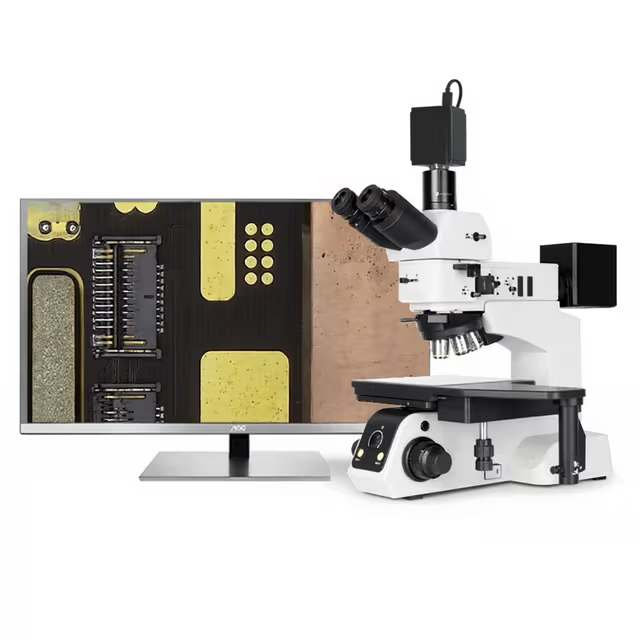
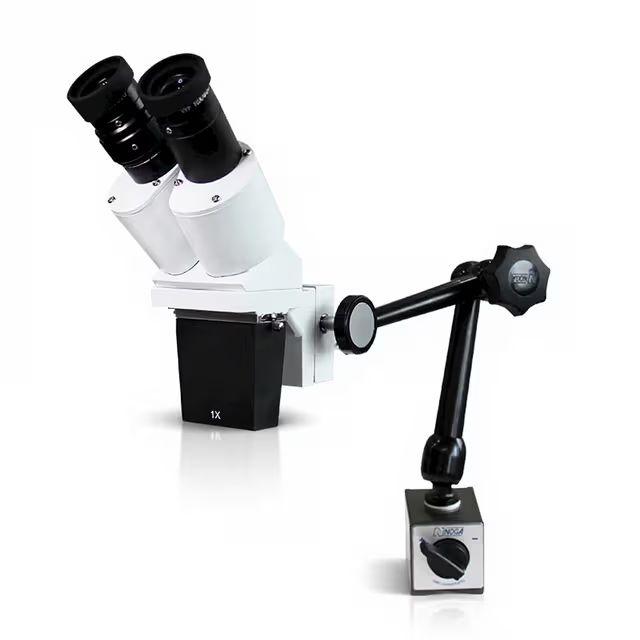
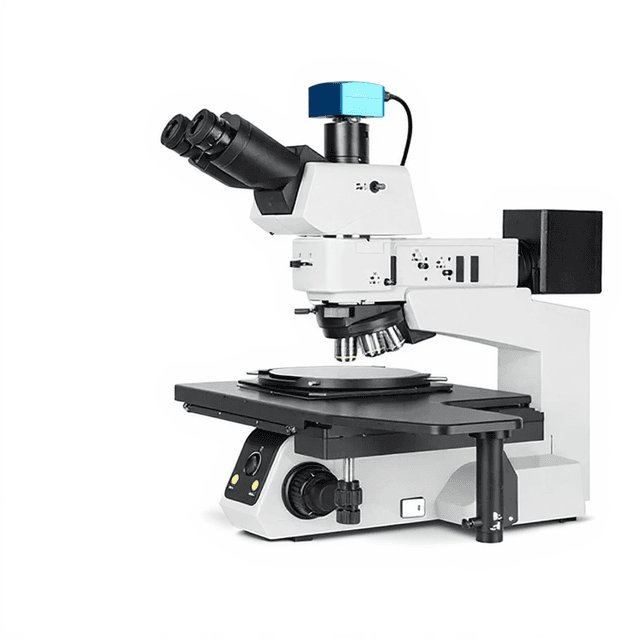
Digital Biological Microscope
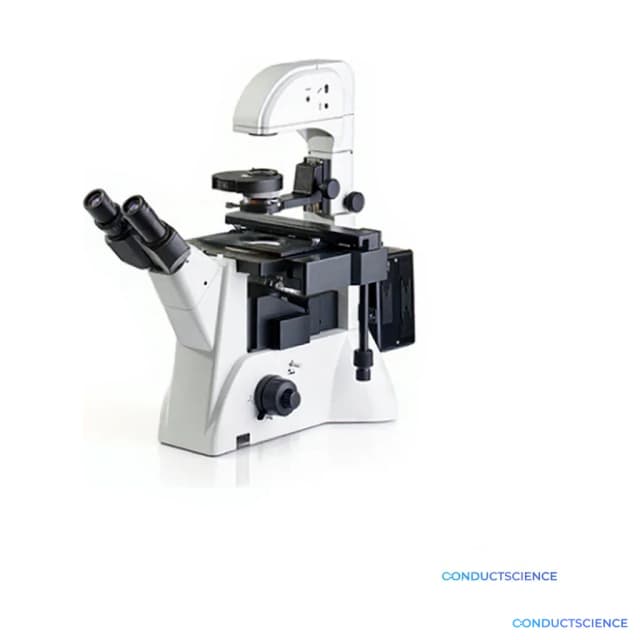
Professional compound biological microscope with infinite optical system, 4X-100X achromatic objectives, and mechanical stage for detailed specimen examination.

Louise Corscadden, PhD
Director of Science · ConductScience
Ask Louise about Digital Biological Microscope fit, setup, configuration, or quote prep.
Already working with us? Sign in to connect this with My Scientist.
Key Specifications
Full details →- Model fit
- Configured during quote
- SKU family
- _old_BIO-0493
- Shipping box
- 5511.81 x 5511.81 x 27.0 cm
- Ordering
- Online checkout and quote request available
- Category
- Microscopy
- Build notes
- Confirm accessories, station layout, and support needs before purchase
The Digital Biological Microscope (BIO-0493) is a professional-grade compound microscope designed for detailed examination of biological specimens. Built on an infinite optical system with a Seidentopf binocular viewing head inclined at 30°, this instrument provides ergonomic viewing with interpupillary adjustment from 47-78mm. The system incorporates achromatic objectives at 4X, 10X, 40X, and 100X magnifications mounted on a backward quadruple nosepiece for efficient magnification changes.
The microscope features a double-layer mechanical stage (140mm×140mm/75mm×750mm) for precise specimen positioning and includes an NA1.25 Abbe condenser for optimal illumination control. Equipped with a 6V/20W halogen lamp with adjustable brightness, the system delivers consistent illumination across all magnification levels. Wide field eyepieces (WF 10X/18) provide a clear field of view for detailed specimen analysis.
How It Works
The microscope operates on the principle of compound magnification using an infinite optical system. Light from the halogen illumination source passes through the specimen and enters the objective lens, which creates a real intermediate image at infinity. This intermediate image is then focused by the tube lens to form a magnified real image at the eyepiece focal plane.
The Abbe condenser with NA1.25 numerical aperture concentrates illumination onto the specimen, providing optimal contrast and resolution. The achromatic objectives correct for chromatic aberration across the visible spectrum, ensuring sharp, color-accurate images. The mechanical stage allows precise X-Y positioning of specimens with micrometer-level control for systematic examination of sample areas.
The binocular viewing head splits the light path equally between both eyepieces, enabling comfortable observation while maintaining full image brightness. The 30° inclination reduces neck strain during extended observation periods, and the interpupillary adjustment accommodates different users' eye spacing.
Features & Benefits
Automation Level
- manual
Optical System
- Infinite Optical System
Viewing Head
- Seidentopf Binocular Viewing Head Inclined at 30°, Interpupillary 47~78mm
Eyepiece
- Wide Field Eyepiece WF 10X/18
Extra Wide Field Eyepiece EW10X/20 with Diopter Ad
- /
Objective
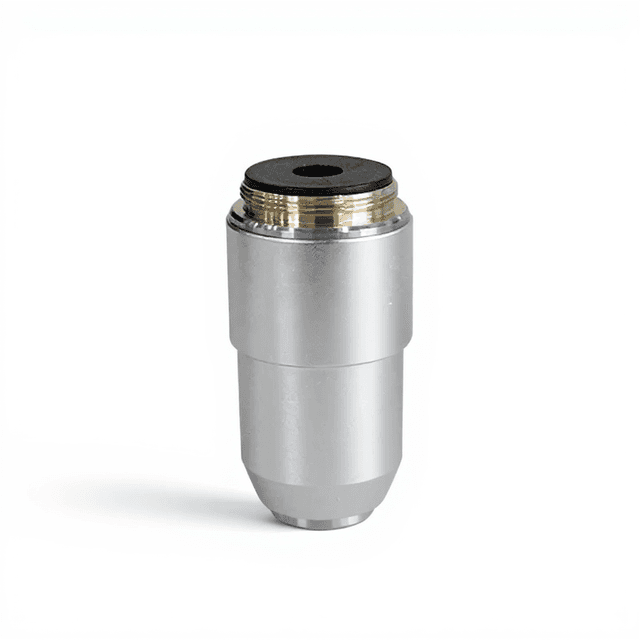
- Achromatic Objective 4X, 10X, 40X, 100X
Nosepiece
- Backward Quadruple Nosepiece
Stage
- Double Layers Mechanical Stage 140mm×140mm/75mm×50mm
Condenser
- NA1.25 Abbe Condenser
Illumination
- 6V/20W Halogen Lamp, Brightness Adjustable
Brand
- ConductScience
Research Domain
- Cell Biology
- Clinical Diagnostics
- Developmental Biology
- Histopathology
- Microbiology
Shipping weight
- 22.58 lb
Shipping box
- L: 5511.81 cm
- W: 5511.81 cm
- H: 27.0 cm
| Feature | This Product | Typical Alternative | Advantage |
|---|---|---|---|
| Optical System Design | Infinite optical system with achromatic objectives | Finite optical systems common in entry-level models | Infinite optics provide superior image quality and easier integration of accessories without tube length constraints. |
| Condenser Numerical Aperture | NA1.25 Abbe condenser | Lower NA condensers in basic models | Higher numerical aperture enables better resolution and contrast, especially critical for high-magnification work. |
| Stage Design | Double layer mechanical stage 140mm×140mm/75mm×750mm | Fixed stages or smaller mechanical stages | Precise specimen positioning enables systematic examination of large samples with reproducible positioning. |
| Viewing Head Configuration | Seidentopf binocular head with 30° inclination | Fixed binocular heads or monocular designs | Ergonomic viewing angle reduces fatigue during extended observation sessions while maintaining optical performance. |
| Objective Range | 4X, 10X, 40X, 100X achromatic objectives | Limited objective sets or non-achromatic optics | Complete magnification range with color correction supports diverse specimen examination requirements from screening to detailed analysis. |
| Illumination Control | 6V/20W halogen with brightness adjustment | Fixed intensity LED or lower wattage systems | Adjustable brightness enables optimization for different specimen types and contrast requirements while providing consistent color temperature. |
This microscope combines infinite optics, high-NA conditioning, and precision mechanics to deliver professional-grade performance. The complete objective set and ergonomic design support both routine and specialized microscopy applications requiring reliable image quality.
Practical Tips
Use a stage micrometer to verify magnification accuracy and establish measurement calibration for each objective.
Why: Accurate measurements require proper calibration verification, especially when conducting morphometric analysis.
Clean objectives using lens tissue and appropriate cleaning solution, working from center outward in circular motions.
Why: Proper cleaning technique prevents scratching of lens surfaces and maintains optical performance over time.
Always start examination with the lowest magnification objective and progress systematically to higher powers.
Why: This approach prevents damage to specimens and objectives while enabling efficient location of areas of interest.
If image appears dim or lacks contrast, check condenser height and diaphragm settings before adjusting lamp intensity.
Why: Proper condenser alignment is more critical for image quality than simply increasing illumination brightness.
Allow the halogen lamp to warm up for 10-15 minutes before critical observations to ensure stable color temperature.
Why: Lamp warm-up eliminates color shifts and intensity fluctuations that can affect specimen appearance and image documentation.
Use immersion oil sparingly and clean both objective and slide immediately after oil immersion procedures.
Why: Excess oil can contaminate other objectives or degrade image quality, while dried oil residue can damage lens coatings.
Adjust interpupillary distance and eyepiece diopters for each user to prevent eye strain and ensure optimal image clarity.
Why: Proper ergonomic setup maximizes visual comfort and reduces focusing errors that can affect observation accuracy.
Cover the microscope when not in use and store objectives in dust-free containers to protect optical surfaces.
Why: Dust accumulation on lenses reduces image contrast and can cause permanent damage if particles scratch coated surfaces.
Setup Guide
What’s in the Box
- Digital Biological Microscope main unit
- WF 10X/18 wide field eyepieces (pair)
- Achromatic objectives: 4X, 10X, 40X, 100X
- Power adapter and cord (typical)
- Dust cover (typical)
- User manual and documentation (typical)
- Calibration certificate (typical)
Warranty
ConductScience provides a standard one-year manufacturer warranty covering defects in materials and workmanship, with technical support available for operational guidance and troubleshooting assistance.
Compliance
What is the practical resolution limit with the 100X objective?
With the NA1.25 Abbe condenser and 100X achromatic objective, theoretical resolution approaches 0.22 micrometers, though practical resolution depends on specimen preparation and illumination optimization.
Is the microscope parfocal across all magnifications?
The achromatic objectives are designed for parfocality, requiring minimal refocusing when changing magnifications, though fine adjustment may be needed for optimal image sharpness.
Can this microscope accommodate oil immersion techniques?
Yes, the 100X objective and NA1.25 condenser system support oil immersion microscopy for high-resolution examination of specimens requiring maximum resolving power.
What specimen thickness can the mechanical stage accommodate?
The double-layer mechanical stage design accommodates standard microscope slides and coverslips; consult product datasheet for specific thickness tolerances.
How does the infinite optical system benefit image quality?
The infinite optical system eliminates tube length dependency, reducing spherical aberration and providing consistent image quality while enabling easier integration of filters or other optical components.
What maintenance is required for the halogen illumination?
The 6V/20W halogen lamp requires periodic replacement based on usage hours and should be handled with clean gloves to prevent premature failure from oil contamination.
Can the eyepieces be upgraded for different magnifications?
The binocular head accepts standard 23.2mm eyepieces, allowing upgrade to different magnifications or specialized eyepieces such as wide-field or high-eyepoint designs.
How does this compare to digital microscopy systems?
This is a traditional optical microscope optimized for direct visual observation, offering real-time viewing without digital processing delays, though it lacks built-in imaging capabilities.
Have a question about this product?
Have a question? Just ask.
Send it over and we'll email you a personalized answer — no call, no scheduling.
Prefer to talk it through?
Accessories
Enhance your setup with compatible accessories
Replacement Parts & Consumables
Frequently Bought Together
Upgrade Options
Related Products