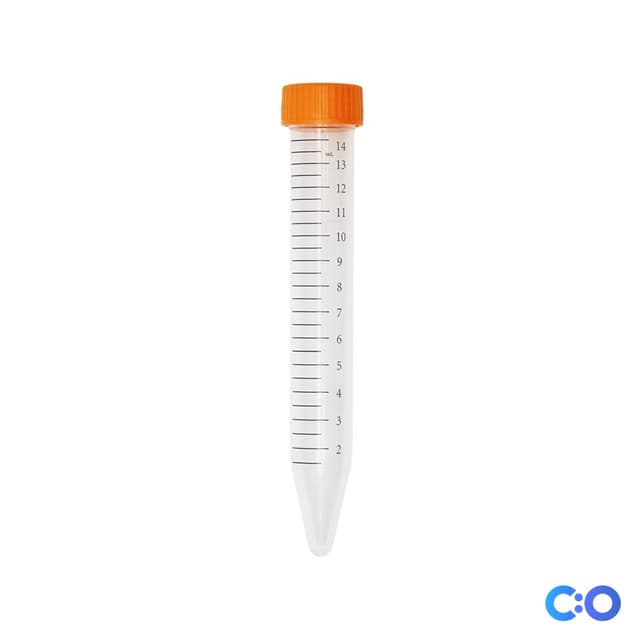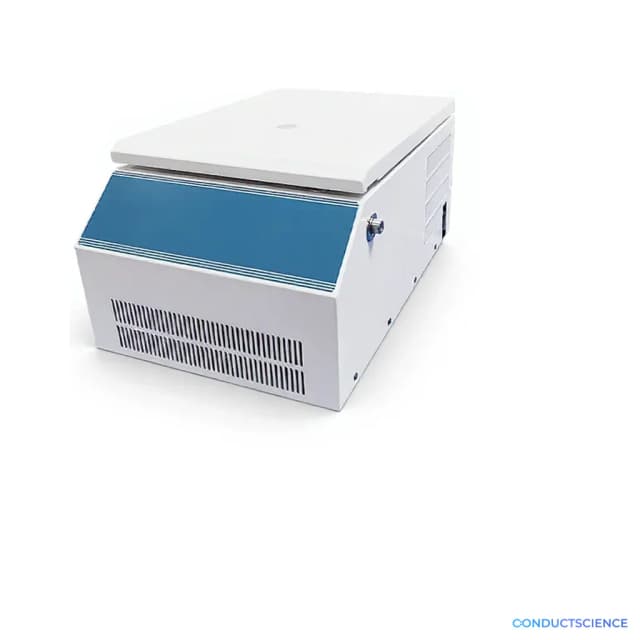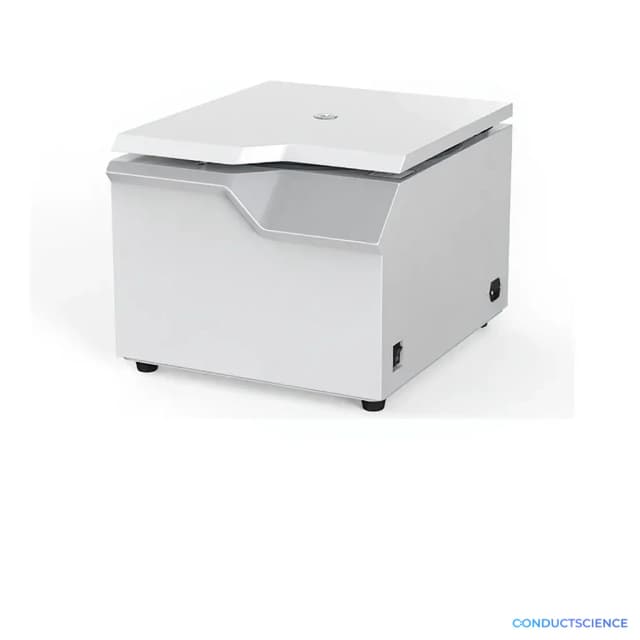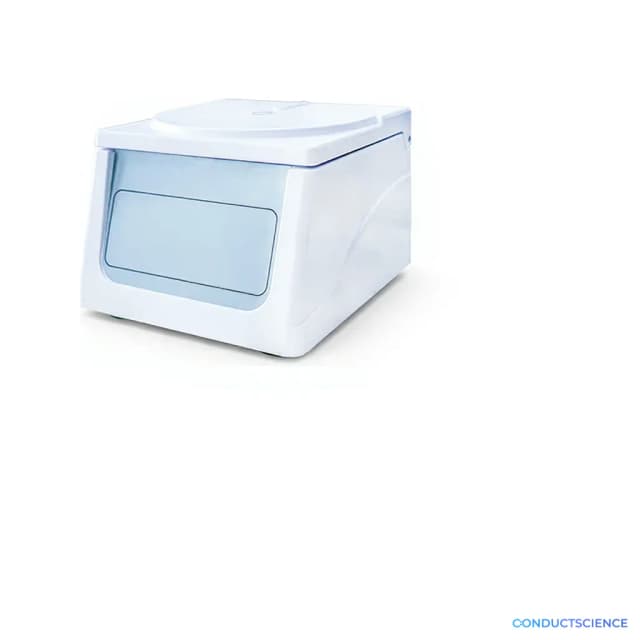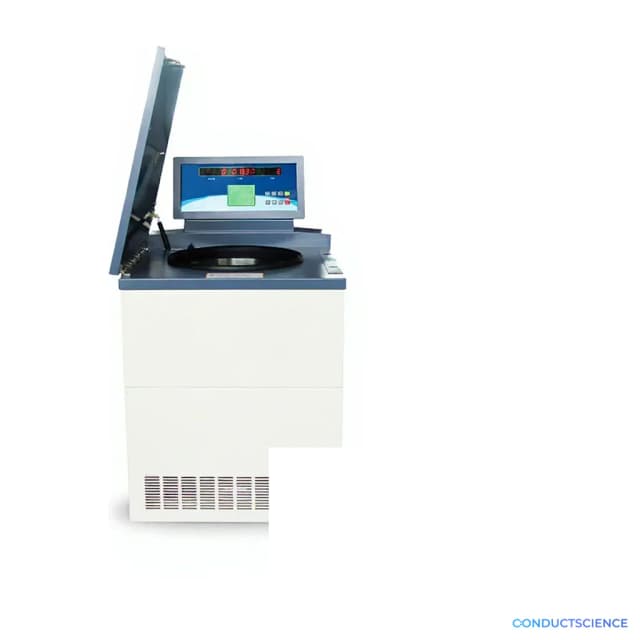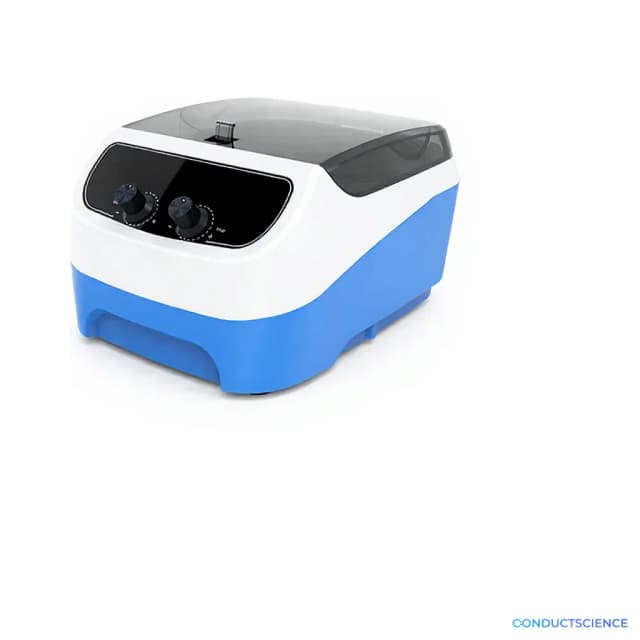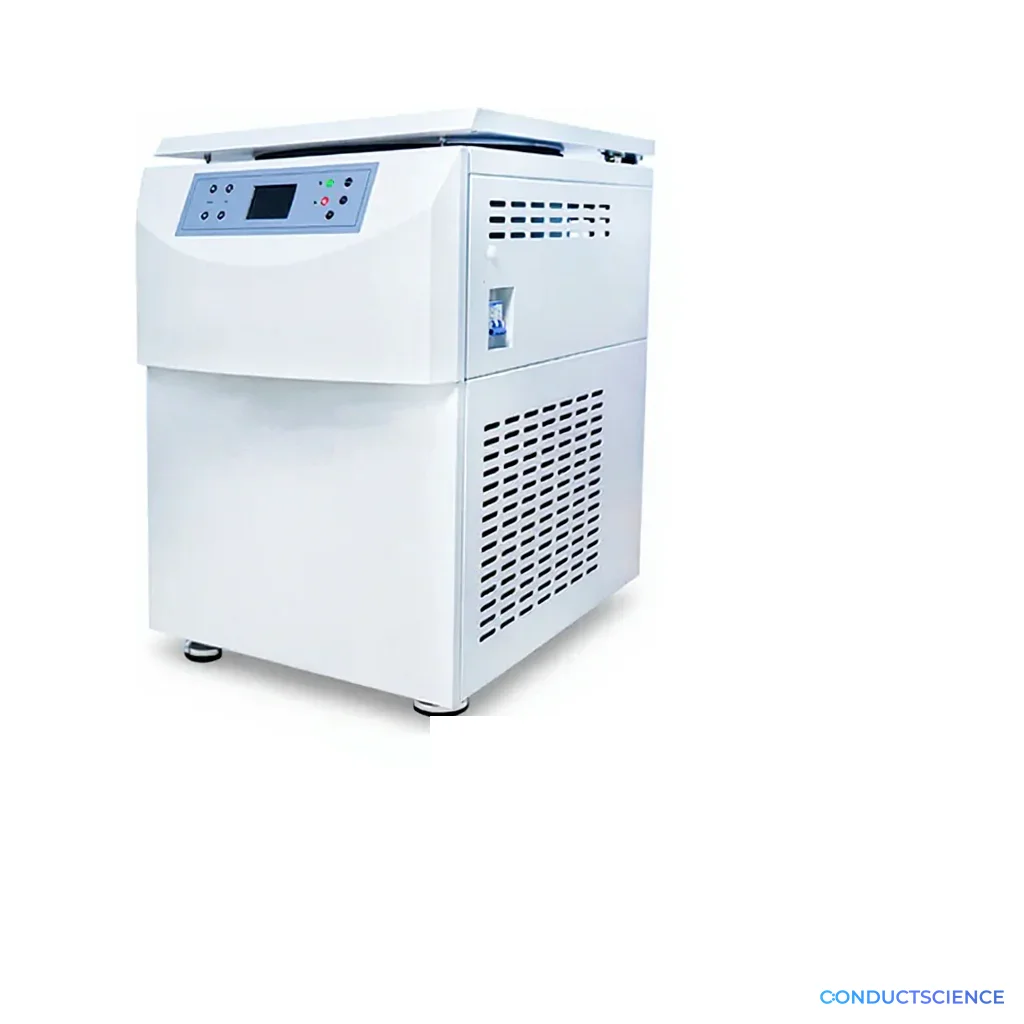
Large Volume Benchtop Centrifuge, 6000 RPM, 5111×g
Benchtop centrifuge for high-capacity, low-speed separation of biological samples with minimal heat generation and space-efficient design.

Louise Corscadden, PhD
Director of Science · ConductScience
Ask Louise about Large Volume Benchtop Centrifuge, 6000 RPM, 5111×g fit, setup, configuration, or quote prep.
Already working with us? Sign in to connect this with My Scientist.
Key Specifications
Full details →- Model fit
- Configured during quote
- SKU family
- BIO-0264
- Shipping box
- 42.0 x 43.6 x 38.0 cm
- Ordering
- Online checkout and quote request available
- Category
- Centrifuges
- Build notes
- Confirm accessories, station layout, and support needs before purchase
Table top centrifuge designed for high-capacity sample processing in laboratory environments requiring routine separation of cellular components, precipitates, and particulate matter. Features low-speed operation optimized for biological samples sensitive to excessive gravitational forces, with large-capacity rotor configurations accommodating multiple sample formats simultaneously.
Engineered for benchtop installation in research facilities where space efficiency and operational reliability are essential. The low-speed design minimizes heat generation and mechanical stress on samples while maintaining consistent separation performance across extended operational periods.
How It Works
Centrifugal separation operates by applying controlled rotational motion to samples, generating centrifugal force that causes particles of different densities to migrate at distinct rates. Components with higher density migrate toward the tube bottom, while less dense materials remain in the supernatant layer.
Low-speed operation typically ranges from 500 to 4,000 rpm, producing relative centrifugal forces suitable for separating cellular components, precipitates, and particulate matter without generating excessive heat or shear forces that could damage sensitive biological materials.
The large-capacity rotor design accommodates multiple tube sizes and formats simultaneously, enabling batch processing of samples while maintaining balanced loading conditions essential for stable operation and consistent separation results.
Features & Benefits
Automation Level
- semi-automated
Research Domain
- Analytical Chemistry
- Cell Biology
- Clinical Diagnostics
- Food Science
- Materials Science
- Microbiology
Shipping weight
- 29.98 lb
Shipping box
- L: 42.0 cm
- W: 43.6 cm
- H: 38.0 cm
| Feature | This Product | Typical Alternative | Advantage |
|---|---|---|---|
| Sample Capacity | Large-capacity rotor accommodates multiple tube formats | Entry-level models often limited to fewer tube positions | Enables batch processing of multiple samples simultaneously, improving workflow efficiency |
| Speed Range | Low-speed operation optimized for gentle separation | High-speed models may generate excessive heat and stress | Preserves sample integrity for temperature-sensitive biological materials |
| Footprint Design | Table top configuration for benchtop installation | Floor-standing models require dedicated floor space | Conserves valuable laboratory bench space while maintaining accessibility |
| Safety Systems | Integrated lid interlock and imbalance detection | Basic models may lack comprehensive safety features | Prevents operational hazards and equipment damage during routine use |
This table top centrifuge provides large-capacity, low-speed separation capabilities in a space-efficient design. The gentle operation preserves sample integrity while accommodating batch processing requirements typical of routine laboratory workflows.
Practical Tips
Always balance samples by mass rather than volume to prevent operational vibration and ensure consistent separation results.
Why: Mass imbalance creates destructive vibration that reduces separation efficiency and accelerates equipment wear.
Verify rotor speed periodically using a calibrated tachometer, especially after rotor changes or maintenance procedures.
Why: Speed accuracy directly affects calculated RCF values and separation reproducibility in quantitative applications.
Clean rotor and chamber after each use with appropriate solvents, paying attention to tube holder recesses where residue accumulates.
Why: Sample residue can cause imbalance, corrosion, and cross-contamination between different experiments.
Inspect tubes for cracks or defects before loading, as centrifugal forces can cause catastrophic tube failure.
Why: Tube breakage creates safety hazards and can damage rotor components or contaminate other samples.
Allow rotor to reach full speed before starting timing for separation protocols requiring precise duration control.
Why: Acceleration time varies with load and can affect separation results in time-sensitive protocols.
If excessive vibration occurs during operation, stop immediately and check sample balance and tube integrity.
Why: Continued operation with imbalanced loads can damage bearings and affect long-term equipment reliability.
Setup Guide
What’s in the Box
- Table top centrifuge main unit (typical)
- Fixed-angle rotor (typical)
- Tube adapters and inserts (typical)
- Power cord (typical)
- Operating manual (typical)
- Safety guidelines documentation (typical)
Warranty
ConductScience provides standard one-year manufacturer warranty covering parts and labor for equipment defects. Technical support includes installation guidance and operational troubleshooting assistance.
Compliance
What tube sizes and formats are compatible with the standard rotor configuration?
Rotor compatibility varies by model configuration. Consult product datasheet for specific tube size ranges, adapter requirements, and maximum volume capacities for your intended sample formats.
What is the maximum relative centrifugal force (RCF) achievable with this low-speed design?
Maximum RCF depends on rotor radius and speed range specifications. Calculate RCF using the formula: RCF = 1.118 × r × (rpm/1000)², where r is the radius in millimeters.
How do I determine appropriate separation times for different sample types?
Separation time depends on particle size, density difference, and viscosity. Start with manufacturer recommendations and optimize based on your specific samples and separation requirements.
What maintenance procedures are required for consistent performance?
Regular cleaning of rotor and chamber, periodic inspection of moving parts, and calibration verification according to laboratory quality procedures. Consult manual for specific maintenance intervals.
Can this centrifuge handle samples containing organic solvents or corrosive materials?
Chemical compatibility depends on rotor materials and sealing components. Verify compatibility with your specific solvents and consider chemical-resistant accessories if needed.
How does performance compare to high-speed microcentrifuges for cell culture applications?
Low-speed design provides gentler separation suitable for maintaining cell viability, while microcentrifuges offer higher RCF for pelleting smaller particles and subcellular components.
What imbalance detection features prevent operational damage?
Built-in imbalance detection monitors vibration patterns and automatically stops operation when load distribution exceeds safe parameters, protecting both samples and equipment.
Have a question about this product?
Have a question? Just ask.
Send it over and we'll email you a personalized answer — no call, no scheduling.
Prefer to talk it through?
Replacement Parts & Consumables