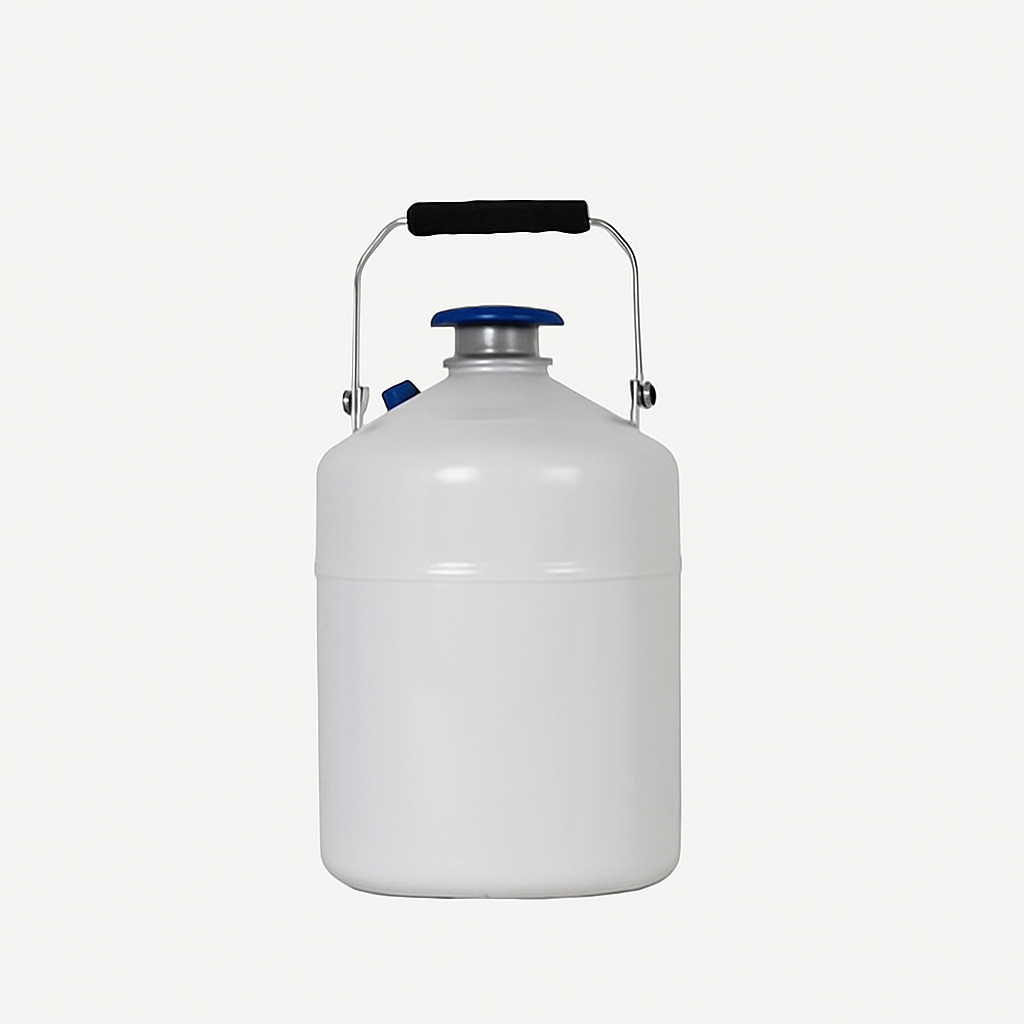
Liquid Nitrogen Dry Shipper
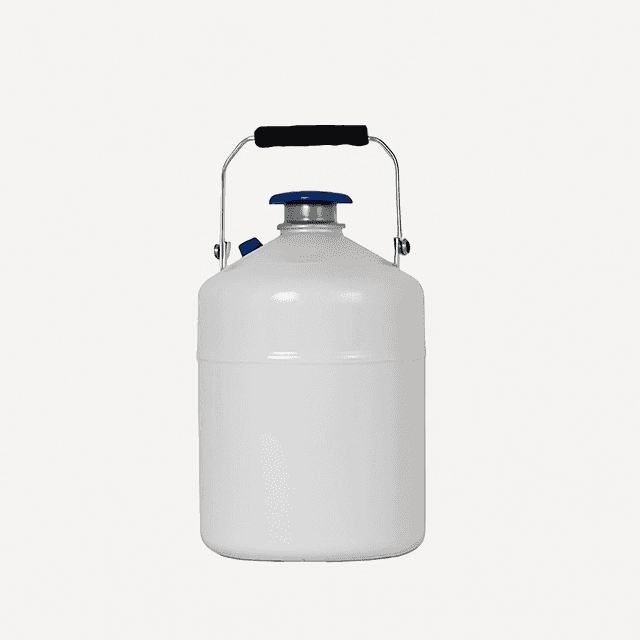
Purpose-built dry shipper for air transportation of biological samples at cryogenic temperatures — no free liquid nitrogen, no spillage risk, IATA-compliant for safe international shipment of cells, tissues, and reproductive specimens.

Louise Corscadden, PhD
Director of Science · ConductScience
Ask Louise about Liquid Nitrogen Dry Shipper fit, setup, configuration, or quote prep.
Already working with us? Sign in to connect this with My Scientist.
The Liquid Nitrogen Dry Shipper maintains biological samples at cryogenic temperatures during air transport without carrying free liquid nitrogen. An absorbent material inside the vessel retains LN2 in a dry, non-spillable state, meeting IATA regulations for transport of cryogenic biological specimens. Aluminium alloy construction keeps the shipper lightweight while providing robust insulation over multi-day transit.
Key Features
- Dry, non-spillable LN2 retention — IATA-compliant for air freight
- High-strength aluminium alloy construction with powder-coated exterior
- Service lifespan exceeding five years
- Lockable lid included; optional liquid nitrogen temperature monitor available
- Compatible with straws (0.25 ml, 0.5 ml), vials (25 ml, 50 ml), and blood bags
Model Specifications
| Specification | LNC-3-50DS | LNC-6-80DS | LNC-10-125DS | LNC-25-216DS |
|---|---|---|---|---|
| Effective Capacity (L) | 1.3 | 2.9 | 3.4 | 9 |
| Caliber (mm) | 50 | 80 | 125 | 216 |
| Outer Diameter (mm) | 223 | 300 | 300 | 394 |
| Height (mm) | 435 | 487 | 554 | 716 |
| Static Evaporation Loss (L/day) | 0.16 | 0.20 | 0.43 | 0.89 |
| Static Holding Time (days) | 20 | 37 | 23 | 29 |
| Effective Shelf Life (days) | 8 | 14 | 8 | 10 |
| Empty Weight (kg) | 3.2 | 4.9 | 6.7 | 15 |
| Gross Weight (kg) | 9 | 12 | 19 | 24 |
| Packing Size (mm) | 270×270×510 | 340×340×555 | 340×340×615 | 425×425×765 |
How It Works
The dry shipper operates on a dual-phase cryogenic storage principle utilizing vacuum insulation and liquid nitrogen absorption technology. The vessel consists of an inner container surrounded by a vacuum-sealed outer shell, with the annular space containing super-insulating materials to minimize heat transfer. An absorbent material within the vessel walls captures and retains liquid nitrogen during the charging process, preventing the presence of free liquid while maintaining the nitrogen in a temperature-stabilized state.
During operation, the absorbed liquid nitrogen provides continuous cooling through sublimation, maintaining sample temperatures below -150°C. The vacuum insulation system creates a thermal barrier that significantly reduces heat influx, extending hold times without requiring external cooling sources. This design eliminates the shipping hazards associated with free cryogenic liquids while providing equivalent thermal performance for biological sample preservation.
Features & Benefits
Material
- High-Strength Aluminium Alloy
Service Life
- >5 Years
Compliance
- IATA-Compliant
Research Domain
- Analytical Chemistry
- Cell Biology
- Clinical Diagnostics
- Microbiology
- Pharmaceutical QC
Weight
- 33.07 kg
Dimensions
- L: 15.51 mm
- W: 11.81 mm
- H: 8.78 mm
| Feature | This Product | Typical Alternative | Advantage |
|---|---|---|---|
| Capacity Range | 1.3L to 9L effective capacity across four models | Entry-level units often offer single capacity options with limited scalability | Allows researchers to select optimal capacity for specific sample volumes and shipping frequency |
| Weight Efficiency | 3.2-15 kg empty weight depending on capacity | Comparable units often have higher weight-to-capacity ratios | Reduces shipping costs while maximizing sample capacity for cost-effective transport |
| Size Options | Outer diameters from 223mm to 394mm with corresponding height variations | Limited size configurations restrict packaging flexibility | Enables optimal fit within existing shipping containers and storage spaces |
| Model Selection | Four distinct capacity configurations (LNC-3-50DS through LNC-25-216DS) | Fewer model options limit capacity matching to specific needs | Provides precise capacity matching for different research applications and shipping volumes |
This dry shipper series provides comprehensive capacity options from research-scale to biobank-scale shipments, with weight-optimized construction and multiple size configurations. The range allows precise matching of transport capacity to specific research needs while maintaining consistent cryogenic performance across all models.
Practical Tips
Verify temperature stability using calibrated cryogenic temperature sensors before each shipment cycle.
Why: Ensures samples remain within required temperature ranges throughout transport duration.
Inspect vacuum integrity annually by checking for frost formation on exterior surfaces during charged conditions.
Why: Vacuum degradation reduces thermal performance and increases liquid nitrogen consumption.
Pre-cool sample containers to liquid nitrogen temperature before loading into the charged dry shipper.
Why: Minimizes thermal shock and reduces internal temperature recovery time after sample loading.
Always use appropriate cryogenic personal protective equipment when handling charged units.
Why: Exterior surfaces reach extremely low temperatures and can cause cryogenic burns upon contact.
Include temperature monitoring devices when shipping critical samples requiring temperature verification.
Why: Provides documentation of temperature maintenance for regulatory compliance and sample quality assurance.
If hold time appears reduced, check for proper charging technique and complete liquid nitrogen absorption.
Why: Incomplete charging or improper technique reduces thermal performance and shortens transport duration.
Setup Guide
What’s in the Box
- Liquid nitrogen dry shipper vessel (typical)
- Protective outer carton (typical)
- User manual with charging instructions (typical)
- Sample inventory sheets (typical)
- Absorbent packing material (typical)
Warranty
ConductScience provides a standard one-year manufacturer warranty covering defects in materials and workmanship, with technical support for proper charging and handling procedures.
Compliance
What is the typical hold time for maintaining cryogenic temperatures during shipment?
Hold time varies by model capacity and ambient conditions, typically ranging from 7-14 days. Consult product datasheet for specific performance curves and temperature maintenance specifications.
How do I properly charge the dry shipper with liquid nitrogen?
Charging involves slowly adding liquid nitrogen until the absorbent material reaches saturation, typically requiring 2-4 hours. The process is complete when no more liquid nitrogen is absorbed and internal temperature stabilizes below -150°C.
Can these units be recharged and reused for multiple shipments?
Yes, dry shippers are designed for multiple use cycles. After each shipment, units can be recharged with liquid nitrogen following proper procedures and safety protocols.
What sample containers are compatible with these dry shippers?
Standard cryogenic vials, microtubes, and small storage boxes designed for liquid nitrogen temperatures are compatible. Ensure containers are properly sealed and rated for cryogenic use.
How do I verify temperature maintenance during transport?
Use data loggers specifically designed for cryogenic temperatures, or temperature-sensitive indicators. Some models may accommodate internal temperature monitoring systems.
What safety considerations apply when handling charged dry shippers?
Handle with cryogenic gloves, ensure adequate ventilation, and follow nitrogen safety protocols. Although free liquid is absent, extremely cold surfaces and nitrogen vapor present standard cryogenic hazards.
How do these compare to traditional liquid nitrogen dewars for shipping?
Dry shippers eliminate free liquid hazards and meet most shipping regulations, but typically have shorter hold times than larger capacity dewars. They are specifically designed for transport rather than long-term storage.
Have a question about this product?
Upgrade Options