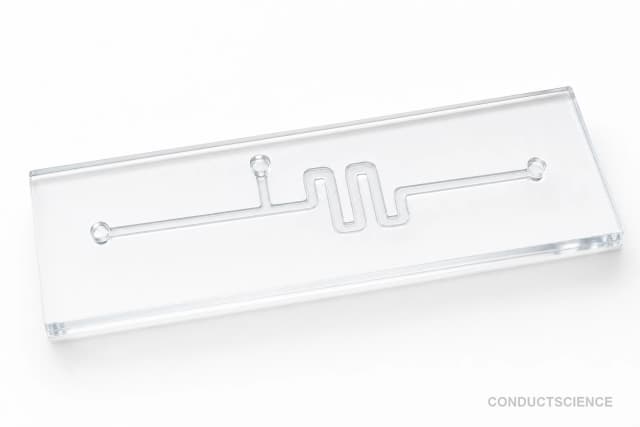
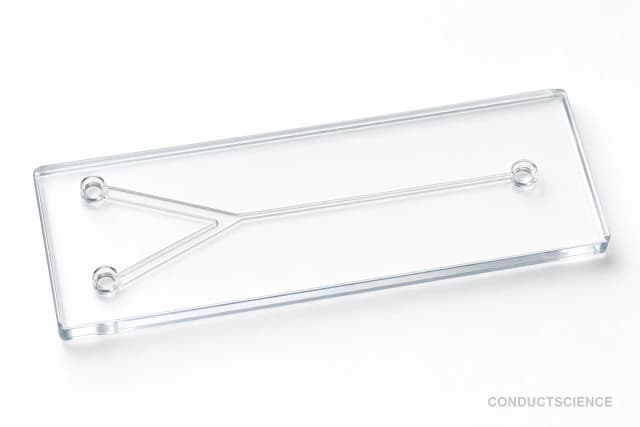
Long-Segment Cross Electrophoresis Chip
Microfluidic electrophoresis chip with extended separation segment in cross-junction design for high-resolution analytical separations and on-chip derivatization.
Reusable chip — designed for multiple experimental runs. Compatible with standard microfluidic tubing: steel pins (0.7 mm ID / 1.0 mm OD) and silicone tubing (0.8 mm ID / 1.9 mm OD). Available in bulk packs (5‑, 10‑, and 25‑unit) for lab-scale and consumable workflows.

Louise Corscadden, PhD
Director of Science · ConductScience
Ask Louise about Long-Segment Cross Electrophoresis Chip fit, setup, configuration, or quote prep.
Already working with us? Sign in to connect this with My Scientist.
Key Specifications
Full details →- Model fit
- 3 selectable configurations
- SKU family
- WHM-0109
- Shipping box
- 181.8 x 136.3 x 90.9 cm
- Ordering
- Online checkout and quote request available
- Category
- Electrophoresis Chips
- Build notes
- Confirm accessories, station layout, and support needs before purchase
The Long-Segment Cross Electrophoresis Chip (WHM-0109) is a microfluidic device designed for high-resolution electrophoretic separations in standard slide format. This chip features an extended separation segment in a cross-junction configuration, enabling enhanced resolution for complex sample analysis and on-chip derivatization workflows.
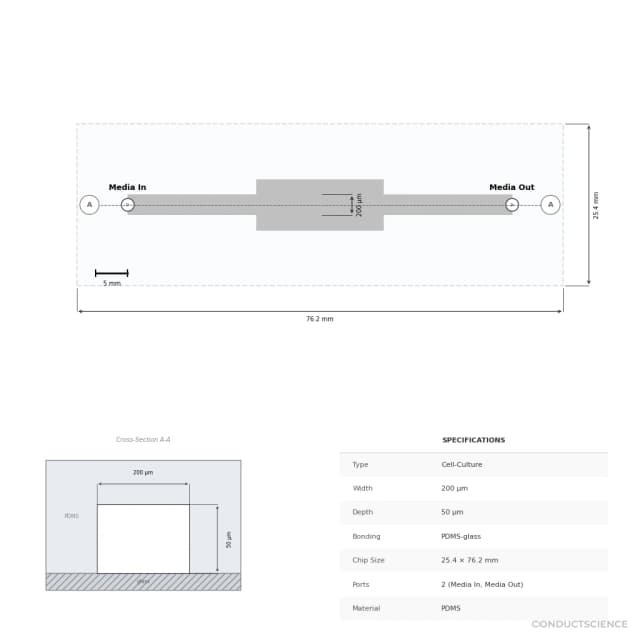
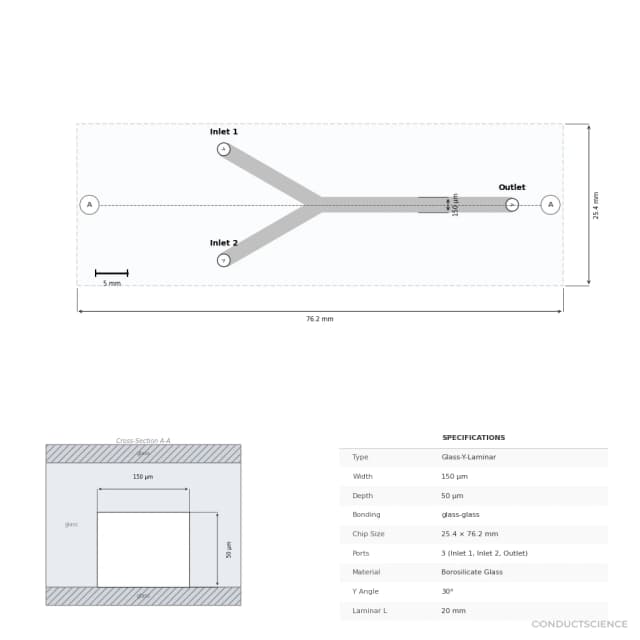
The device provides researchers with flexible channel spacing options (4.5 mm or 9 mm) to accommodate different experimental requirements and detection systems. The standard 25 x 76 mm slide format ensures compatibility with existing microscopy and detection platforms commonly used in microfluidic laboratories.
How It Works
The chip operates on the principle of electrokinetic separation, where charged analytes migrate through microfluidic channels under the influence of an applied electric field. The cross-junction design allows for precise sample injection at the intersection of perpendicular channels, while the extended separation segment provides increased residence time for enhanced resolution.
During operation, sample and buffer solutions are introduced into separate channel inlets. An electric field applied across the separation channel causes analytes to migrate at velocities dependent on their electrophoretic mobility, which is determined by their charge-to-size ratio. The long separation segment maximizes the distance available for separation, allowing closely related compounds to be resolved that might co-elute in shorter channel formats.
The chip design supports on-chip derivatization reactions, where reagents can be mixed with analytes in controlled ratios within the microfluidic environment. This capability enables real-time chemical modification of samples to enhance detection sensitivity or selectivity.
Features & Benefits
Shipping weight
- 3.3 lb
Shipping box
- L: 181.8 cm
- W: 136.3 cm
- H: 90.9 cm
| Feature | This Product | Typical Alternative | Advantage |
|---|---|---|---|
| Separation Channel Length | Extended separation segment design | Standard designs often use shorter separation paths | Longer separation distance enables resolution of closely related analytes that may co-elute in standard formats |
| Channel Spacing Options | 4.5 mm or 9 mm spacing | Many chips offer fixed spacing configurations | Flexible spacing accommodates different electrode systems and detection requirements |
| Slide Format Compatibility | Standard 25 x 76 mm slide dimensions | Custom form factors may require specialized holders | Compatible with existing microscopy stages and detection platforms without additional hardware |
| Derivatization Capability | On-chip derivatization support | Basic separation chips lack integrated reaction capability | Enables real-time sample modification to enhance detection sensitivity or selectivity |
This chip combines extended separation capability with flexible design options and standard format compatibility. The long separation segment provides enhanced resolution while maintaining the rapid analysis benefits of microfluidic electrophoresis.
| Model | SKU | Listed price | Status | Shipping box |
|---|---|---|---|---|
| 25-Pack | WHM-0109-25PK | Quote | Available | 181.8 x 136.3 x 90.9 cm |
| 10-Pack | WHM-0109-10PK | $1,490.00 | Available | 181.8 x 136.3 x 90.9 cm |
| 5-Pack | WHM-0109-5PK | Quote | Available | 181.8 x 136.3 x 90.9 cm |
Practical Tips
Allow sufficient equilibration time after buffer filling to establish stable electroosmotic flow before sample injection.
Why: Proper equilibration ensures reproducible migration times and peak shapes.
Flush channels with deionized water between different sample types to prevent cross-contamination.
Why: Thorough cleaning maintains analytical accuracy and extends chip lifespan.
Use migration time standards to verify system performance and account for day-to-day variations in electroosmotic flow.
Why: Migration time standards provide quality control markers for consistent analytical performance.
Monitor current stability during separations as fluctuations may indicate bubble formation or channel blockage.
Why: Stable current indicates proper electrical contact and unobstructed flow paths for reliable results.
If peaks broaden or resolution decreases, check for air bubbles in channels and re-condition with buffer.
Why: Air bubbles disrupt electric field uniformity and degrade separation performance.
Always disconnect high voltage before handling the chip or adjusting connections to prevent electrical hazards.
Why: Electrophoresis systems operate at dangerous voltages that can cause serious injury or equipment damage.
Setup Guide
What’s in the Box
- Long-Segment Cross Electrophoresis Chip
- User manual (typical)
- Quality certificate (typical)
Warranty
ConductScience provides a standard one-year manufacturer warranty covering defects in materials and workmanship, with technical support available for application guidance and troubleshooting.
Compliance
What buffer systems are compatible with this chip design?
The chip is compatible with standard electrophoresis buffers including phosphate, Tris, and borate systems. Buffer selection should consider pH stability and ionic strength requirements for your specific analytes.
How does the extended separation segment improve resolution compared to standard chips?
The longer separation path increases the time and distance available for analyte separation, allowing closely related compounds with similar mobilities to be resolved that would co-elute in shorter channel formats.
What detection methods can be used with this chip format?
The standard slide format supports fluorescence detection, UV-Vis absorbance, and electrochemical detection methods. The 4.5 mm or 9 mm channel spacing accommodates different optical path requirements.
Can this chip be reused for multiple analyses?
Reusability depends on the sample type and analysis conditions. The chip can typically be cleaned and reused for similar analyses, though single-use is recommended for cross-contamination sensitive applications.
What sample volume is required for analysis?
Microfluidic electrophoresis typically requires nanoliter to microliter sample volumes. Consult the product datasheet for specific volume requirements based on your detection method.
How is on-chip derivatization performed?
Derivatization reagents are introduced through separate inlets and mixed with the sample in controlled ratios within the microfluidic channels before or during the separation process.
Have a question about this product?
Have a question? Just ask.
Send it over and we'll email you a personalized answer — no call, no scheduling.
Prefer to talk it through?