Microfluidic Cell Culture Sorting Chip
Precision microfluidic chip with 200 μm channel depth for cell culture and sorting applications in a compact 25mm × 15mm format.
Reusable chip — designed for multiple experimental runs. Compatible with standard microfluidic tubing: steel pins (0.7 mm ID / 1.0 mm OD) and silicone tubing (0.8 mm ID / 1.9 mm OD). Available in bulk packs (5‑, 10‑, and 25‑unit) for lab-scale and consumable workflows.

Louise Corscadden, PhD
Director of Science · ConductScience
Ask Louise about Microfluidic Cell Culture Sorting Chip fit, setup, configuration, or quote prep.
Already working with us? Sign in to connect this with My Scientist.
Key Specifications
Full details →- Model fit
- 3 selectable configurations
- SKU family
- WHM-0015
- Shipping box
- 25.0 x 15.0 x 3.0 cm
- Ordering
- Online checkout and quote request available
- Category
- Lab Equipment
- Build notes
- Confirm accessories, station layout, and support needs before purchase
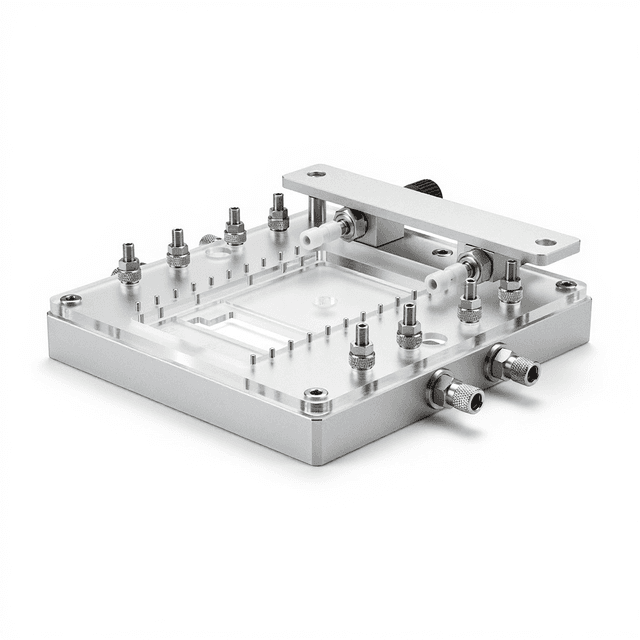
The Microfluidic Cell Culture Sorting Chip is a precision-engineered microfluidic device designed for cell culture and sorting applications. Fabricated with 200 μm channel depth, this chip provides controlled fluidic environments for cell manipulation and separation protocols.
The device measures 25mm × 15mm × 3mm, offering a compact platform for integration into microscopy systems and cell culture workflows. The defined channel architecture enables laminar flow conditions suitable for various cell sorting methodologies and culture maintenance applications.
How It Works
Microfluidic cell sorting operates on the principle of controlled fluid dynamics within precisely defined channels. The 200 μm channel depth creates specific flow conditions that enable predictable cell behavior and separation based on physical properties such as size, deformability, or density.
Laminar flow conditions within the microchannels allow for precise control of cell trajectories. Different cell types experience varying drag forces and flow patterns, enabling separation through differential migration paths. The chip architecture supports both passive sorting mechanisms based on physical properties and active sorting when integrated with external field application systems.
The compact design facilitates integration with standard microscopy platforms for real-time observation and analysis of sorting processes, enabling researchers to optimize separation parameters and validate sorting efficiency.
Features & Benefits
Shipping weight
- 0.03 lb
Shipping box
- L: 25.0 cm
- W: 15.0 cm
- H: 3.0 cm
| Feature | This Product | Typical Alternative | Advantage |
|---|---|---|---|
| Channel Depth | 200 μm depth | Many chips offer 50-150 μm depths | Accommodates a broader range of cell types including larger primary cells and small aggregates. |
| Chip Dimensions | 25mm × 15mm footprint | Larger devices often exceed standard slide dimensions | Fits standard microscopy stages and automated handling systems without modifications. |
| Thickness Profile | 3mm total thickness | Thicker devices may exceed working distances | Compatible with high numerical aperture objectives for detailed cell imaging during sorting. |
| Application Focus | Cell culture + sorting | Many devices focus on sorting only | Supports extended culture protocols in addition to separation functions. |
This chip provides versatile cell handling capabilities with its 200 μm channel depth and compact design. The dimensions support integration with standard laboratory equipment while accommodating diverse cell types.
| Model | SKU | Listed price | Status | Shipping box |
|---|---|---|---|---|
| 25-Pack | WHM-0015-25PK | Quote | Available | 25.0 x 15.0 x 3.0 cm |
| 10-Pack | WHM-0015-10PK | $1,490.00 | Available | 25.0 x 15.0 x 3.0 cm |
| 5-Pack | WHM-0015-5PK | Quote | Available | 25.0 x 15.0 x 3.0 cm |
Practical Tips
Pre-wet channels with culture medium before cell introduction to minimize cell adhesion to channel walls.
Why: Reduces non-specific cell binding that can affect sorting efficiency and cell viability.
Flush channels immediately after use with appropriate cleaning solutions to prevent protein buildup.
Why: Maintains channel geometry and surface properties for consistent performance across experiments.
Use standardized microspheres of known size to verify flow patterns before processing valuable samples.
Why: Ensures proper device function and establishes baseline performance for comparison.
Monitor and record flow conditions during sorting to enable protocol optimization and reproducibility.
Why: Flow parameters directly affect separation efficiency and cell recovery rates.
Use appropriate biosafety containment when processing potentially hazardous cell lines or patient samples.
Why: Microfluidic devices can generate aerosols during operation that require proper containment.
Check for air bubbles in channels if flow patterns appear irregular or cell trajectories are inconsistent.
Why: Trapped air disrupts laminar flow conditions essential for predictable cell sorting behavior.
Setup Guide
What’s in the Box
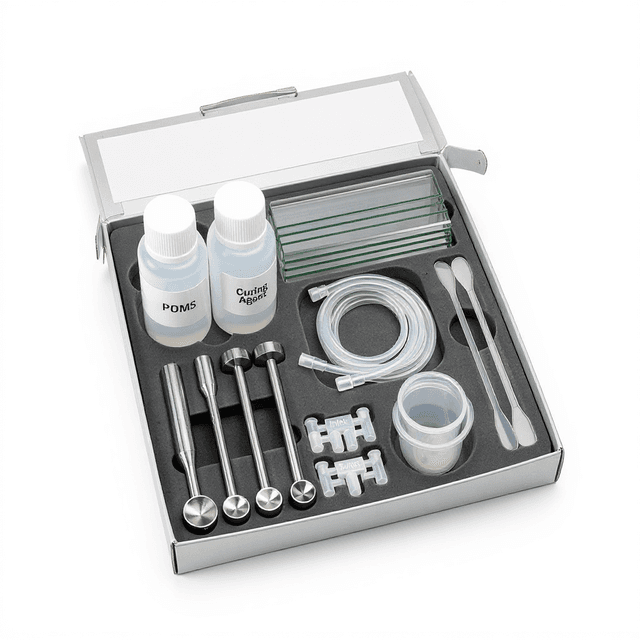
- Microfluidic Cell Culture Sorting Chip
- Protective storage case (typical)
- User guide with protocol recommendations (typical)
- Quality certificate (typical)
Warranty
ConductScience provides a standard one-year manufacturer warranty covering material defects and fabrication quality, with technical support for application guidance.
Compliance
What cell types are compatible with the 200 μm channel depth?
The 200 μm depth accommodates most mammalian cell lines, primary cells, and bacterial cultures. Consult product datasheet for specific compatibility with larger cell types or aggregates.
How do I prevent channel clogging during operation?
Filter samples to remove debris larger than 50 μm, maintain appropriate cell concentrations, and use consistent flow rates to prevent cell accumulation at channel constrictions.
What microscopy systems are compatible?
The 3mm thickness is compatible with most inverted microscopes using 10x-40x objectives. Verify working distance compatibility with your specific microscopy setup.
How many uses can I expect from a single chip?
Usage lifetime depends on application and cleaning protocols. Consult manufacturer guidelines for recommended cleaning procedures and replacement indicators.
What tubing connections are recommended?
Standard microfluidic fittings are typically required. Consult product datasheet for specific port dimensions and recommended tubing materials.
Can the chip be sterilized for sterile cell culture work?
Sterilization compatibility depends on chip material. Consult product specifications for recommended sterilization methods and temperature limits.
Have a question about this product?
Have a question? Just ask.
Send it over and we'll email you a personalized answer — no call, no scheduling.
Prefer to talk it through?