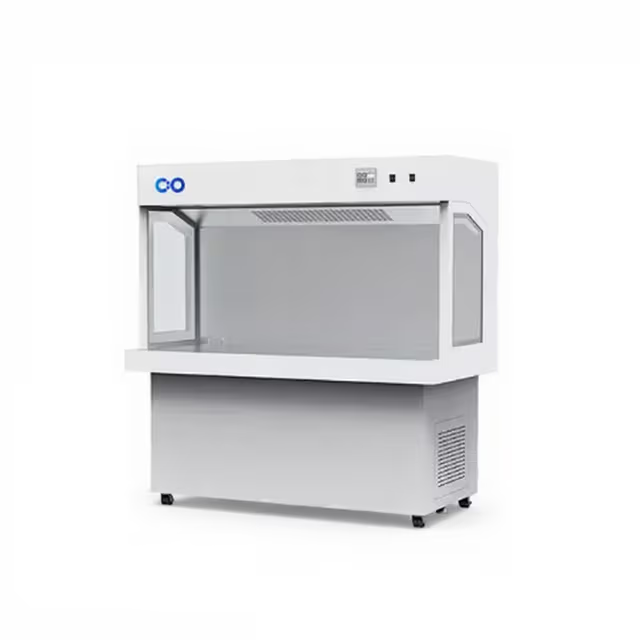
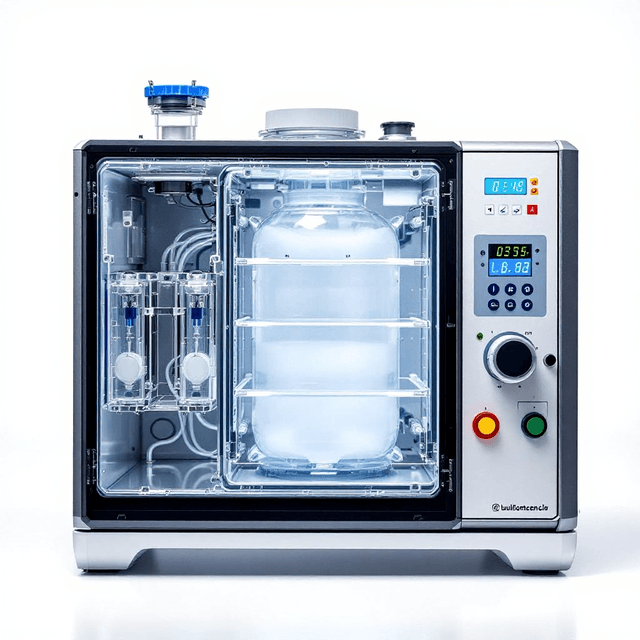
Microfluidic Droplet Generation Platform
A glass-chip droplet-generation bench for producing monodisperse droplets and emulsions — including PLGA microparticles, single-cell encapsulations, and microreaction droplets.
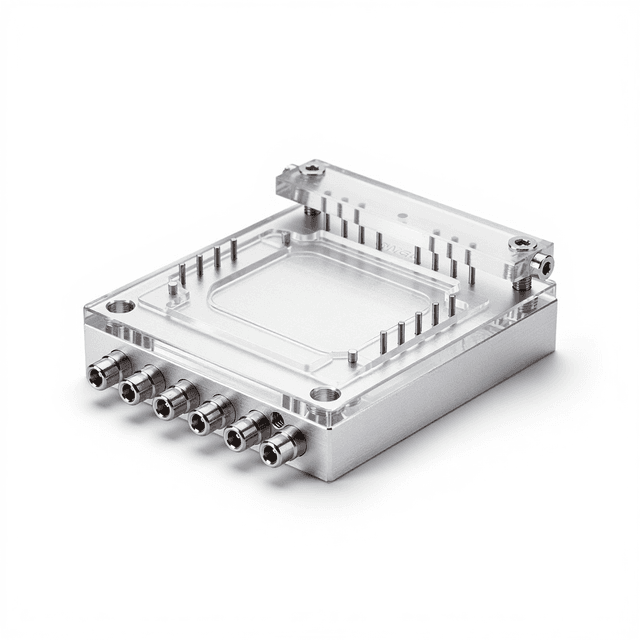
Includes the chip holder, horizontal fixture, two glass chips, and tubing. The all-glass wetted path is stable in the organic solvents (DCM, ethyl acetate, chloroform) that swell PDMS, so droplet size holds steady across a run. Pairs with a syringe or infusion pump (sold separately, or as the Microfluidic Droplet Generation System) and an inverted microscope.

Louise Corscadden, PhD
Director of Science · ConductScience
Ask Louise about Microfluidic Droplet Generation Platform fit, setup, configuration, or quote prep.
Already working with us? Sign in to connect this with My Scientist.
Key Specifications
Full details →- Model fit
- Configured during quote
- SKU family
- WHM-0069
- Shipping box
- 400.0 x 300.0 x 250.0 cm
- Ordering
- Online checkout and quote request available
- Category
- Lab Equipment
- Build notes
- Confirm accessories, station layout, and support needs before purchase
Monodisperse droplets, on a solvent-stable glass platform
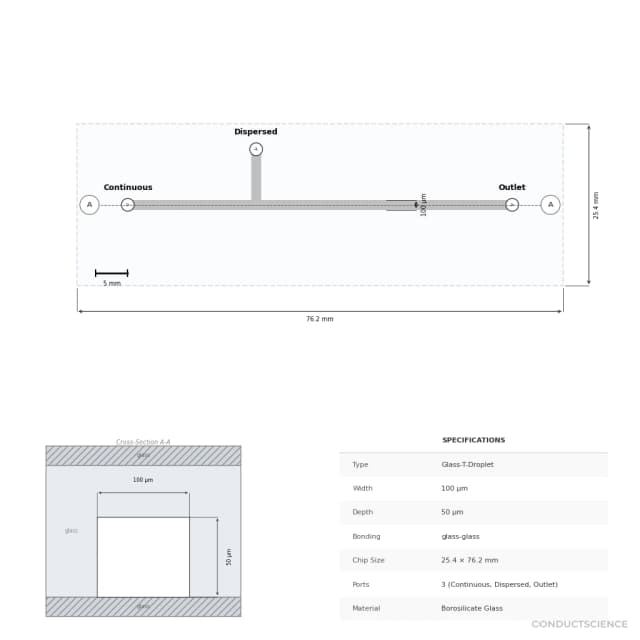
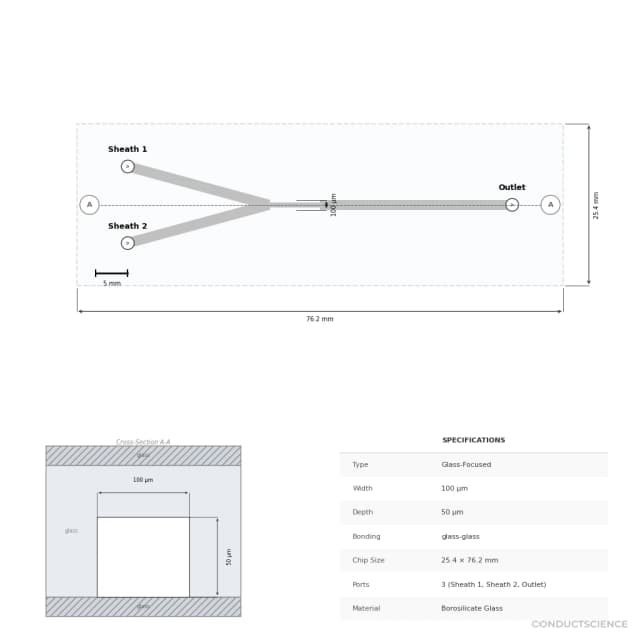
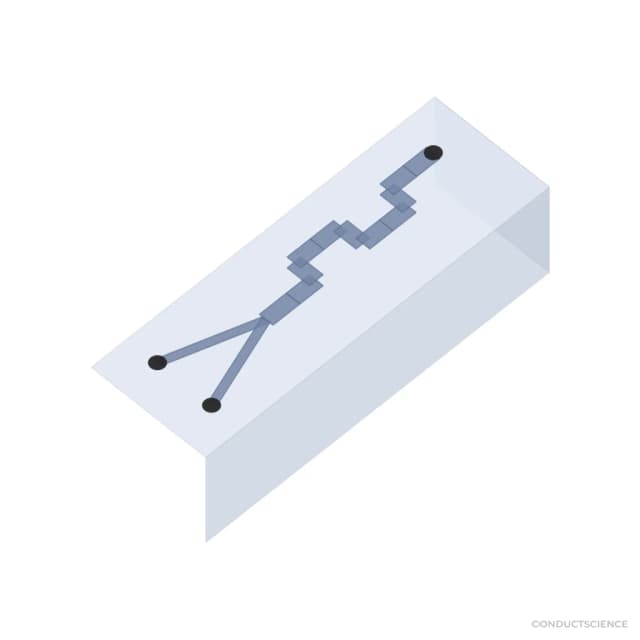
The Microfluidic Droplet Generation Platform produces uniform droplets and emulsions at a flow-focusing or T-junction on a glass chip. Droplet size is set by the flow-rate ratio of the two phases and the chip geometry, giving tight control over size and composition for droplet-based microreactions, emulsion work, and single-cell or particle encapsulation.
Why glass
PLGA and many other formulations require organic solvents — DCM, ethyl acetate, chloroform — that swell and distort PDMS channels, causing droplet drift and clogging. This platform uses an all-glass wetted path (borosilicate chip, PTFE tubing, PEEK/ferrule connections) that is dimensionally stable in those solvents, so a run holds a tight coefficient of variation from the first droplet to the last.
What's included
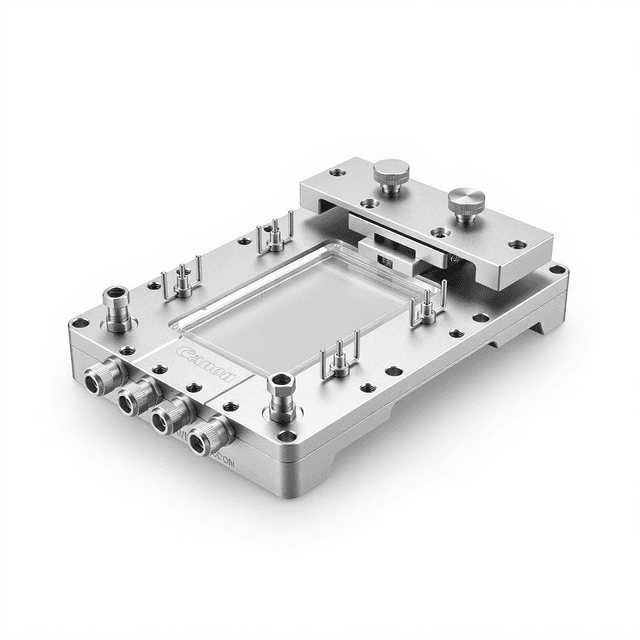
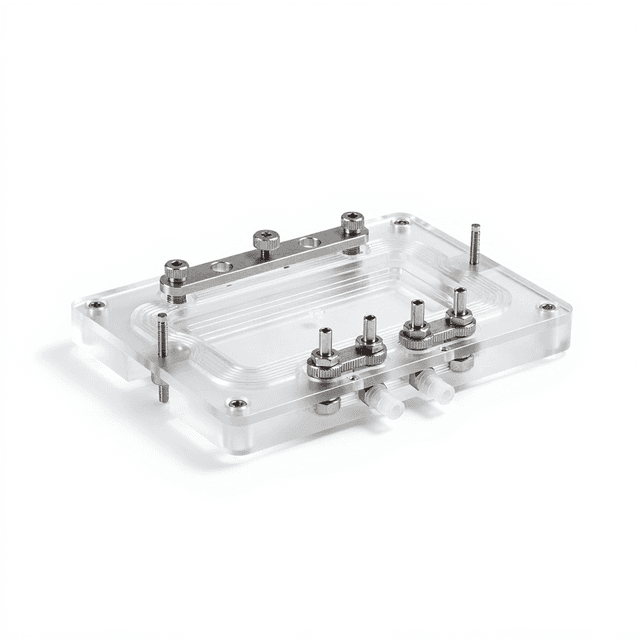
- Microfluidic chip holder / connect interface
- Horizontal standard fixture (cross-section, washer-sealed)
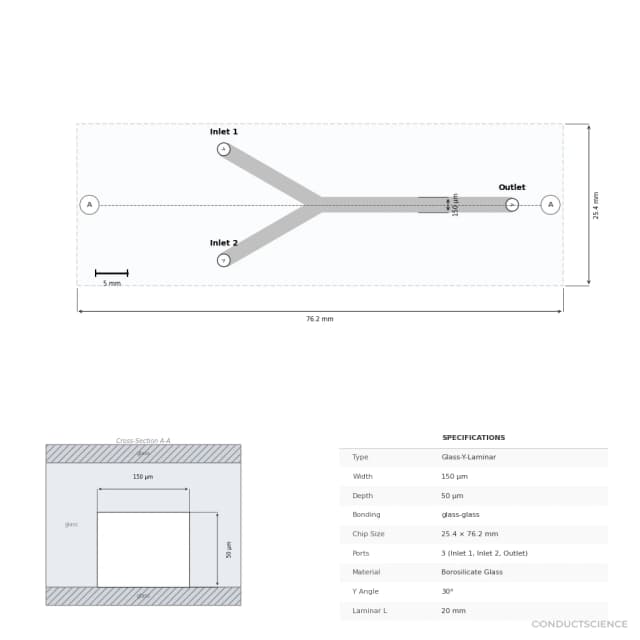
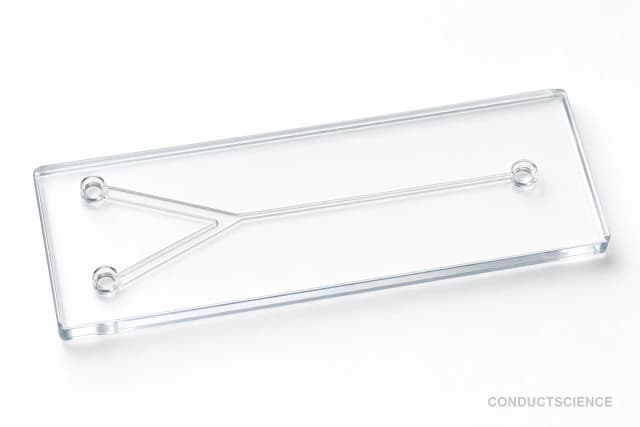
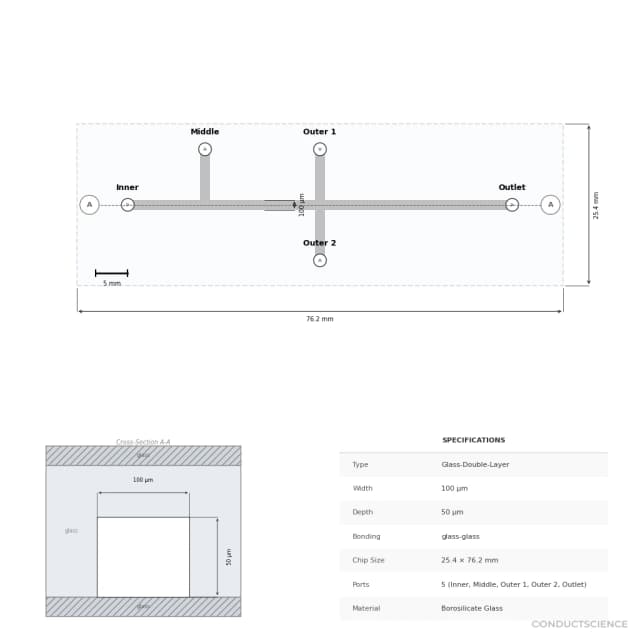
- Two glass microfluidic chips (single-emulsion standard)
- PTFE tubing, ferrules, and inline filters
A syringe or infusion pump is required and is sold separately — or buy the complete Microfluidic Droplet Generation System, which pairs this platform with a matched pump. An inverted microscope (most labs already have one) lets you watch droplet formation.
Specifications
- Chip length: 22.5–120.0 mm
- Pressure rating: > 30 bar
- Droplet size: 10–250 µm (pump- and chip-dependent)
- Up to 8 configurable solution channels
- Low dead volume
- Emulsion modes: oil-in-water, water-in-oil, and double emulsion (with the matching chip)
How It Works
The platform utilizes flow-focusing or T-junction microfluidic geometries to generate droplets through controlled shear forces at liquid-liquid interfaces. Immiscible phases (typically aqueous and oil phases) are introduced through separate channels and converge at a junction where droplet breakup occurs. The balance between viscous forces, surface tension, and flow rates determines droplet size and generation frequency.
Real-time detection is achieved through optical monitoring of the droplet formation region, typically using high-speed imaging or laser-based detection methods. Flow control systems maintain precise flow rate ratios between continuous and dispersed phases, enabling reproducible droplet characteristics. The integrated software analyzes droplet size distributions, counts generation frequencies, and monitors formation stability over time.
Droplet size can be controlled by adjusting flow rate ratios, channel geometries, and fluid properties including viscosity and surface tension. The system accommodates various surfactants and stabilizing agents to prevent droplet coalescence and maintain monodispersity during collection and storage.
Features & Benefits
Components
- Chip holder, flow control, detection, software
Automation Level
- semi-automated
Brand
- ConductScience
Research Domain
- Analytical Chemistry
- Cell Biology
- Food Science
- Materials Science
- Microbiology
- Pharmaceutical QC
Shipping weight
- 15.0 lb
Shipping box
- L: 400.0 cm
- W: 300.0 cm
- H: 250.0 cm
| Feature | This Product | Typical Alternative | Advantage |
|---|---|---|---|
| System Integration | Fully integrated platform with chip holder, flow control, detection, and software | Separate components requiring individual setup and coordination | Reduces setup complexity and improves measurement consistency through coordinated operation. |
| Real-time Detection | Integrated detection system with live monitoring capabilities | External imaging systems requiring separate configuration | Enables immediate feedback and process optimization during droplet generation. |
| Software Integration | Dedicated analysis software with automated droplet characterization | Generic image analysis tools requiring custom configuration | Streamlines data analysis workflow with droplet-specific measurement algorithms. |
| Footprint Efficiency | Compact 400 × 300 × 250 mm benchtop design | Distributed components requiring larger bench space | Maximizes laboratory space utilization while maintaining full functionality. |
The platform provides integrated droplet generation capabilities with coordinated flow control, real-time detection, and dedicated analysis software in a compact benchtop format. This design offers operational consistency and simplified workflow compared to component-based systems while maintaining experimental flexibility through modular architecture.
Practical Tips
Calibrate droplet sizing using monodisperse microsphere standards before each experimental series.
Why: Ensures measurement accuracy and compensates for optical system variations.
Clean microfluidic channels with appropriate solvents immediately after each use to prevent protein or polymer buildup.
Why: Maintains channel surface properties critical for consistent droplet formation.
Allow flow systems to stabilize for 5-10 minutes before collecting droplets for analysis.
Why: Eliminates transient flow effects that can affect droplet size uniformity.
If droplet formation becomes irregular, check for air bubbles in flow lines and re-prime channels as needed.
Why: Air bubbles cause flow instabilities that disrupt consistent droplet breakup.
Collect droplet size data from multiple formation cycles to establish statistical confidence in measurements.
Why: Accounts for inherent variability in microfluidic droplet formation processes.
Use appropriate chemical compatibility guidelines when selecting tubing and sealing materials for organic solvents.
Why: Prevents chemical degradation of system components and maintains measurement integrity.
Pre-warm temperature-sensitive fluids to operating temperature before introducing to the chip.
Why: Prevents thermal shock effects that can alter fluid properties and droplet formation.
Setup Guide
What’s in the Box
- Main platform unit with integrated detection system
- Chip holder assembly with mounting hardware
- Flow control modules and tubing connections
- Analysis software with installation media
- USB communication cables
- User manual and setup guide
- Calibration standards and reference materials (typical)
- Spare tubing and fittings kit (typical)
Warranty
ConductScience provides a standard one-year manufacturer warranty covering defects in materials and workmanship, with technical support for setup and operational guidance.
Compliance
References
Background reading relevant to this product:
What microfluidic chip formats are compatible with the chip holder system?
The platform accommodates standard microscope slide format chips and custom geometries. Consult product datasheet for specific dimensional tolerances and connection specifications for your chip design.
What flow rate ranges can the system control for droplet generation?
Flow control capabilities vary based on the specific pump modules included. Typical ranges span microliters per hour to milliliters per minute. Consult product specifications for precise flow rate ranges and resolution.
How does the detection system measure droplet sizes and what is the sizing accuracy?
Detection typically uses optical imaging with automated image analysis algorithms. Sizing accuracy depends on optical resolution and calibration. Consult product datasheet for specific sizing ranges and measurement uncertainty.
What file formats does the analysis software export for downstream data processing?
Software typically exports common formats including CSV for statistical data and standard image formats for raw detection data. Consult software documentation for complete format compatibility.
Can the platform generate droplets with multiple encapsulated components simultaneously?
Multi-component droplets are possible with appropriate chip designs and flow control configurations. The number of input channels determines the complexity of achievable droplet compositions.
What maintenance procedures are required to maintain droplet generation consistency?
Regular cleaning of microfluidic channels, calibration of flow control systems, and replacement of tubing connections as needed. Specific maintenance schedules depend on usage frequency and fluid compatibility.
How does this platform compare to manual syringe-pump based droplet generation setups?
Integrated design provides more consistent flow control and real-time feedback compared to separate component setups. Software automation reduces manual intervention requirements during extended generation runs.
Have a question about this product?
Have a question? Just ask.
Send it over and we'll email you a personalized answer — no call, no scheduling.
Prefer to talk it through?
Replacement Parts & Consumables
Upgrade Options