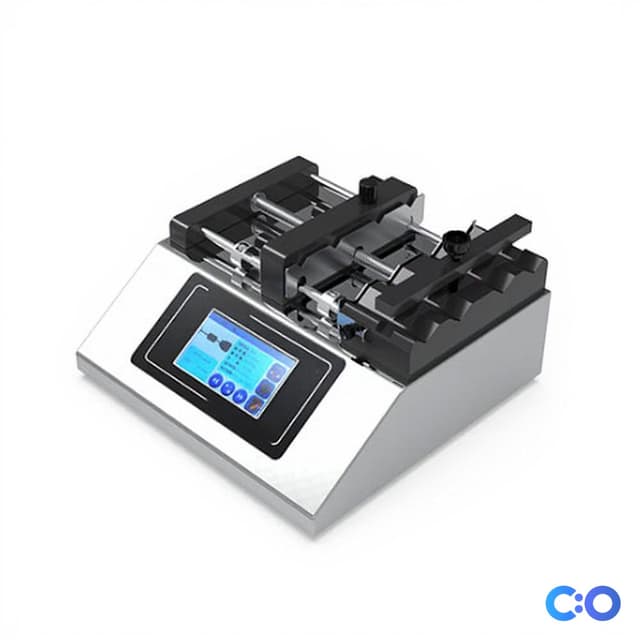
Chip-Diaphragm-Chip Sandwich Holder
Precision mounting platform for chip-diaphragm-chip microfluidic assemblies, enabling secure alignment and integration with valve-based flow control systems.

Louise Corscadden, PhD
Director of Science · ConductScience
Ask Louise about Chip-Diaphragm-Chip Sandwich Holder fit, setup, configuration, or quote prep.
Already working with us? Sign in to connect this with My Scientist.
Key Specifications
Full details →- Model fit
- Configured during quote
- SKU family
- WHM-0051
- Shipping box
- 80.0 x 50.0 x 30.0 cm
- Ordering
- Online checkout and quote request available
- Category
- Lab Equipment
- Build notes
- Confirm accessories, station layout, and support needs before purchase
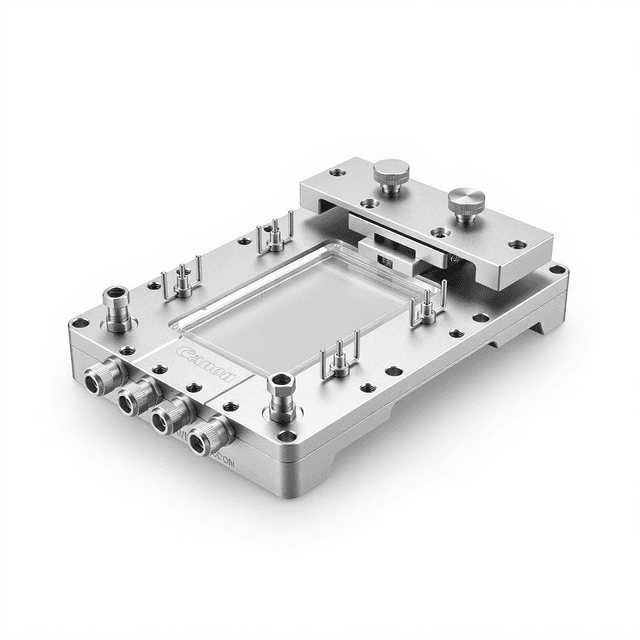
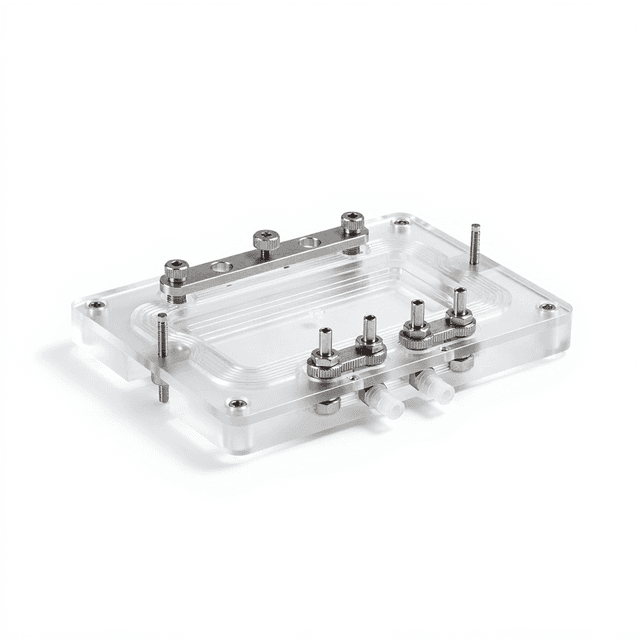
The Chip-Diaphragm-Chip Sandwich Holder provides a precision mounting platform for microfluidic assemblies incorporating flexible membrane components. This holder secures chip-diaphragm-chip configurations in proper alignment while maintaining access to fluidic connections and enabling integration with valve-based control systems.
The 80 x 50 x 30 mm aluminum framework accommodates standard microfluidic chip dimensions while providing consistent clamping pressure across the membrane interface. The holder's design facilitates membrane-based flow control applications and supports research requiring precise fluid manipulation at the microscale level.
How It Works
The holder operates through mechanical compression to maintain consistent contact between the chip layers and central diaphragm membrane. The sandwich assembly relies on precise alignment of fluidic channels across the three-layer stack, with the flexible membrane serving as both a sealing interface and active flow control element when connected to pneumatic or hydraulic actuation systems.
Clamping pressure distributed through the holder frame ensures uniform contact across the membrane surface while preventing channel deformation. The holder's geometry accommodates standard microfluidic interconnect systems, allowing researchers to integrate the mounted assembly with external pumps, controllers, and monitoring equipment for complex fluid handling protocols.
Features & Benefits
Configuration
- Chip-Diaphragm-Chip sandwich
Brand
- ConductScience
Research Domain
- Analytical Chemistry
- Cell Biology
- Environmental Monitoring
- Materials Science
- Microbiology
- Pharmaceutical QC
Shipping weight
- 0.3 lb
Shipping box
- L: 80.0 cm
- W: 50.0 cm
- H: 30.0 cm
| Feature | This Product | Typical Alternative | Advantage |
|---|---|---|---|
| Layer Configuration | Chip-diaphragm-chip sandwich design | Most holders accommodate two-layer assemblies without membrane integration | Enables membrane-based valve functionality within the microfluidic assembly for advanced flow control |
| Membrane Integration | Designed for membrane integration applications | Standard holders lack provisions for membrane incorporation | Supports pneumatically actuated valve systems for dynamic flow manipulation experiments |
| Form Factor | 80 x 50 x 30 mm compact dimensions | Larger holders may accommodate bigger chips but with increased footprint | Maintains small profile for microscopy integration while supporting standard chip sizes |
| Weight | 0.3 kg lightweight construction | Heavier holders can interfere with sensitive instrumentation | Provides stability without mass that could affect microscopy or measurement precision |
This holder specifically addresses the requirements of three-layer microfluidic assemblies with integrated membrane functionality. The compact form factor and dedicated membrane support features distinguish it from standard two-layer mounting solutions.
Practical Tips
Verify chip and membrane alignment under magnification before applying full clamping pressure to prevent misregistration.
Why: Proper alignment is critical for reliable fluidic performance and prevents channel blockage or leakage.
Inspect clamping surfaces regularly for wear or damage that could affect sealing uniformity.
Why: Damaged surfaces can create pressure hot spots that may damage delicate microfluidic features.
Establish consistent clamping pressure protocols using torque specifications or force measurements for reproducible assembly.
Why: Standardized pressure ensures consistent sealing and membrane performance across multiple experiments.
If membrane valves exhibit poor closure, check for particulates between chip layers or insufficient clamping pressure.
Why: Contamination or inadequate contact prevents proper membrane deformation required for valve operation.
Use appropriate solvents for cleaning based on membrane material compatibility to avoid membrane degradation.
Why: Incompatible solvents can cause membrane swelling or dissolution, compromising device integrity.
Test membrane valve operation with simple pressure pulses before complex experiments to verify proper function.
Why: Early detection of assembly issues prevents data loss during lengthy experimental protocols.
Setup Guide
What’s in the Box
- Chip-Diaphragm-Chip Sandwich Holder
- Mounting hardware (typical)
- User manual (typical)
Warranty
ConductScience provides a 1-year manufacturer warranty covering defects in materials and workmanship, with technical support available for setup and operational questions.
Compliance
What chip thicknesses are compatible with this holder?
Consult product datasheet for specific thickness tolerances. The 30 mm height provides accommodation for various chip and membrane combinations.
How do I ensure proper membrane alignment during assembly?
Use visual alignment features on the chips and membrane, if present. Test flow can verify proper registration before full assembly.
What membrane materials are supported?
The holder accommodates various flexible membrane materials. Compatibility depends on membrane thickness and flexibility requirements for your specific application.
Can this holder integrate with automated fluid handling systems?
Yes, the design maintains access to fluidic connections for integration with pumps, valves, and automated liquid handling platforms.
What cleaning protocols are recommended between experiments?
Clean holder surfaces with appropriate solvents based on previous sample chemistry. Avoid aggressive solvents that could affect holder materials.
How do I prevent over-compression of delicate membrane features?
Apply clamping pressure gradually while monitoring for proper sealing. Excessive force can damage membrane structures or affect valve performance.
Is the holder compatible with microscopy systems?
The compact form factor and low profile design facilitate integration with inverted microscopy setups commonly used in microfluidics research.
Have a question about this product?
Have a question? Just ask.
Send it over and we'll email you a personalized answer — no call, no scheduling.
Prefer to talk it through?
Accessories
Enhance your setup with compatible accessories