Cross-Section Microfluidic Chip Holder
Laboratory fixture for secure mounting and cross-sectional positioning of microfluidic chips during analysis and observation.

Louise Corscadden, PhD
Director of Science · ConductScience
Ask Louise about Cross-Section Microfluidic Chip Holder fit, setup, configuration, or quote prep.
Already working with us? Sign in to connect this with My Scientist.
Key Specifications
Full details →- Model fit
- Configured during quote
- SKU family
- WHM-0050
- Shipping box
- 50.0 x 30.0 x 20.0 cm
- Ordering
- Online checkout and quote request available
- Category
- Lab Equipment
- Build notes
- Confirm accessories, station layout, and support needs before purchase
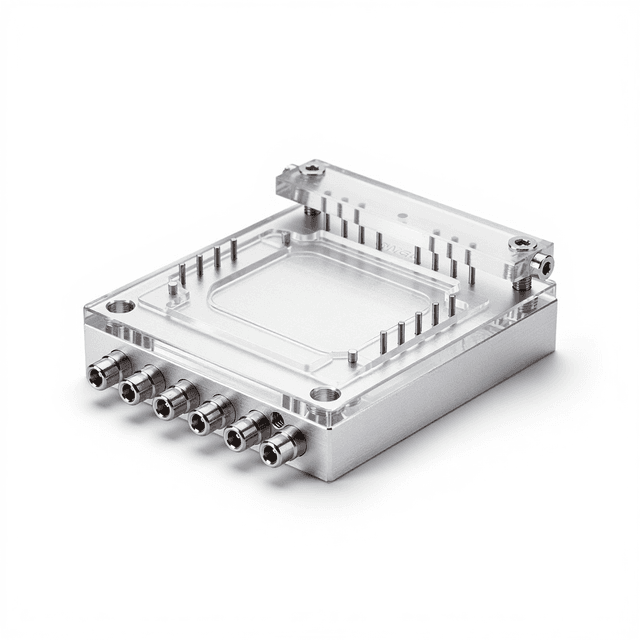
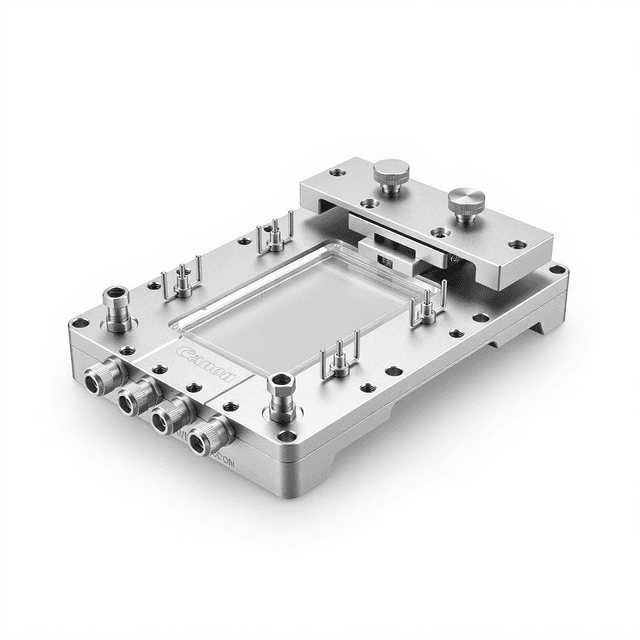
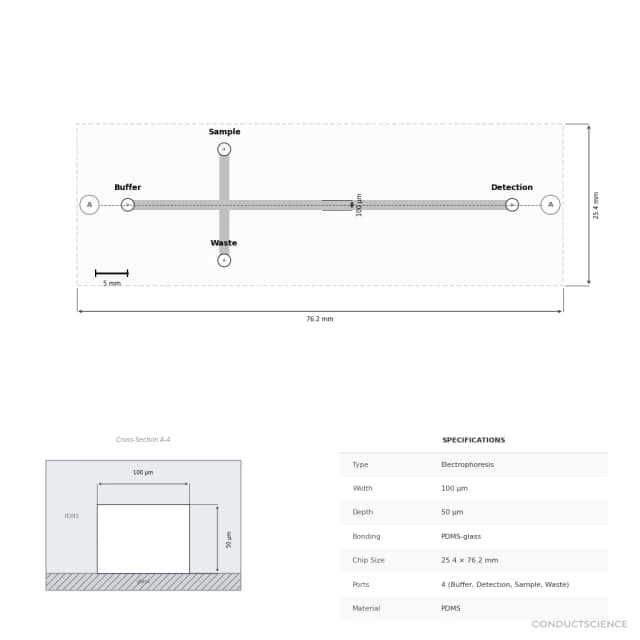
The Cross-Section Microfluidic Chip Holder provides secure mounting and precise positioning for microfluidic devices during cross-sectional analysis and observation. This laboratory fixture enables researchers to achieve stable sample positioning while maintaining optical access for microscopy, imaging, and analytical measurements across the chip's cross-sectional plane.
Designed for compatibility with standard microfluidic chip formats, the holder facilitates consistent sample alignment and reduces mechanical drift during extended observation periods. The compact form factor integrates with existing laboratory setups while providing the stability required for quantitative measurements and high-resolution imaging applications.
How It Works
The holder utilizes mechanical clamping to secure microfluidic chips in a fixed orientation that exposes the cross-sectional plane for observation. The mounting mechanism applies uniform pressure distribution to prevent chip deformation while maintaining optical clarity through the analysis window.
Cross-sectional positioning is achieved through precise mechanical alignment that orients the chip perpendicular to the optical axis. This configuration enables imaging systems to capture data across the full depth of microfluidic channels, providing three-dimensional information about sample distribution, flow patterns, and structural features within the device.
Features & Benefits
Orientation
- Cross-section
Automation Level
- manual
Brand
- ConductScience
Research Domain
- Analytical Chemistry
- Cell Biology
- Materials Science
- Microbiology
- Pharmaceutical QC
Shipping weight
- 0.2 lb
Shipping box
- L: 50.0 cm
- W: 30.0 cm
- H: 20.0 cm
| Feature | This Product | Typical Alternative | Advantage |
|---|---|---|---|
| Orientation Capability | Cross-sectional positioning for profile analysis | Standard holders often provide only top-view access | Enables three-dimensional analysis of microfluidic channel contents and structure |
| Mounting Method | Mechanical clamping system | Vacuum-based or adhesive mounting systems | Eliminates need for additional vacuum equipment or consumable adhesives |
| Size and Portability | Compact 50x30x20mm, 0.2kg design | Larger mounting systems with multiple components | Fits within standard microscope stage areas without extensive setup modifications |
| Chip Compatibility | Universal format compatibility | Device-specific holders for particular chip designs | Accommodates various microfluidic devices without requiring multiple specialized holders |
This holder offers specialized cross-sectional positioning capabilities in a compact, mechanically-stable package. The universal compatibility and straightforward mounting approach provide practical advantages for laboratories working with diverse microfluidic platforms.
Practical Tips
Clean all mounting surfaces with isopropanol before each use to ensure optimal optical clarity and prevent contamination transfer between chips.
Why: Residual contaminants can interfere with imaging quality and potentially affect experimental results.
Periodically inspect the clamping mechanism for wear or misalignment that could affect chip positioning consistency.
Why: Mechanical components can develop play over time, leading to reduced positioning accuracy.
Establish reference positioning using a test chip with known dimensions to verify cross-sectional alignment accuracy.
Why: Consistent reference positioning ensures reproducible measurements across experimental sessions.
Handle microfluidic chips carefully during mounting to avoid sharp edges that could cause injury or chip damage.
Why: Glass or silicon chips can have sharp edges that pose handling risks and are susceptible to cracking.
Allow the system to stabilize for several minutes after mounting before beginning critical measurements or imaging.
Why: Mechanical settling and thermal equilibration improve measurement stability and reduce drift artifacts.
If chips appear to shift during observation, verify that the clamping pressure is sufficient without over-tightening.
Why: Insufficient clamping allows movement while excessive pressure can crack delicate microfluidic devices.
Setup Guide
What’s in the Box
- Cross-Section Microfluidic Chip Holder unit
- User manual (typical)
- Mounting hardware (typical)
Warranty
ConductScience provides a standard one-year manufacturer warranty covering defects in materials and workmanship, with technical support available for setup and operational guidance.
Compliance
What microfluidic chip formats are compatible with this holder?
The holder is designed for universal compatibility with standard microfluidic chip formats commonly used in research. Consult product datasheet for specific dimensional tolerances and supported chip thicknesses.
How does the clamping mechanism prevent chip damage?
The mechanical clamping system applies uniform pressure distribution across the chip surface, avoiding point loads that could cause cracking or deformation of delicate microfluidic devices.
Can this holder be used with inverted microscope systems?
The cross-sectional orientation design maintains optical access from multiple angles, making it suitable for various microscopy configurations including inverted systems with proper positioning.
What maintenance is required for optimal performance?
Regular cleaning of mounting surfaces and periodic verification of clamping mechanism alignment ensure consistent chip positioning and prevent contamination between uses.
How stable is the mounting during extended observation periods?
The 0.2 kg construction and mechanical clamping provide sufficient stability for extended microscopy sessions, minimizing drift artifacts during time-lapse imaging.
Is the holder compatible with temperature-controlled stages?
The compact dimensions and material construction typically allow integration with heated or cooled microscope stages, though thermal expansion effects should be considered.
Have a question about this product?
Have a question? Just ask.
Send it over and we'll email you a personalized answer — no call, no scheduling.
Prefer to talk it through?
Accessories
Enhance your setup with compatible accessories