Oil-in-Water Microdroplet Glass Chip
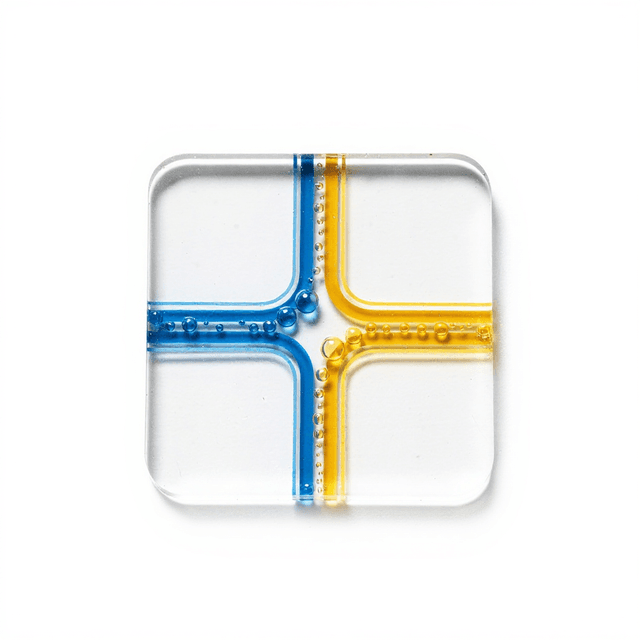
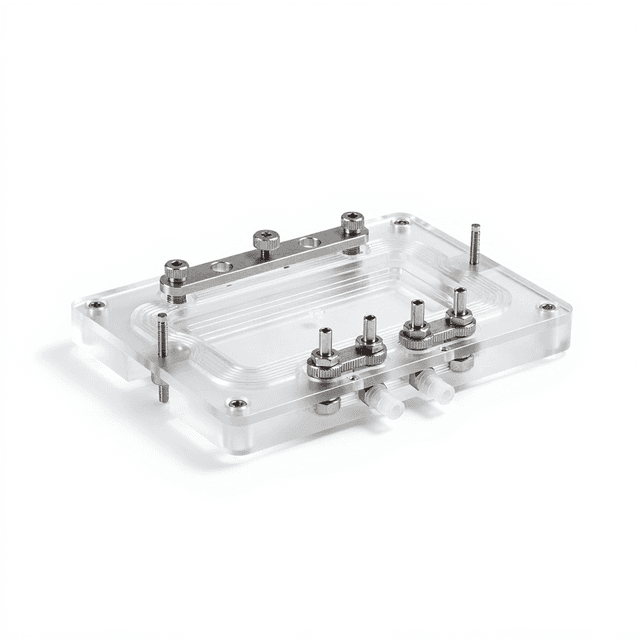
Glass microfluidic chip with hydrophilic surface treatment for generating controlled oil-in-water microdroplets in research applications.
Reusable chip — designed for multiple experimental runs. Compatible with standard microfluidic tubing: steel pins (0.7 mm ID / 1.0 mm OD) and silicone tubing (0.8 mm ID / 1.9 mm OD). Available in bulk packs (5‑, 10‑, and 25‑unit) for lab-scale and consumable workflows.

Louise Corscadden, PhD
Director of Science · ConductScience
Ask Louise about Oil-in-Water Microdroplet Glass Chip fit, setup, configuration, or quote prep.
Already working with us? Sign in to connect this with My Scientist.
Key Specifications
Full details →- Model fit
- Configured during quote
- SKU family
- WHM-0066
- Shipping box
- 22.5 x 15.0 x 4.0 cm
- Ordering
- Online checkout and quote request available
- Category
- Lab Equipment
- Build notes
- glass
The Oil-in-Water Microdroplet Glass Chip is a microfluidic device designed for the controlled generation and manipulation of oil-in-water emulsions at the microscale. Fabricated from glass with hydrophilic surface treatment, this chip enables precise formation of monodisperse droplets for applications requiring stable emulsion systems. The hydrophilic surface treatment promotes aqueous phase wetting and supports consistent droplet formation dynamics.
The chip's glass construction provides optical transparency for real-time microscopic observation of droplet formation processes and downstream analysis. The 22.5 x 15 x 4 mm form factor accommodates standard microfluidic setups while maintaining compatibility with inverted microscopy platforms commonly used in droplet microfluidics research.
How It Works
The chip operates on flow-focusing principles where immiscible oil and water phases converge at a junction geometry to generate discrete droplets. The hydrophilic glass surface preferentially wets the aqueous phase, while the continuous oil phase shears the aqueous stream to form spherical droplets. Droplet size is controlled by adjusting the flow rate ratio between phases and the viscosity properties of the fluids.
The glass substrate provides chemical inertness and optical clarity for real-time monitoring of droplet formation. Surface energy differences between the hydrophilic glass and the oil phase drive predictable wetting behavior that enables stable droplet generation. The 4 mm thickness provides structural rigidity while maintaining compatibility with standard microscope objective working distances.
Features & Benefits
Emulsion Type
- Oil-in-Water (O/W)
Surface Treatment
- Hydrophilic
Automation Level
- manual
Brand
- ConductScience
Material
- glass
Research Domain
- Analytical Chemistry
- Cell Biology
- Food Science
- Materials Science
- Microbiology
- Pharmaceutical QC
Shipping weight
- 0.05 lb
Shipping box
- L: 22.5 cm
- W: 15.0 cm
- H: 4.0 cm
| Feature | This Product | Typical Alternative | Advantage |
|---|---|---|---|
| Material Construction | Glass with hydrophilic surface treatment | PDMS elastomer materials are common in disposable microfluidics | Provides superior chemical resistance and optical clarity for imaging applications |
| Surface Treatment | Pre-applied hydrophilic treatment | Many devices require user-applied surface modifications | Eliminates preparation time and ensures consistent wetting behavior across batches |
| Emulsion Configuration | Oil-in-water droplet formation | Some devices focus on water-in-oil configurations | Enables aqueous droplet encapsulation ideal for biological applications |
| Form Factor | 22.5 x 15 x 4 mm dimensions | Standard microscope slide dimensions vary | Compact size fits standard microscope stages while providing adequate channel development |
This glass microfluidic device combines chemical resistance, optical clarity, and ready-to-use hydrophilic surface treatment for reliable oil-in-water droplet generation. The compact form factor accommodates standard microscopy setups while the pre-treated surface eliminates preparation steps.
Practical Tips
Prime oil channels first before introducing aqueous phase to prevent air bubble entrapment in junction regions.
Why: Air bubbles disrupt droplet formation and require complete system purging to remove.
Clean channels immediately after use with appropriate solvents to prevent protein or polymer adhesion to glass surfaces.
Why: Dried biological samples or polymers can permanently block microchannels and reduce device lifespan.
Verify droplet size measurements using stage micrometer under identical imaging conditions for each experimental session.
Why: Microscope focus and magnification settings directly affect droplet size measurements and must be standardized.
If droplet formation becomes irregular, check for pressure fluctuations in feed lines and verify oil-water flow rate ratio.
Why: Unstable flow conditions produce polydisperse droplets that compromise experimental reproducibility.
Allow 2-3 minutes for flow stabilization after adjusting flow rates before collecting droplet size data.
Why: Flow transients affect droplet formation dynamics and can introduce measurement artifacts.
Handle glass chips carefully during mounting to avoid creating sharp edges that could cause injury or microscope damage.
Why: Glass fragments can damage microscope objectives and create safety hazards in laboratory environments.
Setup Guide
What’s in the Box
- Oil-in-Water Microdroplet Glass Chip
- User documentation (typical)
- Protective storage case (typical)
Warranty
ConductScience provides a 1-year manufacturer warranty covering material defects and fabrication issues. Technical support includes guidance on optimal operating conditions and troubleshooting droplet formation problems.
Compliance
What flow rate ranges are compatible with this chip design?
Flow rates depend on channel geometry and fluid properties. Typical ranges are 0.1-10 μL/min for aqueous phase and 1-50 μL/min for oil phase. Consult product datasheet for specific channel dimensions.
Can the chip be reused after cleaning?
Glass chips can typically be cleaned and reused with appropriate solvents, though surface treatment effectiveness may diminish over multiple uses. Sonication in appropriate solvents followed by plasma cleaning can restore surface properties.
What oil phases are compatible with the hydrophilic surface treatment?
Most hydrocarbon oils, fluorinated oils, and silicone oils are compatible. The hydrophilic surface preferentially wets aqueous phases while allowing oil phase flow through channels.
How is droplet size controlled during operation?
Droplet size is primarily controlled by adjusting the flow rate ratio between oil and aqueous phases. Higher oil flow rates relative to aqueous flow produce smaller droplets.
What microscopy techniques work best for droplet observation?
Bright field and phase contrast microscopy provide good droplet visualization. The glass transparency enables high numerical aperture objective use for detailed droplet analysis.
Can biological samples be processed without cytotoxicity concerns?
Glass is biocompatible, but oil phase selection and any surface treatments should be validated for specific biological applications to ensure cell viability.
Have a question about this product?
Have a question? Just ask.
Send it over and we'll email you a personalized answer — no call, no scheduling.
Prefer to talk it through?
Accessories
Enhance your setup with compatible accessories
Upgrade Options